Troy
Discover Troy, Turkey's legendary UNESCO World Heritage Site where myth meets history. Explore nine ancient city layers, a world-class museum, and sweeping Aegean views near Canakkale.

Discover Troy, Turkey's legendary UNESCO World Heritage Site where myth meets history. Explore nine ancient city layers, a world-class museum, and sweeping Aegean views near Canakkale.

Troy is one of the most storied cities in the ancient world, a place where myth and history converge on a windswept hill in northwestern Turkey. Made immortal by Homer's Iliad, this UNESCO World Heritage Site draws visitors from every corner of the globe seeking to walk the ground where legendary battles were once fought. Whether you are a history enthusiast, a literature lover, or simply a curious traveler, Troy delivers an experience that is both humbling and unforgettable.
The archaeological site of Troy, known locally as Truva, is located near the town of Tevfikiye in Canakkale Province, western Turkey. It sits approximately 30 kilometers south of the city of Canakkale, close to the Aegean coast and the mouth of the Dardanelles strait. The landscape is defined by rolling plains, olive groves, and the distant shimmer of the sea, providing a dramatic backdrop for exploration.
The best time to visit is spring (April to June) or early autumn (September to October), when temperatures are mild and crowds are manageable. Summer months can be intensely hot, with temperatures climbing above 35 degrees Celsius, while winter sees cooler conditions but fewer tourists. Early morning visits are recommended year-round to avoid tour groups and enjoy the site in relative quiet.
Turkey uses the Turkish Lira (TRY) as its currency, and the site is generally affordable by international standards. Entrance fees to the archaeological zone are modest, and budget travelers can comfortably explore the area with a daily spend of 30 to 60 USD including meals and transport. Credit cards are accepted at larger establishments in Canakkale, but cash is advisable for smaller vendors near the site.
The Archaeological Layers of Hisarlik: The mound of Hisarlik contains no fewer than nine distinct city layers, spanning from the Early Bronze Age to the Roman period. Walking through the excavation zones gives a visceral sense of how civilizations were built upon the ruins of their predecessors. Each stratum tells its own story of conquest, rebuilding, and resilience. Practical Tip: Download a site map before you arrive, as on-site signage can be sparse in certain sections.
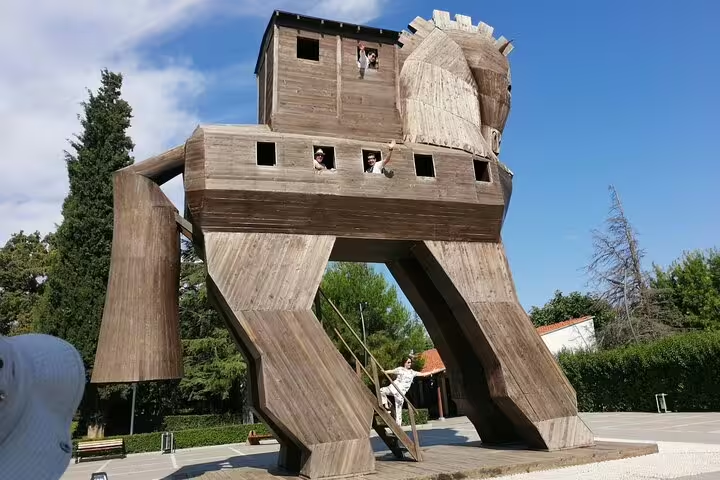
The Replica Trojan Horse: A large wooden replica of the legendary Trojan Horse stands at the site entrance and has become one of the most photographed landmarks in Turkey. Visitors can climb inside and peer out through small windows for a memorable perspective. It is a playful nod to the enduring power of myth. Practical Tip: Visit early to avoid queues for photos, especially during peak summer season.
Troy Museum: Opened in 2018, the Troy Museum is a world-class facility housing thousands of artifacts recovered from decades of excavation. The exhibits are thoughtfully curated across multiple floors, covering everything from prehistoric pottery to Byzantine relics. Interactive displays make the history accessible for visitors of all ages. Practical Tip: Allow at least two hours here and visit before touring the open-air site to give context to what you will see.
Schliemann's Trench: Heinrich Schliemann, the 19th-century archaeologist who first excavated Troy, cut a dramatic trench through the mound in his eagerness to find Homeric Troy. The trench is still visible today and serves as a sobering reminder of how early excavation methods can both reveal and destroy history. Practical Tip: Look for the interpretive panels nearby that explain the controversial legacy of Schliemann's work.
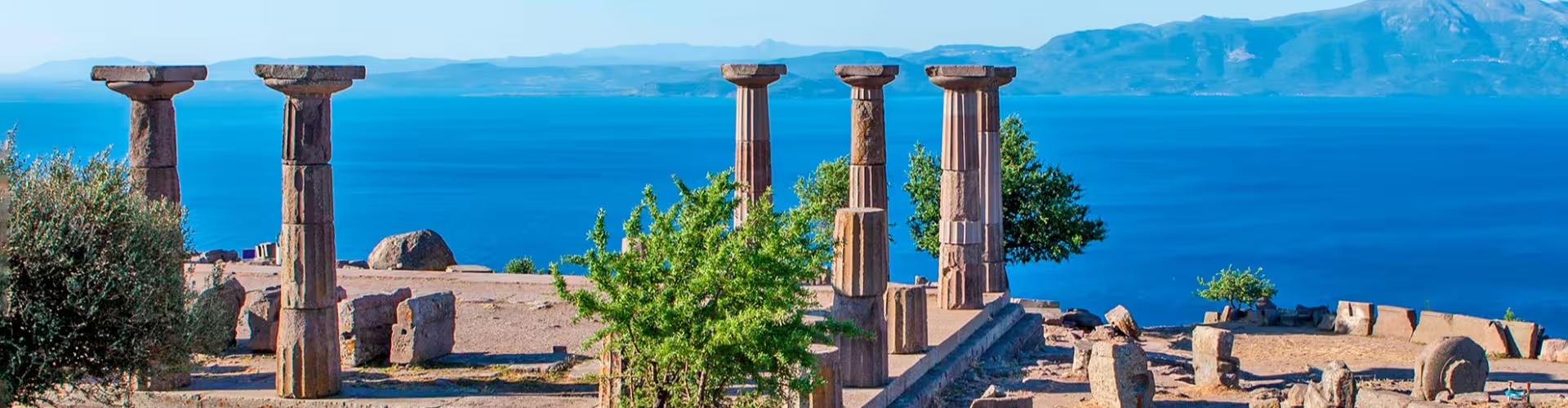
The Sacred Area and Temples: Among the most atmospheric corners of the site are the remains of temples dedicated to Athena, which date to the Hellenistic and Roman periods. Standing among these columns, with the Aegean plain stretching before you, invokes a powerful sense of timelessness. Practical Tip: Wear sturdy shoes, as the terrain is uneven and some areas involve short climbs over rubble.
Panoramic Views from the Citadel: From the highest point of the ancient citadel, visitors can survey the Trojan Plain and, on clear days, see the glittering waters of the Dardanelles. This vantage point helps contextualize the strategic importance of the city in antiquity. Practical Tip: Bring binoculars for an enhanced view of the surrounding landscape and distant coastline.
The Bouleuterion and Odeon: These civic structures from the Roman-era city of Ilium are remarkably well-preserved and offer a glimpse into daily life beyond the battlefield mythology. The semicircular seating of the Odeon is particularly photogenic. Practical Tip: Visit in the late afternoon when the low sun casts long shadows across the stone, creating ideal photography conditions.
Begin with a morning visit to the Troy Museum to absorb the historical context before stepping onto the site itself. Spend the midday hours exploring the archaeological layers, the Schliemann Trench, and the temples. After lunch at a local restaurant in Tevfikiye, dedicate the afternoon to the Roman civic structures and the panoramic citadel views. End with a photo stop at the Trojan Horse replica before heading back to Canakkale for dinner.
On day one, follow the one-day itinerary as outlined above. Day two can be spent in Canakkale itself, visiting the Canakkale Archaeological Museum and the memorial sites of the Gallipoli Peninsula, which are accessible by ferry. On the third day, consider a guided tour that covers lesser-visited excavation zones and provides access to restricted research areas that are not always open to independent visitors. A knowledgeable local guide will dramatically enrich your understanding of the multiple city layers.
The culinary scene around the archaeological zone is modest but rewarding, rooted in the broader traditions of the Aegean and Marmara regions of Turkey.
Cokelek Peynir: A crumbly, tangy local cheese that is produced in the Canakkale region and served with fresh bread and olives at breakfast. Ask for it specifically at local guesthouses.
Canakkale Kofte: These spiced lamb meatballs are a regional specialty, grilled over charcoal and served with flatbread and chopped salad. Found in most lokanta (traditional restaurants) in Tevfikiye and Canakkale.
Ezogelin Soup: A hearty red lentil and bulgur soup seasoned with dried mint and red pepper flakes. This is a staple Turkish comfort food that makes an ideal lunch before an afternoon of walking.
Balik Ekmek: Fresh fish sandwiches sold from small stalls near the waterfront in Canakkale, loaded with grilled mackerel, lettuce, and pickled vegetables. A must-try for any seafood lover.
Ayran: A cold, salted yogurt drink that pairs perfectly with grilled meats and provides welcome refreshment on hot summer days at the site.
Lokum and Regional Sweets: The Canakkale region produces excellent Turkish delight, often flavored with local rose water or pomegranate. Pick up a box from a market stall as an edible souvenir.
Getting to the site from Canakkale is straightforward. Dolmus minibuses run regularly from the Canakkale bus station to Tevfikiye, with the journey taking approximately 30 to 40 minutes. Taxis are also available and can be negotiated for a half-day or full-day fare that includes waiting time at the site. Renting a car in Canakkale offers maximum flexibility, particularly for those wishing to combine the visit with Gallipoli or other regional attractions. There is a car park adjacent to the museum entrance. Within the site, all exploration is done on foot across well-marked but sometimes uneven paths.
Gallipoli Peninsula: One of the most emotionally significant battlefields of World War One, the Gallipoli Peninsula is accessible by ferry and bus from Canakkale. The memorials, cemeteries, and museum here attract visitors from Australia, New Zealand, Turkey, and beyond in large numbers, particularly around Anzac Day in late April.
Assos (Behramkale): Located approximately 80 kilometers south of Canakkale, the ancient city of Assos features a remarkably preserved Temple of Athena perched on a volcanic cliff above the Aegean. The harbor village below offers excellent seafood restaurants and boutique accommodation.
Bozcaada (Tenedos): This small Aegean island, reachable by ferry, is famous for its vineyards, medieval castle, and relaxed atmosphere. It makes an ideal one-night extension for those wishing to decompress after days of historical exploration.
Alexandria Troas: A largely unexcavated Roman city located south of Troy along the coast, Alexandria Troas rewards those willing to venture off the beaten path with dramatic ruins set amid pine forests and overlooking the sea.
Yes, the site is family-friendly, and the Troy Museum has interactive exhibits designed to engage younger visitors. The Trojan Horse replica is particularly popular with children and offers a fun, tangible connection to the legend.
Most visitors spend between two and four hours at the open-air site, depending on their level of interest. Adding the museum extends a full visit to five or six hours comfortably.
Absolutely. While familiarity with the Iliad and Odyssey enriches the experience, the site stands on its own as one of the most important archaeological discoveries in history. The Troy Museum provides all necessary background for first-time visitors.
The most practical route is to take a bus from Istanbul's Esenler bus terminal to Canakkale, a journey of approximately four to five hours. From Canakkale, dolmus minibuses run regularly to the site at Tevfikiye. Some visitors also opt for organized day tours from Istanbul, though the travel time makes an overnight stay preferable.
Yes, licensed guides are available for hire at the museum entrance and can provide tours in English, Turkish, and several other languages. Booking in advance through a reputable local agency is recommended during peak season to secure availability.