Explore Tours

Build your dream
experience

More to know about Kars
Kars Travel Guide
Snapshot
Kars is one of Turkey's most compelling and undervisited destinations, a frontier city in the far northeast where layers of history, dramatic landscapes, and a distinctive local culture converge. Sitting at an altitude of roughly 1,750 metres, this high-plateau city carries the marks of Russian imperial architecture, ancient Armenian heritage, and a proud Anatolian identity. Few places in Turkey offer such a raw, authentic travel experience at the edge of three national borders.
Geography and Logistics
Orientation
Kars sits in northeastern Turkey, close to the borders of Armenia, Georgia, and Russia. The city itself is compact and navigable on foot, built on a flat grid partially designed during the Russian occupation of the late nineteenth century. The surrounding Kars Plateau extends into vast, wind-swept highlands that give way to volcanic peaks and glacial valleys.
When to Go
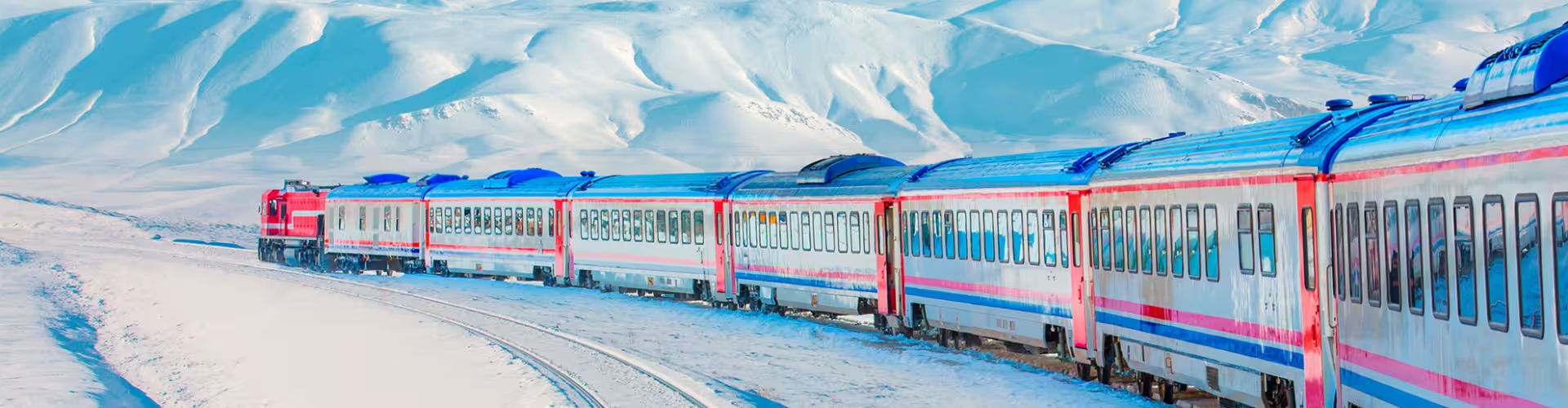
Spring (April to June) and early autumn (September to October) offer the most comfortable conditions. Winters are harsh, with heavy snowfall from November through March, though this season brings a dramatic, moody beauty to the region. Summer days are warm but evenings remain cool at this elevation.
Budget and Currency
Kars is located in Turkey, and the currency is the Turkish Lira (TRY). The city is budget-friendly by both Turkish and European standards. Accommodation, meals, and transport are notably affordable, making it an excellent destination for travellers seeking depth without high costs.
Essential Things to Do
Kars Castle (Kars Kalesi)
Perched on a rocky hill above the city, this fortress dates to the medieval period and was reinforced through successive Armenian, Ottoman, and Russian occupations. The views from the ramparts stretch across the plateau in every direction. Walking the outer walls gives a strong sense of the city's strategic importance across centuries. Practical Tip: Visit at sunset for sweeping golden light across the plains.
Ani Ruins
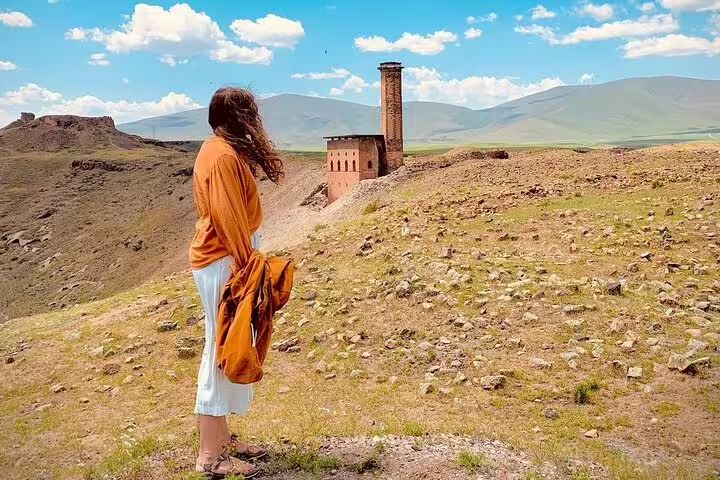
Located 45 kilometres east of the city, the ghost city of Ani is a UNESCO World Heritage Site and the defining attraction of the entire region. Once the capital of the Bagratid Armenian Kingdom, this medieval metropolis at its peak housed over 100,000 people. The surviving churches, city walls, and palace ruins are extraordinary in both scale and artistic detail. Practical Tip: Arrive early in the morning to experience the site in near solitude.
Kars Museum
This well-organized regional museum covers the archaeology, ethnography, and natural history of the Kars area. The collection includes artifacts from Urartian, Seljuk, and Ottoman periods alongside traditional costumes and household objects. It provides invaluable context before exploring the wider region. Practical Tip: Allocate at least 90 minutes to do the collection justice.
Russian Architecture District
The central streets of Kars retain a remarkable collection of stone buildings constructed during the Russian administration from 1878 to 1918. These neoclassical facades, wide boulevards, and arched doorways create a streetscape unlike anything else in Turkey. Walking through this district feels like stepping into a different chapter of history entirely. Practical Tip: Look for the old Governor's Mansion and the Russian bathhouse for the finest examples.
Cildir Lake
Roughly 60 kilometres north of the city, Cildir is the second-largest lake in Turkey and one of its most visually striking. In winter, the lake freezes solid enough for horse-drawn sleigh rides, a truly memorable experience. In warmer months, the lakeside offers peaceful walks and birdwatching opportunities. Practical Tip: A rented car or organized day tour from the city is the most practical way to reach it.
Kars Cheese Market
The dairy tradition of the Kars Plateau is legendary across Turkey, and the local cheese markets are a genuine cultural institution. Gravyer (a local adaptation of Gruyere) and kasar cheeses produced here are exported nationwide. Sampling directly from producers in the market is one of the most authentic activities available in the city. Practical Tip: Buy vacuum-packed cheese to carry home as it travels well.
Kagizman Canyon and Hot Springs
South of the city, the Aras River has carved dramatic gorge landscapes around Kagizman, with thermal springs nearby offering a relaxing stop. The canyon walls glow with warm ochre and rust tones in the afternoon light. The combination of natural scenery and geothermal bathing makes this an ideal half-day excursion. Practical Tip: Bring a towel and swimwear if you plan to use the hot springs.
Curated Itineraries
The Highlights (1 Day)
Begin the morning at the Kars Museum to orient yourself with the region's layered history. From there, walk through the Russian Architecture District before climbing to Kars Castle for midday views. Spend the afternoon at the cheese market, then enjoy a local dinner featuring plateau specialties in one of the city centre restaurants.
Deep Dive (2 to 3 Days)
On day one, follow the one-day itinerary above. Dedicate the entirety of day two to the Ani Ruins, arriving at opening time and exploring through the afternoon. On day three, drive north to Cildir Lake for the scenery and local tea houses, then return via Sarikamis Forest for a contrast of pine landscape against the open plateau.
Flavors of Kars
Kars Gravyer Cheese: A rich, nutty cheese with Swiss origins adapted to local milk traditions. Order it sliced thick at breakfast or as a standalone snack from any market stall.
Cag Kebab: Horizontally-stacked lamb kebab cooked over wood fire, a specialty of eastern Turkey. Order it by the skewer at dedicated kebab houses and eat it wrapped in thin lavash bread.
Tulum Cheese: A sharp, crumbly aged cheese matured in animal skin. Try it paired with local honey for a classic plateau combination.
Goce Corbasi: A hearty regional soup made from dried chickpeas and cracked wheat, ideal for cold mornings on the plateau. It is commonly served at traditional lokanta-style restaurants at lunch.
Sarikamis Trout: Fresh trout from the cold mountain streams of the Sarikamis area, typically grilled simply with butter and herbs. Order it at riverside restaurants near the forest resort town.
Butter and Honey Breakfast: The plateau dairy culture means local butter is exceptional. A full Turkish breakfast in Kars with local butter, honey, and several regional cheeses is one of the great simple pleasures of the region.
Navigation and Transport
Kars has its own airport (KSY) with regular flights connecting to Istanbul and Ankara, making it accessible without a long overland journey. The intercity bus network also links Kars to Erzurum, from where onward connections reach most of Turkey. Within the city, taxis and minibuses (dolmus) cover all key areas at very low cost. Renting a car is strongly recommended for exploring the surrounding region, including Ani, Cildir, and the canyon areas.
Beyond the Center: Day Trips
Ani Ruins (45 km east): The essential excursion from the city. Plan a full day and arrange transport in advance, either by taxi or rental car.
Sarikamis (55 km southwest): A pine-forested mountain town with ski slopes in winter and cool walking trails in summer. The town also carries deep historical significance from World War One.
Cildir Lake (60 km north): Outstanding for seasonal activities and birdwatching. The surrounding villages are welcoming and relatively untouched by tourism.
Digor Castles: A series of medieval fortifications in the Digor district with Armenian and Byzantine origins. The drive through the valley itself is scenic and rewarding.
{{check-circle}} Insider Tips for Travellers
- The city gets extremely cold from November onward. Pack thermal layers even if visiting in early autumn.
- Most restaurants and local businesses do not accept credit cards. Carry sufficient Turkish Lira in cash.
- Hiring a local guide for the Ani Ruins significantly enriches the experience. Guides can be arranged through your hotel or at the site entrance.
- The plateau light is exceptional for photography in the golden hours. Plan arrival at open sites accordingly.
- Accommodation options are limited compared to major Turkish cities. Book well in advance during summer and winter holiday periods.
- Basic English is spoken in hotels but rarely elsewhere. A translation app is a practical necessity.
- The city is generally very safe and hospitable. Solo travellers and couples alike report feeling genuinely welcomed by locals.
Frequently Asked Questions
- What is the best time of year to visit Kars?
- Late spring and early autumn offer the most comfortable weather. Summer evenings are cool, while winter is very cold but scenic, especially for those interested in snow landscapes and frozen lake activities.
- How do I get to Kars from Istanbul?
- Kars is served by Harakani Airport (KSY) with direct flights from Istanbul taking approximately two hours. Bus journeys from major western cities are possible but take well over 24 hours and are not recommended for most travellers.
- Is Ani Ruins worth a visit?
- Absolutely. Ani is considered one of the most important medieval archaeological sites in the world and is a UNESCO World Heritage Site. It is the single most compelling reason many travellers make the journey to this part of Turkey.
- What food is Kars most famous for?
- Kars is nationally celebrated for its exceptional dairy products, particularly Gravyer and kasar cheese. The local cag kebab and plateau-style breakfasts with local butter and honey are also culinary highlights of the region.
- Do I need a guide to explore the region independently?
- For the city itself, independent exploration is straightforward. For Ani and more remote sites, a local guide adds significant historical and contextual value and is worth the modest additional cost.
Kars is a high-altitude city in the Kars Province of northeastern Turkey, situated on the Kars Plateau at approximately 1,750 metres above sea level. It borders Armenia to the east, Georgia to the north, and sits within the broader South Caucasus cultural zone. The city was under Russian imperial administration from 1878 to 1918, a legacy still visible in its urban architecture. The surrounding region contains UNESCO World Heritage Site Ani, the medieval Armenian capital, along with significant Ottoman, Byzantine, and Urartian historical layers. The area is also recognized for its distinct dairy culture and the production of plateau cheeses that are distributed nationally across Turkey.
Destination, Northeastern Turkey, Historical City, Cultural Heritage, UNESCO Region, High Plateau, Border Region, Armenian Heritage, Russian Architecture, Culinary Destination