
Dogubayazit is a raw, dramatic frontier town in far eastern Turkey, perched at the foot of Mount Ararat and steeped in centuries of Kurdish, Persian, and Ottoman history. Few places in Turkey offer such an immediate sense of the wild and remote, where snow-capped peaks loom over ancient palaces and the air carries the chill of high altitude. This is a destination for the curious traveller who seeks authenticity over comfort and stories over souvenirs.
Dogubayazit sits at approximately 1,650 metres above sea level in Agri Province, just 35 kilometres from the Iranian border. The town itself is modest in scale, functioning primarily as a transit and service hub for the surrounding region. Most attractions, including Ishak Pasha Palace and the Meteor Crater, lie just outside the town centre and are easily reached by local transport or taxi.
The best time to visit is between May and September, when the weather is mild and the roads to surrounding sites are accessible. Winters are brutal, with heavy snowfall often cutting off mountain roads from November through March. Spring offers spectacular views of Ararat with snow still clinging to the summit above green lower slopes.
Dogubayazit is one of the more affordable destinations in Turkey. Budget travellers can manage comfortably on 300 to 500 Turkish Lira per day, covering accommodation, meals, and local transport. The Turkish Lira (TRY) is the standard currency, and cash is strongly recommended as card acceptance is limited outside larger hotels.
Ishak Pasha Palace
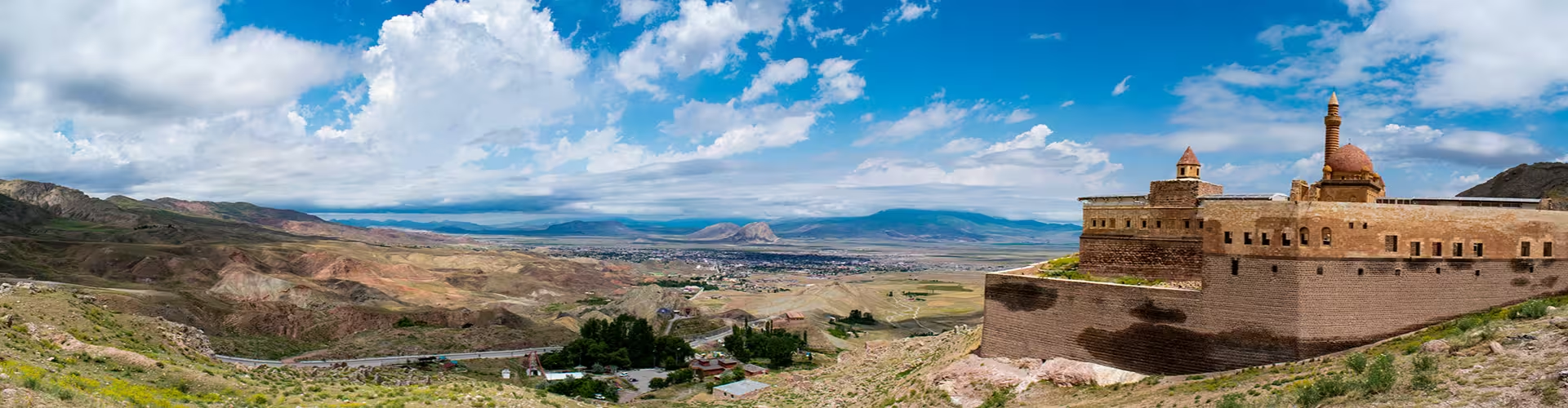
This 18th-century Ottoman palace complex is the crown jewel of the region, dramatically set against a rocky hillside overlooking the Dogubayazit plain. It blends Ottoman, Persian, Armenian, and Georgian architectural styles into a remarkably cohesive and photogenic whole. The palace took roughly a century to complete and features ornate stone carvings, a mosque, a harem, and a mausoleum. Practical Tip: Arrive early morning for the best light for photography and to beat tour groups.
Mount Ararat (Agri Dagi)
At 5,137 metres, Ararat is the highest peak in Turkey and a symbol of immense cultural and religious significance, most famously associated with Noah's Ark in biblical tradition. Trekking to the summit requires a permit, a licensed guide, and proper mountaineering equipment. Even without summiting, the mountain's presence dominates every view from town and the surrounding plains. Practical Tip: Permits must be arranged weeks in advance through a licensed local agency.
Meteor Crater (Dogubayazit Meteorite Crater)
Located a short drive from town, this large and surprisingly well-preserved impact crater offers a surreal, almost lunar landscape that contrasts sharply with the surrounding plains. It is one of the more unusual natural attractions in eastern Turkey and is largely overlooked by mainstream tourism. Practical Tip: Combine this visit with a trip to Ishak Pasha Palace on the same day.
Tent Rock Formations
Scattered across the plateau near the palace, these naturally formed volcanic rock formations create an otherworldly terrain. The eroded tufa structures are photogenic and easy to explore on foot. Practical Tip: Wear sturdy footwear as the ground is uneven and can be slippery after rain.
Ahmed-i Hani Tomb
This mausoleum honours Ahmed-i Hani, the celebrated 17th-century Kurdish poet and intellectual, author of the epic Mem u Zin. The site holds deep cultural significance for Kurdish visitors and scholars of Middle Eastern literature. Practical Tip: Show respect by dressing modestly when visiting this religious and cultural site.
Local Bazaar
The town market is a vivid, lively space where traders from both sides of the Iranian border converge. You will find spices, dried fruits, textiles, and Iranian goods at competitive prices. Practical Tip: Bargaining is expected and part of the experience, approach it with good humour.
Ararat Noah's Ark Searches and Museum Exhibits
Several local operators and guesthouses display artefacts and photographs related to the long history of expeditions searching for Noah's Ark on Ararat's slopes. These informal exhibits provide fascinating historical and cultural context for the mountain's legendary status. Practical Tip: Ask your guesthouse owner about local guides who specialize in Ararat's exploration history.
Begin your morning with a visit to Ishak Pasha Palace, arriving by 8:30am to enjoy the site before crowds arrive. Spend two to three hours exploring the palace complex and the surrounding ruins. In the afternoon, drive to the Meteor Crater for an hour of exploration, then return to town for a meal and a stroll through the bazaar before sunset.
On day one, follow the highlights itinerary above. Day two can be devoted to hiring a local guide for a lower-altitude walk on the slopes of Ararat, combined with a visit to the Ahmed-i Hani Tomb and the Tent Rock formations. On day three, consider a half-day excursion toward the Iranian border region or a visit to the nearby Kurdish villages to understand the living culture of the plateau. This pace allows for genuine engagement with the landscape and people rather than a checklist approach.
Kuru Fasulye: A hearty white bean stew slow-cooked with tomato paste and peppers, this is a staple of eastern Turkish cuisine and deeply satisfying after a cold day of exploring.
Kavurma: A rich, slow-fried lamb dish preserved in its own fat, commonly served with flatbread and yoghurt. It is a traditional preservation method born of necessity in harsh mountain winters.
Tandır Ekmeği: Freshly baked flatbread from a clay tandoor oven, best eaten warm from the bakery with butter or cheese in the morning.
Ayran: Cold, salted yoghurt drink served with nearly every meal. It is refreshing, filling, and the most popular non-alcoholic beverage in the region.
Tulum Peyniri: A sharp, crumbly cheese aged in a goatskin casing, typical of eastern Anatolia. Order it as part of a traditional breakfast spread.
Sac Tava: A mixed meat and vegetable dish cooked on a large iron griddle over an open flame, common in local lokanta restaurants. Ordering Tip: Point at what others are eating if you are unsure, staff are generally patient with visitors.
Dogubayazit is served by regular minibus (dolmus) connections from Agri, the nearest major city, which takes approximately 90 minutes. From Agri there are bus connections to Erzurum, Van, and further afield. There is no train service directly to Dogubayazit. Within town, taxis are the most practical option and fares to Ishak Pasha Palace are typically negotiated in advance. For independent travellers, hiring a local taxi driver for a full day provides the most flexibility and often yields unexpected local knowledge.
Agri City: The provincial capital approximately 95 kilometres to the west offers a broader range of amenities, a museum with regional artefacts, and onward transport connections. It makes a practical base if accommodation in Dogubayazit is limited.
Van and Lake Van: Approximately 3 to 4 hours to the south, Van is one of the great cities of eastern Turkey, home to the stunning Van Castle, the ancient church of Akdamar Island, and the alkaline Lake Van itself. A day trip is ambitious but possible; an overnight stay is recommended.
Tendrek Pass: The mountain road between Dogubayazit and Van crosses the high Tendrek Pass, offering dramatic scenery of volcanic plateaus, grazing herds, and remote Kurdish settlements. The drive itself is a worthwhile experience.
Iranian Border at Gurbulak: For travellers with appropriate documentation, the Gurbulak border crossing into Iran is just 35 kilometres away and provides a fascinating contrast in landscape and culture.