Explore Tours

Build your dream
experience

More to know about Agri Province
Agri Province Travel Guide
Snapshot
Agri Province is one of eastern Turkey's most dramatic and historically layered destinations, anchored by the legendary silhouette of Mount Ararat rising above the plains. This remote province rewards travelers who seek raw natural grandeur, ancient crossroads culture, and genuine off-the-beaten-path adventure. From the iconic biblical summit to hidden valleys and Kurdish highland villages, Agri offers an experience that feels untouched by mass tourism.
Geography and Logistics
Orientation
Agri Province sits in the far northeast of Turkey, bordering Iran to the east and sharing cultural ties with Armenia and the broader South Caucasus region. The provincial capital, also called Agri, serves as the main hub for visitors. The landscape is defined by the vast Agri Plain, towering volcanic peaks, and deep river valleys carved over millennia.
When to Go
Late spring through early autumn, roughly May to September, offers the most accessible conditions. Summers are warm and dry at lower elevations, ideal for trekking and village exploration. Winters are harsh and snowy, often cutting off mountain roads, though the snow-covered plains carry a stark beauty of their own.
Budget and Currency
Turkey uses the Turkish Lira (TRY). Agri is one of the more affordable provinces in the country, with budget guesthouses, local eateries, and shared transport keeping costs manageable. ATMs are available in the city center, but carry cash when venturing into rural areas or smaller villages.
Essential Things to Do
Climb or Trek Mount Ararat
At 5,137 meters, Mount Ararat is the tallest peak in Turkey and one of the most symbolically powerful mountains on earth. Climbers must obtain a special permit and arrange a licensed guide through official channels. The standard route takes around five days and passes through dramatic altitude zones, from green meadows to glacial terrain. Practical Tip: Book permits and guides at least two months in advance through a registered Turkish trekking agency.
Visit Ishak Pasha Palace
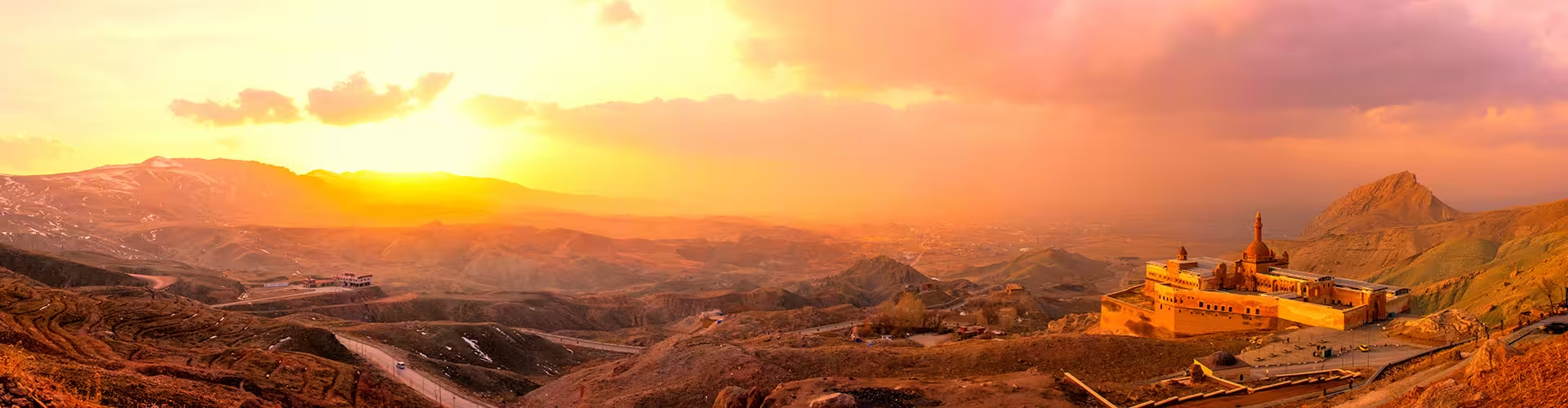
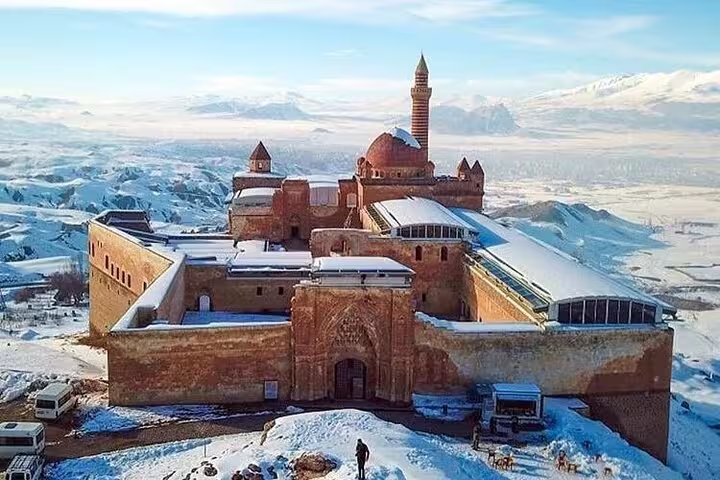
Located near the town of Dogubayazit, this extraordinary semi-ruined palace complex dates to the late 17th and early 18th centuries and blends Ottoman, Persian, Armenian, and Georgian architectural styles. The setting alone, perched on a rocky outcrop above a sweeping valley, is extraordinary. It remains one of the best-preserved examples of late Ottoman-era palatial architecture in eastern Anatolia. Practical Tip: Arrive early morning to catch the light on the facade and avoid tour groups from Dogubayazit.
Explore Dogubayazit Town
Often used as a base for Mount Ararat expeditions, Dogubayazit is a lively border town with a distinctly frontier character. The bazaar sells everything from Kurdish textiles to Iranian goods, reflecting its position as a key crossing point. The street food scene here is excellent and unpretentious. Practical Tip: The town has a range of accommodation options, and many guesthouses offer Ararat permit assistance.
Discover the Meteor Crater Lake
A short drive from Dogubayazit leads to a striking crater lake believed by some researchers to have been formed by a meteorite impact. The turquoise water set within a perfectly circular depression makes for a surreal and photogenic stop. It is rarely crowded and feels like a secret the landscape kept to itself. Practical Tip: Combine this with a visit to Ishak Pasha Palace for an efficient half-day loop.
Walk the Old Silk Road Routes
The region sits along ancient trade corridors that once connected Mesopotamia, Persia, and the Mediterranean world. Several unmarked paths and old stone bridges remain accessible to curious walkers. Local guides can point out caravanserai ruins and inscription sites that most visitors overlook. Practical Tip: Hire a local fixer or cultural guide in Agri city for context-rich exploration.
Visit the Balık Golu Fish Lake
This smaller highland lake offers peaceful scenery and a chance to observe local fishing traditions. The surrounding wetlands attract migratory birds, making it a worthwhile stop for nature enthusiasts. The tranquil atmosphere here contrasts sharply with the drama of Ararat. Practical Tip: Bring binoculars if you have an interest in birdwatching, particularly during spring migration.
Explore Kurdish Village Culture
Several traditional villages around the province maintain age-old customs, handicraft traditions, and oral storytelling practices. Hospitality here is legendary, and a spontaneous invitation to tea is almost guaranteed. These encounters provide a window into a way of life that is genuinely distinct from urban Turkey. Practical Tip: Always accept tea when offered and learn a few basic words in Kurdish as a gesture of respect.
Curated Itineraries
The Highlights (1 Day)
Start with an early morning drive to Ishak Pasha Palace to catch the light and beat the crowds. Continue to the Meteor Crater Lake for a midday stop, then spend the afternoon exploring Dogubayazit's bazaar and sampling local street food. End the day with a sunset view of Mount Ararat from the plains near the town.
Deep Dive (2 to 3 Days)
Day one mirrors the highlights itinerary above. On day two, arrange a guided lower-slope trek on Mount Ararat, exploring the alpine meadows and stone shepherd shelters without committing to the full summit attempt. Day three can be dedicated to village visits, the Silk Road routes, and a visit to Balık Golu for a quieter, more reflective experience of the province.
Flavors of Agri Province
Kuru Fasulye: A rich white bean stew cooked with lamb or beef, served with rice and bread. This is everyday comfort food across eastern Turkey and particularly satisfying after a cold morning outdoors. Order it at any local lokantas for an authentic bowl.
Kavurma: Slow-cooked and preserved lamb, often prepared in autumn and eaten through the winter months. The texture is deeply savory and slightly caramelized. You will find it served with flatbread at family-style restaurants.
Tirit: Layers of torn flatbread soaked in meat broth and topped with braised lamb. It is hearty, warming, and rarely found outside the eastern Anatolian region. Ask specifically for it at traditional eateries.
Ayran: A cold salted yogurt drink that pairs perfectly with any heavy meat dish. It is made fresh in many restaurants and far superior to bottled versions. Always choose the freshly prepared option when available.
Sac Kavurma: Thin slices of lamb cooked on a convex iron griddle with vegetables and spices. It arrives sizzling at the table and is best shared as a group dish. Popular in Dogubayazit restaurants catering to travelers.
Kurdish Bread (Lavash): Thin, wood-fired flatbread baked fresh throughout the day. It accompanies every meal and doubles as a utensil for scooping dips and stews. Buy a stack from a bakery as a snack for the road.
Navigation and Transport
The nearest major airport is Agri Airport (AJI), with domestic connections to Istanbul and Ankara. Buses from Erzurum, Van, and Kars connect regularly to the city of Agri, and dolmus minibuses serve the main towns. Renting a car is strongly recommended for reaching Ishak Pasha Palace, the crater lake, and rural villages independently. Roads are generally paved on main routes but can be rough on secondary tracks.
Beyond the Center: Day Trips
Erzurum (roughly 3 hours west): A historic fortress city with excellent Ottoman architecture, a major bazaar, and one of eastern Turkey's best museums. It makes for a rewarding full-day or overnight excursion.
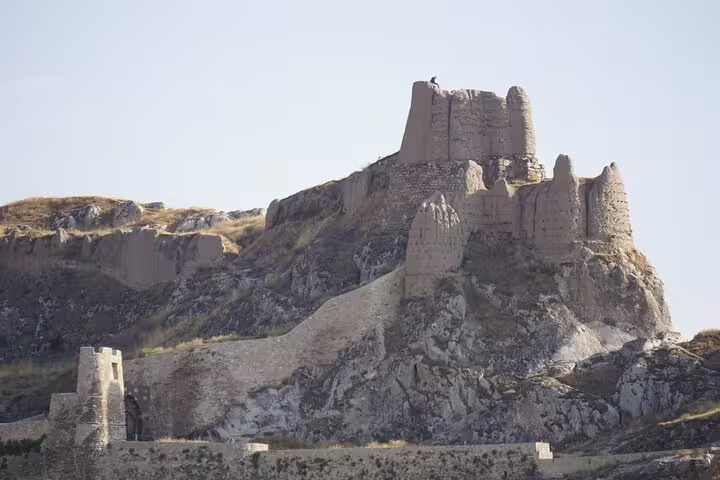
Van Lake and Van City (roughly 3 hours south): The largest lake in Turkey, surrounded by dramatic scenery and home to the famous Van cat and the ancient Urartian citadel. An outstanding extension to any eastern Turkey itinerary.
Kars and Ani Ruins (roughly 3 hours northwest): The ghost city of Ani, a medieval Armenian capital sitting on the Armenian border, is a UNESCO World Heritage Site of quiet devastation and architectural wonder. Kars city itself has a compelling Russian-era old town.
{{check-circle}} Insider Tips for Travellers
- Always carry your passport: border proximity means checkpoints are common and ID may be requested.
- Permits for Mount Ararat must be arranged well in advance through official Turkish agencies; do not attempt independent access.
- Dress modestly when visiting villages and religious sites out of respect for local customs.
- Mobile coverage can be patchy in rural highland areas; download offline maps before leaving the city.
- Fuel up in Agri city or Dogubayazit before long drives, as stations are sparse in the countryside.
- The border with Iran means security presence is visible; be respectful and cooperative at any checkpoint.
- Local guesthouses in Dogubayazit often employ English-speaking staff with Ararat expedition experience.
Frequently Asked Questions
Do I need a permit to climb Mount Ararat?
Yes. All climbers must obtain an official government permit in advance. Agri Province authorities require that all trekkers use a licensed guide and registered agency. Solo or unguided climbing is not permitted.
What is the best time of year to visit?
Late spring to early autumn, from May through September, offers the most comfortable and accessible travel conditions. Summer days are warm and roads remain open throughout the province.
Is Ishak Pasha Palace worth visiting?
Absolutely. It is one of the most atmospheric historical sites in all of eastern Turkey. The combination of stunning architecture and dramatic mountain backdrop makes it a highlight of any itinerary in Agri Province.
How do I get from Agri city to Dogubayazit?
Regular dolmus minibuses run between Agri city and Dogubayazit throughout the day. The journey takes approximately one hour. Taxis are also available for a more direct and flexible option.
Is it safe to travel in Agri Province?
The region is generally safe for travelers who take standard precautions. It is advisable to check current travel advisories from your home country's foreign affairs office before visiting, particularly regarding border area guidelines.
Agri Province is located in far northeastern Turkey, bordering Iran to the east and situated within the broader South Caucasus cultural sphere. It encompasses the Agri Plain, the volcanic massif of Mount Ararat at 5,137 meters, and the historic town of Dogubayazit, which has long served as a key waypoint on ancient trade routes between Persia, Mesopotamia, and the Mediterranean world. The province falls within the Eastern Anatolia Region and is administratively centered on the city of Agri. Its geographic position at the intersection of Turkish, Kurdish, Iranian, and Armenian cultural influences gives it a layered identity that distinguishes it from other Turkish provinces.
Adventure Travel, Eastern Turkey, Mountain Destination, Cultural Heritage, Off the Beaten Path