Explore Tours


Build your dream
experience

More to know about Ozkonak
Ozkonak Travel Guide
Snapshot
Ozkonak is one of Cappadocia's most rewarding underground cities, carved deep into the volcanic rock of central Turkey over two millennia ago. Unlike its more visited neighbors, this subterranean labyrinth offers a genuine sense of exploration without the overwhelming crowds. Visitors descend into a world of narrow tunnels, ventilation shafts, and ancient chambers that once sheltered thousands of people from invasion and persecution.
Geography and Logistics
Orientation
Ozkonak is located approximately 14 kilometers north of Avanos in the Nevsehir Province of central Anatolia, Turkey. The site sits within the broader Cappadocia region, famous for its fairy chimneys, cave churches, and volcanic tufa landscape. The nearest major transportation hub is Nevsehir Kapadokya Airport, roughly 40 kilometers to the south. Most visitors arrive as part of a Cappadocia road trip, combining Ozkonak with stops in Avanos, Goreme, and Urgup.
When to Go
Spring (April to June) and autumn (September to November) are the ideal seasons for visiting. Temperatures are mild, crowds are manageable, and the surrounding landscape is at its most photogenic. Summer brings intense heat above ground, though the underground city remains a cool constant temperature year-round, typically around 10 degrees Celsius. Winter visits are quieter and atmospheric, though some regional transport options may be reduced.
Budget and Currency
Turkey uses the Turkish Lira (TRY). Ozkonak charges a modest entrance fee, typically lower than the fees at Derinkuyu or Kaymakli, making it excellent value. Budget travelers can explore the site for under 10 USD. Cash is recommended for entrance fees, though larger hotels and restaurants in nearby Avanos accept credit cards. ATMs are available in Avanos town center.
Essential Things to Do
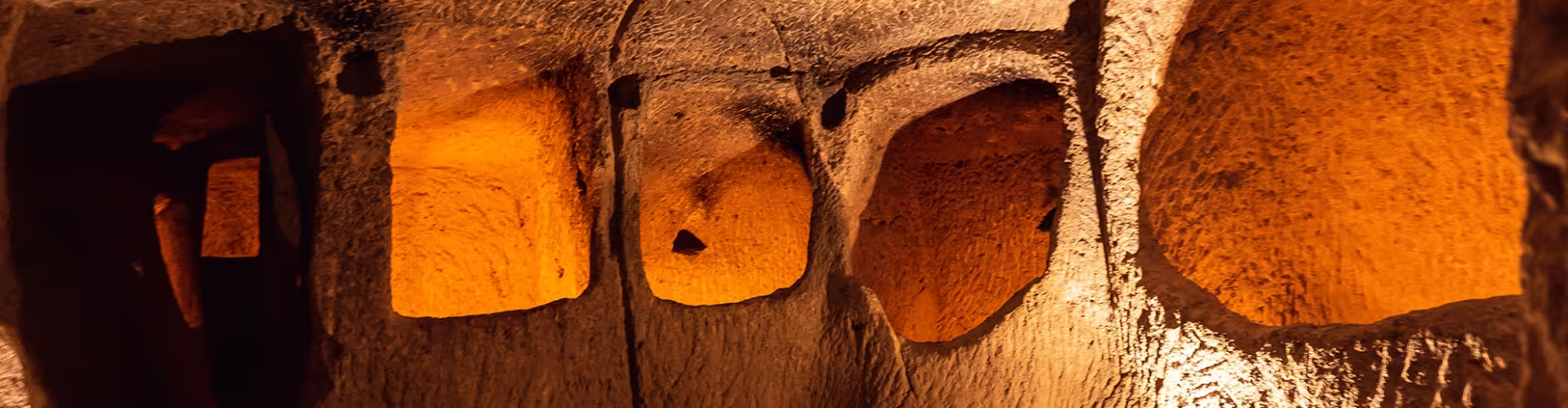
Explore the Underground Tunnels: The core experience here is descending through a network of hand-carved tunnels that drop several stories below the surface. The passages are narrow and low in places, adding to the sense of immersion. Each level reveals new chambers used for storage, worship, and shelter. Practical Tip: Wear comfortable, closed-toe shoes with grip, as some tunnel floors can be slippery.
Examine the Rolling Stone Doors: One of the most remarkable engineering features is the series of large circular stone doors used to seal off sections of the city during attacks. These millstone-shaped barriers could be rolled into position from the inside, blocking entire corridors. They remain remarkably intact. Practical Tip: Ask your guide to demonstrate how the doors were maneuvered.
Visit the Ventilation Shafts: The ancient inhabitants engineered an ingenious system of vertical shafts to circulate fresh air throughout the underground complex. Some shafts also doubled as communication channels between levels. The engineering is a testament to early ingenuity. Practical Tip: Look upward through the shafts to appreciate the depth of the excavation.
Discover the Wine and Oil Cellars: Lower levels contain carved niches and large earthenware vessels that once stored wine, olive oil, and grain. These provisions allowed communities to survive underground for extended periods. The scale of the storage areas reveals how seriously the inhabitants prepared for long sieges. Practical Tip: Compare the scale of these cellars to those in Derinkuyu for an interesting perspective.
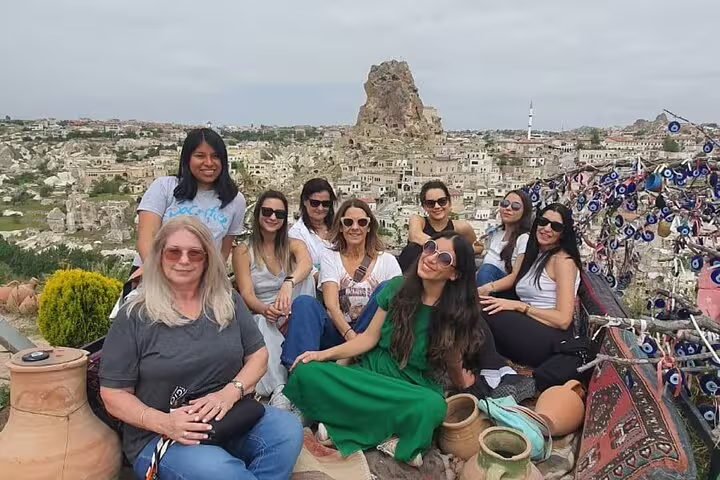
Photograph the Tufa Landscape Above Ground: The terrain surrounding the site is classic Cappadocian scenery, with eroded volcanic rock formations, cave dwellings, and agricultural terraces. The landscape is best photographed in the early morning or late afternoon light. Practical Tip: Arrive early to catch golden hour light over the valley.
Attend a Guided Tour: Local guides offer context that transforms the visit from a simple walk-through into a vivid historical narrative. They explain the origins of the city, its use during Byzantine and early Christian periods, and its eventual abandonment. Practical Tip: Arrange a guide through your hotel in Avanos or Goreme the day before your visit.
Curated Itineraries
The Highlights (1 Day)
Start the morning with a visit to Avanos to pick up supplies and explore the town's pottery workshops along the Kizilirmak River. Drive north to reach the underground city by mid-morning, when lighting inside the tunnels is supplemented by early tour groups' departure, leaving the site quieter. Spend two to three hours exploring the levels, ventilation systems, and stone doors. Return to Avanos for lunch at a local restaurant before heading toward Goreme for the afternoon. End the day watching sunset from one of the Goreme viewpoints.
Deep Dive (2 to 3 Days)
Day one begins with Avanos pottery and a full exploration of the underground city. On day two, visit the Zelve Open-Air Museum and the Pasabag Monks Valley before heading to Goreme for the night. Day three can be spent at Uchisar Castle and the Pigeon Valley hiking trail, with a return journey through the volcanic landscape of the Ihlara Valley if time permits. This multi-day route offers a genuinely comprehensive Cappadocia experience without feeling rushed.
Flavors of Ozkonak
The surrounding region of Avanos and Nevsehir is rich in traditional Anatolian cuisine. Dining near the site means encountering hearty, slow-cooked dishes rooted in Central Anatolian tradition.
Testi Kebab: A slow-cooked meat and vegetable stew sealed inside a clay pot and cracked open at the table. This theatrical dish is a Cappadocian signature and deeply satisfying on cooler evenings. Order it at least 30 minutes in advance as it takes time to prepare.
Manti: Tiny hand-folded dumplings served with garlic yogurt and chili butter. This Turkish comfort classic is found throughout the region and pairs beautifully with a glass of local ayran. Look for handmade versions in small family-run restaurants.
Gozleme: A thin savory flatbread folded around fillings such as cheese, spinach, or minced meat and cooked on a griddle. It is a popular quick lunch option near tourist sites. Markets and small roadside stalls often offer the freshest versions.
Pekmez: A thick grape or mulberry molasses used as a spread or sweetener. Avanos, as a regional center, produces excellent pekmez and it is widely available in local shops. Try it drizzled over fresh bread with white cheese for breakfast.
Cappadocian Wine: The volcanic soil of the region produces distinctive wines, particularly from the Emir grape variety. Several boutique wineries operate near Urgup and Uchisar. Picking up a bottle from a local shop is one of the best souvenirs of the region.
Navigation and Transport
The most practical way to reach the underground city is by private car or rental vehicle from Avanos, a 15 to 20-minute drive. Taxis from Avanos can be arranged for a half-day excursion. Some organized Cappadocia tour operators include the site on their northern Cappadocia itineraries, which is convenient for those without personal transport. Dolmus minibuses from Avanos run toward Ozkonak village with limited frequency, so check schedules in advance. Cycling the route from Avanos is feasible for experienced cyclists, as the road passes through pleasant rural scenery.
Beyond the Center: Day Trips
Avanos: The riverside pottery town is just 14 kilometers south and offers a compelling half-day of workshops, ceramics galleries, and waterfront cafes. It is the natural base for exploring the northern Cappadocia circuit.
Zelve Open-Air Museum: A short drive southwest, Zelve preserves an entire abandoned cave village carved into multiple cliff faces. It feels more raw and less manicured than Goreme, which many travelers prefer.
Pasabag Monks Valley: Famous for its triple-capped fairy chimneys, this valley is one of the most photographed landscapes in Cappadocia and is ideal for a short morning walk.
Goreme: The main tourism hub of Cappadocia, Goreme offers the Open-Air Museum, balloon launch points, and a wide range of accommodation and dining options. It is approximately 25 kilometers from Ozkonak.
Uchisar Castle: This dramatic natural rock fortress offers panoramic views over the entire Cappadocia region and is best visited at sunset for the golden light across the tufa landscape.
Insider Tips for Travellers
- Bring a light jacket regardless of outside temperatures, as underground temperatures hover around 10 degrees Celsius year-round.
- Visit on weekday mornings to avoid weekend crowds and tour group rush hours, typically between 10am and 1pm.
- Carry a small torch or use your phone flashlight, as some lower tunnel sections have limited artificial lighting.
- Photographs are generally permitted inside but avoid flash photography near other visitors in confined spaces.
- Combine the visit with Avanos pottery workshops for a culturally balanced day that appeals to all travel styles.
- Wear shoes with non-slip soles, as some tunnel floors are uneven and can be damp.
- Book a reputable guide in advance if historical context is important to your experience, as on-site interpretation panels are limited.
Frequently Asked Questions
How deep does the underground city go?
The site descends approximately four stories below the surface, though only select levels are fully accessible to visitors. The deepest accessible sections include storage chambers and the ventilation shaft system.
Is Ozkonak suitable for children and elderly visitors?
Ozkonak involves narrow passages and uneven steps, which may be challenging for very young children or visitors with limited mobility. Comfortable walking shoes and a reasonable level of fitness are recommended for the best experience.
How long does a visit typically take?
Most visitors spend between one and two hours exploring the site. Adding a guided tour extends this to two to three hours. The site pairs well with a visit to Avanos on the same day.
What is the entrance fee?
Entrance fees are set by the Turkish Ministry of Culture and are subject to annual revision. The cost is generally modest compared to Derinkuyu and Kaymakli. Checking the official Turkish museum authority website before visiting is recommended for the most current pricing.
How does Ozkonak compare to other underground cities in the region?
Ozkonak is smaller than Derinkuyu but offers a more intimate and less crowded experience. It features a unique communication tube system between levels that is not found in comparable sites, making it particularly interesting for history enthusiasts.
Ozkonak is an ancient underground city located approximately 14 kilometers north of Avanos in the Nevsehir Province of central Anatolia, Turkey. Situated within the UNESCO-recognized Cappadocia region, the site is embedded in the volcanic tufa landscape characteristic of central Turkey. The nearest major airport is Nevsehir Kapadokya Airport, approximately 40 kilometers to the south. The surrounding region is defined by eroded volcanic formations, cave settlements, and rich Byzantine historical heritage, placing Ozkonak within one of Turkey's most significant cultural and geological zones.
Underground City, Cappadocia, Turkey, Historical Attraction, Nevsehir Province, Cave Architecture, Byzantine Heritage, Central Anatolia