
Build your dream
experience

More to know about Catalhoyuk
Catalhoyuk Travel Guide
Catalhoyuk is one of the world’s most influential Neolithic archaeological sites, famous for its dense settlement plan and the way it reshaped what we know about early urban life. Visiting feels like stepping into a layered human story, where architecture, daily routines, and belief systems are read from earth, walls, and traces of communal living. This guide focuses on practical planning and on-site decision support so you can experience Catalhoyuk with context, comfort, and respect.
Snapshot
Catalhoyuk delivers a quiet, contemplative vibe, an open landscape, big skies, and a rare chance to stand where early communities built complex lives together. The signature experience is not spectacle, it is interpretation, noticing how people lived, moved, gathered, and remembered. Go when you want space to think and time to absorb the story, because the site rewards slow observation more than quick photo stops.
🗺️ Geography and Logistics
📍 Orientation: Where is it within Konya Province and Türkiye?
Catalhoyuk sits in Konya Province in the Central Anatolia Region of Türkiye, within a broad plain that helps explain why early farming communities thrived here. The primary travel hub is the city of Konya, which functions as the main base for transport, services, and day planning. For most travelers, the simplest approach is to route through Konya first, then continue overland to the site using a private transfer, taxi, or an organized tour.
🕒 When to Go: Seasonal breakdown
Central Anatolia typically brings hot, bright summers and colder winters, with shoulder seasons often feeling more balanced for outdoor exploration. If you prefer fewer crowds and a calmer pace, shoulder months are usually the most comfortable for walking and reading interpretive material without rushing. In peak summer, plan for stronger sun exposure and prioritize hydration, shade breaks, and a slower tempo on site.
💰 Budget & Currency: Practical money tips
Türkiye uses the Turkish lira, and your day’s budget will usually be shaped more by transportation and guide choices than by time on the mound itself. Carry some cash for small purchases and backups, but also keep a card available for larger payments in Konya, where card acceptance is generally more common. If you are booking a driver or tour, confirm what is included in advance, especially return transport, guiding, and any museum style add-ons.
⭐ Essential Things to Do
1) Walk the Excavation Areas with an Archaeology Mindset
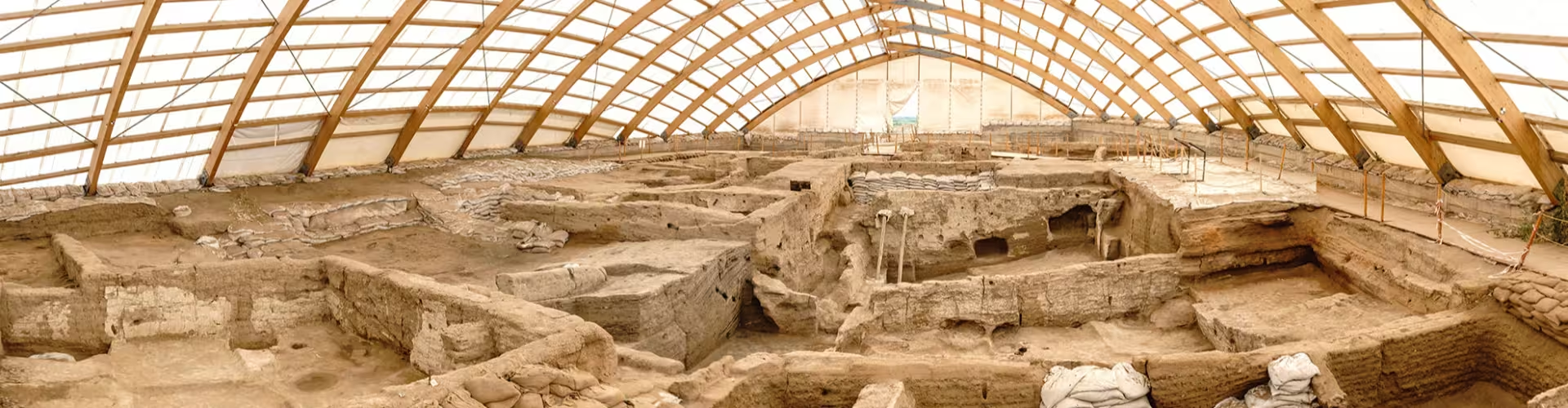
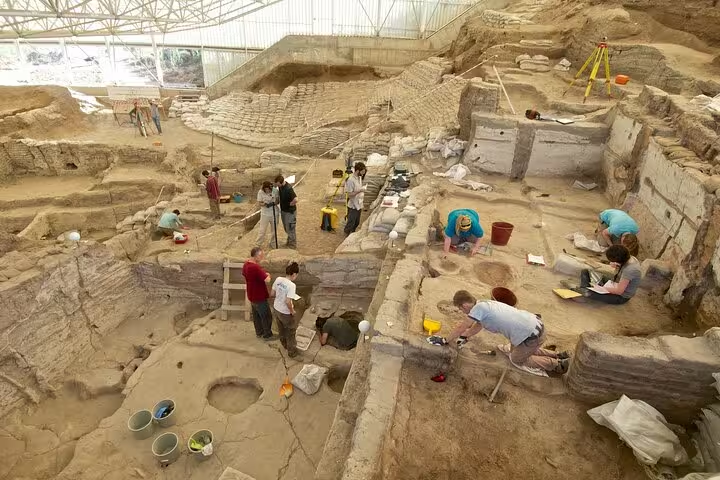
The core experience at Catalhoyuk is learning how a packed settlement functioned, where homes, pathways, and shared spaces reveal early social organization. The site is about patterns and details, so it rewards visitors who slow down and compare what they see to the interpretive explanations. Practical tip: treat it like a museum without walls, read first, then look, then re read after you have oriented yourself.
2) Focus on the Story of Home Life
What makes Catalhoyuk compelling is its intimacy, daily life, food preparation, craft, and household routines inferred from architecture and finds. It is less about a single monument and more about a community’s logic, how space was used, and how identity was expressed. Practical tip: bring a small notebook or use your phone notes to track questions, it improves what you notice on the second pass.
3) Visit with a Local Guide for Context
A knowledgeable guide can connect the site’s layers to broader themes in Anatolian prehistory, including early agriculture and long term settlement. This is especially valuable if you want more than surface level understanding and prefer a structured narrative. Practical tip: book ahead if you are traveling on a tight schedule, and ask whether the tour includes time in Konya for related cultural stops.
4) Pair the Site with a Konya Culture Stop
Konya adds depth to a Catalhoyuk day trip because it anchors your experience in a living Anatolian city with its own heritage and rhythms. Even a short walk through central areas can help you feel the region’s scale and continuity across time. Practical tip: plan your Konya time before or after the site based on daylight, and keep meals flexible so you are not rushed.
5) Photograph the Landscape, Not Just the Details
The surrounding plain is part of the story, it helps explain settlement choices, visibility, and the relationship between people and land. Wide shots can communicate the site’s atmosphere better than close ups alone. Practical tip: aim for softer light early or late in the day, and keep your phone lens clean for clearer textures and color.
6) Build a Personal Timeline of What You Are Seeing
Archaeological places can blur together unless you actively organize your impressions. Creating a simple mental timeline helps you understand how layers accumulate and how interpretations are made. Practical tip: ask your guide or use on site panels to identify what is certain, what is inferred, and what remains debated.
7) Plan a Calm Pace for Better Understanding
The best visits to Catalhoyuk feel unhurried, because comprehension comes from revisiting viewpoints and reading the same explanation twice. A rushed stop can reduce the site to a checklist, which misses what makes it globally significant. Practical tip: block extra time for breaks, water, and a second loop through the main viewing areas.
8) Travel with Respectful Site Etiquette
As an archaeological site, Catalhoyuk depends on careful visitor behavior to protect fragile contexts. Staying on marked paths and following posted guidance supports preservation and ongoing research. Practical tip: keep your voice low in covered areas, avoid touching surfaces, and treat barriers as conservation tools, not obstacles.
🚶 Curated Itineraries
⏰ The Highlights (1 Day): A fast-paced route
Start in Konya and depart early so you arrive with time to orient yourself and read introductory panels before you begin walking. Spend the middle of your visit moving slowly through the main viewing areas, prioritizing understanding of settlement structure and domestic life over trying to see everything quickly. Return to Konya with time for an easy meal and a short evening stroll, which helps you process the experience without fatigue.
⏰ Deep Dive (2 to 3 Days): More context and breathing room
Use day one for Catalhoyuk with a guide or a self guided deep read, and plan for repeated passes through the same areas so details become clearer. On day two, keep Konya as your base and add cultural exploration at a relaxed pace, focusing on how the city’s present day life complements the region’s long historical arc. If you have a third day, use it as a buffer for weather, rest, and an additional regional stop, which often makes the overall trip feel more spacious and less transactional.
🍽️ Flavors of Catalhoyuk
Food experiences will usually be based in Konya, where regional Central Anatolian cooking is easy to find and well suited to travelers who want hearty, comforting meals after a day outdoors.
- Etli ekmek: A long, crisp flatbread topped with seasoned meat, savory and satisfying. Ordering tip: ask for a size you can share if you want to try multiple dishes.
- Tirit: Bread based comfort food with rich, warming flavors. Ordering tip: it can be filling, so consider it as a main meal after the site.
- Mercimek corbasi: Lentil soup with a smooth texture and gentle spice. Ordering tip: a reliable starter if you want something light and familiar.
- Manti: Small dumplings with yogurt and sauce, tangy and savory. Ordering tip: ask how it is served locally, styles can vary by region.
- Gozleme: Griddled flatbread with fillings, crisp outside and soft inside. Ordering tip: choose a filling that matches your appetite, cheese and greens are a common lighter option.
- Ayran: Cold yogurt drink, salty and refreshing. Ordering tip: pair it with bread based dishes for a classic balance.
🚌 Navigation & Transport
Most visitors approach Catalhoyuk from Konya, using a private car, taxi, or organized tour for a straightforward round trip. Walking on site is part of the experience, so wear stable shoes and plan for sun and wind exposure typical of the Central Anatolian plain. For safety and comfort, carry water, layer clothing for shifting conditions, and keep a conservative pace, especially in warmer months.
🌄 Beyond the Center: Day Trips
- Konya city highlights: Ideal as a same day add-on before or after the site, focused on urban culture and regional identity. Reason to visit: it provides living context for your Central Anatolia trip.
- Central Anatolia landscapes: Short scenic drives from Konya can reveal the wide open geography that shaped settlement patterns. Reason to visit: the sense of scale deepens your understanding of place.
- Regional villages and countryside stops: Depending on your route, small local stops can add a human layer to the journey. Reason to visit: it breaks up driving time and adds everyday texture to the trip.
✅ Insider Tips for Travelers
- Plan your Catalhoyuk visit around comfort, not speed, because interpretation improves when you are not rushed.
- Bring sun protection and water, the open plain can feel intense even when temperatures seem moderate.
- Choose shoes with grip and support, you will spend time walking and standing while reading.
- If you hire a driver or tour, confirm round trip logistics and waiting time so you control your pace on site.
- Keep your expectations aligned with archaeology, the value is in context and evidence, not in monumental architecture.
- Pack a light layer, wind can change how warm it feels, especially outside peak summer.
❓ Frequently Asked Questions, FAQ
Q1: Is Konya the best base for visiting Catalhoyuk?
Yes, Konya is the most practical base because it is the main hub in the region for transport and services. Many travelers visit as a day trip from the city using a private transfer, taxi, or tour.
Q2: How much time should I plan on site?
Plan enough time to read the interpretive material and do at least one slow loop through the main viewing areas. If you can, allow extra time for a second pass, it helps the site’s layout make sense.
Q3: What is the best season for Catalhoyuk?
Shoulder seasons are often more comfortable for walking because Central Anatolia can be very hot in summer and colder in winter. If you travel in summer, prioritize early starts, water, and sun protection.
Q4: Do I need a guide at Catalhoyuk?
A guide is not mandatory, but it can significantly improve your understanding of why the site matters and what you are looking at. If you prefer independent travel, plan to spend more time reading and observing carefully.
Q5: What should I wear and bring for the visit?
Wear sturdy walking shoes and bring water, sun protection, and a light layer for changing conditions. A phone or small notebook is useful for capturing questions and details you want to remember.
This guide explains how to plan a visit to Catalhoyuk in Konya Province, Central Anatolia Region, Türkiye, with practical logistics and on-site decision support. It is written by Toursxplorer.com to help travelers build efficient itineraries and travel responsibly.
Asia, Turkey Republic of Turkey, Central Anatolia Region, Konya Province, Catalhoyuk