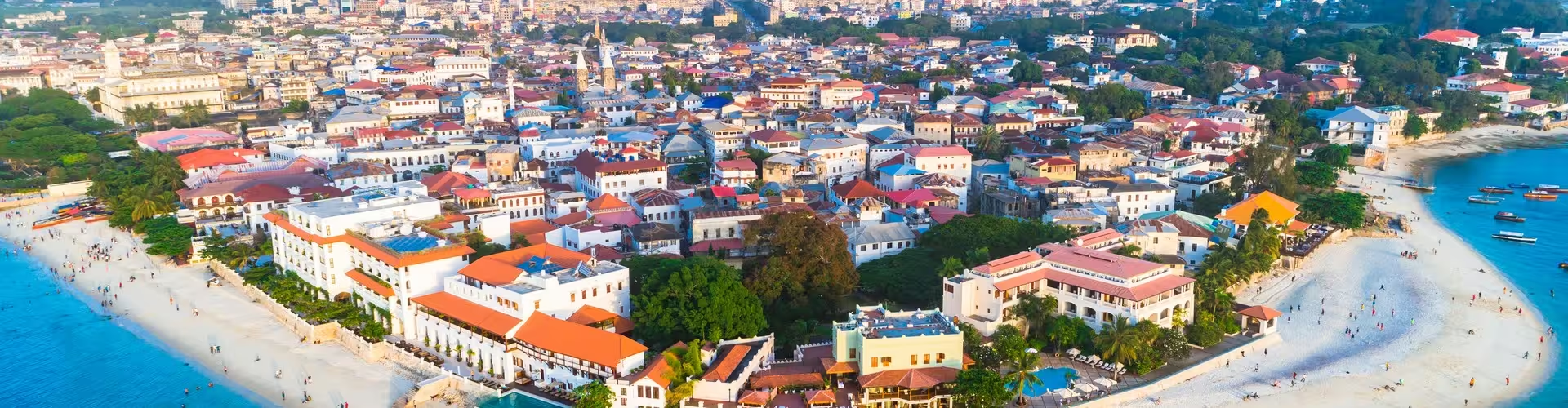
Stone Town, the historic heart of Zanzibar, is a labyrinth of coral stone alleys where the scent of cloves mingles with sea breeze from the Indian Ocean. This UNESCO World Heritage Site is not a museum behind glass, it is a lived city that blends Swahili, Arab, Persian, and Indian influences with a warm island rhythm. Travelers come to Stone Town for carved doors and storied squares, then stay for markets, music, coastal light, and the easy welcome of Zanzibar’s people.
The grand façade of the House of Wonders, known locally as Beit el Ajaib, rises beside the waterfront with high colonnades and airy verandas. Built in the nineteenth century, it symbolized modernity on the Swahili coast, a palace that introduced groundbreaking features to the archipelago. Its scale and seafront setting make it the visual anchor of Stone Town. Even from the outside, the building tells the story of a cosmopolitan port where sultans welcomed ideas and goods from distant horizons. Standing on the plaza, you can look inland to the maze of streets or out to dhows tracing white wakes across the Indian Ocean. The House of Wonders matters because it concentrates the city’s layered identity in one dramatic silhouette.
Next door to the palace stands the Old Fort, a sturdy ring of ochre walls that once defended the harbor. Walk through the arched gateway and you find a courtyard alive with craft stalls, music, and performances. Evening brings soft lights and a gentle hum of conversation. The Old Fort remains a gathering place, a reminder that Stone Town has always balanced trade, culture, and community. Climb the ramparts for a short view across the waterfront, then settle into the courtyard for a cool drink before strolling to the food stalls of the gardens beyond.
As the sun slides toward the horizon, Forodhani Gardens transforms into the most atmospheric food market in Stone Town. Lanterns glow, grills hiss, and vendors arrange skewers of seafood beside coconut pressed sugarcane juice. Join the queue for Zanzibar pizza, a savory parcel folded and fried until crisp, or choose octopus freshly charred and bright with lime. The setting is irresistible, the Indian Ocean on one side, the silhouettes of the House of Wonders and the Old Fort on the other, and a promenade where families and friends gather to talk and taste. For many visitors, an evening at Forodhani Gardens becomes the memory that anchors the whole trip.
In the Mkunazini quarter, the Anglican Cathedral of Christ Church rises over the former Slave Market site. Inside the complex, memorials invite quiet reflection on a difficult chapter in the island’s history. The contrast between the bustle of nearby streets and the stillness of this place is striking. Visiting the Anglican Cathedral of Christ Church helps travelers understand the economic forces that shaped Stone Town and the moral turning points that redefined it. The stop is solemn, necessary, and handled with care by local custodians who share the story with dignity.
Facing the harbor, the Old Dispensary is a jewel of carved balconies, stained glass, and coral stone. Once a charitable pharmacy, it now stands as an architectural lesson in the meeting of cultures. Indian wooden craftsmanship, Swahili stonework, and Arab stylistic flourishes come together in harmony. Pause to admire the façade from across the street, then step inside to appreciate the cool interior and the rhythm of its arcades. The building’s grace explains why so many travelers fall for Stone Town, a city where daily life unfolds inside art.
A short walk inland leads to Darajani Market, the scent of cloves and cinnamon rising from burlap sacks. Fishmongers arrange gleaming catches on ice, fruit sellers stack pyramids of mango and pawpaw, and spice traders scoop blends into paper packets. This is the place to buy your island pantry, to listen to the music of bargaining, and to greet vendors with a simple jambo. A visit to Darajani Market adds flavor to your itinerary, literally and figuratively, and gives you a taste of daily Stone Town life that no postcard can capture.
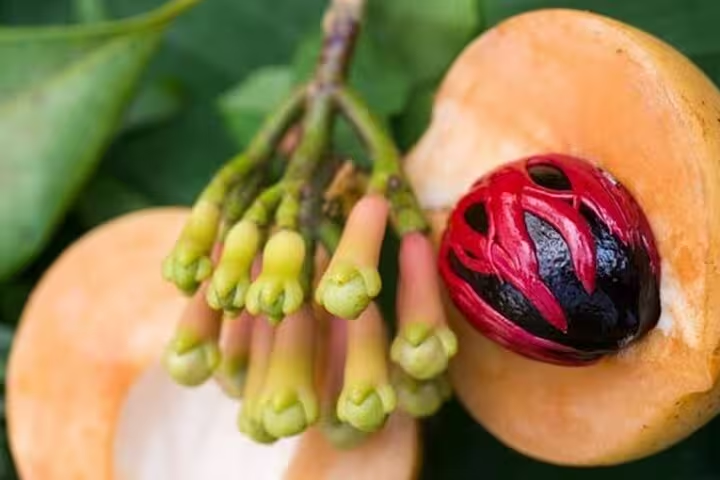
Beyond the alleys, experiences unfold on the water and in the countryside. A sunset dhow cruise along the waterfront gives you the best perspective on the skyline, sails catching golden light as you drift past the Old Fort and the House of Wonders. Inland, a classic spice tour reveals the island’s agricultural soul. Guides lead you through small farms where nutmeg, vanilla, cloves, and cardamom grow side by side, inviting you to taste, touch, and smell each plant. Offshore, Prison Island, also known as Changuu, rewards day trippers with turquoise shallows, coral snorkeling, and encounters with giant tortoises that amble across shaded enclosures. Each outing complements the time you spend wandering Stone Town, giving your journey a generous arc from city to sea.
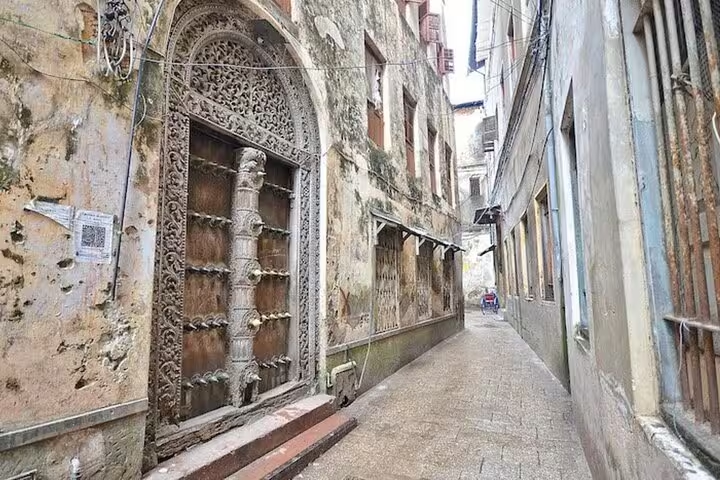
No walk in Stone Town is complete without noticing its famous carved doors. Brass studs catch the sun, Qur’anic inscriptions and floral motifs curl across lintels, and side streets hide shaded courtyards where jasmine climbs old walls. These details are not background decoration, they are the city’s emotional vocabulary. Look closely and you learn to read the symbols, a fish for prosperity, a lotus for purity, geometric borders for protection. Every doorway becomes a portrait of a family, a craft guild, or a merchant’s ambition. This is the quiet pleasure of Stone Town, everyday beauty revealed step by step.
Stone Town is a rare blend. Historic architecture meets salt air, lively markets meet hushed courtyards, and the glow of evening prayers mixes with children playing on the seafront. You feel connected here, to stories carved in doors, to recipes flavored with cloves, to a waterfront skyline that speaks of sailors and spices. Visiting Stone Town satisfies different travelers at once, photographers, food lovers, heritage seekers, and dreamers who like to wander without a fixed plan. It is a city that invites you to slow down and look closely, then rewards you with moments that feel personal and timeless.
Plan a day that flows, a morning wander past the Old Dispensary and the House of Wonders, a midday tasting at Darajani Market, an afternoon boat to Prison Island, and a night under lanterns at Forodhani Gardens. When you are ready to shape your time with knowledgeable guides and easy logistics, Toursxplorer.com can help you curate walks, spice farm visits, and coastal cruises that match your pace. With thoughtful planning, Stone Town becomes more than a stop before beaches, it becomes the heart of your Zanzibar journey.