
The name Serengeti National Park evokes open skies, tawny grasslands, and the pulse of movement across ancient routes. In northern Tanzania, where volcanic highlands soften into sweeping plains, this legendary park offers one of the world’s most complete wildlife spectacles. From the thunder of hooves during the Great Migration to quiet dawns among granite kopjes, every hour reveals another scene on nature’s grandest stage.
The Great Migration is the park’s signature event, an annual cycle that draws more than a million wildebeest, hundreds of thousands of zebra, and antelope across the ecosystem in search of new grass. It is not a single moment, it is a rhythm, shifting through months and regions. In the south, the herds gather around Ndutu and the short grass plains from December to March, calving in vast numbers while predators circle. By late spring they sweep into the Central and Western zones. In early to mid summer many press north toward the Mara River, then linger between Tanzania and Kenya until the first storms signal the turn back south.
Two rivers frame the season’s most dramatic scenes. In the far north, the Mara River can be calm at sunrise, then charged with urgency by noon, as lines of wildebeest launch into strong currents and crocodile patrolled pools. In the west, the Grumeti River offers its own crossings earlier in the dry season, a different mood with gallery forests and oxbow bends. Patience is essential. Your guide will choose safe viewpoints, and sometimes waiting in silence is the surest path to a moment you will never forget.
The Central region around the Seronera Valley is the Serengeti’s classic heartland, a mosaic of acacia woodland, river lines, and granite outcrops called kopjes. Here, resident wildlife thrives all year. Lions lounge on warm stone, leopard drape in sausage trees, and cheetah use low ridges as vantage points to scan for gazelle. The valley’s permanent water draws giraffe, buffalo, and elephant, while sunlit reeds hide reedbuck and bushbuck. Even when the herds travel elsewhere, the Central Serengeti remains a dependable canvas for big cat encounters and varied birdlife.
Southwest of Seronera, the Moru Kopjes rise like islands from the grass. They host ancient rock art and give shelter to elusive black rhinoceros that browse in nearby thickets. To the east, the Simba Kopjes offer wide views, especially beautiful in the late afternoon when the light turns soft and the rocks glow. Stop, listen, and you may hear rock hyrax squeaks echo across the granite while a martial eagle passes overhead.
Stretching toward Lake Victoria, the Western Corridor feels wilder and more linear than the central plains. Gallery forests follow the Grumeti River, hippos grunt from sandy banks, and topi lean into the wind on open ridges. When the Migration pushes west in May and June, the corridor becomes a moving river of animals, flanked by predators that work the edges, hyena clans, lion coalitions, and stealthy leopard near the woodland seams. The sunsets here are long and burnished, ideal for photographers who love layered horizons.
From Kogatende to the Lamai Wedge, the Northern Serengeti blends rolling hills with patches of acacia and wide Mara River bends. Wildlife is abundant from July to October, then again in short grass months when the north turns calm and contemplative. This is the ideal region for travelers who seek time with elephant families and big cats, then unhurried afternoons where only wind and birdsong share the riverbank.
The Southern Serengeti and the Ndutu area are the Migration’s nursery. From late December through March, green short grass nourishes hundreds of thousands of wildebeest mothers. Calving peaks in a brief window, drawing cheetah, lion, and hyena. The drama is real, yet the plains feel gentle at dawn, with larks rising, jackals coursing, and mirage light rippling over the horizon. If you want behavior rich sightings, stalking hunts, new calves finding their feet, this season is deeply rewarding.
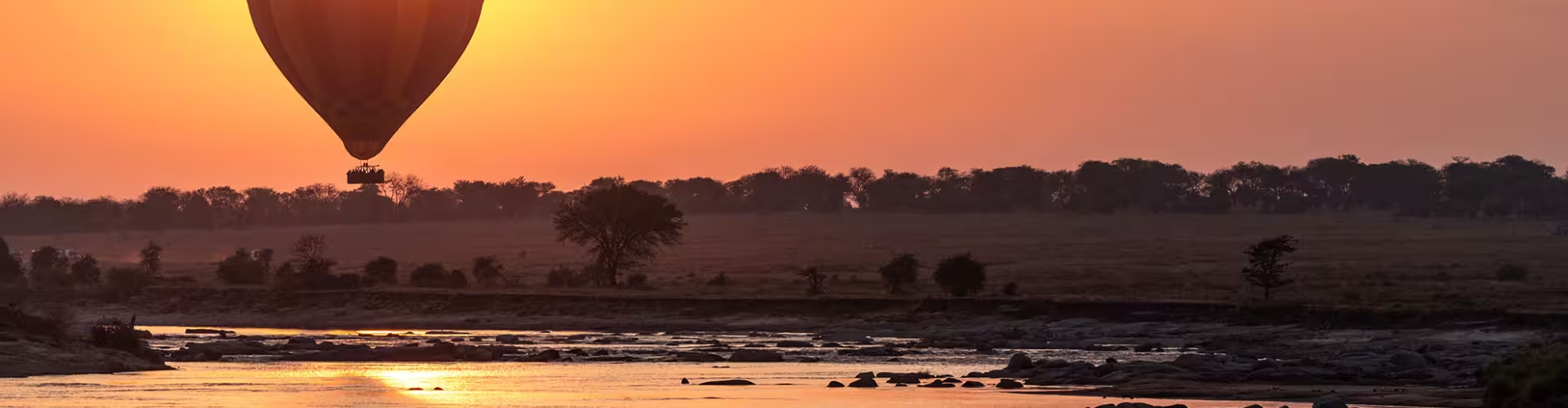
Beyond game drives, the park offers singular vantage points. A hot air balloon safari lifts at first light, rising over meandering rivers and herds that knit and part like living currents. Guided nature walks in designated areas tune you to smaller miracles, tracks in soft dust, medicinal shrubs, termite architecture, weaver nests. Night falls with orchestral sound, lions calling across distances, hyenas whooping, pearl spangled stars that remind you how open this landscape really is.
Serengeti National Park anchors a larger protected mosaic that includes community lands and adjoining reserves. Responsible travel supports conservation through park fees, ethical guiding, and choices that respect local livelihoods. Conversations with guides and camp staff often illuminate the human context, modern pastoralism, education projects, and the daily work required to protect wildlife corridors. Safaris here are richer when you see both the animals and the people who safeguard their future.
Tanzania pairs the intimacy of close predator encounters with the scale of the Great Migration. In one journey you can witness river crossings, spot leopard in the Seronera Valley, drift over plains on a hot air balloon safari, and sit beside a campfire under galaxies of stars. The experience is both elemental and comfortable, with professional guiding, character filled camps, and the timeless cadence of animals on the move. It is a place that lingers long after you leave, a living lesson in wildness and connection.
Plan a route that follows the seasons, then let the park surprise you. Whether you want to focus on Mara River crossings, spend days with big cats on the kopjes, or watch the calving plains of Ndutu turn emerald after the first rain, your ideal pace is possible. When you are ready to shape an itinerary with trusted guides and well placed camps, Toursxplorer.com can help you weave the best of the Serengeti National Park into a smooth, memorable journey.