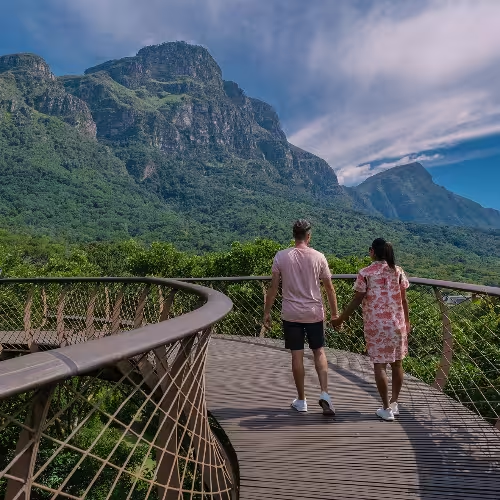
Last updated:


Stellenbosch suits a trip that combines historic buildings with wine country. In South Africa's Western Cape, the town sits beside the Eerste River below Stellenbosch Mountain, about 50 km east of Cape Town.
The historic buildings and university give a town-focused visit a clear starting point. Cape Dutch buildings are part of the historic streetscape, while Stellenbosch University's campus and buildings occupy much of the centre.
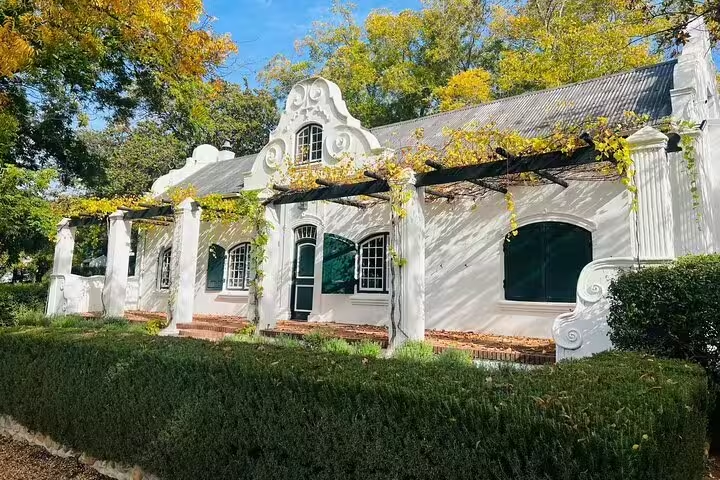
A walk focused on architecture also puts the town's history in context: Simon van der Stel founded it in 1679. The oaks he planted explain the nickname Eikestad, meaning City of Oaks in Afrikaans and Dutch. For a separate nature outing, Jonkershoek Nature Reserve is about 9 km east of town.
Two days is a useful plan if you want time for both the town and its wine estates. The first can focus on Cape Dutch buildings and the university area; the second can be devoted to wine tasting. That separates the town visit from a full day at the estates.
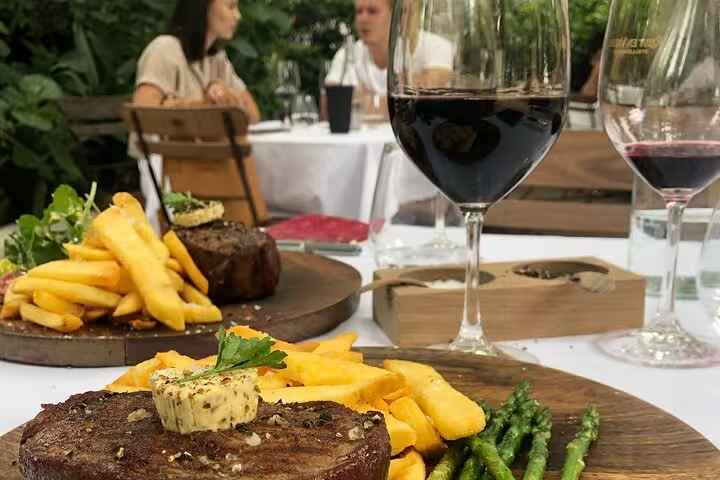
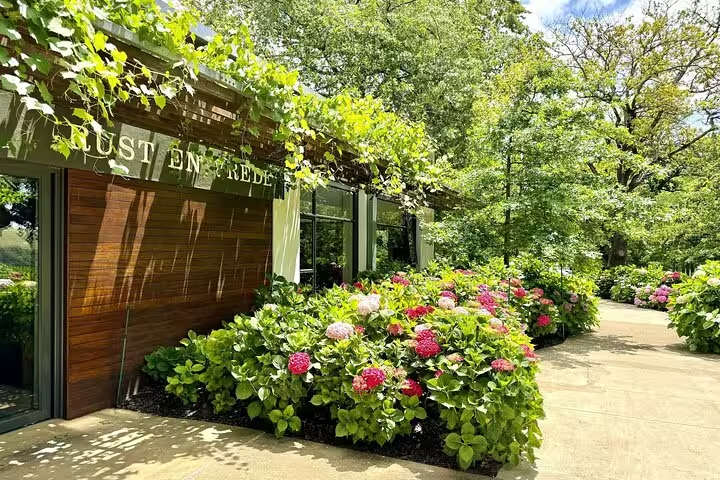
The full-day Stellenbosch wine tour visiting four estates lasts 8 hours and includes a guide, return transport, tastings at Waterford, Rust en Vrede, Tokara and Delaire Graff, and guided vineyard and garden walks at each estate.
Wine has a local history to explore alongside the tastings. Frans Malan of Simonsig, Niel Joubert of Spier and Spatz Sperling of Delheim founded the Stellenbosch Wine Route in 1971. Pinotage combines Pinot noir and Cinsaut; Abraham Izak Perold created it in South Africa in the mid-1920s. Its name draws on Hermitage, the name used for Cinsaut in South Africa at the time.
Summer suits a trip where dry weather matters, provided you are comfortable with heat. Stellenbosch has a Mediterranean climate: summers are hot and dry, while winters are cool and wet. For walking, that means weighing summer heat against winter rain. A winter visit makes more sense if cooler conditions matter more to you than avoiding wet weather.
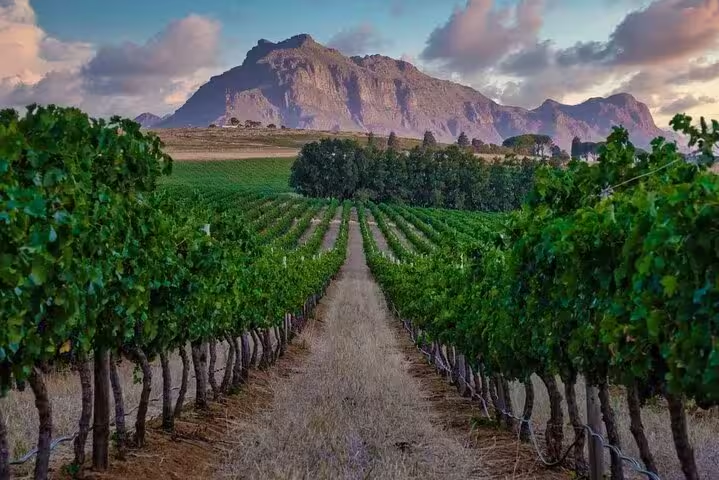
It helps to plan the town centre and outlying visits separately. The university occupies much of the centre, while Jonkershoek Nature Reserve lies about 9 km east of town. Stellenbosch railway station lies east of the central business district. For an estate-focused day, the linked Stellenbosch wine tour includes return transport.
Stellenbosch, Paarl and Franschhoek fit a wider wine-country itinerary because their valleys together form the Cape Winelands. A trip covering these places suits a day devoted to the region rather than to Stellenbosch alone.
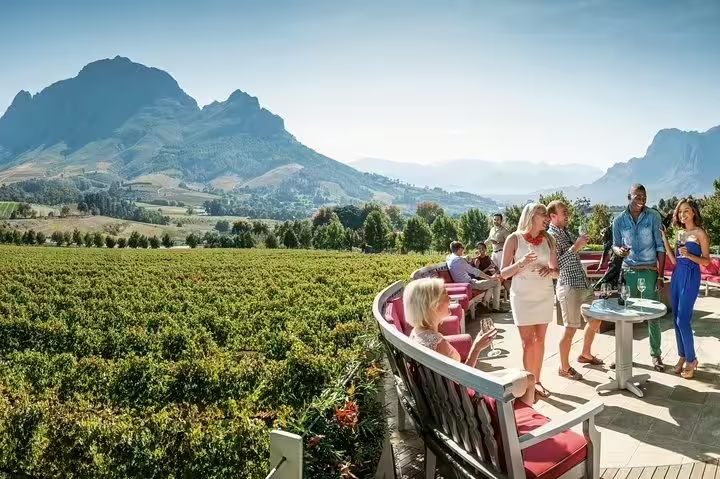
The private Cape Winelands tour of Stellenbosch, Paarl and Franschhoek lasts 8 hours and 30 minutes, with a private certified guide, tastings at up to five estates, biltong and cheese pairings at selected estates, a Huguenot Monument visit in Franschhoek and orientation visits to the three town centres.
The Cape Winelands day trip from Cape Town with wine tasting lasts 8 hours, with a licensed guide and driver, tastings at up to five estates, biltong and wine pairing at Marianne Wine Estate, cheese and wine tasting at Fairview Estate, a Stellenbosch orientation tour and air-conditioned transport.
The valley town has an average elevation of 136 metres.
To the east and southeast are the Jonkershoek, Drakenstein and Simonsberg mountains.
About 63.8% of residents spoke Afrikaans at home.