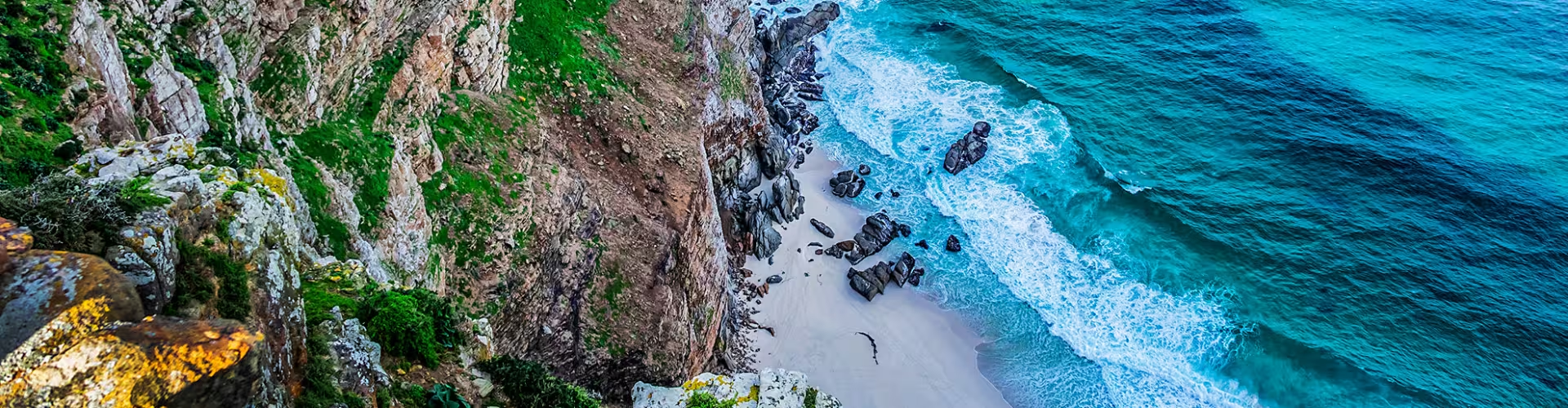


The Cape of Good Hope, on the far reaches of the Cape Peninsula in Cape Town, is a landscape of drama and light. Granite cliffs plunge into white capped surf, sea birds wheel on the wind, and fynbos perfumes the trails that lead to postcard vistas. Inside Table Mountain National Park, this wild headland is more than a waypoint on old maritime charts. It is a place to feel the scale of nature, to walk among rare plants, and to stand where history and myth blend with the pulse of the ocean.
At the southeastern tip of the promontory rises Cape Point, crowned by the nineteenth century Old Lighthouse. A footpath climbs the ridge; stone steps reveal sweeping views of the Atlantic Ocean and the rolling curves of the Cape Peninsula. The light once guided ships along hazardous waters. Today its terrace is one of the finest viewpoints in Table Mountain National Park, a place where you can trace the coastline from Hout Bay to far off mountain silhouettes.
For a gentler ascent, the Flying Dutchman Funicular glides to the lookout level in minutes. The short ride is popular with families and those saving energy for longer trails. At the top, walk the cliff path to viewpoints where cormorants skim the swells and, in winter, whales sometimes thread the bays.
Southwest of Cape Point, the road ends at the famous Cape of Good Hope sign. Behind it, a rugged tableau of boulders and surf stages the ultimate travel photograph. This is the symbolic cape that captured the imagination of early navigators, a marker of passage between worlds. Spend a few extra minutes exploring the shoreline. Tide pools host anemones and tiny fish, and the coastal path begins just beyond the parking area.
From the Cape Point parking area, a steep wooden staircase leads down to Diaz Beach, an arc of pale sand tucked beneath towering cliffs. It feels remote; waves thunder, gulls scatter, and footprints vanish on the next tide. Swimming is not advised due to strong currents and cold water. Come for the solitude, the sculpted dunes, and the way the light changes the cliff faces from silver to ochre as clouds pass.
The Cape of Good Hope lies within the Cape Floral Kingdom, the smallest yet most biodiverse floral kingdom on Earth. Low growing fynbos thrives in sandy soils and sea breeze. In late winter and spring, proteas and ericas bloom in subtle pinks and fiery reds. The air carries hints of honey and spice. Look closely and you will see sunbirds dipping for nectar, beetles gleaming on petals, and the intricate architecture of tiny leaves adapted to coastal wind.
On the plains and along the road edges, you may spot ostrich pairs striding between shrubs, bontebok grazing, or a shy Eland crossing at dusk. Chacma baboons frequent the area. Watch them from a respectful distance and secure food in your vehicle. Along the cliffs, look for Cape cormorants, gulls, and in the right season, southern right whales cruising offshore.
European navigators rounded this cape on the route to the East. Storms gave it a fearsome reputation; safe passage brought hope of new trade. The romantic tale of the Flying Dutchman ghost ship still clings to the mists on certain afternoons. While the true southernmost point of Africa lies at Cape Agulhas, the Cape of Good Hope remains a powerful symbol of the meeting of currents and cultures, where journeys began and ended for centuries.
West of the main roads, the coastline holds reminders of hard seas. The Olifantsbos area offers signposted shipwreck trails, where rusted ribs of stranded vessels rest on tidal flats. These paths are gentle and atmospheric, perfect for walkers who enjoy the blend of nature and maritime history.
The drive to the Cape of Good Hope can be as memorable as the destination. Many visitors follow the coastal curve along Chapman’s Peak Drive, a spectacular cliffside route carved into mountain rock. Others loop via Simon’s Town and stop at Boulders Beach to see the famous penguin colony before turning toward the reserve gates. Either way, the route sketches a portrait of the Cape Peninsula: fishing harbours, sentinel mountains, and surf breaks that glitter in clear light.
The Cape Peninsula distills the essence of South Africa’s wild coast. At the Cape of Good Hope, cliffs and sea arrange themselves with theatre like grace. Trails invite exploration without fuss. History lingers in the wind. You can touch warm stone, listen to wave and bird, and look across water that stretches unbroken to the horizon. Few places offer such a complete meeting of nature, heritage, and simple joy in the outdoors.
Ready to pair cliff top viewpoints with fynbos trails and a coastal drive that feels made for storytelling. With Toursxplorer.com, it is easy to arrange timed entry, a comfortable vehicle, and a guide who knows the quiet turn offs and the safest paths in changing weather. Add a stop for penguins at Boulders Beach or a sunset roll along Chapman’s Peak Drive, and your Cape of Good Hope experience becomes a day you will replay long after you return to the city.