
Across sun warmed savannahs and river carved forests, Kruger National Park stretches through Mpumalanga and Limpopo, inviting travelers into one of the most celebrated wildlife sanctuaries on earth. This vast wilderness is a living theatre of ecology and culture, where early morning safari drives follow lion tracks, afternoons linger beside the Sabie River, and evenings close with hippo calls floating up from oxbow pools. For many, a journey to Kruger becomes the definition of an African adventure, rich in sightings, layered in history, and generous with space to simply be.
Travelers come for the Big Five, then leave with a deeper love for the park’s entire web of life. Elephant families move between marula and leadwood, browsing with quiet assurance. Buffalo herds churn dust as they cross riverbeds. White and black rhinos leave hieroglyphs of tracks in the sand. Leopards slip along the thickets at dusk, while lions rest on tawny plains and greet the night with thunderous roars. Daily game drives reveal not only headline mammals, but also giraffe with oxpeckers, zebra in tight formation, and shy antelope that keep the bush alive between predator encounters.
Part of the magic of Kruger National Park is the variety of ecosystems. Knob thorn and bushwillow dominate the central grasslands around Satara, an area known for frequent lion and cheetah activity. Riverine forests around Lower Sabie and Skukuza concentrate wildlife through the dry months. Northwards, mopane scrub opens into baobab country near Pafuri, where the Luvuvhu River and fever tree forests offer exceptional birding. Along the Olifants River, dramatic viewpoints give sweeping scenes of elephants at water and eagles riding thermals.
Beyond wildlife, the park holds quiet records of human history. The hilltop stone walls of Thulamela, in the far north, speak of a late Iron Age trading center with connections that reached the Indian Ocean. Near Phalaborwa, Masorini reveals iron smelting sites where skill and industry shaped an early economy. These places anchor Kruger National Park not just as a refuge for animals, but as a landscape threaded with the stories of people who navigated and nurtured it for centuries.
Modern conservation in Kruger stands on the dedication of rangers, scientists, and communities. Anti poaching units, ecological monitoring, and cooperative projects with neighboring private reserves keep the park resilient. For visitors, this means sightings that are both thrilling and responsible, with guiding that places behavior, habitat, and ethics at the center of each encounter.
The Sabie River, Olifants River, Letaba, and Luvuvhu River shape the park’s rhythm. Along their banks, nyala browse in shade, water thick knees call from sandbars, and crocodiles warm themselves in the afternoon light. The Lebombo range rises on the eastern horizon, a blue seam that catches sun and storm. In the far north near Pafuri, fever tree forests glow almost luminous in the golden hours, a signature scene that photographers love.
Classic camps anchor the journey. Skukuza is the main hub with river views and leafy walks. Satara sits in open country suited to big cats. Lower Sabie overlooks a wide watercourse where elephants and hippos gather. Letaba celebrates elephants in a restful setting, while Olifants offers balcony like vistas high above the river. Each camp brings a distinct mood, all united by the simple pleasure of a braai fire, a nightjar call, and stars bright enough to travel by.
Stroll river loops lined with jackalberry and sycamore fig. Watch saddle billed storks work the shallows, then join an evening guided bush walk for a fresh perspective on tracks and micro life that hide in plain sight.
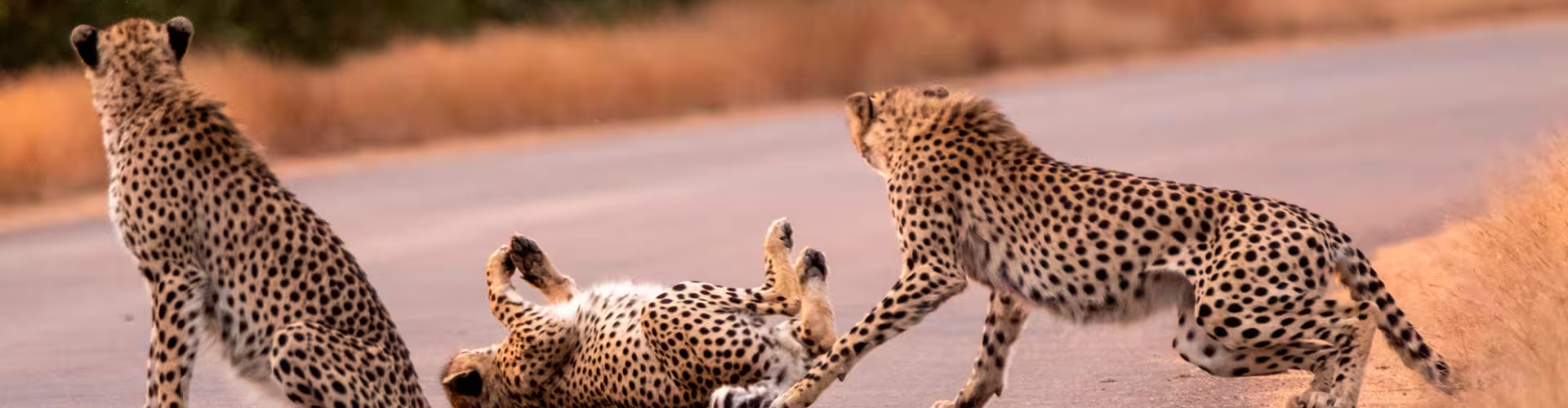
These grasslands are famous for predator prey drama. Loop roads near camp frequently deliver lion, cheetah, and hyena action. Open horizons make for crisp, cinematic photography.
Follow the river road at dawn and dusk for a parade of sightings. Crocodile Bridge Gate sits to the south, giving access to productive thornveld and seasonal pans.
Pause at overlooks where the Olifants River cuts through rock, then spend time at Letaba exploring the elephant hall and watching herds move ghost quiet through the riverside woodland.
At the edge of Limpopo, this region rewards patient travelers with rarities, from Pel’s fishing owl to herds of nyala browsing in the shade of giant trees. In green season, birdlife peaks and the forest pulses with color.
The pairing of Mpumalanga and Limpopo offers the best of both worlds, a national park with immense scale and a constellation of neighboring private lands that refine the experience. In Kruger National Park, long drives paint the breadth of an ecosystem, from fever tree forests to lion lined floodplains. In the private reserves, predator encounters unfold at close quarters, with expert trackers guiding respectful approaches. Together, they create a journey that is generous in sightings, authentic in feel, and unforgettable in rhythm.
When you can almost hear lions calling across the grass and see elephants throwing dust in the late light, it is time to plan. On Toursxplorer.com, you can match camps to your style, blend self drive freedom with guided expertise, and add nights in Sabi Sand or Timbavati for variety. Your safari in Kruger National Park should feel thoughtful, unrushed, and full of the moments you came for.