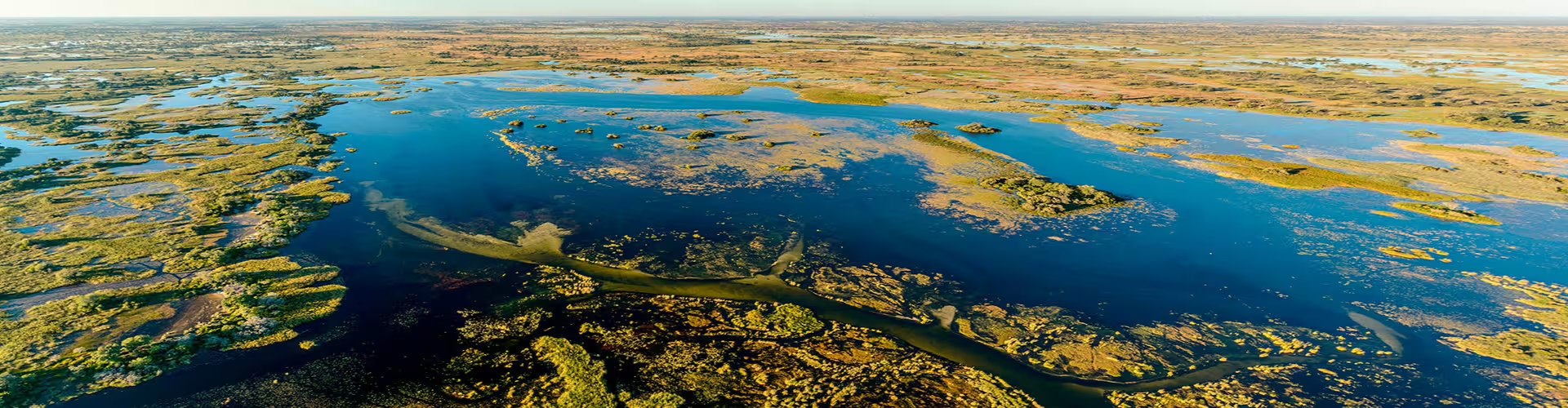


The North-West District of Botswana gathers some of Africa’s most compelling landscapes into a single journey. Centered on the Okavango Delta, and anchored by Maun as the friendly safari hub, the region blends glassy lagoons, island woodlands, and desert edges with living cultures and deep time stories. Travelers come for Botswana safaris and stay for quiet moments on reed lined channels, sunrise game drives across floodplains, and evening conversations under a sky crowded with stars.
The Okavango Delta is the district’s heartbeat. Rain that falls far in Angola moves south and spreads across Kalahari sands, creating a seasonal wetland of lagoons, palm islands, and papyrus fringed channels. The flood usually peaks in the middle of the year, which turns boat routes into mirror calm corridors where mokoro safaris glide at an unhurried pace. On island walks, guides point out spoor, medicinal plants, and the delicate nests of weavers. Wildlife adapts beautifully to this shifting map, elephants wade through lily pads, red lechwe skim the shallows, and shy sitatunga melt into reeds. Birdlife is superb, with fish eagles calling and wattled cranes stepping through wet meadows.
Along the eastern delta, the Moremi Game Reserve protects a patchwork of habitats that support strong predator and plains game populations. Morning drives often cross open pans where giraffes browse on acacia, zebras move in clean lines, and impalas spring through golden light. Leopards favor the denser thickets, lions patrol productive floodplain edges, and African wild dogs follow seasonal movements of antelope. The reserve’s network of loops and crossing points keeps the pace gentle, which allows time to watch behavior rather than simply tick lists. Water based outings and classic drives complement each other, one reveals textures and tracks at eye level, the other opens long views with dramatic skies.
Northwest of the delta channels, the Tsodilo Hills rise from the dry country with a presence that feels ceremonial. Rock shelters hold thousands of paintings in ochre and white, evidence of communities that gathered, hunted, and dreamed here for millennia. Guided routes thread past panels of eland, giraffe, and geometric motifs, while stories connect images to seasonal movements and ritual. The site’s atmosphere is as important as its archaeology, quiet paths, echoing rock faces, and a horizon that runs clean in every direction. Many visitors pair river time in the Panhandle with a day at Tsodilo, which offers a powerful balance of water and stone, present life and deep past.
Maun is where itineraries come together with easy logistics and genuine warmth. Outfitters arrange small group safaris, light aircraft transfers to remote camps, and gear checks for self drivers. Cafés and craft markets add a friendly pause between wilderness days. Upstream, the Okavango Panhandle carries water in a single broad channel that invites boat cruises, houseboat stays, and seasonal fishing for tigerfish with local guides. Villages like Shakawe and Sepopa sit along the banks, where papyrus walls sway and kingfishers flash in tight arcs over the current.
On the district’s eastern edges, the landscape thins into fossil pans and grassed flats. Nxai Pan is known for wide horizons and island groves of baobab. In green months, zebras arrive in sparkling herds and predators follow in crisp morning air. Dry months concentrate wildlife at remaining water, which sharpens sightings and makes tracking straightforward. Evenings are spectacular, the Kalahari’s stillness gathers, the temperature drops cleanly, and the Milky Way appears with a clarity that first time visitors rarely forget.
Travel here is richer with local insight. Bayei and Hambukushu communities along the water bring an intimate understanding of channels, fish runs, and safe passages. San trackers read the desert’s quiet grammar, prints, seed heads, insect lines, and wind. Respectful encounters, from village craft cooperatives to guided walks, help sustain livelihoods and keep knowledge alive. Choosing community based tourism makes the experience more personal and ensures that conservation benefits reach the people who care for these places every day.
Each season tells a different story. From November to March, rains paint the bush in fresh greens, migrant birds arrive, and antelope drop their young. Photography loves the cloud drama, paths can be muddy, and afternoons invite siestas before golden hour explorations. From May to October, cooler nights and dry air improve visibility, wildlife clusters near water, and the delta flood is often at its best for boating. Both self drive circuits and fly in itineraries work well. Self drivers appreciate Maun’s provisioning and mechanical support, while light aircraft hops open remote corners without long road hours. Soft sided luggage is the norm on small planes, which keeps loads safe and streamlined.
Set out as the first light catches the mopane leaves. Look for fresh tracks at pan edges, listen for francolins and doves, and scan termite mounds for cheetah silhouettes. Guides tune the route to recent sightings and the movement of herds.
Slip into a mokoro and feel the delta’s pace steady. Dragonflies stitch the air, jacanas step on lily pads, and tiny frogs sing from reed seams. The view is close and calm, which makes small details shine.
In the Panhandle and selected delta channels, late afternoon cruises gather hippo yawns, bee eater flights, and sunsets that fold from copper to violet. A slow throttle and patient piloting keep the moment gentle.
Dinner by lantern gives way to stargazing from deck chairs. With no city glare, constellations feel immediate. Guides trace the Southern Cross and the Magellanic Clouds, and stories travel easily in the cool night air.
The North-West District brings together three rare gifts, water that shapes a desert, wildlife that thrives in space and silence, and communities whose knowledge carries across generations. Days unfold with a rhythm that calms the mind, slow boats, unhurried drives, soft conversations by the fire. Travelers leave with clear photographs and clearer feelings, a renewed respect for wild places, and gratitude for the people who keep them alive.
Design a route that flows, Maun for easy starts, Moremi Game Reserve for classic drives, Okavango Delta for water light and island walks, Tsodilo Hills for art and memory, Nxai Pan for horizons and stars. When you are ready to turn ideas into smooth arrangements, explore curated experiences on Toursxplorer.com, then book with confidence and enjoy the space to breathe.