
Build your dream
experience

More to know about Chobe Simwanza
Chobe Simwanza Travel Guide
Snapshot
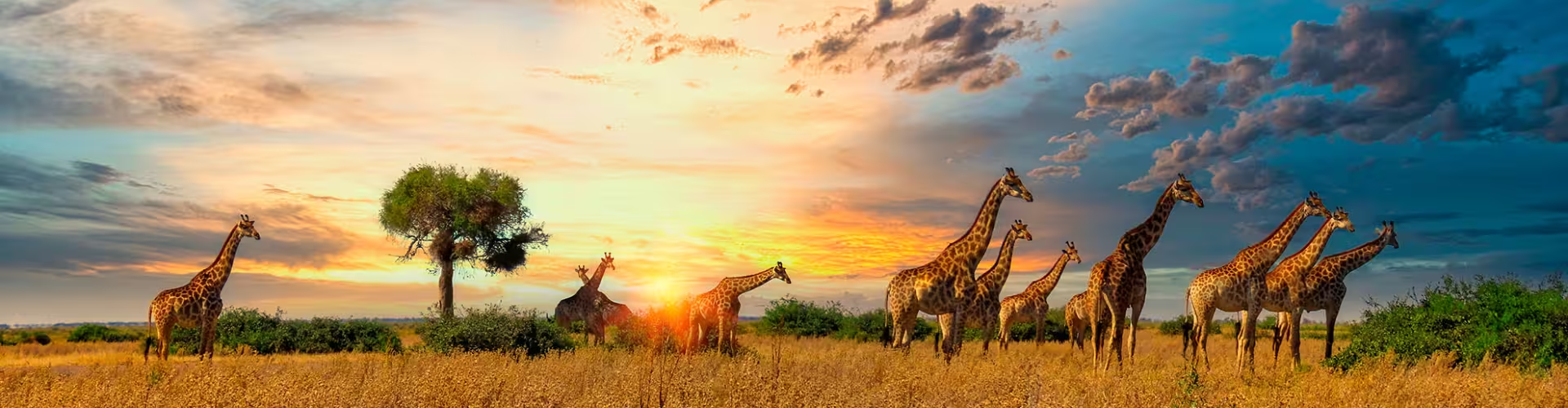
Chobe Simwanza is a destination defined by a wild, water shaped rhythm, where daily life and travel plans tend to follow light, temperature, and the movement of animals. The signature vibe is unhurried and observant, with travelers coming for close to nature moments and staying for the calm, open space feeling. Go now if you want a trip that prioritizes simple, high impact experiences, and if you prefer planning that stays flexible around weather and wildlife conditions.
🗺️ Geography and Logistics
📍 Orientation: Where is it within Botswana and the region?
Chobe Simwanza sits within Botswana’s northern travel circuit, a region that is often planned alongside other safari focused areas. Logistics typically revolve around reaching Botswana first, then continuing by road and local connections depending on your route. If you are mapping a broader itinerary, treat Chobe Simwanza as a nature forward base, and plan buffers for travel time because distances can feel longer than they look on a map.
🕒 When to Go: Seasonal breakdown
Timing is a decision between weather comfort, landscape conditions, and crowd levels. In warmer periods, midday heat can shape your schedule, so early mornings and late afternoons become the most comfortable windows for outdoor activities. In cooler periods, you may find longer comfortable hours, but pack layers because temperatures can shift quickly between sunrise and evening.
💰 Budget & Currency: Practical money tips
Budgeting for Chobe Simwanza is easiest when you separate essentials from experiences. Keep a daily baseline for transport, meals, and water, then add a flexible buffer for guided activities that can change with conditions. Carry some cash for small purchases and tips, and also keep a card option available where possible, since payment acceptance can vary by operator and location.
⭐ Essential Things to Do
Note: The experiences below are curated for planning value and can be adapted to different budgets and time frames. Where activities require guides or permits, confirm details locally and book ahead when possible.
1) Sunrise wildlife drive
Why it matters: Early morning is when the landscape feels most alive, and it is often the best time for sightings and softer light. The cooler air also makes the experience more comfortable and helps you stay attentive for longer. Practical tip: Start before the sun is fully up, and bring a warm layer plus a dust cover for camera gear.
2) Sunset viewing session
Why it matters: The end of day light can turn simple scenes into memorable images, and the atmosphere slows down in a way that feels distinctly Botswana. Sunset is also a natural time to reflect and reset your plan for tomorrow. Practical tip: Choose a spot with a wide horizon, arrive early to settle in, and keep a headlamp for the walk back.
3) Guided nature walk
Why it matters: Walking shifts your attention from big sightings to small details, tracks, plants, and bird calls. It adds depth to any safari itinerary because you learn how the ecosystem works rather than only observing it. Practical tip: Go with a qualified guide, wear closed shoes, and keep your voice low to preserve the experience.
4) Birdwatching session
Why it matters: Northern Botswana is known for rich birdlife, and birding adds a rewarding layer even when larger animals are less visible. It is also one of the most accessible experiences for travelers who prefer quieter activities. Practical tip: Bring binoculars, and plan around early morning or late afternoon when activity tends to increase.
5) Community respectful cultural touchpoints
Why it matters: Travel feels more meaningful when you understand the human stories connected to a place, not only the landscapes. Responsible interactions can support local livelihoods and help you learn etiquette that improves your whole trip. Practical tip: Ask before taking photos, and choose experiences that clearly explain how they benefit the community.
6) Photography focused outing
Why it matters: Chobe Simwanza rewards patient photography, with changing light, textures, and animal behavior that can unfold slowly. A dedicated session helps you avoid rushed snapshots and instead capture a cohesive set of images. Practical tip: Use a dust resistant bag, keep spare batteries, and prioritize steady shooting over constant lens changes.
7) Stargazing night
Why it matters: Away from heavy city lighting, the night sky becomes a major attraction, and it can be a highlight for travelers who want a quieter evening. It also balances busy daytime schedules with a calm, low cost experience. Practical tip: Let your eyes adjust for at least 15 minutes, and bring a light jacket even if the day was hot.
8) Slow day reset
Why it matters: Safari style travel can be intense, with early starts and long hours outdoors. A planned slower day helps you recover, sort photos, and stay energized for the rest of your route. Practical tip: Use the downtime to confirm next day pickup times and check weather conditions.
🚶 Curated Itineraries
⏰ The Highlights (1 Day): A fast paced best of route
Start with an early morning outing focused on wildlife and soft light, then return for breakfast and a short rest. In the late afternoon, schedule a second session that prioritizes scenery and photography, followed by a simple dinner and a stargazing wind down. Keep the middle of the day flexible, it is often the hottest period and a good time to recharge.
⏰ Deep Dive (2 to 3 Days): More time, more texture
Day 1 is for orientation, an early wildlife session, then a sunset focused outing to learn the landscape. Day 2 adds a guided nature walk and a birding session, which builds understanding of the ecosystem beyond headline sightings. If you have Day 3, use it for a slower pace morning, a cultural touchpoint handled respectfully, and a final golden hour session to capture what you missed.
🍽️ Flavors of Chobe Simwanza
Food in Botswana often centers on hearty staples and straightforward preparation, which suits active days outdoors. What you eat may depend on where you stay and what is available locally, so keep expectations flexible and focus on freshness and hydration.
- Seswaa, tender slow cooked meat with a simple, savory profile. Ordering tip: Ask what it is served with today, sides can vary.
- Pap, a maize based staple that is filling and neutral, ideal with stews. Ordering tip: Pair it with the most flavorful sauce on the menu.
- Morogo, leafy greens with an earthy taste that balances richer dishes. Ordering tip: Ask if it is cooked mild or with spice.
- Vetkoek, a fried bread that is crisp outside and soft inside. Ordering tip: If fillings are available, choose a savory option for a more substantial snack.
- Grilled meats, often simply seasoned and satisfying after long outdoor hours. Ordering tip: Ask for the recommended cut, availability can change.
- Local tea or soft drinks, an easy way to reset between activities. Ordering tip: Keep a bottle of water with you as well, hydration is part of the plan.
🚌 Navigation & Transport
Getting around Chobe Simwanza is usually a mix of planned transfers and activity based transport. Walking can work for short distances where it is clearly safe and permitted, but many travelers rely on arranged rides for longer stretches and for reaching nature areas. Confirm pickup points in advance, keep offline directions if mobile service is limited, and prioritize safety by avoiding unplanned night walks outside well used areas.
🌄 Beyond the Center: Day Trips
Day trips depend on road conditions and your base location, so confirm realistic travel times locally. Build in extra time for wildlife related slowdowns and photo stops.
- Nearby riverfront viewpoints, ideal for changing light and relaxed observation. Travel time: varies by starting point. Reason to visit: scenery and photography.
- Protected wildlife areas in the broader Chobe region, a natural add on for safari travelers. Travel time: varies by route. Reason to visit: expanded wildlife viewing opportunities.
- Cross border style regional hubs, useful if your itinerary links multiple countries in southern Africa. Travel time: varies by border and road conditions. Reason to visit: logistics, supplies, and onward connections.
✅ Insider Tips for Travelers
- Plan around the day’s temperature. Schedule active outings early and late, and keep midday for rest and logistics.
- Keep your itinerary flexible. Wildlife and weather do not follow a timetable, and the best moments are often unplanned.
- Pack dust protection for electronics, plus a small dry bag for sudden weather changes.
- Carry small cash for tips and small purchases, and do not assume card payments always work.
- Ask before photographing people, and choose community experiences that clearly explain benefits and etiquette.
- Confirm pickup times the day before. Small timing mismatches can ripple through a day of activities.
❓ Frequently Asked Questions, FAQ
Is Chobe Simwanza suitable for a short trip?
Yes, a one day plan can deliver a strong sense of the landscape if you focus on sunrise and sunset activities. Add a second day if you want a slower pace and more variety.
What is the best time of day for wildlife viewing?
Early morning and late afternoon are commonly the most comfortable and productive times outdoors. Midday heat can reduce activity and make long outings less enjoyable.
Do I need cash in Chobe Simwanza?
It is smart to carry some cash for small purchases and tips, even if you also have a card. Payment acceptance can vary depending on the operator and location.
How many days should I plan for Chobe Simwanza?
Two to three days is a good balance for most travelers, giving you time for wildlife, a walk, and a slower reset. If you only have one day, prioritize the early and late sessions in Chobe Simwanza.
Is it easy to get around Chobe Simwanza without a plan?
It is easier with pre arranged transport, especially for reaching nature areas and coordinating activity times. For safety and efficiency, confirm pickups and avoid unplanned travel at night in Chobe Simwanza.
This guide to Chobe Simwanza is written by Toursxplorer.com to help travelers plan logistics, timing, and experiences using destination specific structure. It focuses on practical decisions such as when to go, how to get around, and how to build a realistic itinerary.
Africa, Botswana, Chobe, Chobe Simwanza, Safari, Wildlife, Nature travel, Itineraries, Local food, Transport tips