




Whale Watching in Funchal: 5 Tours That Are Worth Your Time (and Money)
A discerning 2026 guide to the best cetacean encounters departing Funchal Marina, from agile RIBs to private sailboats and biologist-led expeditions.
Madeira sits at the convergence of warm and cold Atlantic currents approximately 978 kilometres southwest of Lisbon, creating one of Europe's most productive cetacean corridors. Over 28 species of whales and dolphins have been recorded in these waters, including resident populations of short-finned pilot whales and common bottlenose dolphins. But not every boat tour out of Funchal Marina delivers the same quality of encounter. This guide separates the five genuinely worthwhile options from the rest.
Why Does Madeira Have Such Exceptional Whale and Dolphin Sightings?
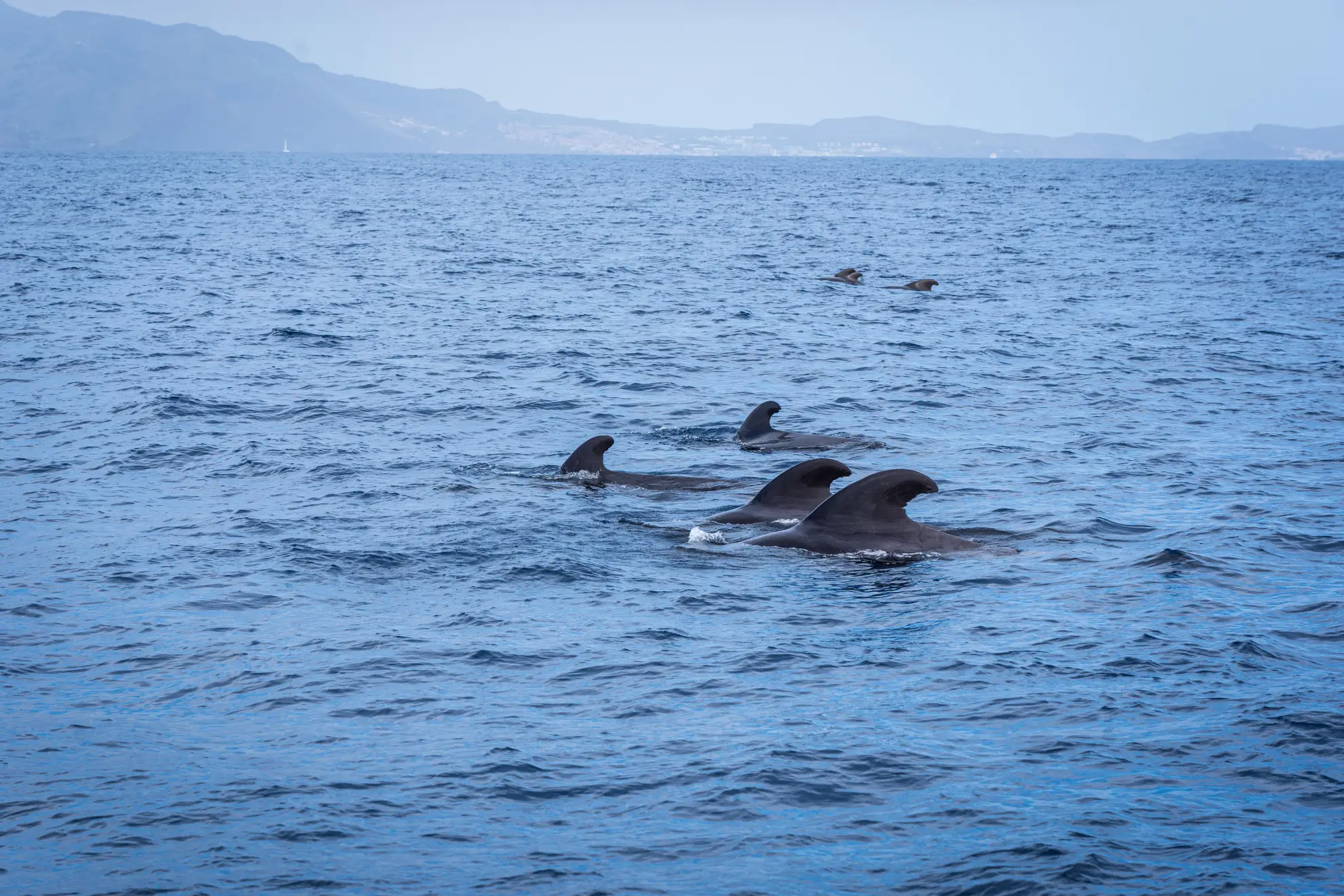
The waters surrounding Madeira belong to the Macaronesian biogeographic region, a zone where the Atlantic's mid-ocean ridge creates upwellings rich in squid and fish. This abundance sustains year-round resident populations of short-finned pilot whales (Globicephala macrorhynchus) and Atlantic spotted dolphins (Stenella frontalis), both of which are regularly encountered within 10 to 15 nautical miles of Funchal Marina.
Seasonal migrations bring additional species between April and October, including sperm whales (Physeter macrocephalus), fin whales (Balaenoptera physalus), and occasionally blue whales (Balaenoptera musculus). The island's steep submarine topography, dropping from the coast to depths exceeding 3,000 metres within a few nautical miles, concentrates deep-diving species unusually close to shore.
"Madeira is one of the only places in Europe where you can realistically encounter five different cetacean species in a single three-hour morning trip, without travelling more than 12 nautical miles from port." — Funchal-based marine research station, 2024 report.
A land-based vigia (lookout) system, originally developed by 19th-century whalers on the island, is still operated by tour operators today. Spotters stationed on clifftops above Funchal use telescopes and radio communication to direct vessels toward pod sightings in real time, significantly improving encounter rates. Reputable operators in 2026 report sighting rates above 95 percent on morning departures between May and September.
What Are the 5 Types of Whale Watching Tour in Funchal, and Which Suits You?
The phrase "whale watching tour" covers an enormous range of experiences in Funchal. A 40-passenger catamaran with a bar and sundecks delivers a fundamentally different encounter from a 10-person RIB running at 35 knots to intercept a sperm whale pod. Understanding these distinctions before booking is the single most useful thing a traveller can do.
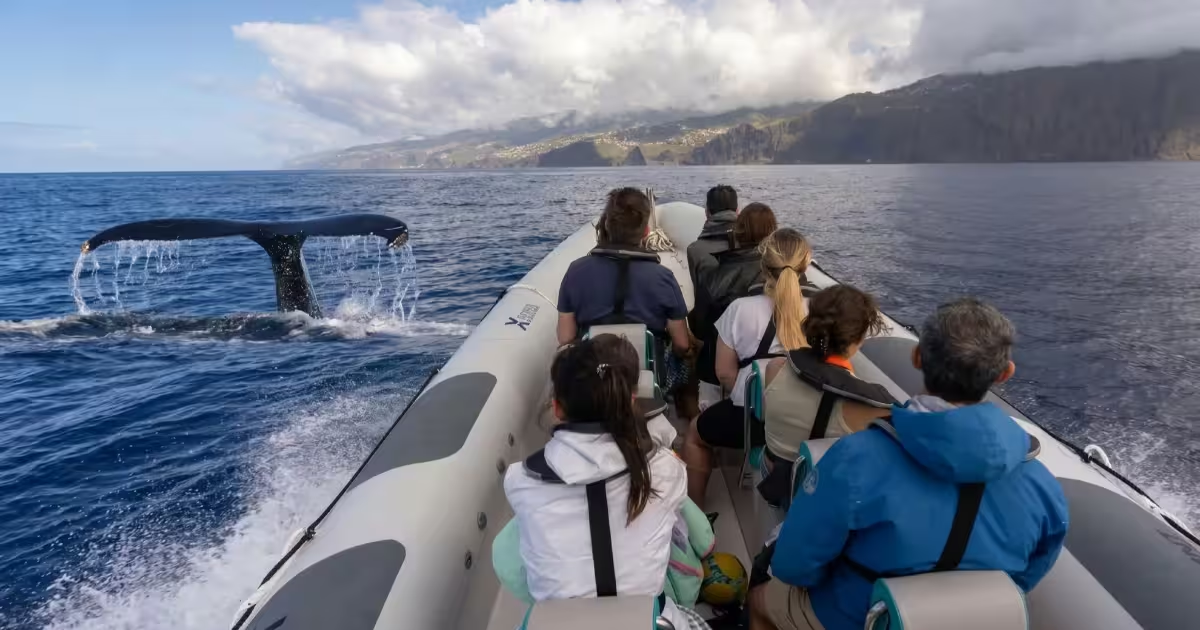
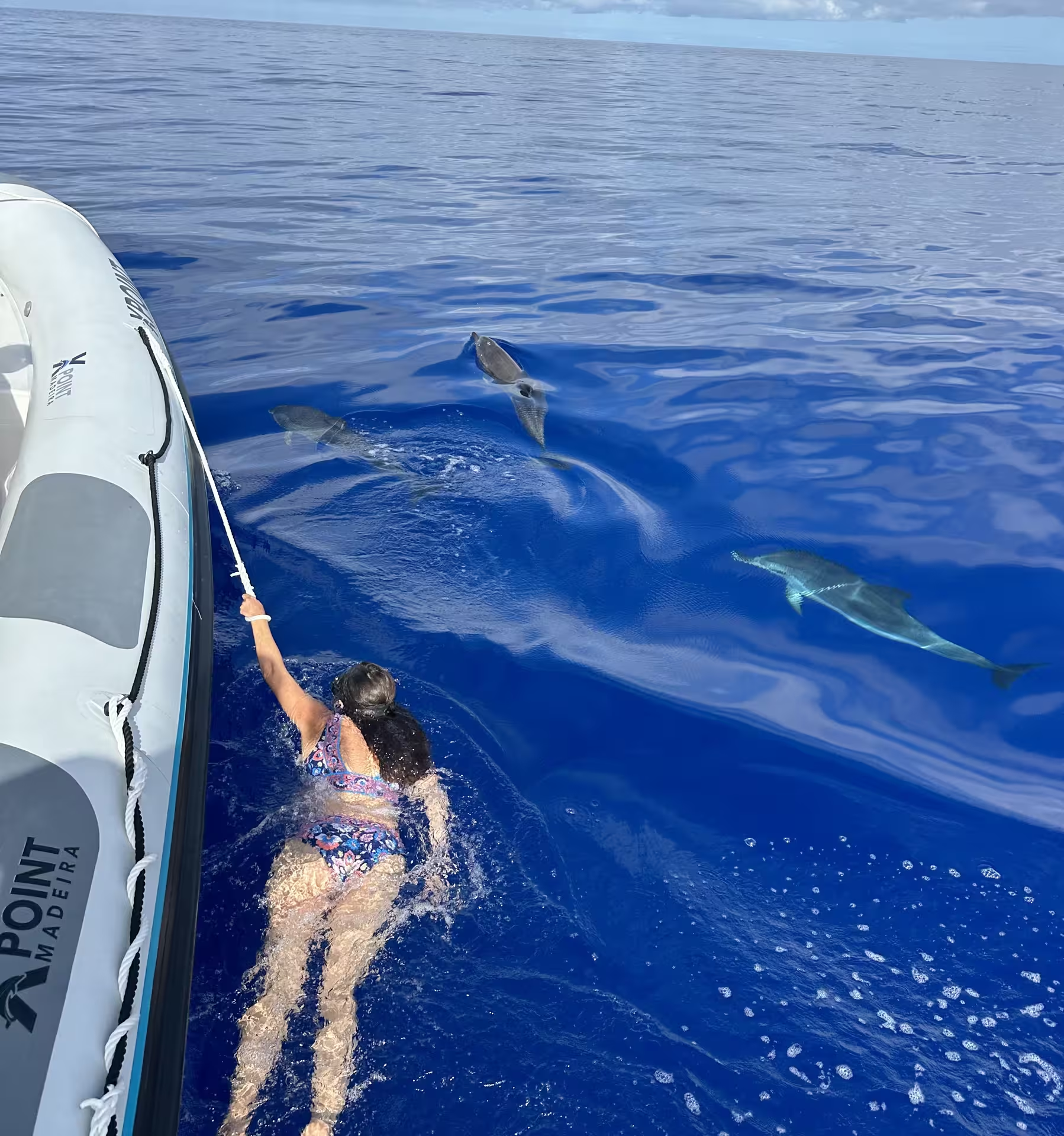
The Eco-Zodiac (RIB): Rigid inflatable boats sit at water level, covering distance quickly and manoeuvring close to cetaceans within the 50-metre minimum approach distance required by Portuguese maritime law. Passengers feel spray and swell directly, making these unsuitable for young children under seven or travellers prone to seasickness. For photographers and those seeking proximity, however, the low platform and 360-degree visibility are unmatched.
The Private Boat: Chartering a vessel for your own group eliminates the crowd entirely. Departure times are negotiable, the skipper responds to your group's pace, and snorkelling stops can be added after cetacean encounters. Costs are higher per booking but competitive when split across six to eight people.
The Biologist-Led Expedition: Several operators partner with researchers from the Madeira Whale Museum (Museu da Baleia) in Caniçal, 25 kilometres east of Funchal. Participants assist with photo-identification catalogues and behavioural observation logs. These tours operate under stricter approach protocols and typically carry no more than 12 passengers.
The Coastal Departure: Not all tours leave from Funchal Marina. Departures from Calheta, on Madeira's southwestern coast, or from the marina at Caniçal, access different cetacean habitat zones and avoid the harbour traffic of Funchal entirely. Travel time to sighting grounds is often shorter from these points.
The Combination Tour: Pairing whale watching with snorkelling, cave exploration, or a sunset sail is increasingly common. These suit travellers who want a full day on the water rather than a focused cetacean encounter.
"Choosing the wrong boat is the number-one reason visitors leave disappointed. A 90-minute express tour in a crowded vessel is not the same product as a three-hour expedition with a marine biologist aboard." — ToursXplorer editorial review, 2025.
One practical note on marina logistics: Funchal Marina (Marina do Funchal) is located at the base of Avenida do Mar, and street parking along the seafront is limited. The nearest covered car park is the Parque de Estacionamento do Lido, roughly 1.2 kilometres west along the promenade. Most operators recommend arriving at the marina 20 minutes before departure for safety briefings and equipment distribution. Late arrivals risk missing the briefing and, in some cases, the boat itself.
Is the 'No-Sighting' Guarantee Real, and What Should Responsible Whale Watching Look Like in 2026?
In 2026, the leading operators departing from Funchal Marina honour a free return trip policy if no cetaceans are sighted during a tour. This is not a universal industry standard, so confirm the policy in writing before booking. It applies almost exclusively to operators who invest in vigia lookout networks and carry trained marine naturalists, because those investments make the guarantee economically viable.
Responsible whale watching in Madeira is governed by Portuguese Decree-Law 263/81 and European Union Habitats Directive protocols. Key rules include: a minimum approach distance of 50 metres for dolphins and 100 metres for large whales, no more than three vessels around any single group of cetaceans simultaneously, engine throttling when within observation range, and a maximum observation time of 30 minutes per encounter. Operators holding the Cetacean Alliance certification display this visibly on their vessels and booking pages.
ToursXplorer lists only operators who comply with these standards. When browsing tours on the platform, look for certification badges and read operator descriptions carefully for references to naturalist guides, vigia networks, and approach protocols. These details distinguish an educational marine encounter from a simple sightseeing trip.
Seasickness is a legitimate concern on open Atlantic waters. Funchal's south-facing harbour provides some shelter, but swells of 1 to 2 metres are common between October and March. Booking a RIB tour in these conditions is not recommended for first-time ocean passengers. Larger, deeper-hulled vessels handle Atlantic chop more comfortably. If in doubt, check sea state forecasts via Windguru or the Portuguese Maritime Authority (DGRM) before departure day.
The Top 5 Whale Watching Tours Departing Madeira in 2026
Ready to book a cetacean tour that meets the highest standards? Browse all verified whale and dolphin watching departures from Madeira on ToursXplorer and filter by tour type, group size, and departure point.
Click hereHow to Choose the Right Whale Watching Tour in Funchal for Your Group
The five tours listed above cover distinct traveller profiles. Here is a concise matching guide based on the most common scenarios ToursXplorer editors encounter from reader enquiries.
Families with children aged 8 to 14: The three-hour naturalist-led boat tour from Funchal Marina offers the best combination of educational content, stable platform, and manageable duration. Avoid RIB tours for this age group unless children are experienced on open water.
Photographers and wildlife enthusiasts: The RIB swim-with-dolphins tour and the private Funchal charter offer the closest legal approach distances and the most manoeuvrable positioning around cetacean pods. Bring a lens with at least 200mm focal length and a waterproof housing or dry bag.
Couples and small groups seeking exclusivity: The private Calheta departure removes harbour crowds entirely and accesses less-trafficked southwest Atlantic corridors. The private Funchal charter is the more flexible option if snorkelling is a priority.
Travellers focused on responsible marine tourism: Look for the coastal departure and the standard three-hour tour for operators with documented vigia networks and naturalist guides. These formats prioritise observation quality over passenger volume.
One final note on timing: the months of April through October represent peak sighting season for migratory species, but resident pilot whales and bottlenose dolphins are present year-round. Booking morning departures before 10:00 consistently yields calmer sea conditions and better light for observation and photography.
Frequently Asked Questions
Madeira's waters host over 28 cetacean species. Year-round residents include short-finned pilot whales and Atlantic spotted dolphins. Between April and October, sperm whales, fin whales, and occasionally blue whales migrate through the area. Common bottlenose dolphins are also frequently encountered within 10 to 15 nautical miles of Funchal Marina.
Tours operate year-round, but April through October offers the highest species diversity due to seasonal whale migrations. Resident pilot whales and spotted dolphins are present in all months. Sea conditions are calmer between May and September, making those months preferable for passengers prone to seasickness on Atlantic swells.
Group boat tours from Funchal Marina typically range from 45 to 75 euros per adult for a three-hour departure. Private charters range from 350 to 650 euros for the full vessel depending on duration and operator. Prices in 2026 vary by tour type, group size, and included services such as naturalist guides or snorkelling equipment.
The three-hour naturalist-led group tour from Funchal Marina suits families with children aged eight and above. It offers a stable vessel, educational commentary, and a manageable duration. Private charters are also family-friendly and allow itinerary flexibility. RIB tours are not recommended for young children due to ocean swell exposure and high speeds.
In 2026, reputable operators with vigia lookout networks offer a free return trip if no cetaceans are sighted. This guarantee is not universal across all operators, so confirm the policy before booking. Operators with trained naturalists and land-based spotters report sighting rates above 95 percent on morning departures from May through September.
Yes, provided you choose an operator with a naturalist guide, a vigia spotter network, and a certified approach to cetacean welfare. Madeira's deep-water Atlantic habitat produces reliable sightings year-round, and the island's proximity to deep submarine canyons means encounters with large whales are possible within 12 nautical miles of Funchal Marina.