




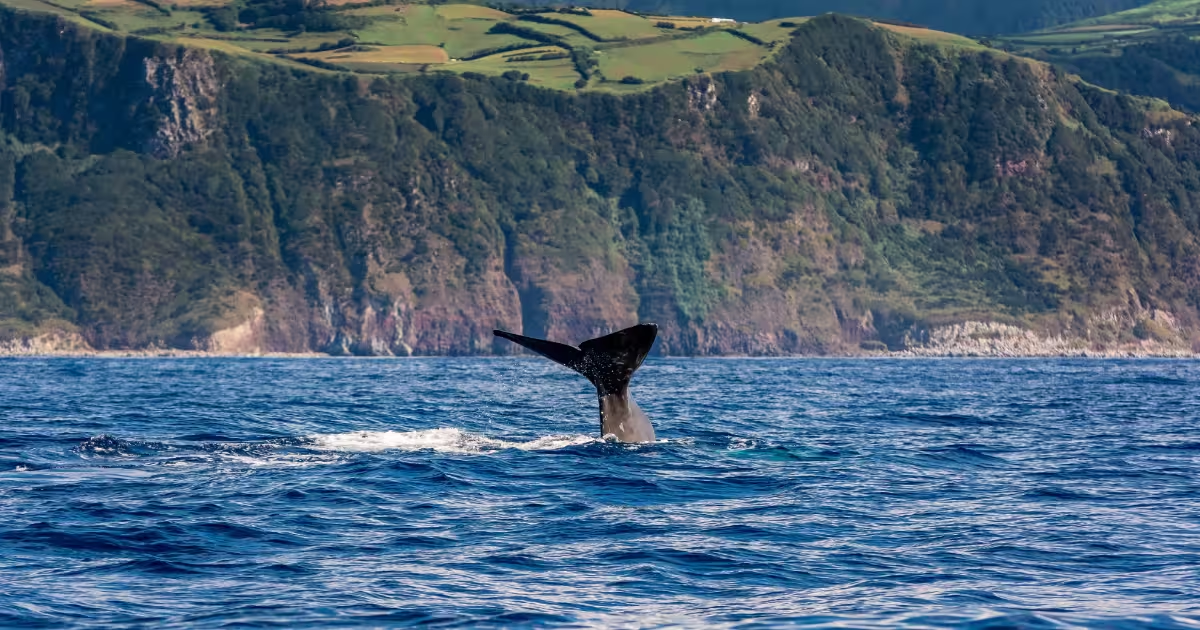
Whale Watching Tours in Ponta Delgada: How to Choose the Right Operator
A practical 2026 guide to selecting the right vessel, operator, and ethical framework for cetacean encounters in the Azores.
The waters around São Miguel sit above one of the deepest submarine canyons in the North Atlantic, the Princess Alice Bank system, making the island one of the most consistent cetacean habitats in the world. More than 28 species of whales and dolphins have been recorded in Azorean waters. But the quality of your experience depends less on the ocean and more on the operator you choose.
Why São Miguel Is One of the Most Reliable Whale Watching Destinations in the Atlantic
The Azores archipelago sits at the convergence of three tectonic plates, generating deep, nutrient-rich upwellings that sustain large populations of sperm whales (Physeter macrocephalus), common dolphins (Delphinus delphis), bottlenose dolphins (Tursiops truncatus), and seasonal visitors including blue whales (Balaenoptera musculus) and fin whales (Balaenoptera physalus). São Miguel's southern coastline, particularly the stretch between Ponta Delgada and Vila Franca do Campo, provides direct access to oceanic depths exceeding 1,000 metres within just a few nautical miles of shore.
Sighting rates on licensed tours operating from the Marina de Ponta Delgada consistently exceed 95 percent between April and October, the peak season. This figure is not accidental. It is the direct result of the vigia system, a network of land-based lookouts stationed on elevated coastal points who use binoculars and radio communication to direct vessels toward cetacean groups in real time. Operators who use vigias, a tradition dating to 19th-century Azorean whaling, offer a fundamentally different and more efficient experience than those who rely solely on onboard navigation.
"The vigia is not a romantic detail. It is the single most important logistical factor separating high-success operators from those running glorified boat rides." — ToursXplorer Editorial Team
When evaluating whale watching ponta delgada options, always ask whether the company employs active land-based lookouts during every departure. If the answer is unclear, treat that as a signal to look elsewhere.
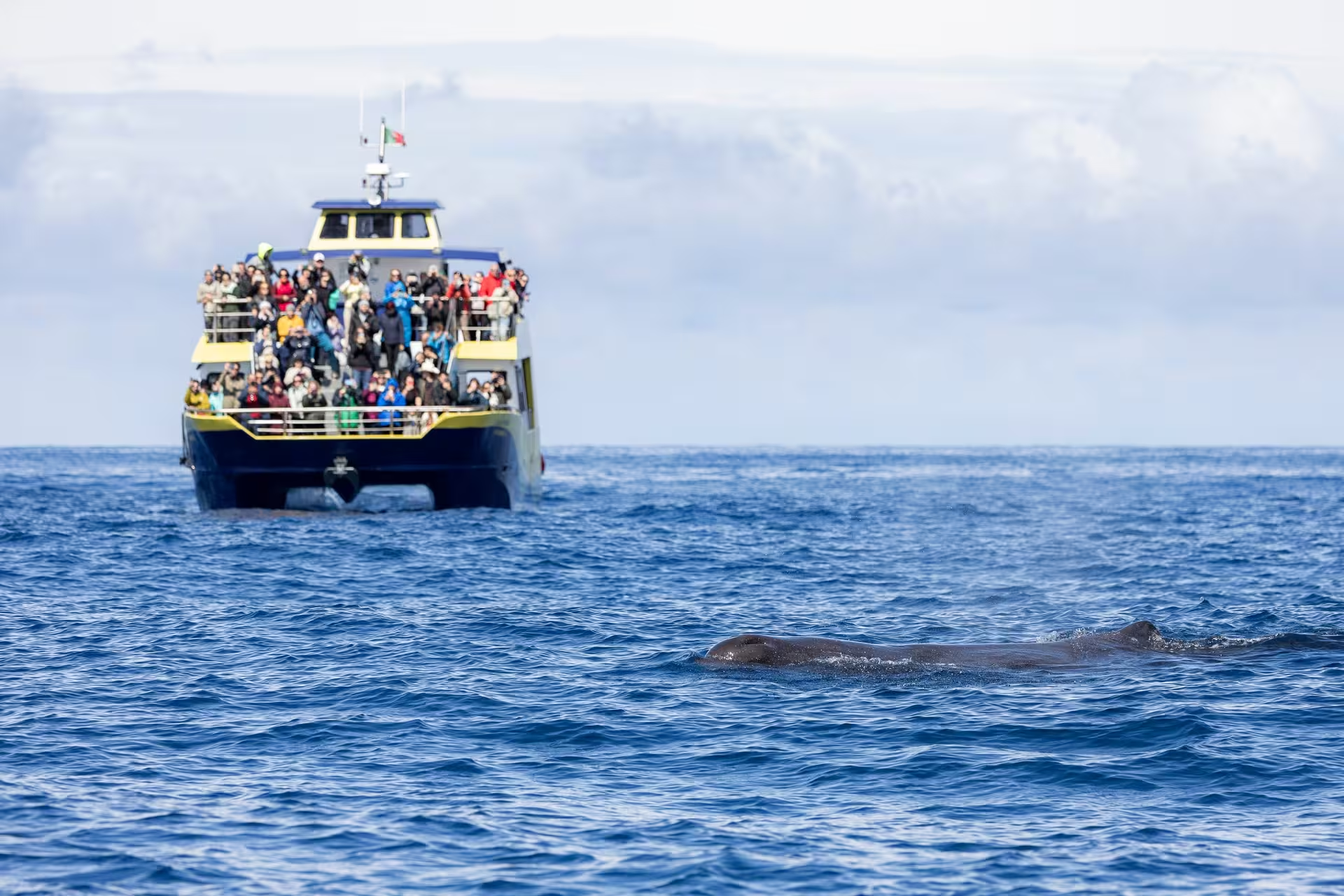
Zodiac or Catamaran: Which Vessel Type Is Right for Your Group?
This is the most consequential practical decision you will make before booking. Each vessel class involves real trade-offs in comfort, access, and experience quality.
RIBs and Zodiacs (Rigid Inflatable Boats) typically carry between 8 and 12 passengers and travel at speeds of 25 to 40 knots. Their low freeboard places passengers approximately 30 to 50 centimetres above the waterline, offering an intimate, eye-level perspective on surfacing animals. This proximity makes them the preferred choice for underwater photographers and naturalists. However, the ride across Atlantic swells can be physically demanding. Passengers with chronic back problems, osteoporosis, or those who are pregnant are generally advised by operators to avoid RIB departures. Onboard facilities are minimal: no toilet, no shelter, and no bar service. Passengers should expect to get wet.
Catamarans and fibreglass motor vessels carry between 20 and 60 passengers depending on the operator and are significantly more stable in choppy conditions. They include enclosed cabin areas, onboard toilets, and often a small bar or galley. For families travelling with young children, senior travellers, or anyone with a history of seasickness, these vessels provide a considerably more manageable environment. The trade-off is perspective: the higher deck position and larger vessel size mean approaches to cetacean groups are slightly more constrained by Portuguese maritime regulations governing minimum distances from marine mammals.
"Neither vessel type is objectively superior. The right choice depends on who is in your group, what you want to observe, and how you respond to open-water conditions."
Portuguese maritime law, enforced by the Autoridade Marítima Nacional, requires all commercial whale watching vessels to maintain a minimum approach distance of 50 metres from cetaceans and to limit the duration of any single encounter. These rules apply equally to all vessel types, but smaller RIBs can manoeuvre to optimal positions more quickly and quietly, which experienced operators consider a meaningful advantage.
The Ethical Checklist: How to Identify a Responsible Operator in 2026
Responsible whale watching in the Azores is not simply a matter of good intentions. It is a set of verifiable, documented practices that you can confirm before handing over your payment. The following checklist reflects current best practice standards and the framework promoted by the World Cetacean Alliance (WCA), whose whale watching guidelines set internationally recognised benchmarks for cetacean welfare.
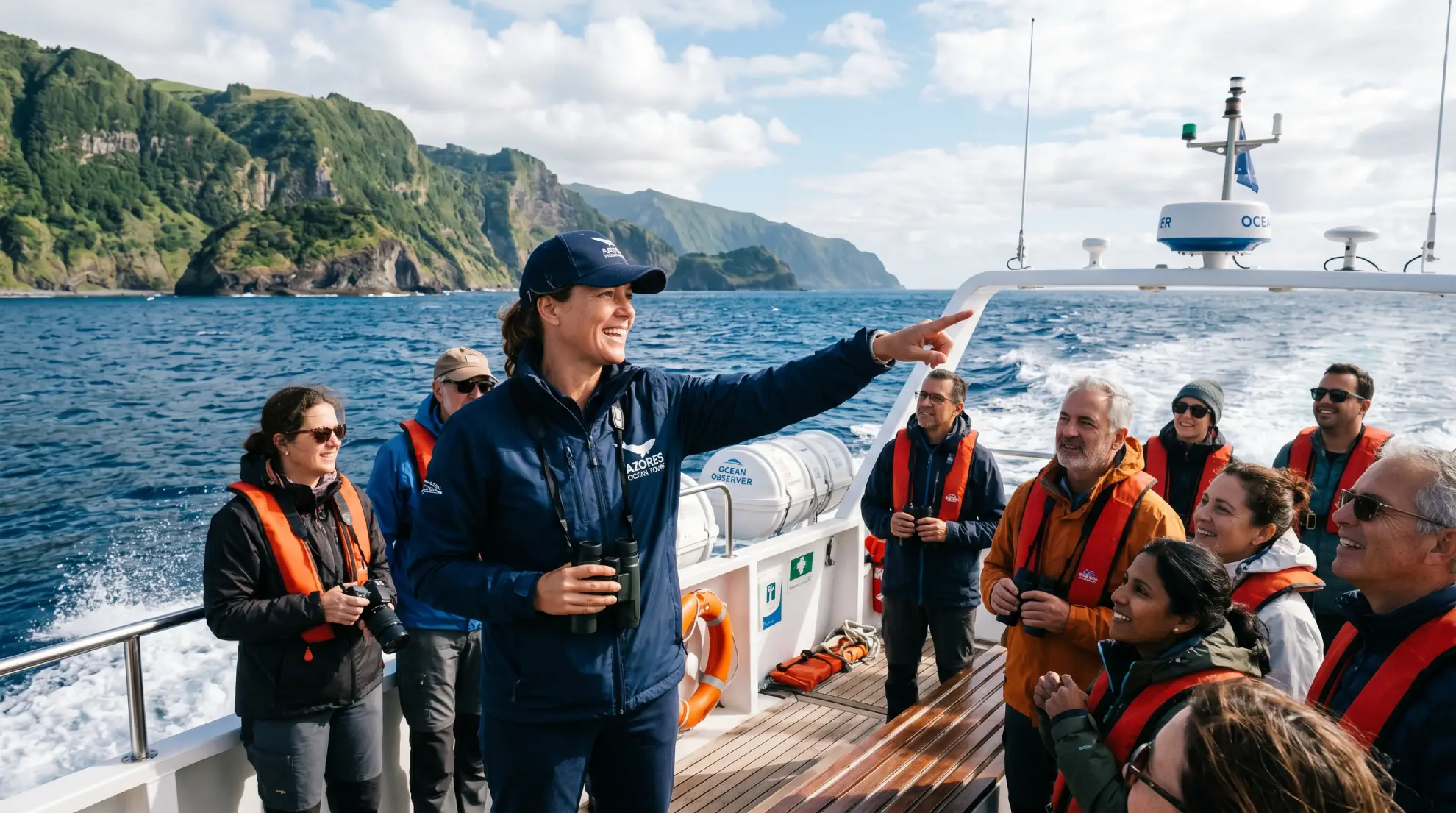
1. Marine biologist or certified naturalist on board. As of 2026, the most credible operators on São Miguel include a qualified marine biologist or WCA-certified naturalist on every departure. This person conducts an immersive briefing before departure covering cetacean behaviour, identification techniques, and onboard conduct protocols. If a tour's listing makes no mention of an educational component, that omission is a red flag worth investigating before booking.
2. Documented WCA compliance. Ask whether the operator is a WCA member or holds equivalent eco-certification. Certified operators agree to non-intrusive approach protocols, time limits per encounter (typically no more than 30 minutes with a single group), and strict no-feeding and no-swimming-with-wild-cetaceans policies unless specifically licensed for the latter.
3. Group size transparency. Boutique tours carrying fewer than 12 to 14 passengers offer a qualitatively different experience from large-vessel departures with 50 or more passengers. Smaller groups allow the naturalist to engage individually with participants, and the vessel can hold position or reposition with greater discretion.
4. Clear rescheduling and no-show policy. Azores weather is variable even in summer. A reputable operator will have a written policy covering what happens if sea conditions prevent departure, and what compensation or rebooking options apply if no cetaceans are sighted. Ask for this in writing before booking.
5. Transparent captain credentials. All commercial whale watching vessels in Portuguese waters must be operated by licensed skippers holding current Marinha de Portugal certifications. Legitimate operators will provide this information on request.
ToursXplorer lists operators on São Miguel who meet these standards and provides tour-level detail on vessel type, group size, and educational components so you can cross-reference before booking.
What Questions Should You Ask Before Booking a Whale Watching Tour in the Azores?
The gap between a competent operator and an exceptional one is often revealed in how they answer direct questions. Before confirming any whale watching tours sao miguel azores booking, consider putting the following to the operator directly or reviewing their listing for clear answers.
Do you use a land-based vigia during every departure? This question alone filters out a significant portion of operators who rely solely on onboard radar and historical knowledge rather than active real-time sighting data.
Who leads the educational briefing, and what are their qualifications? A tour that begins with a 15-minute briefing from a marine biologist identifying the species likely to be encountered, explaining their social structure, and outlining observation etiquette is categorically different from one that starts with safety instructions and a life jacket demonstration.
What is your sighting success rate and how do you define it? Success rates above 90 percent are achievable with experienced operators using vigias. Clarify whether "success" means seeing any marine life (including common dolphins, which are abundant year-round) or specifically seeing large whales.
What species are most likely during my travel dates? Sperm whales are present year-round. Blue whales and fin whales migrate through Azorean waters primarily between March and May. Common and bottlenose dolphins, as well as Risso's dolphins (Grampus griseus), are observed throughout the season. Atlantic spotted dolphins (Stenella frontalis) are more frequent from June through September.
What is the maximum group size on the vessel? Anything above 30 passengers on a whale watching departure warrants scrutiny regarding the quality of the naturalist-guided experience.
ToursXplorer editorial team reviews these criteria as part of its curation process for whale watching azores listings, so readers can use the platform as a first filter before reaching out to operators directly.
Whale Watching & Full-Day Tours from Ponta Delgada
Ready to book a responsible whale watching tour from Ponta Delgada? Browse ToursXplorer's curated selection of certified operators on São Miguel, filtered by vessel type, group size, and educational offer.
Click hereWhen Is the Best Time to Go Whale Watching in São Miguel?
São Miguel whale watching operates year-round, but the species composition changes meaningfully across seasons. Sperm whales (Physeter macrocephalus) are the one constant: adult males and mixed social groups are present in Azorean waters in every month of the year, feeding on squid in the deep submarine canyons that surround the island.
The peak migration window for large baleen whales runs from late March through May. Blue whales, the largest animals on earth, pass through the Azores EEZ (Exclusive Economic Zone) during this period as they move between subtropical wintering grounds and North Atlantic feeding areas. Fin whales follow a similar pattern. For travellers whose primary goal is a blue whale sighting, April is statistically the most productive month based on operator records compiled over the past decade.
Summer months (June through September) bring the most diverse dolphin assemblages, including Atlantic spotted dolphins, common dolphins in large pods sometimes exceeding 500 individuals, and occasional encounters with pilot whales (Globicephala macrorhynchus). Sea conditions are also at their most stable during this period, with Atlantic swell averaging 1 to 1.5 metres and water temperatures reaching 22 to 24 degrees Celsius.
Autumn departures (October through November) offer a quieter, less crowded experience with continued sperm whale activity and the first fin whale sightings of the southbound migration. Winter departures are available but subject to higher cancellation rates due to North Atlantic weather systems. Always confirm the operator's winter rescheduling policy before booking between December and February.
Planning Your Whale Watching Trip: Practical Logistics from Ponta Delgada
Most whale watching tours ponta delgada depart from the Marina de Ponta Delgada, located in the city centre approximately 500 metres from the main seafront promenade. A smaller number of operators depart from the harbour at Caloura, roughly 12 kilometres east of the city, or from Vila Franca do Campo, approximately 20 kilometres from Ponta Delgada along the EN1-1A coastal road.
Departure times for standard cetacean watching tours typically fall between 08:00 and 10:00 in the morning, taking advantage of calmer morning sea states. Afternoon departures are available but less common among specialist operators. Full-day tours combining whale watching with snorkelling or islet visits generally depart at 09:00 and return between 16:00 and 17:00.
What to bring: sunscreen rated SPF 30 or higher (biodegradable formulas preferred by eco-certified operators), a light waterproof layer even in summer (wind chill at sea is significant), seasickness medication taken at least one hour before departure if you are susceptible, a camera with a zoom lens of at least 300mm equivalent for meaningful whale photography from legal approach distances, and closed-toe shoes with non-slip soles.
Booking in advance is strongly recommended during July and August, when popular boutique tours with small group sizes sell out 3 to 4 weeks ahead. The ToursXplorer platform displays real-time availability for all listed São Miguel operators, allowing you to compare dates and vessel types before committing.
Frequently Asked Questions
Families with young children generally do better on catamaran or fibreglass vessels rather than zodiacs, as these offer enclosed spaces, onboard toilets, and a more stable ride. Look for operators with a maximum group size under 30 passengers and a marine biologist on board for an educational component. Departure times around 09:00 suit children better than early morning or late afternoon slots.
Choose a zodiac if you prioritise photography, want a low-angle perspective on surfacing whales, and are comfortable with a physically demanding, wet ride. Choose a catamaran if you are travelling with seniors, children, or anyone prone to seasickness, or if you have back problems. Both vessel types are subject to the same Portuguese approach distance regulations of 50 metres from cetaceans.
Ask whether the operator uses land-based vigias, whether a marine biologist leads the briefing, what the maximum group size is, what the sighting success rate means in practice, and what the rescheduling policy is for bad weather or no sightings. An operator who answers all five questions clearly and in writing is demonstrably more professional than one who does not.
Sperm whales are present year-round. Blue whales and fin whales migrate through between March and May. Common dolphins, bottlenose dolphins, and Risso's dolphins are seen throughout the season. Atlantic spotted dolphins are most frequent from June to September. More than 28 cetacean species have been recorded in Azorean waters in total, making it one of the most diverse habitats in the Atlantic.
Yes. Licensed operators depart year-round from the Marina de Ponta Delgada and other southern coast harbours. The peak season for species diversity and stable sea conditions runs from April to October. Winter departures (December to February) are subject to higher cancellation rates due to North Atlantic weather. Always confirm the operator's rebooking policy before booking outside the main season.
Yes, but only through licensed operators who hold specific Portuguese regulatory permissions for in-water cetacean encounters. These tours operate under strict WCA-aligned welfare protocols that restrict entry to the water based on the naturalist's real-time assessment of cetacean behaviour and sea conditions. Unsupervised or self-organised swimming near wild cetaceans is prohibited under Portuguese maritime law.