





Tuk-Tuk vs. Tram 28: Which Is the Best Way to See Lisbon?
A side-by-side comparison of wait times, comfort, photo stops, and cost to help you navigate Lisbon's seven hills in 2026.
Lisbon's Tram 28 is one of Europe's most photographed public transport routes, threading yellow wooden carriages through the Alfama and Graça districts since 1930. But in 2026, the queue at Martim Moniz regularly stretches past the hour mark. Tuk-tuk tours cover much of the same ground, add private commentary, and stop wherever the view demands it. Here is how the two options actually compare.
What Is the Tram 28 and Why Does Everyone Talk About It?
The Elétrico 28, known locally as Tram 28, has been operating in Lisbon since 1930. It runs approximately 6 kilometres from Martim Moniz in the northeast to Campo de Ourique in the southwest, passing through the Alfama, Graça, and Chiado districts. The carriages are narrow wooden vehicles built in the 1930s, classified as heritage infrastructure by Carris, the city's public transport operator.
The route climbs gradients of up to 13.5 percent, rattling past the Sé Cathedral, the Portas do Sol viewpoint, and the Igreja de Santa Luzia before descending into the Baixa-Chiado area. Those physical facts alone make it a genuinely interesting piece of urban engineering.
"The Tram 28 is best understood as a moving monument. It belongs to the city's fabric the way the azulejos do. Watching it pass from a café terrace on Rua da Escola Politécnica is a Lisbon moment. Riding it in July with 40 other tourists pressed against the handrails is a different story entirely."
The problem is popularity. Lisbon received over 9 million tourists in 2023, and the Tram 28 sits at the top of nearly every "must things to do in Lisbon" list published in English. The result is queue times of 45 to 75 minutes at Martim Moniz on weekday mornings and longer on weekends between April and October. The tram does not run on a fixed tourist schedule: it operates as a functional Carris line, meaning it can be delayed, overcrowded, or cancelled without notice for operational reasons.
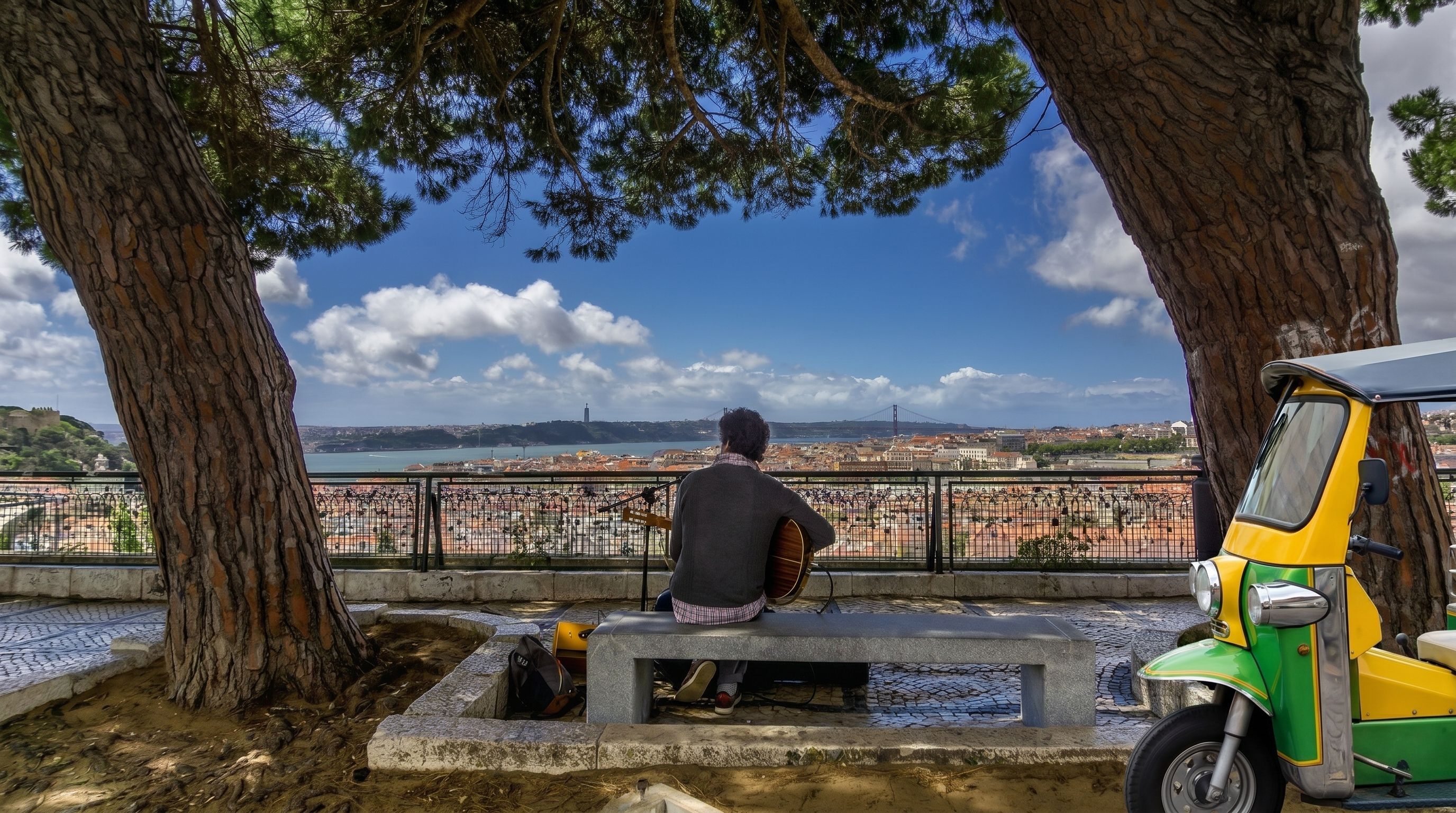
How Does a Tuk-Tuk Tour Actually Differ on the Same Streets?
Electric tuk-tuks began appearing on Lisbon's streets around 2015 and now operate under municipal licensing from the Câmara Municipal de Lisboa. They are three-wheeled, open-air electric vehicles seating two to four passengers, guided by a driver who also serves as a local commentator. Most tours depart from central hubs near Praça do Comércio or Alfama and run between 45 minutes and a full day depending on the itinerary.
The fundamental difference is control. A tuk-tuk stops when you want a photograph of the Portas do Sol viewpoint. It waits while you step out at the Miradouro da Graça to look north across the city to the Castelo de São Jorge. It can also climb to Senhora do Monte, the highest natural viewpoint in Lisbon at roughly 110 metres above sea level, where Tram 28 rails simply do not reach. The tram, by contrast, does not pause for tourists: it has a schedule, regulated stops, and a driver with no obligation to narrate anything.
Route flexibility extends beyond the main tram corridor. Tuk-tuks can access the narrow lanes of Mouraria, the cobblestone alleys of Intendente, and the riverside strip of Belém, all in a single custom itinerary. The Tram 28 corridor is fixed between Martim Moniz and Campo de Ourique with no diversion possible.
"At the Miradouro de Santa Luzia, the tram slows but does not stop. You have approximately four seconds to photograph the Tagus estuary through the window before the carriage rounds the next bend. A tuk-tuk driver will park, step aside, and give you ten minutes."
Comfort is a practical consideration rather than a luxury preference. In July and August, Lisbon regularly records temperatures above 38 degrees Celsius. The 1930s-era Tram 28 carriages have no air conditioning and limited ventilation. Electric tuk-tuks are open-sided, which in motion creates airflow. Neither option is cool in the conventional sense, but the tuk-tuk's movement generates consistent airflow across the open cabin, which riders consistently report as preferable during peak summer heat.

Is the Tram 28 in Lisbon Worth the Wait?
The honest answer depends on what you are trying to do. If you want to see the tram as part of Lisbon's character, the most efficient approach is to photograph it from the Largo das Portas do Sol or from the steep Rua de São Tomé, where it rounds a corner at low speed, giving photographers a clear shot without joining the queue. As a sightseeing vehicle, it has real limitations.
A single-journey ticket on Tram 28 costs approximately 3 euros purchased on board in 2025, or is covered by the Viva Viagem 24-hour card at around 6.80 euros, which also covers the Lisbon Metro and other Carris buses. For a traveller on a tight budget, this makes it the most affordable way to cover the Alfama corridor. The tuk-tuk is a premium product: tours start at roughly 30 euros per person for a 45-minute group ride and rise to 120 to 180 euros for a private full-day itinerary.
ToursXplorer lists a range of tuk-tuk tours across Lisbon's central districts, from focused 90-minute rides through Chiado and Bairro Alto to full-day private experiences that combine Alfama, Belém, and the Mouraria quarter. The cost difference is real, but so is the difference in what each option delivers.
For first-time visitors who have never seen the Elétrico 28, taking it once for a single stop or two between Alfama and Chiado remains a worthwhile experience. For anyone who has already made that journey, or who is visiting Lisbon specifically to understand its districts and viewpoints, a guided tuk-tuk tour covers more ground with more information and no queue.
Tuk-Tuk Tours of Lisbon's Historic Districts
Ready to skip the queue at Martim Moniz? Browse all Lisbon tuk-tuk tours on ToursXplorer and book your preferred route with free cancellation up to 24 hours before departure.
Click hereWhich Option Is Right for Your Lisbon Visit?
The Tram 28 and tuk-tuk tours are not mutually exclusive, and the best Lisbon visits often involve both. Ride the Elétrico 28 for one or two stops early on a weekday morning, before 9:00, when queues are shortest and carriages are less crowded. Then book a tuk-tuk tour through ToursXplorer to cover the districts and viewpoints the tram cannot reach, including the Miradouro de Senhora do Monte, the Mouraria quarter, and Belém.
If you have a single day and want to cover as much ground as possible, the full-day tuk-tuk options listed here represent the most efficient route through Lisbon's top things to do. If budget is the primary concern and you are comfortable with crowds and waiting, the Tram 28 with a Viva Viagem card delivers the core Alfama-to-Chiado experience at minimal cost.
The comparison ultimately comes down to a simple question: do you want to watch Lisbon pass by, or do you want to stop inside it?
Frequently Asked Questions
For the experience of riding a 1930s heritage tram through the Alfama district, many visitors find it worthwhile once. The practical issue is queue times of 45 to 75 minutes at Martim Moniz between April and October. Going before 9:00 on a weekday reduces the wait significantly. If sightseeing efficiency matters, a tuk-tuk tour covers the same corridor with added stops and commentary.
Electric tuk-tuk tours are the most direct alternative. They follow a similar route through Alfama and Graça, stop at viewpoints including Portas do Sol and Miradouro da Graça, and can reach higher points like Senhora do Monte at around 110 metres where tram rails do not go. Private and group options are both available, with durations from 45 minutes to a full day.
A single Tram 28 journey costs approximately 3 euros on board, or is covered by the 24-hour Viva Viagem card at around 6.80 euros. Tuk-tuk tours start at roughly 30 euros per person for a 45-minute group ride and range up to 120 to 180 euros for a private full-day itinerary covering multiple districts including Belém and Alfama.
Yes. The Tram 28 operates on a fixed rail route between Martim Moniz and Campo de Ourique, roughly 6 kilometres. Tuk-tuks are not rail-bound and can access the Miradouro de Senhora do Monte, the Mouraria quarter, the Belém waterfront approximately 6 kilometres west of central Lisbon, and many narrow lanes in the Alfama that the tram line does not serve.
Weekday mornings before 9:00 and late evenings after 20:00 consistently have shorter queues at Martim Moniz. Avoid Saturday and Sunday mornings between May and September, when queues frequently exceed 60 minutes. Riding for just one or two stops rather than the full route also makes the experience more manageable and leaves time for other top things to do in Lisbon.
Advance booking is strongly recommended between April and October, when Lisbon's tourist season peaks. Private tuk-tuk tours in particular tend to fill several days ahead. Group tours sometimes accept walk-ups, but availability is not guaranteed. Booking through platforms like ToursXplorer typically includes free cancellation up to 24 hours before departure, which reduces the commitment risk.