




Travel Isn't Just Seeing Places — It's Becoming Someone New
How Portugal's landscapes, culture, and slower rhythms offer the conditions for genuine personal transformation.
There is a particular kind of tiredness that no amount of sleep seems to fix. It accumulates not in the body but somewhere deeper, in the part of us that stopped noticing things a long time ago. Millions of people arrive in Portugal each year carrying exactly that weight. Some leave lighter. Some leave changed. And a rare few return home feeling, for the first time in years, like themselves.
Why does travel have the power to change a person?
Psychologists have long observed that removing yourself from familiar environments disrupts the automatic patterns of thought that define daily life. When the commute, the inbox, and the habitual lunch order disappear, the mind has room to notice again. Not everything, not immediately, but slowly the volume of ordinary life turns down.
Travel does not produce transformation on its own. What it produces is the conditions for it: distance, novelty, presence, and the particular vulnerability of being somewhere you do not fully understand. Those conditions, when combined with the right landscape and pace, can do in two weeks what years of routine obscure entirely.
Portugal is not a dramatic country in the way that some destinations are. It does not assault the senses or demand constant interpretation. Its effect is quieter and, for that reason, often more lasting. The Atlantic light is softer in the Alentejo plains than it is on Instagram. The pace of a village lunch in the Minho region is genuinely, structurally different from eating at a desk. These are not aesthetic details. They are the architecture of a different way of being in the world.
"The journey that changed me most was not the longest or the most exotic. It was the one where I finally stopped moving long enough to notice where I was."
What does burnout look like before a transformative journey?
Consider the pattern familiar to many working professionals in their thirties and forties. Weeks blur into months. Weekends are spent recovering, not living. The things that once produced joy, reading, cooking, long walks, have become items on a to-do list that never gets finished. Screens replace presence. Productivity replaces meaning.
This is the state in which many travellers arrive in Portugal. They have booked the trip out of exhaustion, not inspiration. The flight lands and something unexpected happens: the country does not hurry them. Lisbon's trams run on their own schedule. Évora's Roman temple has been standing since the first century and is not particularly concerned with anyone's agenda. The Douro River moved through its valley for millennia before the first wine was pressed on its terraced hillsides, and it will continue long after.
That sense of deep time, of a place that exists entirely independently of personal urgency, is one of Portugal's most underrated offerings. For people in the grip of burnout, it is not a platitude. It is a physical, felt relief.
The shift rarely arrives as a revelation. It comes more quietly. On day three, a traveller notices they have not checked their phone in four hours. On day five, they eat a slow meal and do not feel guilty about it. By day eight, something in the chest has loosened that they had forgotten was tight.
Can solo travel in Portugal help you reconnect with yourself?
Solo travel carries a specific emotional texture that group travel cannot replicate. There is no one to defer to, no social performance required, no negotiation about where to eat or how long to stay. The decisions are yours entirely, which means, for the first time in a long time, so are the consequences.
Portugal is one of the more welcoming countries in Europe for solo travellers. It ranks consistently among the safest destinations on the continent. Its transport network connects Porto, Lisbon, and the Algarve reliably by rail. The Portuguese themselves tend toward a reserved warmth, a quality that does not overwhelm but does not exclude.
In the villages of the interior Alentejo, where whitewashed houses line cobbled streets and the ambient sound at midday is mostly wind, solo travellers report an unusual experience: the absence of distraction makes them available to themselves in a way that group travel does not allow. Questions surface. Not dramatic ones, but the quieter kind that get drowned out in ordinary life. What am I actually enjoying? What do I genuinely want next?
"Traveling alone through the Alentejo, I realized I had spent years being very busy while avoiding being very honest with myself. The silence was the most useful thing I encountered."
The Azores archipelago, 1,500 kilometres west of mainland Portugal in the mid-Atlantic, offers a different kind of solo reckoning. Its volcanic lakes, including Lagoa do Fogo on São Miguel island, sit inside calderas formed over hundreds of thousands of years. Standing at the edge of that lake, surrounded by nothing but endemic vegetation and open sky, is a spatial experience that recalibrates scale. Personal concerns do not vanish, but they become proportionate again.
Where in Portugal do transformative travel experiences happen most naturally?
Alentejo: the architecture of stillness. The Alentejo occupies roughly one third of Portugal's landmass but holds fewer than 800,000 residents. Its landscape is defined by cork oak forests, known locally as montado, which are among the most biodiverse ecosystems in the Iberian Peninsula. The harvest of cork, which cannot be repeated on the same tree for nine years after each stripping, imposes a natural rhythm on economic life that has no counterpart in urban productivity culture.
The region's towns, Évora, Monsaraz, Marvão, operate at a pace that feels less like deprivation and more like a different calibration of time. A visit to Évora, classified as a UNESCO World Heritage Site since 1986, includes not only the well-documented Roman temple and the 13th-century cathedral, but the experience of walking streets that have been walked continuously for two millennia. That continuity has a physical effect on the body. The urgency dissolves.
Madeira: clarity through physical effort. Madeira's levada network, approximately 2,500 kilometres of irrigation channels constructed from the 15th century onward, doubles as one of the most distinctive hiking infrastructures in the world. The trails follow gradients that make the island's interior accessible without technical climbing, passing through laurisilva forest, a UNESCO-classified ecosystem that represents the largest surviving area of laurel forest in the world, dating back to the Tertiary geological period.
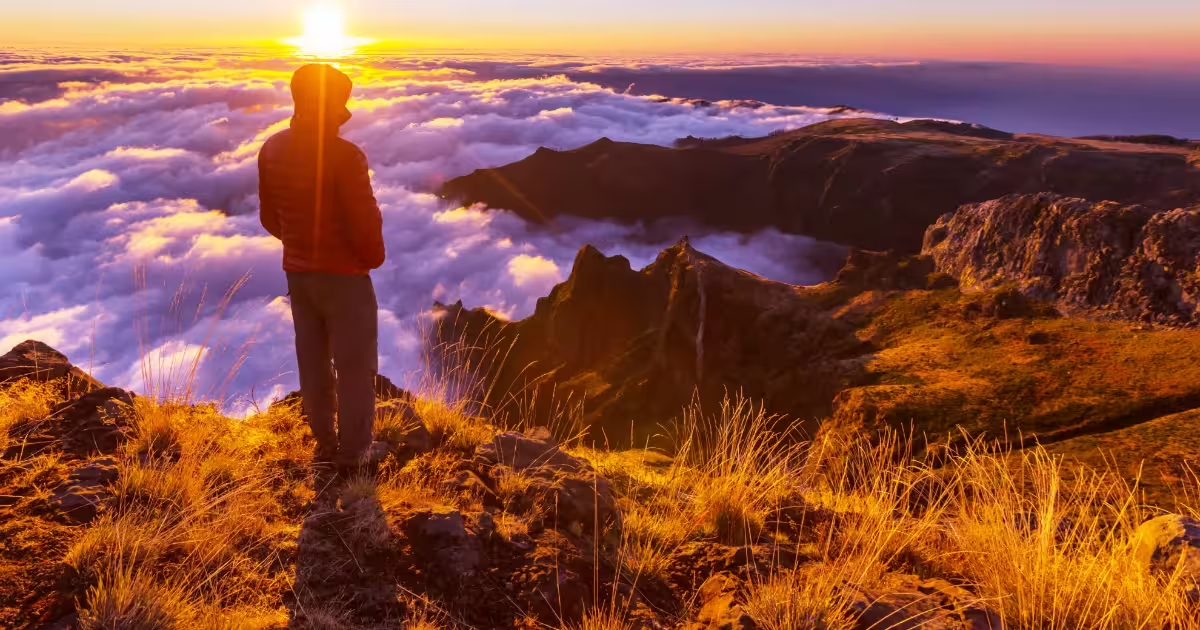
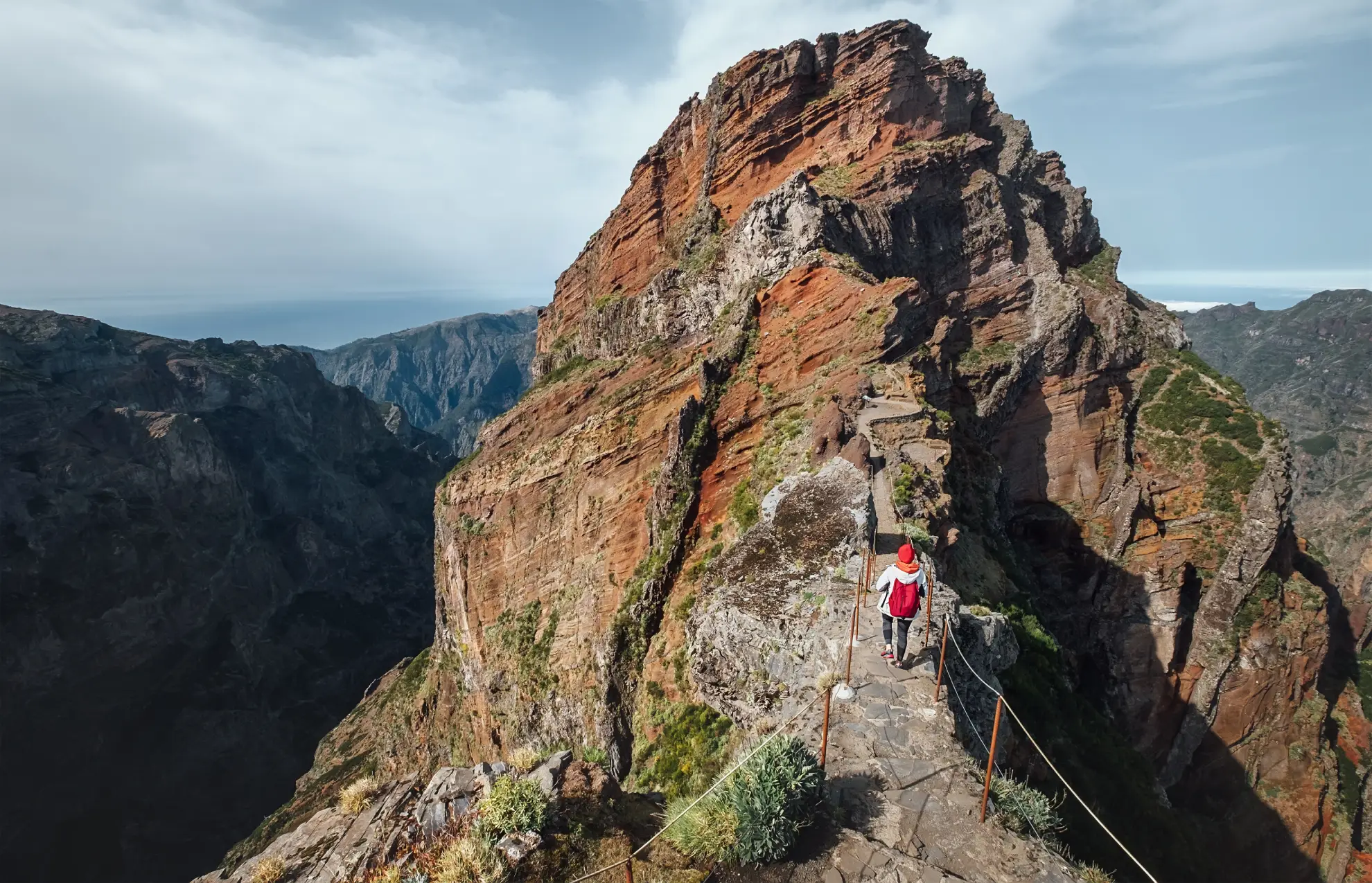
The hike between Pico do Arieiro (1,818 metres) and Pico Ruivo (1,862 metres, the highest peak in Madeira) covers approximately 9 kilometres and typically takes four to five hours. The trail crosses volcanic ridges above the cloud line. At points, walkers find themselves above a white sea of cloud with only the highest peaks visible. The physical effort required to reach that vantage point is part of why it registers so differently from a viewpoint accessed by road. The body's involvement makes the mind's clarity feel earned.
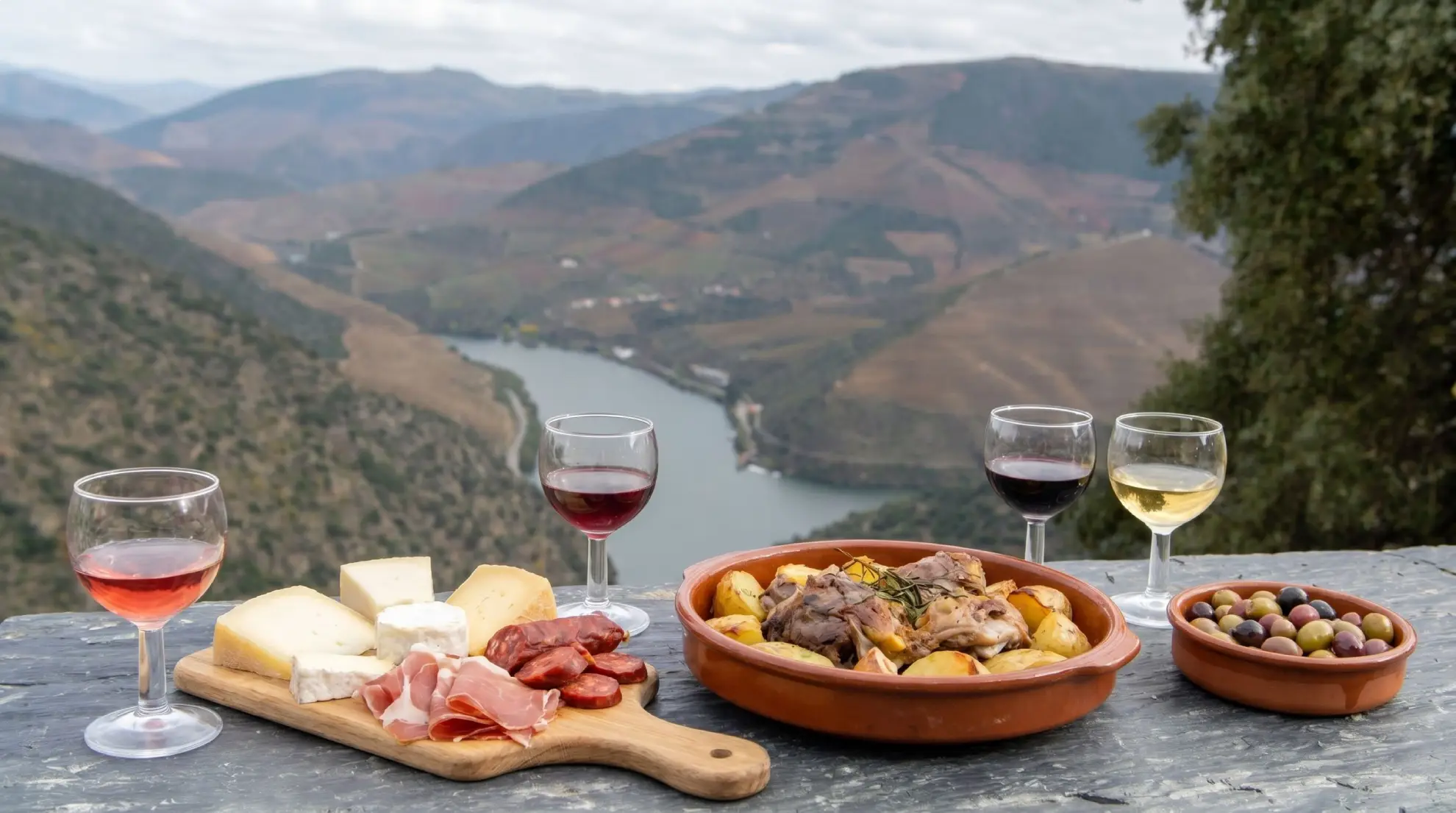
Douro Valley: human culture as grounding. The Douro Valley wine region, classified as a UNESCO World Heritage Site in 2001, stretches approximately 100 kilometres east from Peso da Régua toward the Spanish border. Its terraced vineyards, many maintained by family estates that have operated continuously for several generations, represent one of the most labour-intensive agricultural landscapes in Europe. The quinta system, the family-owned wine estates that define Douro culture, offers travellers genuine human connection rather than curated heritage tourism. Meals eaten at a family quinta, with wine from grapes grown on the property's slopes, carry an authenticity that urban restaurant experiences rarely approximate.
Portugal's wellness and nature retreat landscape. The country has developed a significant infrastructure for wellness-oriented travel over the past decade. Thermal spa traditions rooted in Roman-era bathing culture survive in destinations including Caldas da Rainha and Vidago. Nature lodges operating in the Gerês mountain region and along the Alentejo coast offer digital detox programmes in genuine natural isolation. The Comporta coastline, 120 kilometres south of Lisbon, has become a reference for oceanfront slow living, with rice fields, white sand beaches, and a development density that remains, for now, dramatically lower than the Algarve.
Experiences That Invite a Different Way of Travelling
Portugal offers more than scenery. It offers conditions for genuine change. Browse ToursXplorer's full selection of Portugal experiences and find the journey that matches where you are, and where you want to go.
Click hereBefore and after: how meaningful travel shifts what we carry home
The changes that transformative travel produces are rarely dramatic in the way films suggest. Nobody returns from Portugal having solved the fundamental questions of their life. What changes is subtler and, in many ways, more durable.
Before a meaningful journey, many travellers describe a common set of conditions: constant urgency that feels structural rather than optional, digital overload that makes sustained attention difficult, a pervasive sense of disconnection from the present moment, and a growing suspicion that the life being lived has drifted some distance from the life that was intended.
After time spent in the kind of environments Portugal offers, the same travellers describe a different set of conditions. Not a permanent cure, but a recalibration. A renewed appetite for simplicity. A reduced tolerance for unnecessary busyness. Greater ease with silence. Clearer priorities. A capacity for presence that had not been accessible for years.
These are not trivial outcomes. Research in environmental psychology, including studies conducted by the University of Michigan on attention restoration, suggests that exposure to natural environments measurably reduces directed attention fatigue and restores the capacity for reflection. The Alentejo's silence, Madeira's volcanic ridges, and the Douro's terraced slopes are not simply beautiful. They are neurologically restorative in ways that have quantitative support.
The practical implication for travellers is worth stating directly: the transformation is not automatic. It requires choosing depth over coverage, staying in places long enough to feel their rhythm rather than photograph their surfaces, and accepting the slight discomfort of not filling every hour with scheduled activity. ToursXplorer's approach to Portugal experiences is built around exactly this philosophy: fewer places, more presence, experiences that invite genuine engagement rather than passive consumption.
How to plan a transformative trip to Portugal
Choose fewer places. The reflex to cover maximum ground in minimum time is the single greatest obstacle to meaningful travel. A week in the Alentejo will change you more than a week that includes the Alentejo, the Algarve, Porto, Lisbon, and the Azores. Portugal is compact enough, at roughly 92,000 square kilometres, that the temptation to see everything is always present. Resist it. Depth requires time.
Prioritize experiences over landmarks. The Pena Palace in Sintra is architecturally distinctive and historically significant. But the experience of walking Sintra's forested paths in the early morning mist, before tour buses arrive, is the memory that persists. Similarly, seeing the Douro Valley from a quinta's terrace over a long lunch is a different experience entirely from seeing it from a tour bus window. ToursXplorer's private and small-group formats are designed to support the former.
Disconnect structurally, not aspirationally. Deciding to use your phone less during a holiday is a decision that competes against the phone's entire design purpose. Structural disconnection works better: leave the device in the hotel room for specific periods, book accommodation in areas with limited connectivity, or choose experiences (a sunrise hike above the cloud line, a horse riding tour through a coastal wetland) where phone use is physically inconvenient. The absence of distraction is not a loss. It is the point.
Leave space for what cannot be scheduled. The encounters that travellers describe most vividly, years later, are almost never the ones that were planned. They are the conversation with a quinta owner who opened a bottle they were not supposed to open. The unexpected fog that made a mountain trail feel like walking through cloud. The village festival stumbled upon while looking for somewhere to eat. Transformative travel requires an itinerary loose enough that the unexpected can find you.
Frequently Asked Questions
Travel removes the environmental cues that reinforce habitual thinking, including routines, familiar faces, and automatic daily patterns. Without those cues, the mind has room to reflect and reorient. Research in environmental psychology confirms that natural environments reduce directed attention fatigue. The change is not guaranteed, but the conditions travel creates (distance, novelty, presence) are among the most reliable triggers for genuine perspective shifts.
Portugal's most internally significant experiences tend to involve physical engagement with landscape or authentic cultural immersion. The sunrise ridge hike between Pico do Arieiro and Pico Ruivo in Madeira (9 kilometres, roughly 4 to 5 hours) consistently produces reports of perspective change. Slow travel in Alentejo villages such as Monsaraz and Évora, whale watching in the Azores, and visits to family-owned quintas in the Douro Valley also rank among the experiences travellers describe as genuinely affecting.
The Alentejo region is the clearest example of slow travel infrastructure in Portugal. Its low population density (approximately 24 people per square kilometre), UNESCO-listed cities like Évora, and cork oak landscapes encourage a naturally unhurried pace. The Comporta coast, 120 kilometres south of Lisbon, and the interior villages of the Minho region in northern Portugal offer comparable rhythms. The Azores archipelago, 1,500 kilometres west of the mainland, adds natural isolation to the mix.
Portugal is among the most solo-travel-friendly destinations in Europe. It ranks consistently in the top tier of European safety indexes. Its rail network connects major cities reliably, and domestic flights serve Madeira and the Azores from Lisbon in under two hours. The Portuguese tend toward reserved but genuine warmth with visitors. Solo travellers report that the country's slower pace and human-scale towns create conditions for self-reflection that group travel rarely allows.
Portugal's wellness landscape is diverse. Thermal spa traditions with Roman-era roots survive in Caldas da Rainha and Vidago in the north. Nature lodges in the Gerês mountain region, classified as Portugal's only national park, offer digital detox in genuine natural isolation. The Comporta coastline combines oceanfront calm with low development density. Madeira's levada trail network provides daily access to UNESCO-classified laurel forest. The Azores add volcanic hot springs at Termas Ferreira and coastal geothermal pools at Ponta da Ferraria on São Miguel island.
Most travellers report that meaningful internal shifts require a minimum of seven to ten days in a single region, rather than a shorter trip spread across multiple destinations. The first two or three days are typically absorbed by the decompression from daily life. Days four through seven, when the routine urgency has dissipated, tend to be when the reflective quality of travel becomes genuinely accessible. Two weeks in one or two regions, with no more than three or four scheduled activities per week, is a practical framework.