




Best Madeira Jeep Safaris: East vs. West Island Comparison
Two landscapes, two moods, one decision: which side of Madeira fits your 2026 adventure?
Madeira Island packs two distinct geographies into 741 square kilometres. The eastern half delivers soaring peaks, deep levada valleys and centuries-old thatched hamlets, while the western half answers with UNESCO-listed laurisilva forest, a high basalt plateau and natural volcanic swimming pools carved by the Atlantic. Choosing the right madeira jeep tour itinerary means matching your priorities with the terrain before you book.
What Makes East and West Madeira So Different?
Madeira's central mountain spine, which reaches 1,862 metres at Pico Ruivo, divides the island into two climatic and geological zones that behave almost independently. Persistent north-Atlantic trade winds push moisture against the northwestern slopes, keeping the Fanal Forest and the Paul da Serra plateau shrouded in low cloud for much of the year. The eastern flanks, sheltered by those same peaks, receive more sunshine and present drier, more exposed terrain.
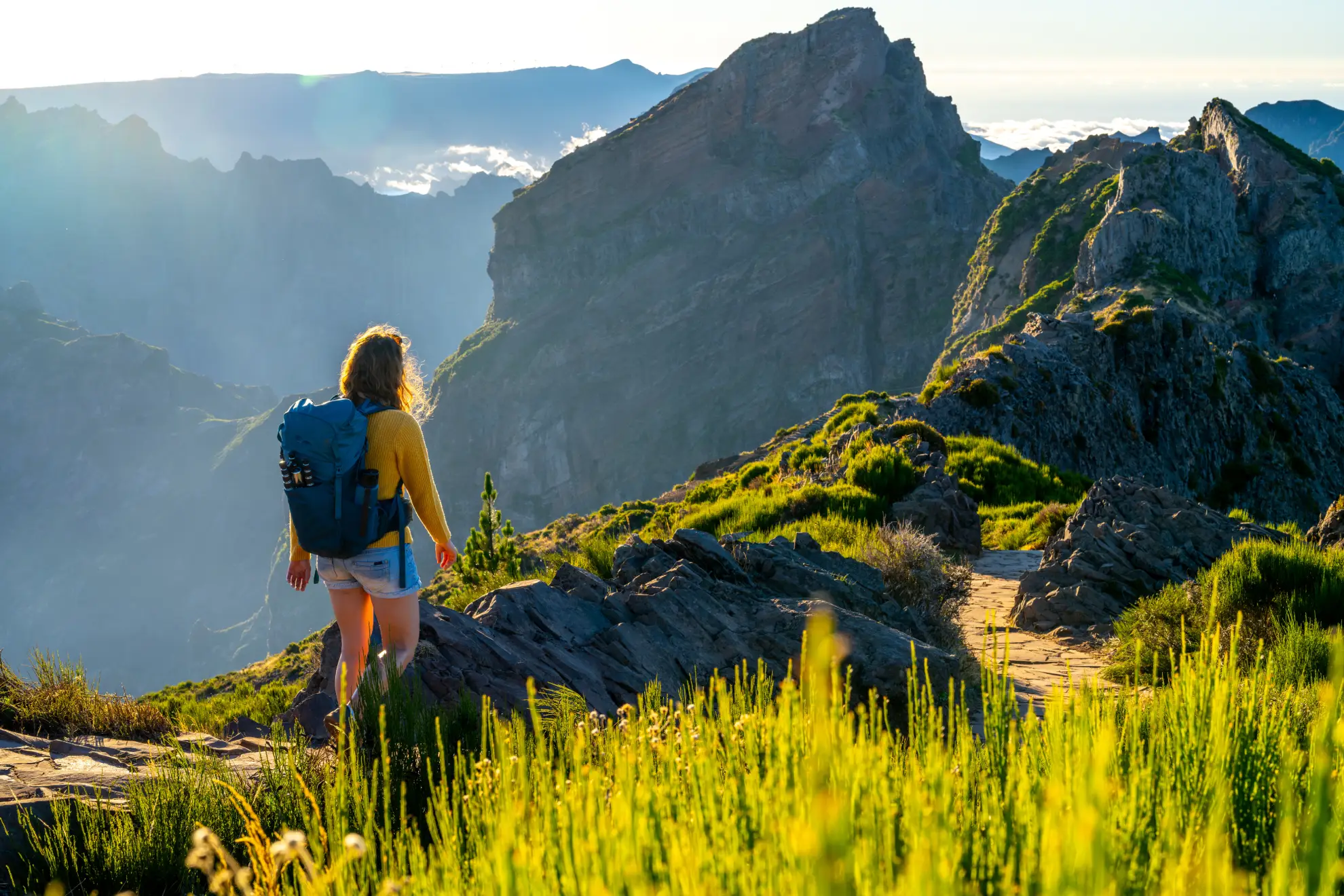
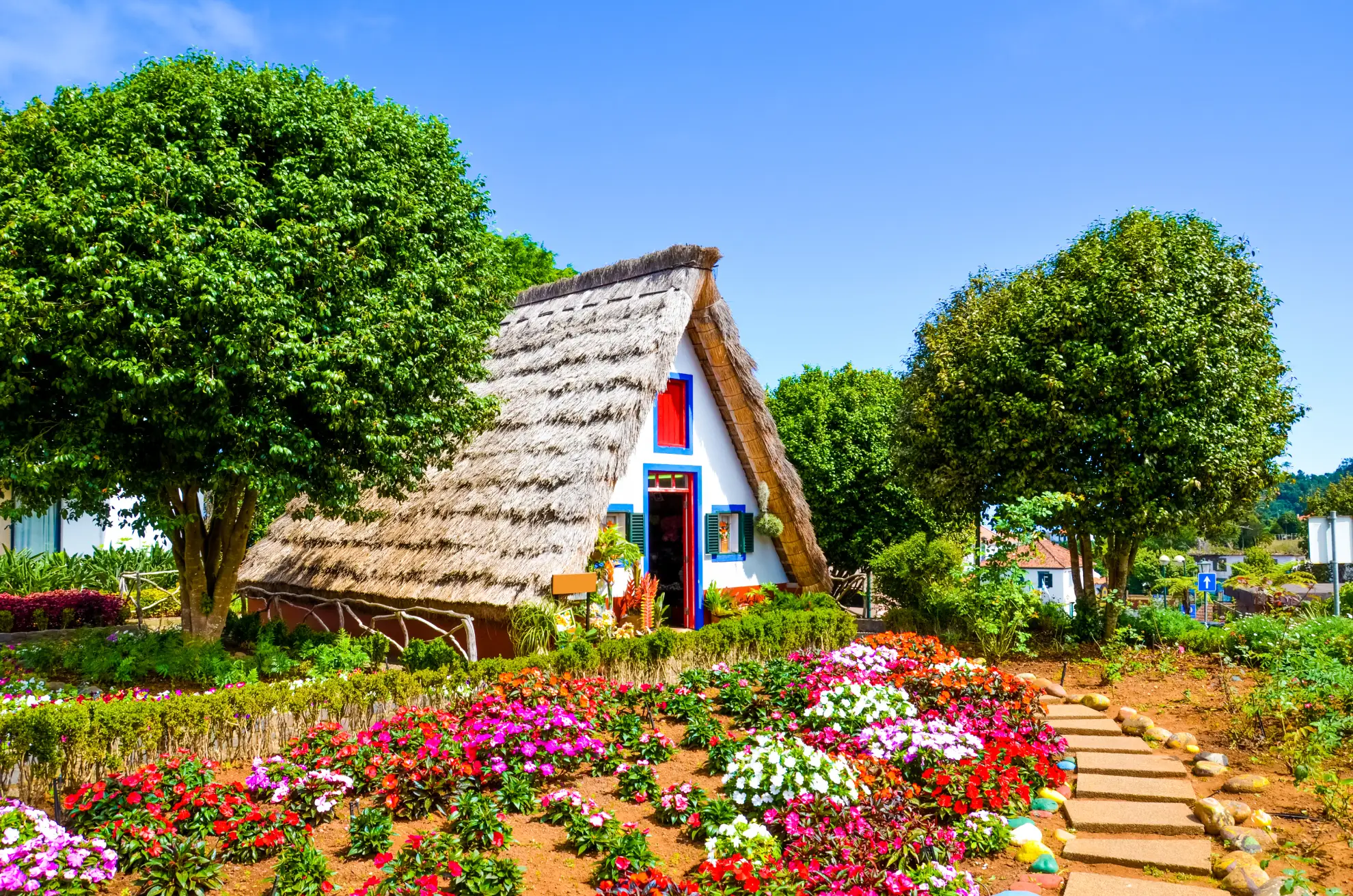
The result is a binary landscape that rewards different types of travellers. The East is defined by arid, panoramic ridges and dramatic altitude changes. Pico do Arieiro, the island's third-highest summit at 1,818 metres, regularly sits above the cloud layer, offering unobstructed views across a sea of white. The cliff peninsula of Ponta de São Lourenço, extending 9 kilometres into the Atlantic, is among the most geologically stark corners of all Macaronesia. Between these extremes, the UNESCO-recognised village of Santana preserves the palheiros, the distinctive triangular thatched houses that date back to at least the 16th century.
"The East is where Madeira shows its bones. The volcanic rock is bare, the ridgelines sharp, and on a clear morning above Arieiro you genuinely feel suspended between ocean and cloud." — ToursXplorer Editorial Team
The West operates on different terms. The Fanal Forest, a 1,000-hectare grove of thousand-year-old Ocotea foetens (til trees) and tree heather at roughly 1,100 metres elevation, is part of the Laurisilva of Madeira, a UNESCO World Heritage Site since 1999. Dirt tracks through this canopy feel categorically different from high-altitude ridge driving. The Paul da Serra, a flat basalt plateau at around 1,300 metres, channels rainfall westward into dramatic coastal waterfalls near Seixal before the land plunges into the sea.
Which Terrain Is More Demanding for a 4x4 Off-Road Tour?
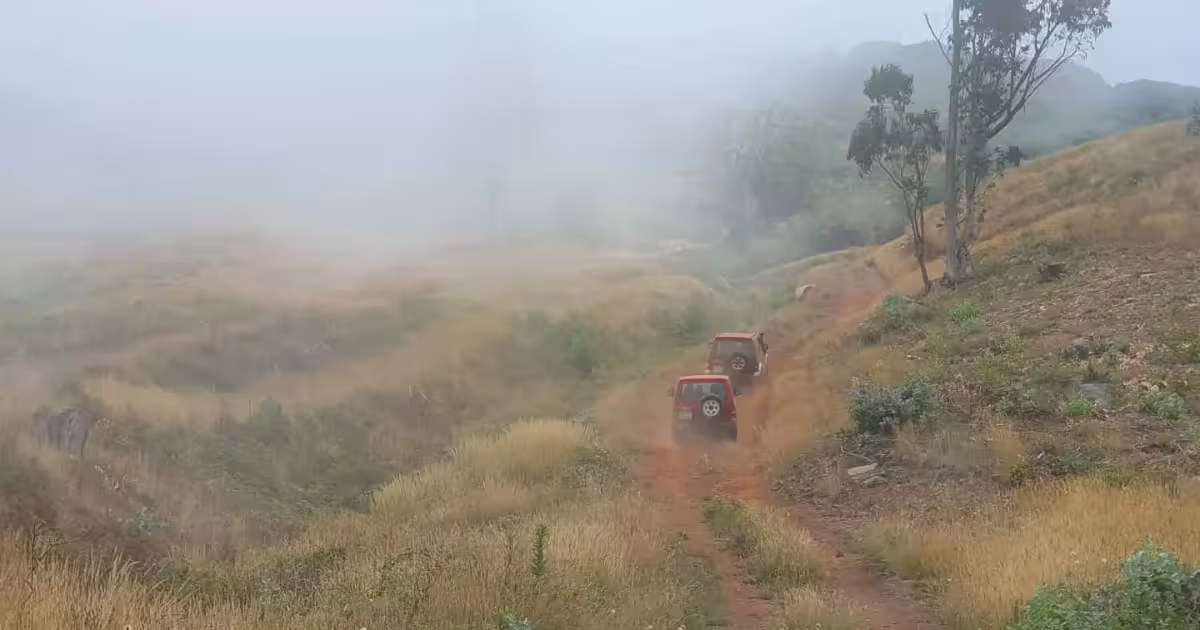
Both halves of the island offer genuine off-road conditions, but the character of the tracks differs substantially. Western routes, particularly those threading through the Fanal and descending toward Porto Moniz, tend to follow forest-based dirt paths where low gear and ground clearance matter more than speed. Moisture keeps the surfaces unpredictable year-round, and the canopy often reduces visibility in misty conditions.
Eastern routes favour altitude. The ascent toward Pico do Arieiro uses exposed mountain roads where switchbacks and steep gradients dominate. The descent through the valleys of Ribeiro Frio and the eastern plateau passes agricultural terraces carved into slopes that drop several hundred metres in less than two kilometres. Neither route is technically extreme in a commercial safari context, but the eastern terrain is more consistently dramatic in terms of elevation change.
A practical consideration for 2026 travellers: Madeira's weather frequently creates a natural seesaw effect. If heavy cloud sits over the northwest, the eastern slopes from Santana toward Ponta de São Lourenço are often clear. An experienced guide monitoring the morning forecast can redirect the itinerary accordingly, which is one reason guided 4x4 tours consistently outperform self-drive options for visitors unfamiliar with local microclimates.
"Paul da Serra in full cloud cover is a landscape of near-total white silence. Porto Moniz pools glittering below it twenty minutes later is the kind of contrast that makes western Madeira routes impossible to summarise in a single image." — ToursXplorer Editorial Team
Culture, Poncha and Local Stops: How Do the Routes Compare?
Both itineraries punctuate the landscape with culturally specific stops, but the flavour differs. Eastern tours typically pass through farming communities in the Machico valley, the first area permanently settled by Portuguese navigators under João Gonçalves Zarco after 1419. Stops in Santana allow time to walk among the palheiros and visit small family producers. The local poncha variation in these mountain communities tends toward fruit-based recipes using regional passion fruit or tangerine rather than the classic fisherman's formula.
Western tours approach Madeiran culture through the Atlantic fishing tradition. Câmara de Lobos, a small harbour town approximately 9 kilometres west of Funchal, is the historic centre of the island's espada preta (scabbard fish) industry and the origin of the traditional Fisherman's Poncha, made from aguardente de cana, honey and lemon. Ribeira Brava, a further 18 kilometres northwest, marks the entry point into the deeper western valleys and offers another stop with strong maritime character.
For photography-focused travellers, the East delivers the more iconic single frames: the thatched silhouette of a palheiro against a green hillside, the red volcanic tips of Ponta de São Lourenço against blue water. The West rewards patience with atmospheric light, particularly in the Fanal at dawn when ground fog creates layered depth through the til canopy. ToursXplorer lists tours in both directions precisely because neither itinerary objectively dominates the other.
Eastern Madeira: Mountains, Heritage and Open Ridges
Western Madeira: Forests, Plateaus and Volcanic Pools
Combination and Wine Route: A Third Option
Unsure which side of Madeira suits your travel style? Browse all available jeep and 4x4 tour options on ToursXplorer and filter by region, duration or activity type to find the right match.
Click hereHow to Choose Between East and West Madeira in 2026
The simplest framework is to match your primary interest to the terrain. If your priority is swimming, the volcanic pools at Porto Moniz or the natural seawater pools at Seixal on the northwest coast have no eastern equivalent. If your priority is altitude and panoramic views, Pico do Arieiro and the Ponta de São Lourenço peninsula offer landforms that the forested west cannot replicate. If you want cultural stops and heritage, the eastern villages of Santana and Machico carry more concentrated historical significance.
Weather is a legitimate variable. Madeira's northwest receives an annual average of over 3,000 millimetres of rainfall in higher elevations, compared to under 700 millimetres on the southeastern coast near Funchal. In practical terms, this means a misty Fanal is still a worthwhile destination on an overcast day, while a clear Arieiro on the same morning is a different experience entirely. Checking both forecasts the evening before and discussing options with your guide is a habit worth building.
For travellers with more than one full day available, covering both halves is the most complete approach. The island is compact enough that a northeastern tour on day one and a northwestern circuit on day two still leaves time for independent exploration. ToursXplorer lists all six tours covered in this guide with full itinerary details, group sizes and availability for 2026 bookings, making side-by-side comparison straightforward before committing.
Practical Information for Madeira 4x4 Tours
Most guided jeep tours operate from Funchal and last between six and eight hours for full-day itineraries. Open-top vehicles are standard on scenic routes, though enclosed 4x4s are available on some operators' listings. Departure times typically range from 08:00 to 09:30, with hotel pickup included in most packages. Group sizes vary but commonly range from 8 to 14 passengers per vehicle.
Altitude changes are significant on both eastern and western routes. Temperatures at Paul da Serra or Pico do Arieiro can be 10 to 12 degrees Celsius lower than at sea level on the same day, so a light layer is practical regardless of coastal conditions. Sturdy footwear is advisable for any stop involving short walks on volcanic rock or levada paths.
Regarding food and drink stops: the eastern routes typically include a lunch break in Santana or a nearby village, while western tours often combine a mid-morning stop in Câmara de Lobos with a lunch at Porto Moniz. Poncha, the island's traditional sugarcane spirit, appears on both routes, but the fisherman's version from the south-coast towns uses a distinct honey-lemon recipe that differs from the mountain fruit variations found in the northeast.
Frequently Asked Questions
Neither is objectively better. The eastern route (Santana, Pico do Arieiro, Ponta de São Lourenço) suits travellers who prioritise mountain panoramas, altitude driving and cultural heritage. The western route (Fanal, Paul da Serra, Porto Moniz) is the stronger choice for swimming in volcanic pools, forest photography and Atlantic coastal scenery. Your personal priorities determine the right fit.
Full-day guided 4x4 tours in Madeira generally run between six and eight hours, including driving time, stops and a lunch break. Departures from Funchal usually begin between 08:00 and 09:30, with hotel pickup included. The exact duration depends on the specific itinerary and number of stops, which vary between eastern and western routes.
Madeira's mild climate makes jeep tours viable year-round. Spring (April to June) offers wildflowers on the eastern plateau, while summer months see lower cloud probability on both sides. Autumn and winter bring more atmospheric mist to the Fanal Forest, which many travellers find appealing for photography. The eastern routes tend to have more predictable sunshine between June and September.
Yes. Several western jeep tour itineraries listed on ToursXplorer include Porto Moniz as a main stop. The volcanic pools are natural seawater formations on the island's northwest coast, approximately 55 kilometres from Funchal. Some tours also include the similar pools at Seixal, located roughly 7 kilometres east of Porto Moniz along the coastal road.
Pico do Arieiro, at 1,818 metres above sea level, is a standard highlight on northeastern Madeira jeep itineraries. Access depends on weather conditions, as the summit road can close during high winds or ice. Guides typically monitor forecasts and may adjust the route if summit conditions are unsafe, sometimes substituting nearby viewpoints at similar elevations.
Most full-day guided tours include a lunch stop at a local restaurant, though the meal itself may or may not be included in the tour price depending on the operator. Poncha tasting stops are common on both eastern and western routes. Travellers should check individual tour listings on ToursXplorer for precise inclusions, as these vary between operators and itinerary types.