




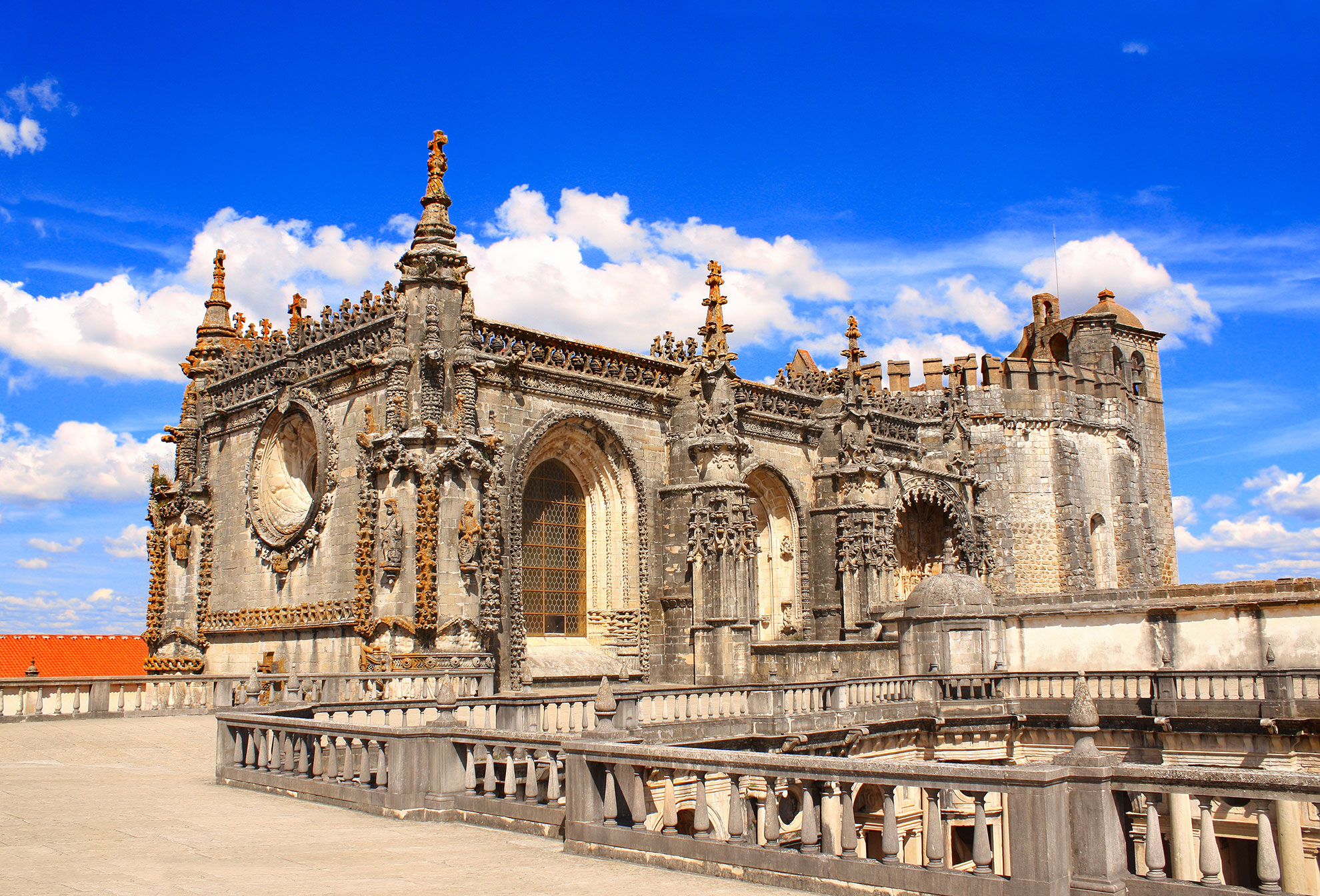
The Convent of Christ (Convento de Cristo), UNESCO World Heritage Site since 1983, crowns the hilltop above the town of Tomar.
The Templar Capital
Tomar: Decoding the Enigmatic Heart of Portugal's Templar Legacy
From the sacred geometry of the Round Church to a castle rising from the Tagus River, Tomar guards a medieval history unlike anywhere else in Europe.
Roughly 140 kilometres north of Lisbon, the town of Tomar sits quietly along the banks of the Nabão River, its whitewashed houses and orderly gardens giving little indication of the weighty history compressed within its hilltop walls. This is a place where the Knights Templar, at the height of their power, constructed not merely a fortress but a theological statement in stone — a complex so layered with symbolism, sacred geometry, and enigmatic purpose that historians are still unravelling its meanings centuries later.
Founded in 1160 by Gualdim Pais, the first Grand Master of the Portuguese Templars, Tomar was conceived as both a military stronghold and a spiritual headquarters. The Convent of Christ that eventually grew from its early Templar castle became one of the most architecturally ambitious projects of the medieval world, absorbing successive waves of Romanesque, Gothic, and Manueline ornamentation over four centuries. To walk its corridors is to move through the collective ambitions of a dozen kings and an order of warrior-monks who believed they were doing the work of God.
"Tomar is not merely a heritage destination — it is a palimpsest, each layer of stone inscribed with a belief, a conquest, or a secret that its builders half-intended to conceal."
Beyond the convent walls, the old town below preserves its own quiet dignity. The 15th-century Synagogue on Rua Dr. Joaquim Jacinto — one of the few intact medieval synagogues in Portugal — stands as a reminder that Tomar's history encompasses not only Christian military orders but also the Sephardic Jewish community that flourished here before the Inquisition. On charming cobblestone streets, painted azulejo facades and the steady rhythm of local life create an atmosphere where history does not feel archived but inhabited.
The Convent of Christ: Where Sacred Geometry Meets Stone
Designated a UNESCO World Heritage Site in 1983, the Convento de Cristo is Portugal's most complexly layered monument. At its core sits the Charola — the Round Church modelled on the Holy Sepulchre in Jerusalem, built by the Templars in the 12th century as a place where knights could attend Mass on horseback. The circular nave, rising to a sixteen-sided polygon, is decorated with gilded panels and intricate stonework from the 16th century, a visual density that rewards careful attention. Adjacent to the Charola, the Manueline Window on the chapter house's west facade is arguably the most ornate piece of architecture in all of Portugal: a floor-to-ceiling composition of maritime ropes, armillary spheres, coral branches, and the Cross of the Order of Christ, carved in limestone with a feverish precision that borders on the visionary.
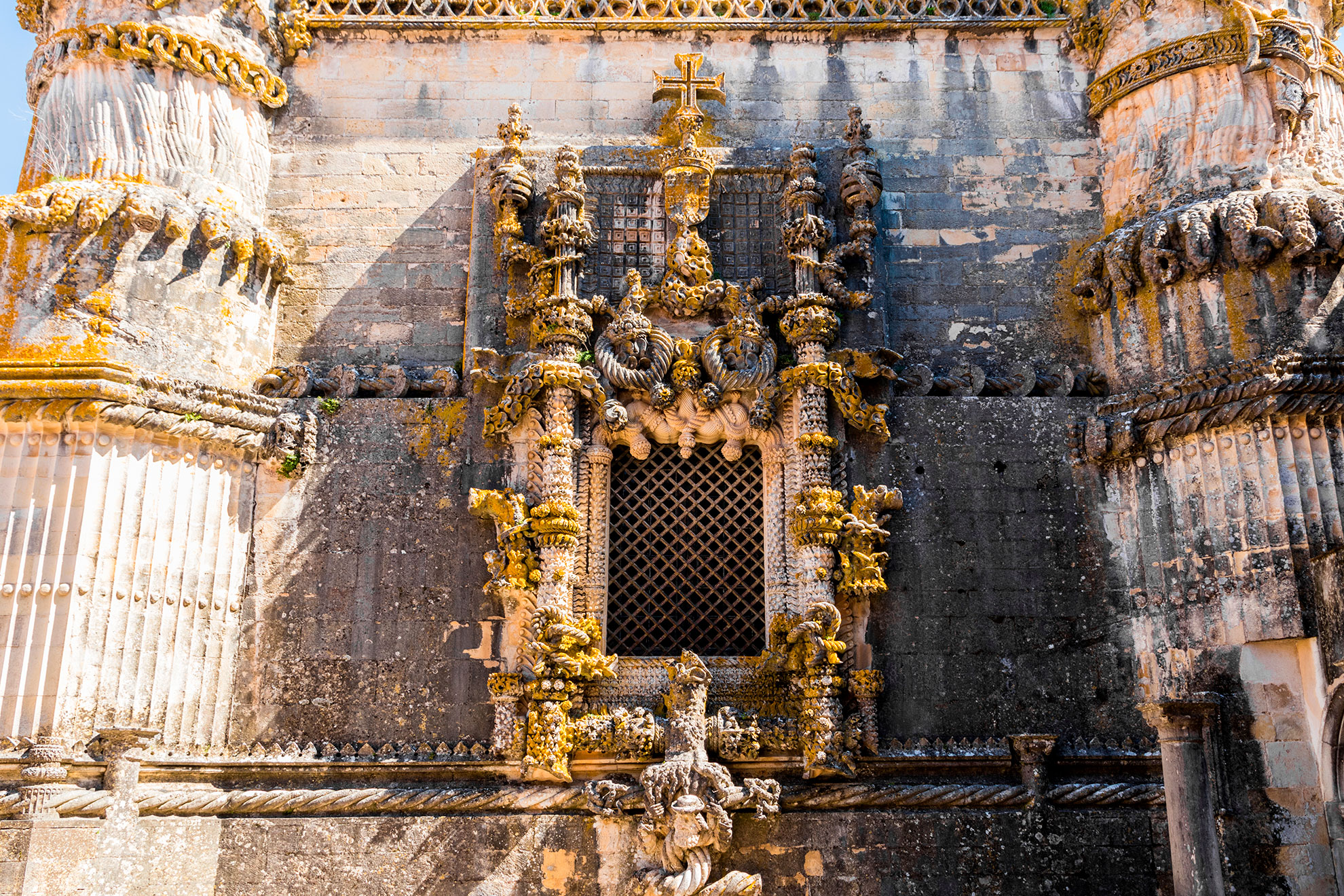
The Manueline Window, carved in the early 16th century, integrates nautical symbolism with the heraldry of the Order of Christ in a single densely layered composition.
Tours Based in Tomar
Almourol Castle: A Fortress on an Island in the Tagus
Twenty kilometres south of Tomar, where the Tagus River widens into a broad, slow reach, a small rocky island rises from the water with a medieval castle perched on its summit. Almourol is one of the most visually striking fortifications in Portugal — not because of its size, but because of its placement. Originally a pre-Roman site later developed by the Templars in 1171, the castle's ten towers and central keep are accessible only by small boat from the riverbank, a short crossing that nonetheless creates a sense of genuine separation from the contemporary world. The white limestone walls reflected in still water on a clear morning produce a scene that feels closer to medieval illustration than lived geography.
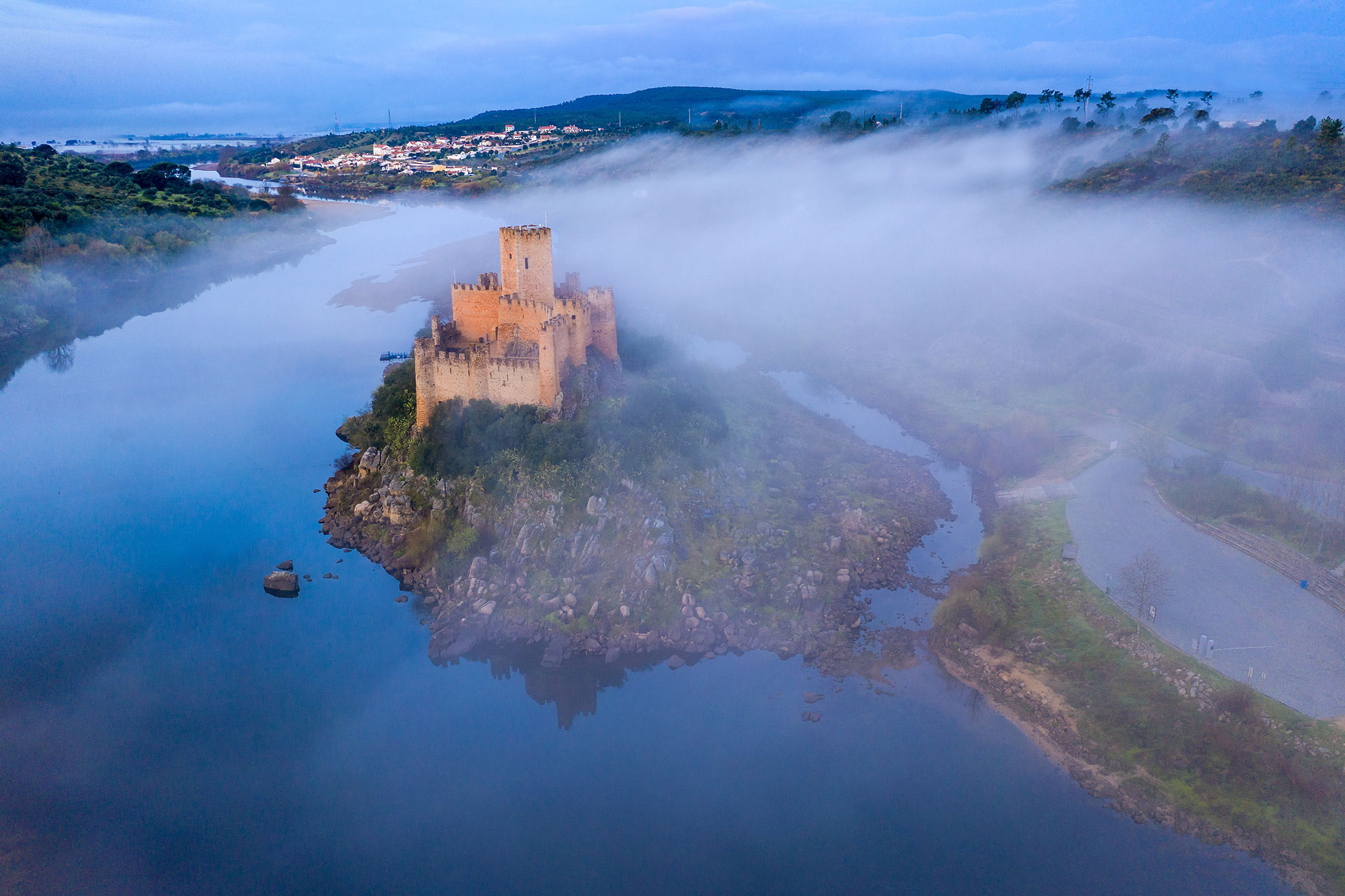
Almourol Castle, built by the Templars in 1171 on a pre-Roman foundation, sits on a small granite island in the middle of the Tagus River.
"Almourol appears in the Portuguese medieval romance Amadis of Gaul as a castle at the edge of the known world — and standing on its banks today, that description still carries weight."
Day Trips from Lisbon Covering Both Sites
Tomar's Templar heritage spans castles, convents, and centuries of enigmatic history. Browse all available tours and find the format — private, group, or half-day — that suits your schedule.
View all Tomar tours →From Coimbra and Beyond: Regional Connections
Tomar sits at a convenient geographical midpoint that makes it accessible from multiple Portuguese cities. From Coimbra, roughly 90 kilometres to the north, the drive down through the pine-covered hills of the Beira Litoral takes under an hour and a half, making Tomar a logical addition to any central Portugal itinerary. Private tours departing from Coimbra can combine the Convent of Christ with a stop at one of the agricultural estates along the Nabão valley, giving a layered view of the region beyond its medieval heritage.
Tours from Coimbra
The Broader Templar Landscape: Castles and Countryside
The Knights Templar did not build in isolation. Across the rolling terrain of central Portugal, a series of fortifications, watchtowers, and commanderies once formed an interconnected defensive network stretching from the Tagus valley to the Atlantic. A dedicated Templar castles tour allows you to trace this wider geography, moving between sites that rarely appear in standard itineraries and that, taken together, convey the scale of the Order's territorial ambitions in the Iberian Peninsula. The landscapes themselves — cork oak groves, the wide bends of the Tagus, and ochre-coloured hilltop villages — form an integral part of the journey.
Regional Templar Heritage Tour
Whether you are arriving from Lisbon, Coimbra, or planning a self-directed trip through central Portugal, there is a guided format that fits your travel style. Explore the full range of Tomar and Templar tours available through ToursXplorer.
Explore all Tomar experiences →Frequently Asked Questions
How long does it take to get from Lisbon to Tomar?
By car or organised tour, Tomar is approximately 1 hour 40 minutes from Lisbon depending on traffic. Direct trains from Lisbon's Santa Apolónia station take around 2 hours, with a change at Entroncamento. Most day tours from Lisbon factor travel time into the itinerary and typically depart early morning to maximise time at the sites.
What is the Manueline Window and why is it considered significant?
The Manueline Window is a carved limestone window on the west facade of the chapter house of the Convent of Christ, completed in the early 16th century during the reign of King Manuel I. It is considered the pinnacle of Manueline style — a uniquely Portuguese architectural language that fused Gothic structure with maritime and exploratory imagery. The window incorporates ropes, coral, armillary spheres, the Cross of the Order of Christ, and the royal arms in a single densely layered composition approximately ten metres tall.
Can you enter Almourol Castle, and how do you reach it?
Almourol Castle is accessible by small ferry boats that depart from the riverbank in Vila Nova da Barquinha. The crossing takes only a few minutes, and the castle interior — including its towers and keep — is open to visitors. Tours that combine Tomar with Almourol generally include a scheduled stop at the river crossing as part of the day's itinerary.
Is Tomar suitable for visitors with limited mobility?
The old town of Tomar is largely flat and walkable, though some cobblestone streets can be uneven. The Convent of Christ involves a moderate uphill approach and contains stairs in several sections of the interior; a partial visit covering the most accessible areas is feasible. Guides on private tours can tailor the route to accommodate specific mobility requirements — it is worth raising this when booking.
What is the best time of year to visit Tomar?
Spring (April to June) and early autumn (September to October) offer the most comfortable conditions for visiting Tomar. Summer temperatures in the region regularly exceed 35°C, and the Convent of Christ can become crowded during July and August. The town also hosts the Festa dos Tabuleiros, a centuries-old festival held every four years, which draws large crowds but is a distinctive cultural event in its own right.
Is the Synagogue of Tomar open to visitors?
Yes. The Synagogue on Rua Dr. Joaquim Jacinto is one of the best-preserved medieval synagogues in Portugal, dating to the 15th century. It houses a small museum with artefacts related to the Sephardic Jewish community that lived in Tomar before the forced conversions and expulsions of the late 1490s. Opening hours are limited and subject to seasonal variation, so it is advisable to check current access before visiting independently. Several walking tour guides include the synagogue as a specific stop.