




Best Things to Do on Berlenga Island for Nature and Adventure Lovers
From sea caves and snorkeling reefs to Fort São João Baptista and Atlantic seabird colonies, Berlenga Grande rewards those willing to make the crossing.
Lying 12 kilometres off the coast of Peniche in central Portugal, Berlenga Grande is the largest island in the Berlengas Archipelago and one of the few truly wild Atlantic islands accessible by day trip from the Portuguese mainland. Classified as a UNESCO Biosphere Reserve since 2011 and a protected marine park, it draws naturalists, divers, and coastal hikers looking for scenery and wildlife that the Algarve crowds never quite deliver.
Where Is Berlenga Island and What Makes It Different?
Berlenga Grande sits at 39°24'N, approximately 12 kilometres west of Peniche in the Oeste region of Portugal, roughly 100 kilometres north of Lisbon. It is the main island of the Berlengas Archipelago, which also includes the smaller Estelas and Farilhões rock groups. The island measures just 1.5 kilometres in length and 800 metres at its widest point, covering a surface area of around 78 hectares.
What separates Berlenga from other Portuguese island destinations is its governance. The entire archipelago is a Natural Reserve, established in 1981, and was designated a UNESCO Biosphere Reserve in 2011. Visitor numbers are actively controlled during summer months, and wild camping is prohibited. The island has no permanent village, no car traffic, and limited accommodation, which keeps the experience firmly in the territory of nature tourism rather than beach holiday.
The granite here is ancient, part of the same Hercynian geological formation that shaped the Serra de Sintra. Stand on the cliff path above Cova do Sonho and the ocean reads in fifty shades of blue-green, the colour shifting with depth over the submerged rock shelves below.
The combination of a marine protected area, a historically significant fortress, and endemic birdlife makes Berlenga a genuinely layered destination. It is not simply a beach with clear water. The island rewards curiosity at every scale, from the lichen patterns on the schist paths to the sonar clicks of common dolphins (Delphinus delphis) audible through the hull of a small boat.
How Do You Get to Berlenga Island from Peniche?
The standard route is a ferry crossing from Porto de Pesca de Peniche, the main fishing harbour on the southern side of the Peniche peninsula. Viamar operates the licensed ferry service, with crossings typically lasting between 35 and 45 minutes depending on sea conditions. The Atlantic swell in this stretch of coast is real: the waters between Peniche and Berlenga are open ocean, and on days with a westerly fetch the ride can be rough for passengers prone to motion sickness. Ginger tablets or prescription seasickness patches taken the night before departure make a measurable difference.
Ferries run from approximately June through September, with the highest frequency in July and August. Outside these months, access is largely limited to private charter boats, organised diving excursions, or the few licensed overnight guests. The last ferry back from the island typically departs in the late afternoon, so a precise check of the return schedule before boarding is essential.
An increasingly popular alternative to the standard ferry is booking a guided boat tour, which combines the crossing with structured activities such as cave exploration, snorkeling stops, and commentary on the island's natural and military history. ToursXplorer lists several of these tours departing from Peniche, all of which handle the logistics of timetables and landing permits on behalf of travellers.
Book your boat tour as early as possible in the summer season. Daily visitor numbers to Berlenga are capped, and the island reaches capacity on most days from late June through August. Tickets bought at the harbour on the morning of travel are a gamble.
For those travelling from Lisbon, the drive to Peniche takes approximately one hour via the A8 motorway. There is paid parking near the harbour. No private vehicles cross to the island.
What Are the Best Things to Do on Berlenga Island?
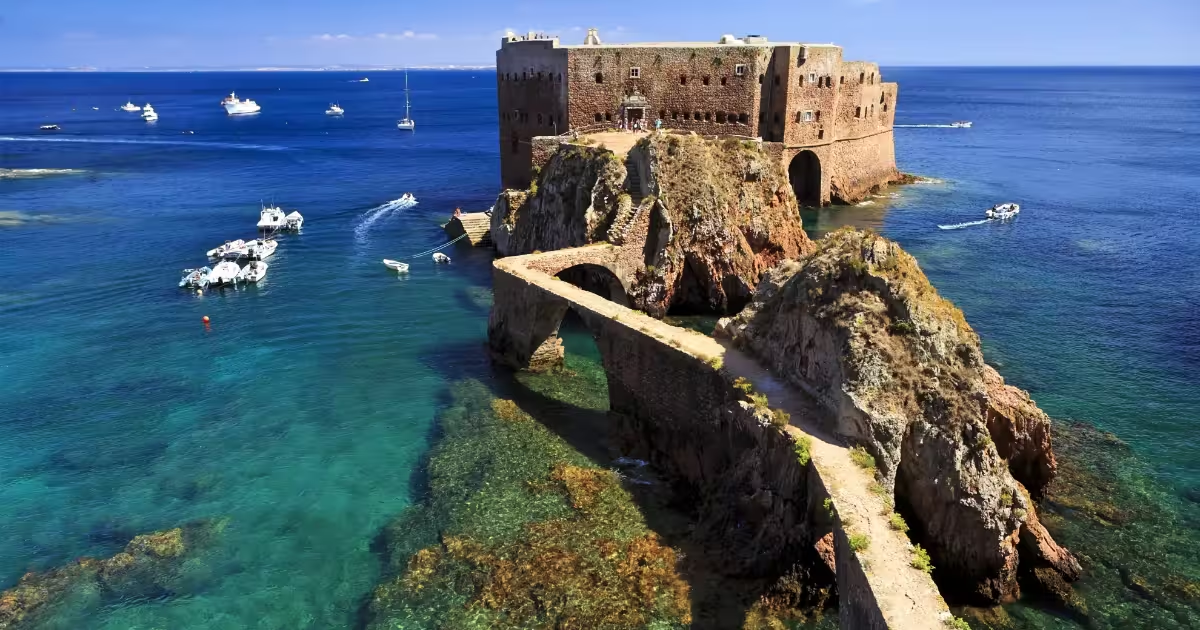
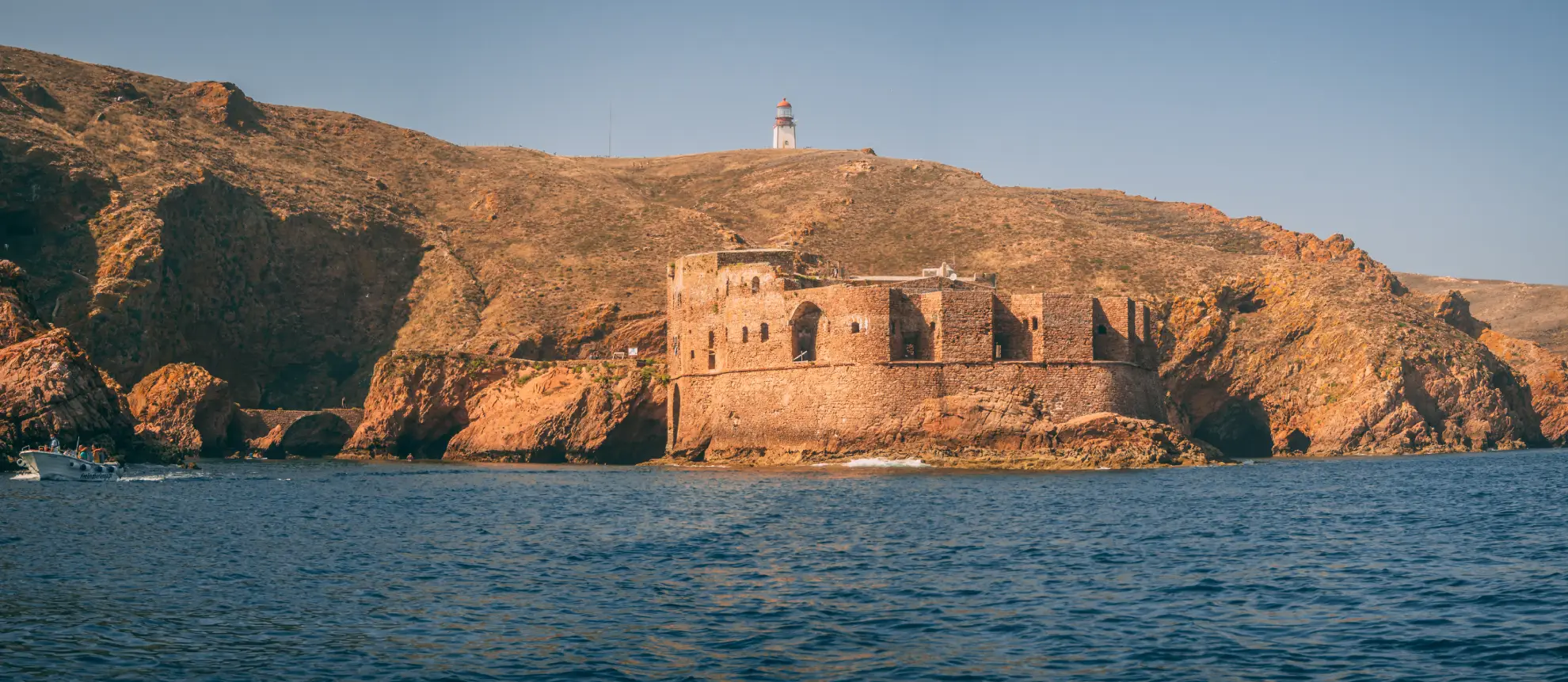
Visit Fort São João Baptista. The fortress sits on a small islet off Berlenga Grande's southeastern tip, connected to the main island by a narrow 17th-century stone causeway. Construction began in 1656 under orders from King João IV of Portugal, replacing an earlier Hieronymite monastery that had been repeatedly sacked by pirates. The fort was designed to defend the approaches to the Tagus estuary and is one of the best-preserved examples of Portuguese military architecture of its period on the Atlantic coast. Visitors can walk across the causeway and explore the outer walls and battlements.
Explore the sea caves by boat. The island's western and southern coastlines are riddled with sea caves and rock tunnels carved by Atlantic wave action over millennia. The most visited is Furado Grande, a tunnel that passes entirely through a headland and opens into a sheltered lagoon known as Cova do Sonho (Dream Cove). Small tour boats navigate through at slow speed, and the contrast between the cave darkness and the lit lagoon beyond is visually striking in a way that photographs rarely capture accurately.
Snorkel or dive the marine reserve. Berlenga's waters are classified as a Marine Protected Area, meaning fishing restrictions have allowed fish populations to recover significantly since the 1980s. Visibility in the coves can exceed 15 metres on calm days. Common species encountered while snorkeling include Diplodus sargus (white seabream), Labrus bergylta (ballan wrasse), and Octopus vulgaris. Certified divers can access deeper sites around the Farilhões rocks, which are considered among the top dive sites in mainland Portugal.
Hike the island trails. Berlenga Grande has a network of marked footpaths covering most of the accessible terrain. The ridge path from the landing dock to the lighthouse at the island's western end takes approximately 40 minutes at a relaxed pace and passes the ruins of the Hieronymite monastery. The lighthouse itself, Farol das Berlengas, dates to 1841 and is still operational. The clifftop views north toward the Farilhões group are unobstructed.
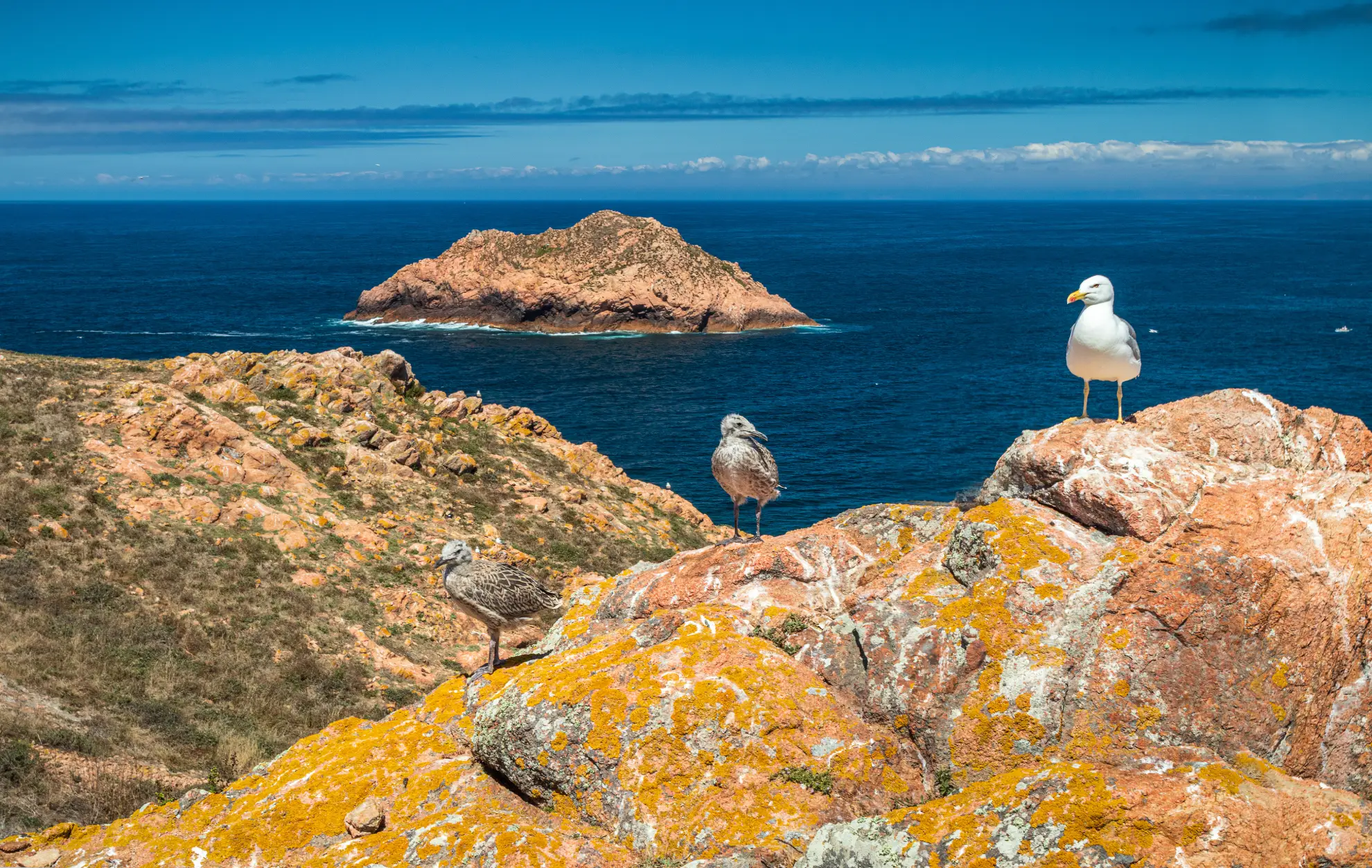
Watch seabirds and marine wildlife. Berlenga is one of the most important nesting sites for Puffinus mauretanicus (Balearic shearwater) and Larus michahellis (yellow-legged gull) on the Portuguese coast. The island also supports a colony of European shags (Gulosus aristotelis). Common dolphins are frequently spotted during the crossing from Peniche, and bottlenose dolphins (Tursiops truncatus) occasionally appear in the sheltered coves. Sightings are not guaranteed but are frequent enough to justify keeping a pair of binoculars in your bag.
Swim at Praia do Carreiro do Mosteiro. The island has one accessible sandy beach, located in the sheltered cove near the fortress causeway. The water is cold by Mediterranean standards, typically between 17°C and 20°C in summer, but clear and calm compared to the exposed Atlantic faces. This is the safest and most practical swimming location for non-divers.
What Wildlife Lives on Berlenga Island?
The Berlengas Natural Reserve protects one of the densest concentrations of seabirds on the Portuguese coastline. In addition to the shearwater and shag colonies already mentioned, the island supports nesting populations of Hydrobates pelagicus (European storm petrel), a small seabird that comes ashore only at night to avoid predation by gulls. The total breeding bird list for the archipelago runs to over 20 species.
Below the waterline, the marine reserve status has produced a genuine recovery in fish biomass. Surveys conducted by the Instituto Português do Mar e da Atmosfera (IPMA) have documented population increases in commercially valuable species since fishing restrictions were tightened in the 1990s. The kelp forests around the island's base provide habitat structure for juvenile fish and invertebrates, and the rocky substrate supports communities of Paracentrotus lividus (sea urchin) and Balanus barnacles at the intertidal zone.
Rabbits (Oryctolagus cuniculus) are the only land mammal present in significant numbers and are descended from animals introduced during the monastic period. They graze the sparse coastal heath vegetation and are conspicuously unafraid of humans, a reminder of how isolated from mainland predator pressure the island has remained.
Can You Stay Overnight on Berlenga Island?
Overnight accommodation on Berlenga is extremely limited by design. The Berlenga Grande campsite operates during summer with a strict quota, and reservations must be made weeks in advance through the Peniche municipality. There is also a small hostel facility within the fort complex, operated by a private concessionaire, with very few beds available per night. Both options sell out quickly once booking opens each spring.
Staying overnight has a distinct advantage: once the last ferry departs in the afternoon, the island population drops to a handful of campers, researchers, and lighthouse staff. The evening light on the western cliffs and the absence of daytime visitor noise create a substantially different experience from the day-trip version of Berlenga. That said, the infrastructure is genuinely basic. There is no reliable mobile signal from most operators, one small restaurant near the dock that serves grilled fish and simple meals, and limited fresh water. Packing a headlamp, a warm layer (even in July the Atlantic nights are cool), and more food than you think you need is standard advice from anyone who has done it.
When Is the Best Time to Visit Berlenga Island?
The ferry operates reliably from June through September, making this the practical window for most visitors. July and August offer the calmest sea conditions, the warmest water temperatures, and the longest daylight hours, but also the highest visitor density. On peak summer days, the island can feel crowded around the dock and beach area despite the overall visitor cap.
June and September represent a more balanced option. Temperatures in Peniche average around 22°C in June and 23°C in September. The sea is marginally rougher than in high summer but still manageable for most travellers. Birdwatching is productive throughout the season, but September is particularly good for observing shearwater activity as birds begin to depart for their Atlantic wintering grounds.
Winter visits are possible but require chartering a private boat from Peniche, and the sea state makes landings genuinely difficult or impossible on many days between November and March. Spring (April to May) is favoured by birdwatchers and marine biologists but the ferry is not yet running, again requiring private charter arrangements.
For photography, the golden-hour light on the fort's stone walls and the western cliffs is most accessible on summer evenings for overnight guests. Day visitors with cameras should aim for early morning arrivals on the first ferry to avoid the midday flatness of the light and the peak crowd hours.
Guided Tours and Boat Trips to Berlenga Island
Ready to explore Berlenga Island? ToursXplorer lists guided boat tours departing from Peniche with sea cave access, snorkeling equipment, and full-day itineraries. Book your spot before the summer quota fills.
Click hereSustainable Travel on Berlenga: What Every Visitor Should Know
The Berlengas Natural Reserve operates under a visitor management framework that is stricter than most Portuguese protected areas. Daily landing quotas apply during the summer season, anchoring of private boats within the marine reserve is regulated, and all waste must leave with visitors since there is no landfill capacity on the island. These restrictions are not bureaucratic inconvenience but the operational backbone of what makes Berlenga worth visiting.
Sunscreen is a specific concern in marine reserves. Chemical UV filters including oxybenzone and octinoxate have documented toxic effects on coral and invertebrate larvae at concentrations measurable in popular snorkeling sites. Switching to a mineral-based reef-safe sunscreen before entering the water at Berlenga is a concrete action rather than an abstract gesture toward sustainability.
ToursXplorer selects tour operators for the Berlenga departures who hold valid licensing from the Peniche harbour authority and comply with the natural reserve's landing and operational rules. Travelling with a licensed operator also means your visit counts toward the officially monitored visitor numbers, which feeds into the management data used by ICNF (Instituto da Conservação da Natureza e das Florestas) to set future quotas.
Noise discipline around nesting bird areas, staying on marked paths, and not feeding the rabbits or gulls are the three most commonly disregarded guidelines on the island. The yellow-legged gull population has expanded significantly due to opportunistic feeding on visitor food scraps, which has put pressure on smaller nesting seabirds competing for the same cliff ledges.
Is Berlenga Island Worth the Trip from Lisbon?
For travellers based in Lisbon with a spare day, Berlenga requires about an hour's drive north to Peniche, a 40-minute boat crossing, and a return by late afternoon ferry. The total round trip from Lisbon is feasible in a single long day but is genuinely tiring. Spending a night in Peniche the evening before and taking the first morning ferry is a more comfortable arrangement and allows an earlier start on the island before the second ferry wave arrives.
The question of whether Berlenga is worth it depends on what kind of traveller is asking. For those whose Portugal itinerary consists primarily of historic city centres and restaurant tables, a rough Atlantic crossing to an island with one café and no shade trees at noon may not land well. For travellers drawn to marine environments, coastal geology, birdlife, or the particular atmosphere of a place that actively limits how many people can be present, Berlenga is one of the more rewarding day trips in mainland Europe.
ToursXplorer recommends pairing the Berlenga visit with time in Peniche itself, which has a working fishing industry, a well-preserved town wall, and a surf beach at Supertubos that is ranked among the top ten beach break waves in Europe. The combination turns a single-purpose day trip into a two-day coastal itinerary with genuine variety.
Frequently Asked Questions
Berlenga Grande is located 12 kilometres off the coast of Peniche in the Oeste region of central Portugal, approximately 100 kilometres north of Lisbon. It is the largest island of the Berlengas Archipelago, which also includes the Estelas and Farilhões rock groups. The island covers around 78 hectares and rises to a maximum elevation of about 83 metres.
The ferry crossing from Porto de Pesca de Peniche to Berlenga Grande takes between 35 and 45 minutes depending on sea conditions. The waters between Peniche and the island are open Atlantic, and a westerly swell can make the crossing uncomfortable for those prone to motion sickness. Booking a guided boat tour rather than the standard ferry often means a slightly smaller vessel with more flexibility on stops.
Yes, but options are very limited. A small campsite with a strict seasonal quota operates during summer, managed by Peniche municipality. There is also a small hostel within Fort São João Baptista with very few beds. Both require advance booking, often weeks ahead of the intended date. Outside the campsite and hostel, wild camping is prohibited under the Natural Reserve regulations.
Berlenga supports significant seabird colonies including European shags (Gulosus aristotelis), yellow-legged gulls (Larus michahellis), Balearic shearwaters (Puffinus mauretanicus), and European storm petrels (Hydrobates pelagicus). Wild rabbits descended from monastery-era introductions roam freely. In the water, snorkelers regularly encounter white seabream, ballan wrasse, common octopus, and on boat crossings, common and bottlenose dolphins are frequently sighted.
June and September offer the best balance of accessible sea conditions, moderate visitor numbers, and good wildlife activity. July and August have the calmest seas and warmest water (17 to 20 degrees Celsius) but are the busiest months. The ferry service runs from approximately June to September. Outside this window, access requires chartering a private boat from Peniche, and landings can be difficult due to Atlantic swell.
Bring reef-safe mineral sunscreen, water (at least 1.5 litres per person since the only café has limited stock), a light windproof layer even in summer, closed-toe shoes suitable for rocky trails, and seasickness medication taken before boarding if you are at all susceptible. There is no reliable mobile signal from most Portuguese operators on the island, so download offline maps before you leave Peniche.