




Pico Ruivo and Pico do Areeiro: Everything You Need to Know Before Hiking
A practical guide to Madeira's highest peaks, covering routes, logistics, weather, and the best time to set off.
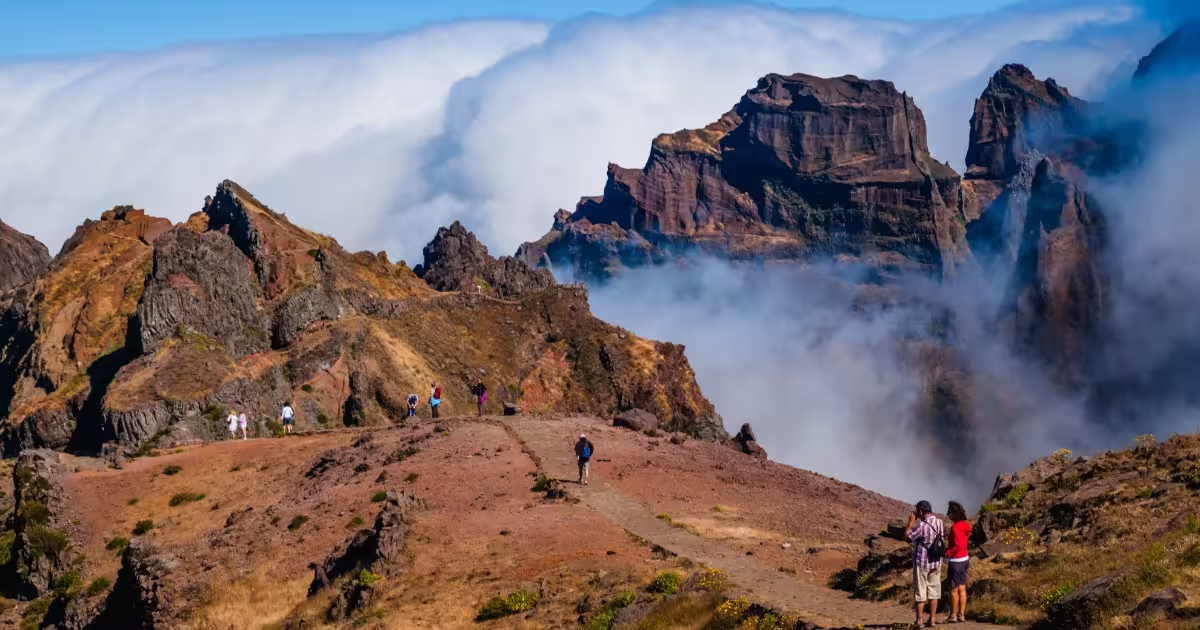
Standing at 1,862 metres, Pico Ruivo is the highest point on Madeira Island and the third highest peak in all Portuguese territory. The trail connecting it to Pico do Areeiro (1,818 m), officially designated PR1 Vereda do Areeiro, spans roughly 13 kilometres one way through volcanic basalt, cloud forest, and tunnelled ridgelines. It draws tens of thousands of visitors each year and remains one of the most distinctive mountain treks in the Atlantic.
What is the PR1 Trail and Where Does It Run?
The PR1 Vereda do Areeiro is a waymarked trail managed by the Regional Secretariat for the Environment of Madeira. It links Pico do Areeiro in the east to Pico Ruivo in the west, passing through the central mountain spine of the island. The official trailhead at Pico do Areeiro sits at roughly 1,818 metres and is accessible by road via the EN202 from Poiso. Pico Ruivo's summit can be reached via a short 15-minute ascent from the Achada do Teixeira car park on the northern side of the island.
The full route between the two peaks covers approximately 13 km and involves around 1,600 metres of cumulative elevation change when accounting for the undulating ridge. There are two path options on sections of the trail: a high route that traverses open ridgelines with full exposure, and a lower route that passes through tunnels carved into the rock. The lower route is shorter by about 1.5 km and reduces wind exposure considerably.
The PR1 is not a circular route. Hikers who complete the full traverse need to plan return logistics in advance, either by arranging a vehicle at each trailhead or booking a transfer through a local operator.
Trail markers are painted in red and yellow. The path is rocky throughout and includes metal staircases, narrow ledges, and sections where hands are needed for stability. Proper footwear is non-negotiable. The Madeira Tourism Board classifies the route as difficult for the full traverse and medium difficulty for the Achada do Teixeira to Pico Ruivo section alone.
How Long Does the Pico Ruivo Hike Take?
Hiking time depends heavily on which section you tackle. The full PR1 traverse from Pico do Areeiro to Pico Ruivo takes most walkers between 4 and 6 hours at a moderate pace, not including rest stops. Hikers starting from Achada do Teixeira and ascending directly to Pico Ruivo can reach the summit in approximately 45 minutes to 1 hour, as that segment covers only about 1.7 km with 290 metres of elevation gain.
For those doing the full trail, adding a descent back to Pico do Areeiro means a round trip of roughly 26 km, a commitment that demands an early start, sufficient food and water, and fitness suited to sustained mountain terrain. Most guided groups cover the full traverse one way, with transport coordinated at either end.
Sunrise starts are particularly popular. Leaving Pico do Areeiro at around 5:30 to 6:00 a.m. in summer months means arriving at Pico Ruivo by mid-morning, with cloud inversion at its most photogenic during the first two hours of daylight. In winter months, sunrise occurs later (around 7:30 a.m.), and temperatures at altitude can drop to near 0°C.
"The cloud sea below the peaks is most reliable between May and October, when warm Atlantic air rises against the cool volcanic ridge and settles into the valley as a white blanket by early morning," notes seasonal data compiled by the Instituto de Meteorologia de Portugal.
Can Beginners Hike Pico do Areeiro to Pico Ruivo?
The honest answer is: it depends on the individual. The Achada do Teixeira to Pico Ruivo section is genuinely accessible to most adults with a reasonable level of fitness. The path is well-maintained, clearly marked, and less than 2 km in each direction. Families with older children regularly complete this section without difficulty.
The full PR1 traverse is a different matter. The route demands sustained effort over several hours on uneven volcanic terrain, with some exposed sections that may unsettle those with a fear of heights. There are no mountain rescue stations along the trail, and mobile signal is intermittent above 1,600 metres. Inexperienced hikers should either join a guided group, which provides local expertise and safety oversight, or limit their hike to the Pico Ruivo summit from Achada do Teixeira.
Guided tours available through ToursXplorer include options suited to different fitness levels. Some operators offer sunrise guided experiences starting at Pico do Areeiro and finishing at Pico Ruivo, with transport included, which removes the logistical complexity for first-time visitors.
What Should You Bring for the Pico Ruivo Trail?
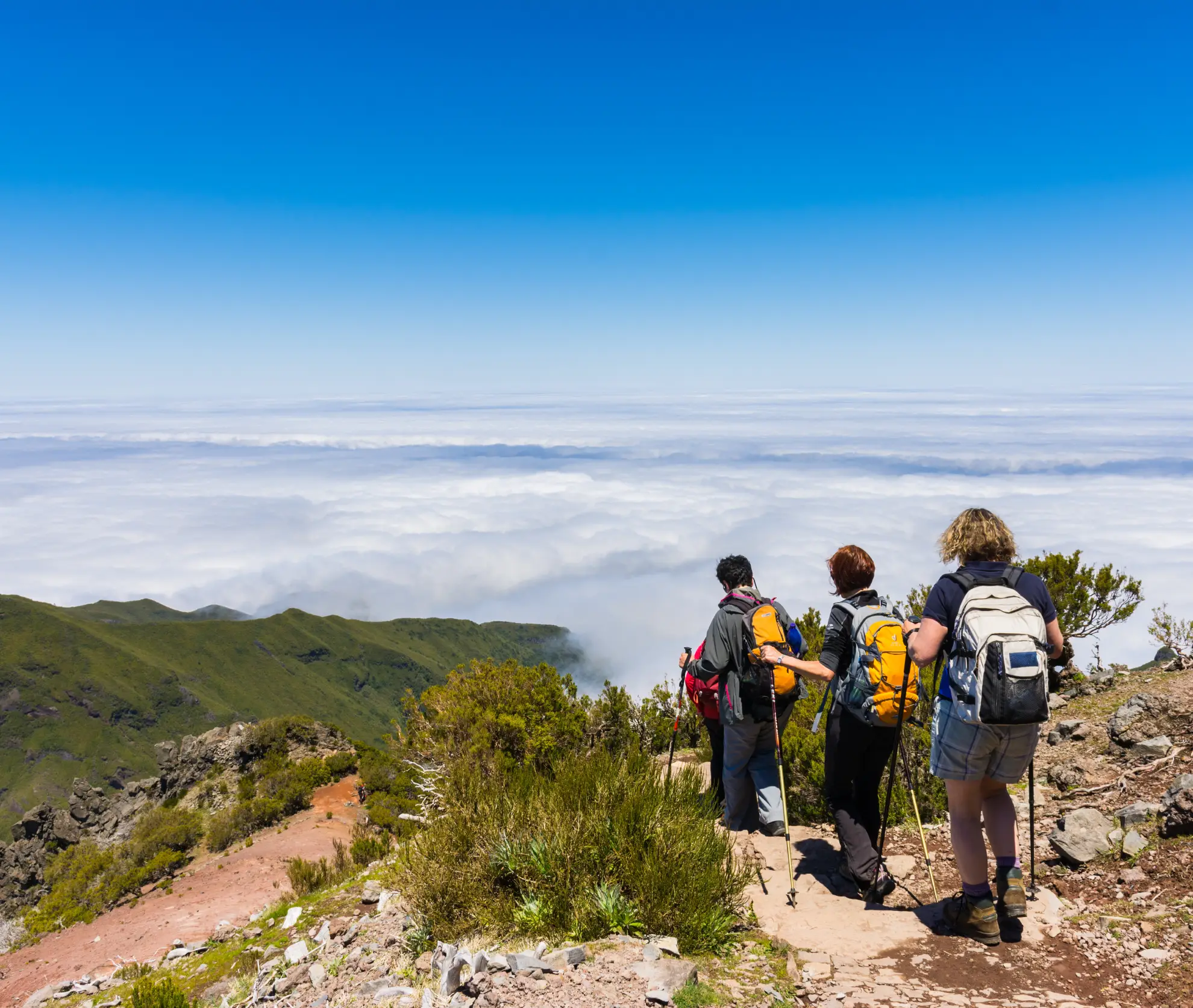
Weather on the central ridge changes fast. Clear skies at the trailhead can give way to thick cloud and wind within 30 minutes. The following kit list reflects what experienced guides consistently recommend for the PR1 route:
Essential gear: waterproof jacket and trousers, hiking boots with ankle support, at least 2 litres of water per person, high-calorie snacks, sun protection (factor 50 or higher), headlamp or torch (for pre-dawn starts), and a fully charged mobile phone with offline maps downloaded.
Useful additions: trekking poles (especially helpful on the descent), a light fleece layer (temperatures above 1,800 m are 6 to 10°C cooler than sea level), and a hat with wind protection. The Pico Ruivo refuge (Casa de Abrigo do Pico Ruivo) serves basic food and drinks between approximately 8:00 a.m. and 5:00 p.m. in peak season, but should not be relied upon as a primary food source.
Photography equipment benefits from a wide-angle lens or smartphone with panoramic capability. The 360-degree summit view from Pico Ruivo on a clear day extends to Pico das Torres (1,851 m), the coast at São Vicente to the north, and the plateau of Paul da Serra to the west.
How Do You Get to Pico do Areeiro and Pico Ruivo?
Pico do Areeiro is accessible by private car or taxi via the EN202 road from Poiso, approximately 20 km from Funchal. The drive from Funchal city centre takes around 35 to 45 minutes depending on traffic. There is a public car park at the summit (free of charge as of 2024) with a café and a small visitor facility. Public bus services do not reach Pico do Areeiro directly, making private transport or organised tours the practical option for most visitors.
Achada do Teixeira, the northern trailhead for Pico Ruivo, is reached from Santana via a narrow mountain road. The car park here fills quickly on weekends between June and September, and arriving before 8:00 a.m. is advisable. There is no public bus serving this road.
For hikers completing the full traverse, a common logistics solution is to drive one vehicle to Achada do Teixeira and take a taxi to Pico do Areeiro, then hike back to the car. Alternatively, guided tours from ToursXplorer handle all transfers, which significantly simplifies the planning for independent travellers visiting Madeira for a short stay.
When Is the Best Season to Hike Madeira's Peaks?
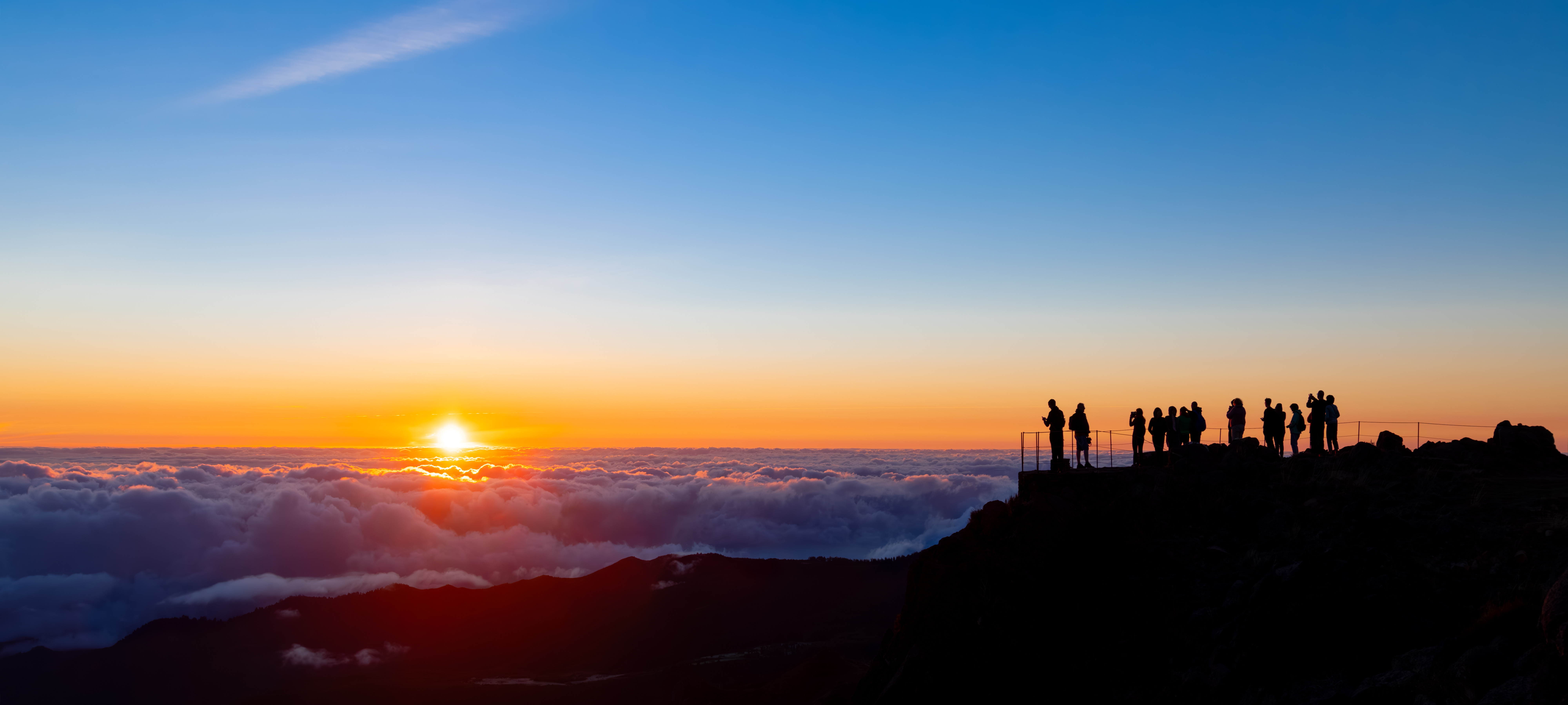
The PR1 trail is open year-round, but conditions vary considerably by season. May through October is generally the most reliable window. During these months, morning cloud inversions are frequent, humidity at altitude is lower than on the coast, and daylight hours allow a comfortable full-day traverse. July and August bring the most stable weather but also the heaviest visitor numbers, meaning car parks fill before 7:00 a.m. on weekends.
November through February brings the highest risk of trail closures due to ice, strong wind, or low visibility. The Regional Secretariat for the Environment may close sections of the PR1 at short notice during adverse weather. Checking the official Madeira Trails website (trails.madeira.gov.pt) and the Instituto Português do Mar e da Atmosfera forecast (ipma.pt) the evening before your hike is strongly recommended regardless of season.
Autumn (September to November) offers a useful middle ground: fewer visitors than midsummer, mild temperatures, and the endemic Vaccinium padifolium (Madeira bilberry) and Erica arborea (tree heather) still in leaf along the lower cloud forest sections of the trail. Spring (March to May) sees wildflowers including Echium candicans (pride of Madeira) on the surrounding hillsides below the tree line.
Guided and Self-Guided Tours for Pico Ruivo and Pico do Areeiro
Ready to hike Pico Ruivo or Pico do Areeiro? Browse guided sunrise tours, self-guided options, and high-altitude treks on ToursXplorer and book your departure slot before spaces fill.
Click herePhotography, Regulations, and Respecting the Trail
The central massif of Madeira falls within the Madeira Natural Park (Parque Natural da Madeira), established in 1982 and covering approximately 67% of the island's land area. Within the park, regulations prohibit camping outside designated areas, the collection of plants or rocks, and the use of drones without prior written authorisation from the Regional Directorate of Forests. Violations carry fines under Portuguese environmental law.
Photography on the PR1 is unrestricted for personal and editorial use. The most productive windows for landscape photography are the 30 minutes before and after sunrise from the Pico do Areeiro viewpoint, and the period between 7:00 and 9:00 a.m. from the Pico Ruivo summit when cloud inversion is typically at its highest and most defined. A polarising filter reduces glare from the basalt surfaces and deepens the contrast between cloud and sky.
Trail etiquette matters on a route this popular. Yield to hikers moving uphill, keep group noise low near the ridge edges where wind makes communication difficult, and carry all waste out. The trail does not have waste bins, and the Regional Secretariat has increased warden patrols during peak season following incidents of litter accumulation at the Pico Ruivo refuge area.
Planning Your Hike with ToursXplorer
For travellers who want structured options rather than building a logistics plan from scratch, ToursXplorer lists a range of departures covering the Pico Ruivo and Pico do Areeiro corridor. Options span self-guided formats, small-group guided sunrise departures, and high-altitude full-day experiences. All listed operators are verified for local licensing compliance and insurance coverage.
Whether you plan to hike independently or with a guide, the key variables to confirm before your departure date are: current trail status (check trails.madeira.gov.pt), weather forecast above 1,500 m (ipma.pt), and transport arrangements for the non-circular finish point. Having a contingency plan for trail closure due to ice or high winds is not overcaution — it is standard practice for mountain trekking in the Atlantic volcanic environment.
Frequently Asked Questions
The full PR1 traverse from Pico do Areeiro to Pico Ruivo covers approximately 13 km one way and takes most hikers between 4 and 6 hours at a steady pace. Hiking only from Achada do Teixeira to the Pico Ruivo summit takes around 45 minutes to 1 hour, as that section covers just 1.7 km with 290 metres of ascent.
The full traverse is rated difficult and requires sustained effort on uneven volcanic terrain with exposed sections. Beginners are better suited to the shorter Achada do Teixeira to Pico Ruivo route (under 2 km each way), which most adults with moderate fitness can complete. Joining a guided group is strongly recommended for those without mountain hiking experience on the full PR1.
Essential items include waterproof jacket and trousers, ankle-support hiking boots, at least 2 litres of water, sun protection (factor 50), a headlamp for pre-dawn starts, and a fully charged phone with offline maps. A light fleece layer is needed as temperatures above 1,800 m are 6 to 10°C cooler than coastal Madeira. Trekking poles help significantly on the descent.
May through October offers the most reliable conditions, with morning cloud inversions, stable weather, and longer daylight hours. Sunrise departures between 5:30 and 6:00 a.m. in summer give the best chance of clear summit views before midday cloud builds. Avoid November through February if possible, as ice, strong wind, and low visibility can lead to trail closures with short notice.
Yes, both trailheads have free public car parks. The Pico do Areeiro car park is accessible via the EN202 road from Poiso, roughly 35 to 45 minutes from Funchal. Achada do Teixeira is reached from Santana and fills quickly on summer weekends. Arriving before 8:00 a.m. is advised. No direct public bus serves either car park.
The PR1 Vereda do Areeiro is officially open year-round, but sections can be closed at short notice due to ice, high winds, or low visibility, particularly between November and February. Before hiking, check the current trail status at trails.madeira.gov.pt and the altitude weather forecast at ipma.pt. The Regional Secretariat for the Environment issues closure notices online the day before or morning of adverse conditions.