




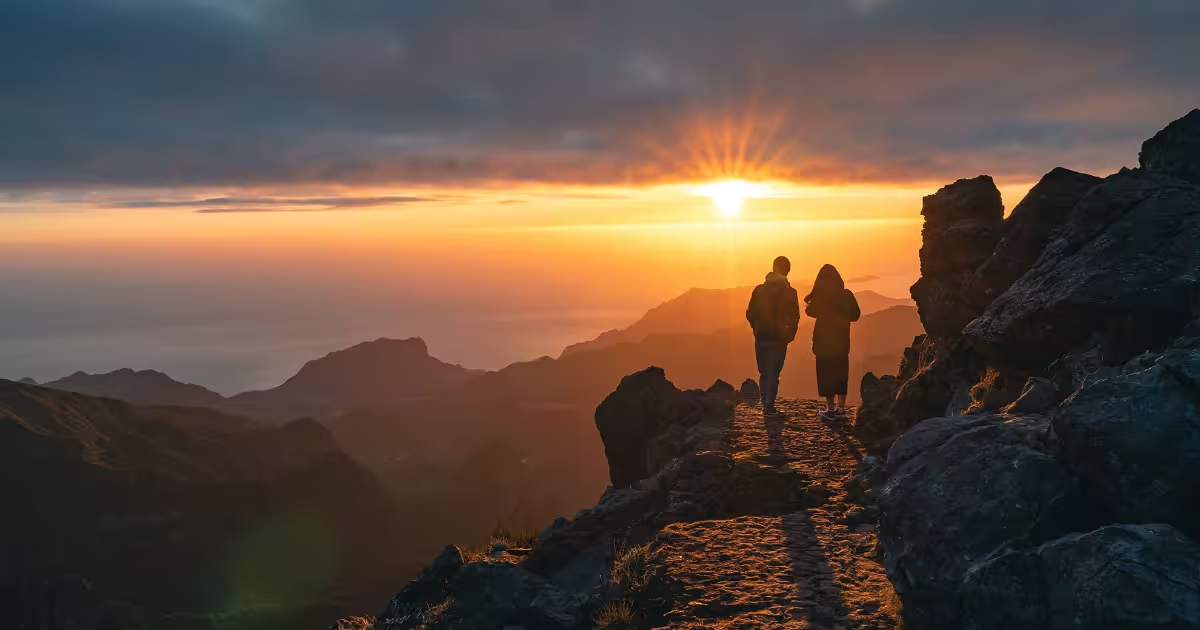
Sunrise at Pico do Areeiro and Pico Ruivo: Madeira's Most Epic View
Standing 1,818 metres above the Atlantic, Madeira's third-highest peak offers a rare encounter with golden light breaking over a sea of clouds.
At 1,818 metres above sea level, Pico do Areeiro is the third-highest point in Madeira and one of the few places in Portugal where you can watch sunrise above a complete cloud inversion. The peak is accessible by car via the ER202 road, making it unusually reachable for a high-altitude viewpoint. From here, a marked trail of approximately 9 kilometres connects to Pico Ruivo, the island's highest summit at 1,862 metres.
What makes the sunrise at Pico do Areeiro different from other viewpoints?
Madeira sits at approximately 32 degrees north latitude, positioned in the Atlantic Ocean roughly 700 kilometres west of the Moroccan coast. The island's central mountain range, the Maciço Central, rises so sharply from the ocean that trade winds push moisture-laden air upward, producing persistent cloud layers that typically settle between 1,200 and 1,600 metres. Pico do Areeiro at 1,818 metres sits above this band for much of the year.
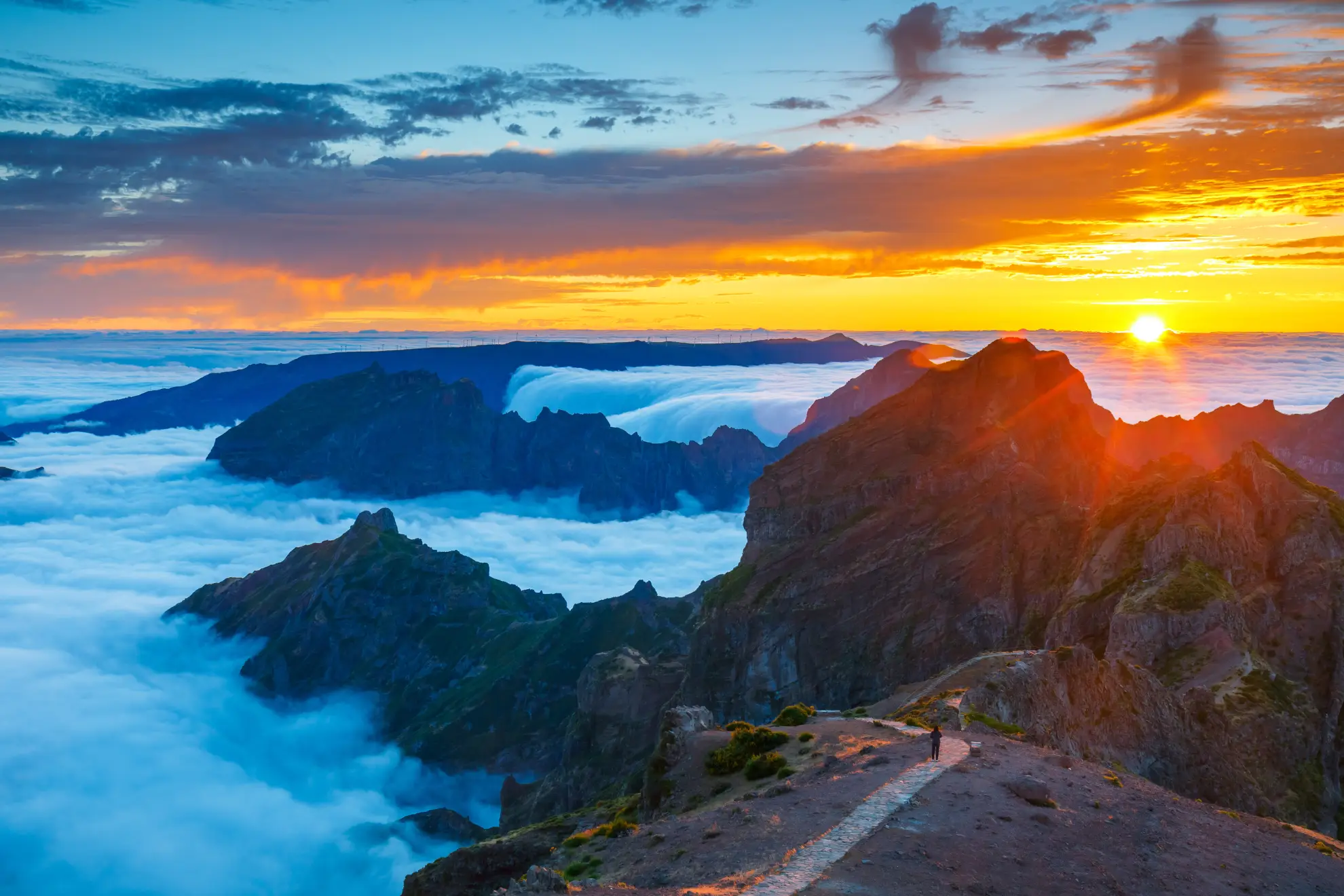
The result is a cloud inversion: from the summit platform, you look down on a white, rippling layer of cloud that conceals the valleys and coastline below. When the sun clears the eastern horizon, it strikes the volcanic basalt ridges and the cloud surface simultaneously, producing a layered effect of orange, deep red, and pale gold that shifts for approximately 30 to 40 minutes before the colours flatten into daylight white.
"The cloud layer sat perfectly still at around 1,400 metres. The peaks of Pico Ruivo and Torres emerged from it like islands above a white sea, and the first light turned every ridge a different shade of copper." — ToursXplorer Editorial Team field notes, March 2024
Unlike coastal sunrise spots such as Ponta de São Lourenço (Madeira's easternmost peninsula) or the clifftop at Cabo Girão (the second-highest sea cliff in Europe at 580 metres), Pico do Areeiro places you above the weather rather than beside it. The sensation of looking down on clouds rather than up at them is the defining characteristic of this experience.
Can you drive to Pico do Areeiro, or do you need to hike?
Pico do Areeiro is one of the very few peaks in Madeira accessible entirely by road. The ER202 from Poiso, itself reachable from Funchal in approximately 35 to 40 minutes by car, continues upward to a small car park and viewpoint platform at the summit. There is a café and a small government-run guesthouse, the Abrigo do Pico do Areeiro, which accommodates limited overnight guests and is typically booked weeks in advance during peak season (June to September).
Arriving by car for sunrise requires no physical preparation beyond the drive. Most visitors arrive 20 to 30 minutes before the forecast sunrise time, which in Madeira ranges from approximately 06:10 in June to 07:55 in December, due to the island's position at the western edge of the Western European Time zone. In winter months, sunrise at Pico do Areeiro can occur closer to 08:05 on the shortest days.
The alternative, and considerably more demanding, approach is the PR1 hiking trail connecting Pico do Areeiro to Pico Ruivo. This route covers approximately 9 kilometres one way with an elevation change of roughly 300 metres (including multiple ascents and descents along the ridge). The trail crosses three tunnels and passes the intermediate peak of Torres (1,851 metres) before reaching the Pico Ruivo refuge at 1,818 metres and the summit at 1,862 metres. Total walking time is typically 3 to 4 hours one way for a fit hiker.
"The PR1 is not a casual walk. The section between Torres and Pico Ruivo involves exposed ridgeline paths with steel cable handrails, and wind speeds above 1,700 metres can make footing unreliable. The views at each intermediate point justify the effort for those who are prepared." — ToursXplorer Editorial Team
Hikers attempting the full route from Pico do Areeiro to Pico Ruivo for sunrise typically start in darkness from Pico do Areeiro at around 04:30 to 05:00 in summer, or arrange a shuttle from Santana or Funchal. The trail is marked but has no lighting, making a headlamp essential.
What are the best photography spots along the Pico do Areeiro ridge?
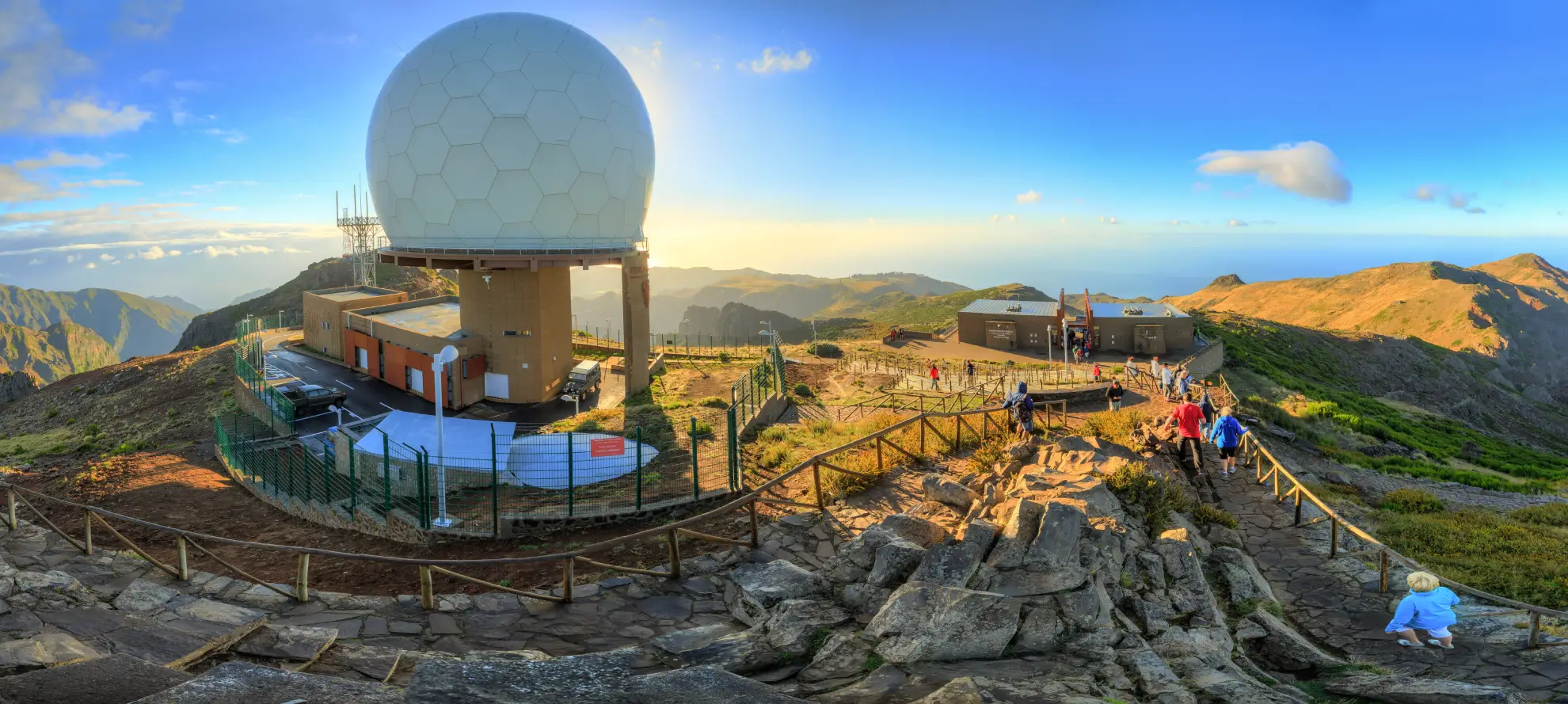
Pico do Areeiro itself offers the widest panoramic platform, facing east and northeast across the central massif toward Pico Ruivo. This is the primary location for cloud inversion photography because the viewing angle looks directly into the sunrise direction. The concrete platform at the summit car park provides an unobstructed foreground with the volcanic ridgeline receding into the distance.
Approximately 400 metres along the PR1 trail from the car park, a secondary rocky promontory (locally referred to as the Miradouro do Juncal area) gives a southwest-facing angle back toward Pico do Areeiro itself. This reverse angle, with the sun rising behind the photographer, produces well-lit shots of the peak and the cloud sea beneath it. This spot is particularly useful between October and February when the sun rises further south and the light is lower and warmer.
At the Torres peak (1,851 metres), approximately 2.5 kilometres from the start, hikers gain a 360-degree unobstructed view. The angle from Torres toward Pico Ruivo is the classic ridge shot: a narrow path cutting along the spine of the island with cloud on both the north and south sides. This composition requires calm winds to be safe and is most reliable in summer months between May and August.
Drone photography at Pico do Areeiro falls under Portuguese Civil Aviation Authority (ANAC) regulations. The area sits within uncontrolled airspace above 120 metres but requires registration of recreational drones over 250 grams with ANAC. Commercial drone use requires specific permits. Wind speeds above 1,700 metres regularly exceed 30 km/h even on clear days, making stable drone footage technically challenging without professional equipment.
For still photography, a wide-angle lens in the 16 to 24mm range (full-frame equivalent) captures the full curvature of the ridge and the depth of the cloud layer. A tripod is useful for the pre-dawn period, and a neutral density graduated filter helps balance the bright sky against the darker ridge during the first 15 minutes after sunrise.
When is the best season to see cloud inversions at Pico do Areeiro?
Cloud inversions at Pico do Areeiro are most reliable between October and March, when trade winds strengthen and moisture levels in the lower atmosphere are higher. During this period, clear summit conditions with cloud below occur on approximately 60 to 70 percent of mornings, according to records from the Instituto de Meteorologia regional station maintained near Pico do Areeiro.
Summer months (June to August) offer the longest daylight and the warmest summit temperatures (typically 8 to 14 degrees Celsius at sunrise), but cloud inversions are less frequent and the cloud layer sometimes rises to obscure the peak itself rather than sitting below it. April and May represent a useful middle period: inversions are still relatively common and the sunrise occurs before 07:00, making logistics easier for visitors staying in Funchal.
Temperature at the summit at sunrise in any month can be significantly lower than coastal Funchal, which typically sits between 16 and 23 degrees Celsius year-round. A difference of 8 to 12 degrees Celsius between Funchal and the summit is typical, and wind chill at exposed viewpoints can push the effective temperature 5 degrees lower still. Layered clothing, including a windproof shell, is recommended regardless of the season.
For visitors planning around a short stay in Madeira, ToursXplorer recommends checking local forecast services such as IPMA (Instituto Português do Mar e da Atmosfera) the evening before. A forecast showing high pressure, clear skies at altitude, and cloud below 1,600 metres at coastal stations is the strongest indicator of a successful cloud inversion sunrise.
Guided and Self-Guided Sunrise Experiences at Pico do Areeiro
Book your Pico do Areeiro sunrise experience through ToursXplorer and arrive at one of Madeira's most compelling viewpoints with transport, timing, and local knowledge already handled.
Click herePlanning your visit: practical logistics for Pico do Areeiro sunrise
Visitors driving independently should leave Funchal no later than 90 minutes before the forecast sunrise time to allow for the 35-minute drive to Poiso and the additional 15 to 20 minutes up the ER202 to the summit car park. Parking at the summit is limited to approximately 40 spaces. On weekends and public holidays between April and October, the car park fills quickly and some visitors park along the ER202 shoulder and walk the final 800 metres.
The Abrigo do Pico do Areeiro guesthouse is operated by the regional government of Madeira and offers the most direct access to the sunrise viewpoint. Staying there eliminates transport logistics entirely and allows guests to step onto the platform within 2 minutes of leaving their room. Bookings are made through the Secretaria Regional de Florestas e Conservação da Natureza and should be made at least 4 to 6 weeks in advance during peak season.
For visitors joining a guided tour through ToursXplorer, pickup times from Funchal typically start between 04:30 and 05:30 depending on the season and operator. The tours listed on this page cover the full range of options from car-accessible sunrise visits to the complete ridge hike to Pico Ruivo, accommodating different fitness levels and time budgets.
Weather at this altitude changes rapidly. The Madeira archipelago is subject to orographic cloud formation throughout the year, and a clear summit at 05:00 can become overcast by 06:30. Checking the IPMA mountain forecast (available in Portuguese and English on the IPMA website) the evening before is strongly recommended. A forecast showing stable high pressure with cloud tops below 1,600 metres gives the best probability of a clear inversion sunrise.
Frequently Asked Questions
For most visitors to Madeira, yes. The summit at 1,818 metres offers a cloud inversion view that is not replicable at any coastal viewpoint on the island. On clear mornings, particularly between October and March, the sunrise produces visible layers of colour across the volcanic ridge and cloud surface for approximately 30 to 40 minutes. The car-accessible summit makes it achievable without specialist hiking fitness.
Aim to arrive 20 to 30 minutes before the forecast sunrise time. In Madeira, sunrise ranges from approximately 06:10 in June to around 08:00 in December. Leaving Funchal 90 minutes before sunrise allows time for the 35 to 40-minute drive and finding parking. The car park holds roughly 40 vehicles and fills quickly on weekends between April and October.
Yes. Pico do Areeiro is accessible entirely by road via the ER202 from Poiso, which is itself reachable from Funchal in approximately 35 to 40 minutes. The road is paved and maintained year-round, though it may be closed briefly in winter during frost or ice events. A small car park at the summit accommodates around 40 vehicles, with a café and guesthouse also on site.
The PR1 trail covers approximately 9 kilometres one way with around 300 metres of cumulative elevation change across several ascents and descents. The route passes Torres at 1,851 metres and includes exposed ridgeline sections with steel cable handrails. Fit, experienced hikers complete it in 3 to 4 hours one way. The trail requires sturdy footwear, a headlamp for pre-dawn starts, and windproof clothing.
October to March offers the most reliable cloud inversions, with clear summit conditions above a cloud layer occurring on roughly 60 to 70 percent of mornings. Summer months (June to August) are warmer and have longer daylight but less frequent inversions. April and May provide a useful balance of reasonable inversion frequency and earlier, more convenient sunrise times around 06:30 to 07:00.
Still photography is unrestricted on the public summit platform. Drone operators must register recreational drones over 250 grams with the Portuguese Civil Aviation Authority (ANAC) and comply with standard altitude and airspace rules. Commercial drone use requires additional permits. Wind speeds above 1,700 metres frequently exceed 30 km/h, which poses practical challenges for stable aerial footage regardless of regulations.