




Ria Formosa Natural Park: The Hidden Paradise of Portugal's Algarve Coast
Where flamingos wade through turquoise lagoons, barrier islands shelter ancient fishing villages, and the Algarve reveals its quietest, wildest self.
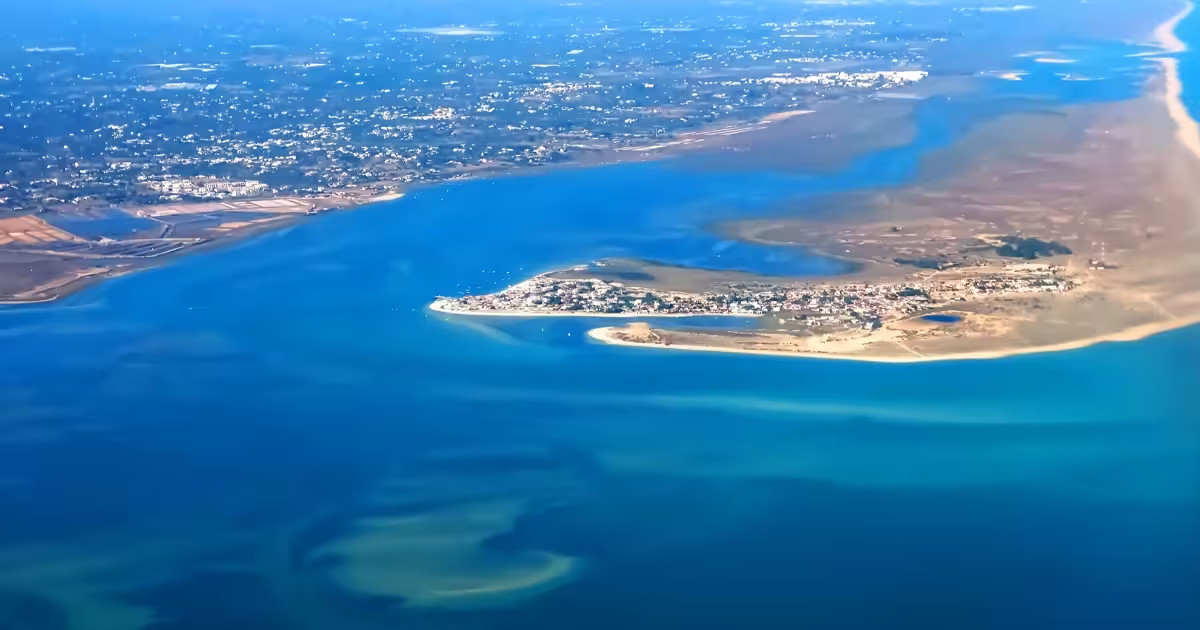
Stretching 60 kilometres along the Algarve coast between Manta Rota and Meia Praia, Ria Formosa Natural Park protects one of Europe's most significant coastal lagoon systems. Established as a protected area in 1987, the park shelters eight barrier islands, tidal mudflats, salt marshes and a biodiversity that includes over 200 bird species. Most visitors fly into Faro without realising this reserve begins at the airport perimeter.
What Is Ria Formosa Natural Park and Why Does It Matter?
Ria Formosa Natural Park covers approximately 18,400 hectares of protected coastline in the eastern Algarve, classified under Portugal's national nature protection framework in 1987. The system is a ria, a coastal lagoon formed by a chain of barrier islands and peninsulas that separate the Atlantic Ocean from a network of tidal channels, mudflats and salt marshes. Tidal exchange with the ocean occurs through six natural inlets, renewing the lagoon's water twice daily and sustaining one of the most productive marine ecosystems on the Iberian Peninsula.
The park is recognised as a Ramsar Wetland of International Importance, a designation it holds due to the exceptional density of migratory and resident waterbirds that depend on its habitats. Approximately 20,000 waterbirds overwinter here each year. The reserve also functions as a critical nursery for commercial fish species including sea bream (Sparus aurata), sea bass (Dicentrarchus labrax) and European flounder (Platichthys flesus), supporting both the local fishing economy and marine biodiversity at a regional scale.
Ria Formosa is one of the seven natural wonders of Portugal, a title awarded by public vote in 2010, and it remains the only major coastal lagoon system in the country with this level of ecological integrity intact.
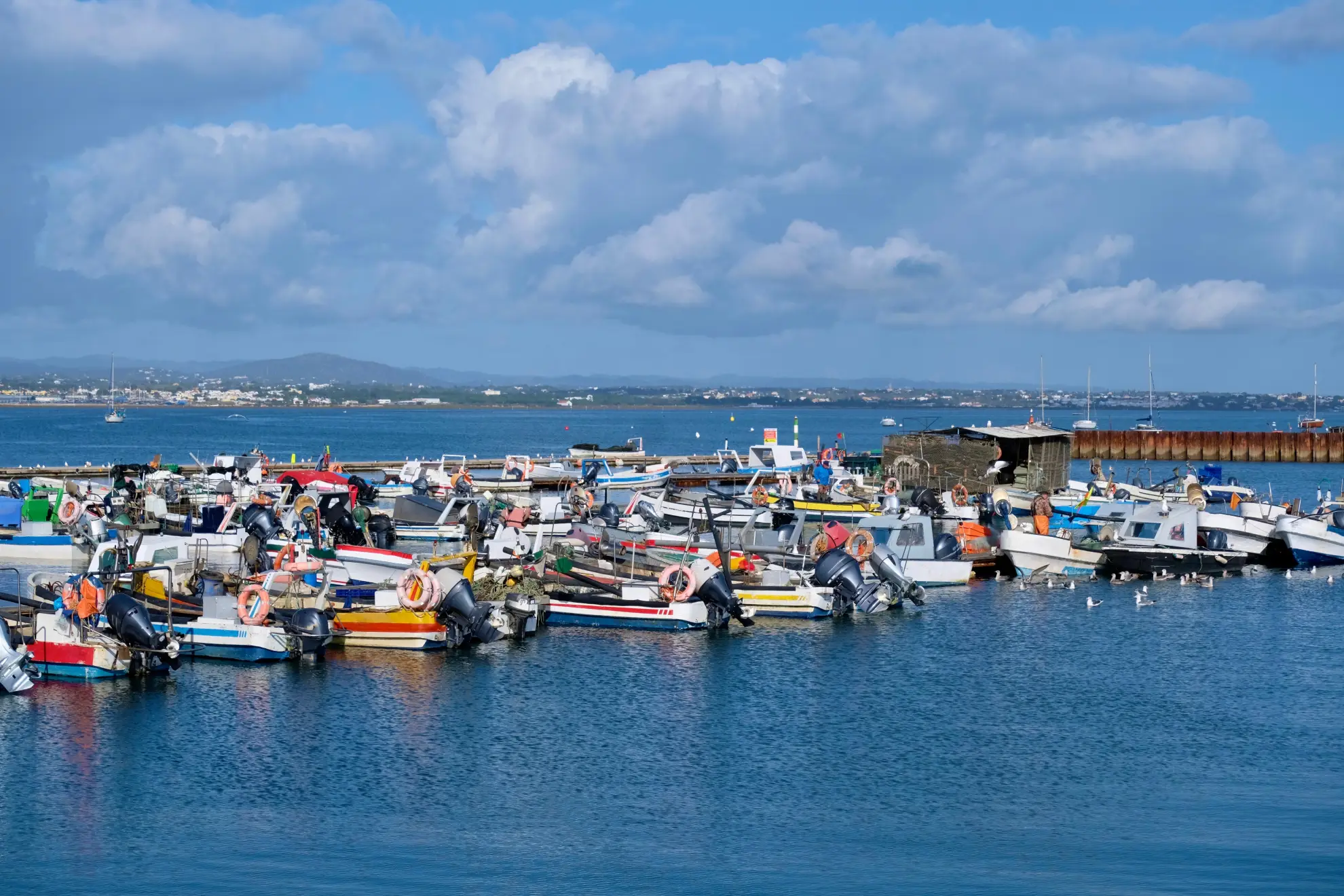
The human presence within the park is longstanding. Fishing communities on Culatra Island and Armona Island have maintained traditional livelihoods for generations, harvesting clams (Ruditapes decussatus), oysters and fish from the same channels their predecessors worked centuries before. This coexistence of protected nature and lived culture gives Ria Formosa a character that purely remote wilderness cannot replicate.
What Are the Best Things to Do in Ria Formosa?
The range of experiences available in Ria Formosa suits travellers with very different interests, from passive observation to active exploration. Boat tours departing from Faro Marina remain the most accessible way to cover the lagoon's geography and reach multiple islands in a single outing. Private boat tours allow guests to set their own pace, anchor near sandbanks and enter shallower channels that larger vessels cannot navigate.
Kayaking is increasingly popular as a way to move through the park at water level, close to the reed beds where purple herons (Ardea purpurea) nest and where the sounds of the lagoon are unfiltered by engine noise. A 4-hour paddle covers enough distance to reach inner sandbanks and tidal channels without requiring advanced paddling experience. Early morning departures, before the sea breeze builds, offer the calmest conditions and the best birdwatching windows.
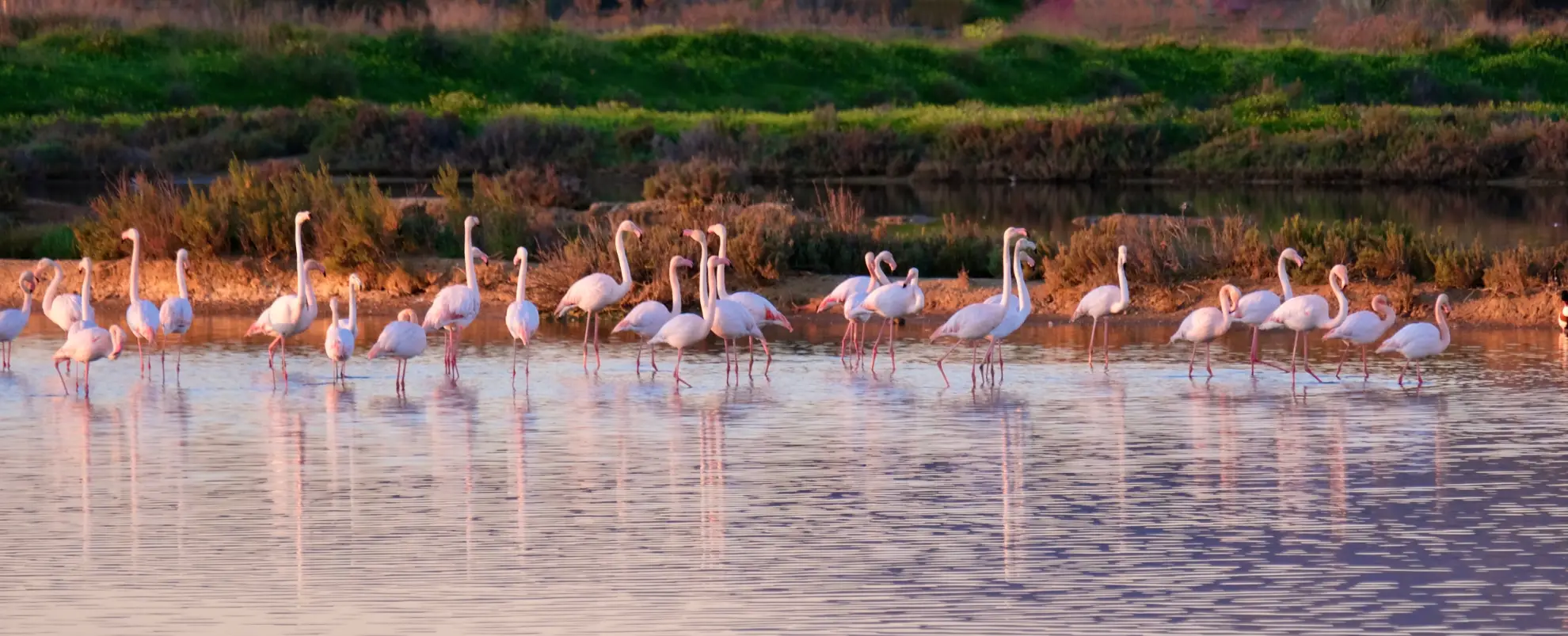
Island hopping by boat gives access to four distinct island environments: Culatra, Armona, Farol and Deserta. Each has a different character and visitor profile. Birdwatching is productive throughout the year but peaks during spring migration (April and May) and autumn migration (September and October), when species such as the greater flamingo (Phoenicopterus roseus), spoonbill (Platalea leucorodia) and Kentish plover (Charadrius alexandrinus) are present in large numbers. Sunset boat tours offer a different perspective on the same landscape, with the low angle of light turning the tidal channels copper and the silhouettes of wading birds becoming compositional elements rather than distant specks.
Photography within the park rewards patience. The combination of reflective water surfaces, flat horizons and abundant wildlife creates conditions that professional landscape and wildlife photographers return to repeatedly. The salt pans near Olhão, located on the park's western edge, attract concentrations of flamingos that are reliably visible from late summer through winter.
Which Islands Should You Visit in Ria Formosa?
Culatra Island is the largest and most populated of the barrier islands, home to a permanent fishing community of approximately 1,000 residents. The island has no roads and no cars, and its village of the same name clusters around a sheltered harbour. Culatra's ocean-facing beach, Praia de Culatra, extends for over 2 kilometres and is backed by low dunes rather than development. Regular ferry services from Olhão reach Culatra in approximately 45 minutes.
Armona Island, located west of Culatra, is accessible from Olhão in around 15 minutes by ferry. The island's southern beach, Praia de Armona, is one of the most visited in the park due to its width and calm Atlantic conditions. A small seasonal community occupies holiday houses near the ferry dock, but walking 20 minutes east along the beach leads to effectively empty shoreline. The shallow lagoon side of Armona is particularly suitable for swimming at low tide.
Farol Island, named for the lighthouse that has guided vessels since 1851, sits at the western end of the island chain nearest to Faro. The lighthouse stands 47 metres tall and marks the entrance to Faro's navigational channel. The village of Farol accommodates a small permanent population and a handful of seasonal restaurants. The ocean beach here faces the open Atlantic and has stronger wave action than the lagoon-side shores.
Deserta Island lives up to its name: no permanent residents, no services and no infrastructure beyond the sand itself. Its 11 kilometres of beach represent the park's most undisturbed stretch of Atlantic coastline, accessible only by private boat or organised tour.
Deserta is also a significant nesting site for the Kentish plover and the Sandwich tern (Thalasseus sandvicensis), and parts of the island are seasonally restricted to protect nesting colonies. Visitors who reach it by boat typically have long sections of beach entirely to themselves, even during July and August.
What Wildlife Can You See in Ria Formosa?
Ria Formosa's position along the East Atlantic Flyway makes it a convergence point for bird species moving between northern Europe and West Africa. The park records over 200 bird species annually, of which approximately 70 breed within the reserve. The greater flamingo is the most photographed resident, present year-round in the salt pans near Olhão and Tavira, with populations exceeding 2,000 individuals during winter months. The purple gallinule (Porphyrio porphyrio), a rail species with vivid blue-purple plumage, is a park emblem and can be observed in reed beds throughout the lagoon.
Marine biodiversity is equally significant. The lagoon supports populations of the European chameleon (Chamaeleo chamaeleon), one of its northernmost habitats in Portugal, as well as the Mediterranean fan mussel (Pinna nobilis), a critically endangered bivalve protected under European legislation. Bottlenose dolphins (Tursiops truncatus) are regularly sighted near the tidal inlets, particularly during morning hours when they follow fish schools through the channels.
For birdwatchers, the optimal visiting window is between October and April, when wintering species augment the resident population and the vegetation is low enough to allow clear sightlines across the mudflats. The Centro de Educação Ambiental de Marim, located 2 kilometres east of Olhão on the EN125 road, provides an entry point into the park with marked trails, interpretation panels and viewing hides. Admission to the centre is free.
How Do You Visit Ria Formosa Practically?
Faro is the principal gateway to Ria Formosa. Faro International Airport sits on the lagoon's edge, and Faro Marina, located in the city centre, serves as the main departure point for boat tours into the park. The journey from the marina to the nearest barrier island takes under 20 minutes. Olhão, 8 kilometres east of Faro along the EN125, operates ferry services to Culatra and Armona islands daily from April through September, with reduced frequency in winter.
Organised boat tours represent the most efficient way to experience multiple parts of the park in a single day. Private tours offer flexibility in timing and itinerary, while group tours typically follow fixed routes to the main islands with scheduled stops. Kayak rentals, available from operators based near Faro and Olhão, suit visitors who prefer self-directed exploration and have some experience on the water. A 4-hour rental is generally sufficient to explore the inner channels and reach the nearest sandbanks.
The best months for visiting are April through June and September through October. July and August bring the largest visitor numbers, particularly to Armona and Culatra, and ferry services operate at full capacity on weekends. Spring visits coincide with peak birdwatching conditions and warm but not extreme temperatures. Water temperatures in the lagoon reach 24 degrees Celsius in summer, making swimming comfortable from June through September.
Sustainable behaviour within the park includes staying on marked paths in designated nature zones, not disturbing nesting birds between April and August, avoiding single-use plastics on boat tours and respecting the no-anchor zones around seagrass beds. The park authority, Instituto da Conservação da Natureza e das Florestas (ICNF), enforces these regulations and operators holding park permits are required to brief visitors before entering protected zones. ToursXplorer lists only licensed operators for all Ria Formosa experiences, ensuring that bookings contribute to responsible tourism within the reserve.
Explore Ria Formosa: Tours and Experiences
Ready to explore Ria Formosa? Browse licensed boat tours, kayak rentals and sunset experiences on ToursXplorer and book directly with operators who carry official park permits.
Click hereIs Ria Formosa Worth Visiting? An Honest Assessment
For travellers whose image of the Algarve consists entirely of cliff-backed beaches and resort towns, Ria Formosa represents a genuine alternative. The park is not a secondary attraction to be slotted between beach days. It is a destination with its own logic, its own pace and its own rewards that bear no resemblance to anything available on the ocean-facing coastline.
The honest answer to whether Ria Formosa is worth visiting depends on what a traveller expects from it. It is not a dramatic landscape in the way that the Ponta da Piedade sea stacks near Lagos are dramatic. The park's appeal is horizontal: wide skies, flat water, the slow movement of birds and the quiet rhythm of tidal cycles. Visitors who arrive expecting spectacle may find it understated. Visitors who arrive with patience consistently rate it among the most memorable parts of their Algarve trip.
Practically, a half-day is the minimum meaningful visit. A full day, incorporating a morning kayak session, a stop on one of the islands for lunch and an afternoon boat tour back through the inner channels, covers the park's principal experiences without feeling rushed. ToursXplorer's listings include tours that can be combined to build this kind of itinerary, with operators coordinating timing between activities on request.
The park's proximity to Faro Airport means it is feasible even for travellers on short visits. A 3-night stay in Faro with one full day in Ria Formosa provides a genuine encounter with this ecosystem rather than a cursory transit. For those with more time, basing two or three nights on Culatra Island, in accommodation run by local families, removes the day-tripper constraint entirely and allows the park's character to reveal itself on its own terms.
Frequently Asked Questions
Ria Formosa Natural Park is famous for its coastal lagoon system, barrier islands and exceptional biodiversity. It protects over 18,400 hectares of tidal mudflats, salt marshes and seagrass beds along the Algarve coast. The park is one of Portugal's seven natural wonders and a Ramsar Wetland, hosting more than 200 bird species including greater flamingos, spoonbills and the rare purple gallinule.
The main barrier islands are reached by ferry from Olhão (to Culatra and Armona, journeys of 15 to 45 minutes) or by organised boat tour from Faro Marina. Private boat tours allow access to smaller sandbanks and tidal channels unreachable by ferry. Deserta Island has no ferry service and requires a private boat or organised tour. Ferries operate daily from April through September.
Yes, swimming is possible on both the lagoon side and the Atlantic-facing beaches of the barrier islands. The lagoon's sheltered channels reach water temperatures of around 24 degrees Celsius in summer, making them popular for calm-water swimming. Ocean-facing beaches such as Praia de Culatra and Praia de Armona have Atlantic conditions with moderate wave action. Seagrass beds and tidal zones near the park's nature reserves are protected and should not be disturbed.
October through April is the best period for birdwatching, when migratory species augment resident populations and flamingo numbers at the Olhão salt pans peak above 2,000 individuals. Spring migration in April and May brings spoonbills, Kentish plovers and Sandwich terns. Summer months offer warmer water for swimming and kayaking but nesting restrictions apply in some island zones between April and August.
Ria Formosa begins effectively at Faro Airport's perimeter. Faro Marina, the main departure point for boat tours, is in the city centre about 2 kilometres from the airport. Olhão, with its ferry services to Culatra and Armona islands, is 8 kilometres east of Faro along the EN125 road and reachable by regional train in under 10 minutes. No car is required to access the park from Faro.
Yes, kayak rentals and guided paddling experiences operate within the park, typically departing from points near Faro or Olhão. A standard 4-hour rental covers enough distance to explore inner tidal channels and reach sandbanks. No advanced kayaking experience is required for lagoon paddling, though some familiarity with flat-water technique is helpful. Guided options with a naturalist guide are also available for those who want species identification along the route.