




Madeira Weather Month by Month: When to Visit for Sun, Hiking and Whale Watching
A practical climate guide to Madeira's microclimates, seasonal windows, and the activities that define each month of the year
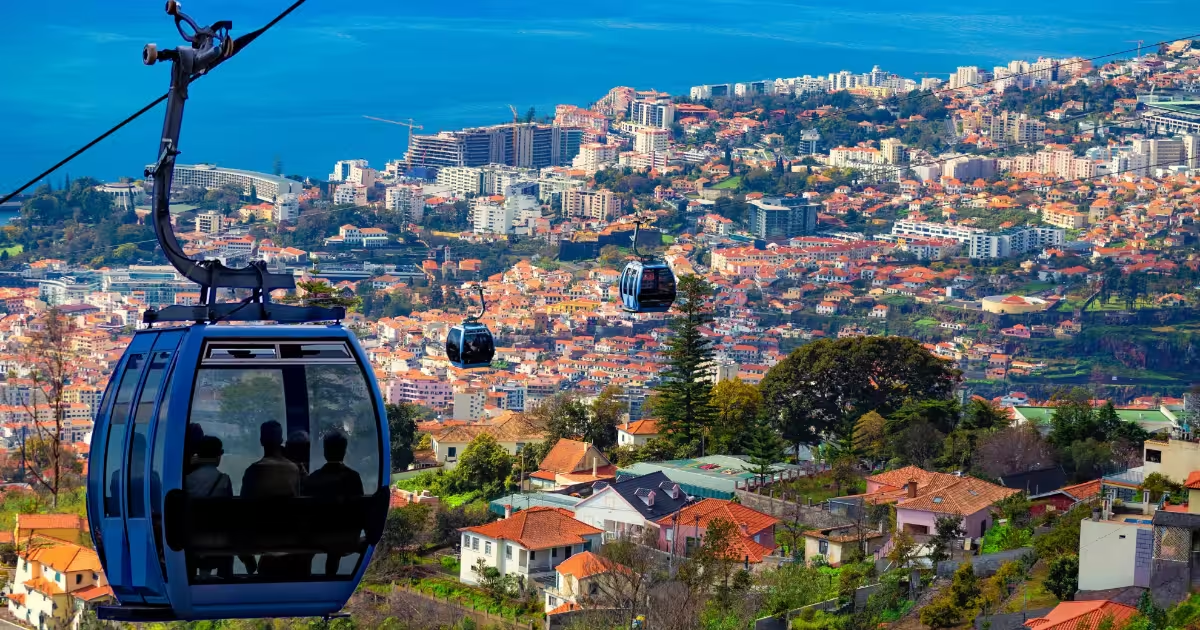
Madeira sits at 32 degrees north latitude in the Atlantic Ocean, roughly 980 kilometres southwest of Lisbon and 520 kilometres west of the Moroccan coast. That position, combined with the island's volcanic topography rising to 1,862 metres at Pico Ruivo, creates a patchwork of microclimates so varied that two valleys separated by a single ridge can experience entirely different weather on the same afternoon. Understanding those patterns is the key to timing any visit well.
What Are Madeira's Microclimates and Why Do They Matter?
Madeira's weather is governed by three interacting forces: the semi-permanent Azores High pressure system, the northeast trade winds, and the island's own dramatic relief. Moisture-laden trade winds strike the northern slopes and are forced upward, a process meteorologists call orographic rainfall. The result is that the north coast around São Vicente and Santana receives more than 2,000 millimetres of rain annually, while Funchal on the south coast averages around 640 millimetres. The two towns are separated by just 35 kilometres of mountain road.
Locals refer to the Banana Line — an informal boundary at roughly 300 metres above sea level — below which subtropical warmth and sunshine are reliable for most of the year. Banana plantations thrive on these sun-facing southern terraces precisely because frost is virtually unknown and temperatures rarely drop below 15°C even in January. Above that line, conditions shift rapidly. On the central plateau around Paul da Serra at 1,400 metres, fog, wind, and temperatures in single digits are possible any month of the year.
"A cloud inversion is not a threat — it is a spectacle. Standing on Pico Areeiro at 1,818 metres while a sea of clouds fills the valleys 1,000 metres below is one of the more disorienting and rewarding experiences this island offers." — ToursXplorer Editorial Team
The practical consequence for travellers is simple: pack a lightweight waterproof jacket regardless of the season, regardless of what the forecast for Funchal says. The EN-202 mountain road between Funchal and Santana gains and loses several distinct climate zones in under an hour. A sunny morning in Câmara de Lobos can coincide with a saturated afternoon on the Fanal laurisilva plateau, where ancient Til and Laurel trees drip with Atlantic moisture year-round.
When Is the Best Time to Visit Madeira for Hiking the Levadas?
The island's 3,000-kilometre network of irrigation channels, known as levadas, doubles as a trail system threading through some of the island's most inaccessible terrain. The 25 Fontes levada, starting from Rabaçal in the Paul da Serra plateau, leads 5 kilometres to a basin where 25 separate springs feed a single pool. The Caldeirão Verde levada in the Queimadas forest park near Santana covers 8.2 kilometres one way to a 100-metre waterfall. Both trails are walkable year-round but reward hikers differently depending on the month.
April and May are widely considered the hiking sweet spot. Winter rainfall has filled reservoirs and waterfalls to maximum volume, so cascades like Risco Falls and the lower drops at Levada do Rei run at full force. The Madeira Flower Festival, scheduled for late April 2026, transforms Funchal's streets into a botanical display and coincides with the island's most photogenic vegetation flush. Air temperatures in the mountains range between 14°C and 19°C — cool enough for sustained uphill effort, warm enough for short sleeves on ridgelines in direct sun.
September and October offer the second-best hiking window. Summer crowds have thinned, the trade winds have stabilised after August's occasional Saharan dust events, and peak temperatures on the high plateaus settle at 16 to 20°C. The Pico Areeiro to Pico Ruivo traverse, a 6.5-kilometre ridge walk at over 1,700 metres elevation, is at its most reliably clear during these months. Early morning departures reduce the chance of cloud build-up that typically forms by early afternoon from June onward.
"The levadas were built between the 15th and 20th centuries to channel water from the wet north to the dry, cultivated south. Walking them today is simultaneously a feat of engineering history and a naturalist's transect through the Macaronesian laurel forest — a UNESCO World Heritage ecosystem since 1999." — ToursXplorer Editorial Team
Winter hiking — December through February — is underrated. Trails are quieter, mountain light is dramatic, and snow occasionally dusts the summits of Pico Ruivo and Pico Areeiro above 1,700 metres, sometimes as late as March. The key constraint is that the northern levada trails around Queimadas can be slippery and partially closed after heavy rainfall. South-facing routes like Levada do Caniçal near Machico remain more consistently accessible through the winter months.
What Is the Best Month for Whale Watching in Madeira?
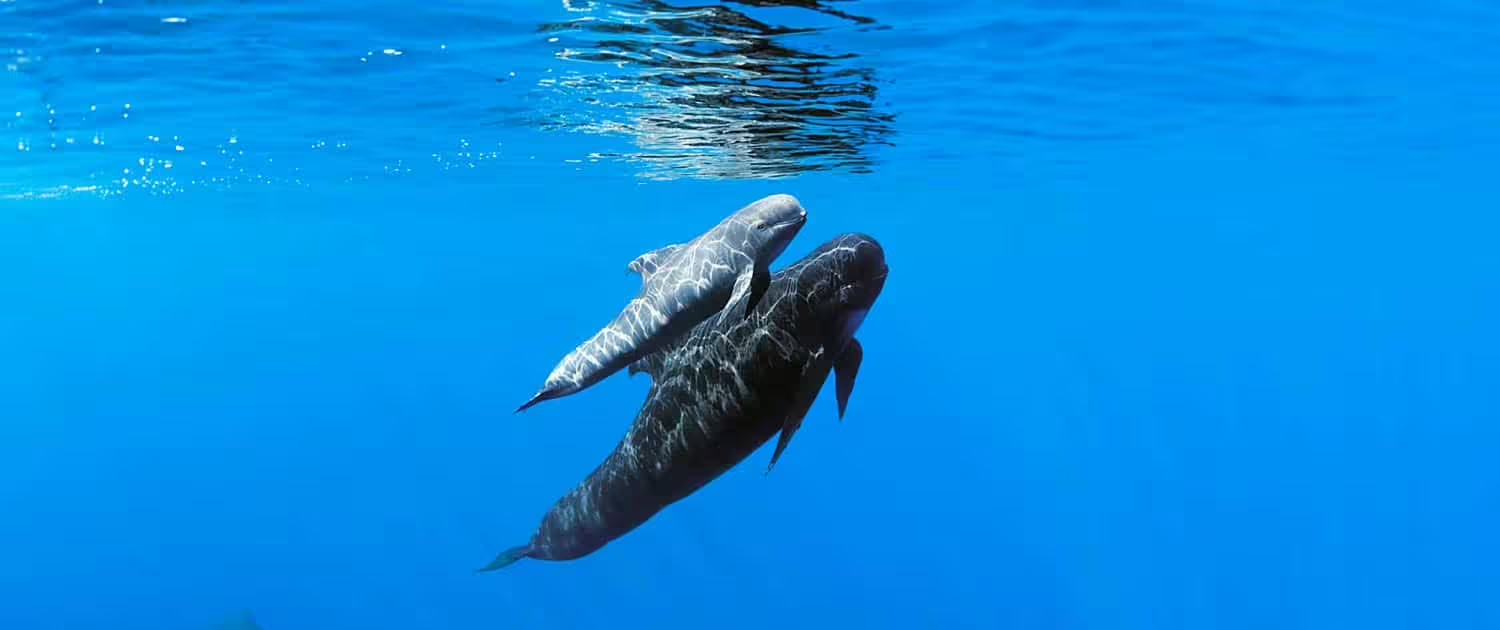
The waters surrounding Madeira sit within the Macaronesian region, one of the North Atlantic's most productive cetacean habitats. Resident species include the Short-finned Pilot Whale (Globicephala macrorhynchus), the Common Bottlenose Dolphin (Tursiops truncatus), and the Atlantic Spotted Dolphin (Stenella frontalis). These animals are present throughout the year and sightings are reported on virtually every departure from the Marina do Funchal.
Migratory species follow a different timetable. Sperm Whales (Physeter macrocephalus), which can reach 18 metres in length and dive to depths exceeding 2,000 metres, pass through Madeiran waters most reliably from April to October, peaking in May and June. Baleen whale species — including the Sei Whale (Balaenoptera borealis) and the occasional Fin Whale (Balaenoptera physalus) — are recorded most frequently between March and May as they migrate northward toward summer feeding grounds. Bryde's Whale (Balaenoptera edeni) has been confirmed as a resident of the waters south of Funchal and can be observed year-round.
Sea conditions matter as much as species presence. Between November and February, north Atlantic swells can reach 3 to 5 metres, making offshore excursions uncomfortable for anyone susceptible to motion sickness. The calmest sea windows are July through September, when the Azores High suppresses Atlantic storm tracks and surface conditions are consistently moderate. Tour operators in Funchal typically use rigid inflatable boats (RIBs) capable of reaching cetacean zones 10 to 30 kilometres offshore within 30 minutes.
The island's whale-watching industry operates under Portuguese national regulations and Madeira Regional Government licensing, which set minimum approach distances of 50 metres for cetaceans and prohibit vessel crowding around individual animals. For travellers whose primary goal is Sperm Whale sightings, May and June represent the optimal combination of migratory presence and manageable sea conditions.
Month-by-Month Weather Guide: What to Expect in Funchal and the Mountains
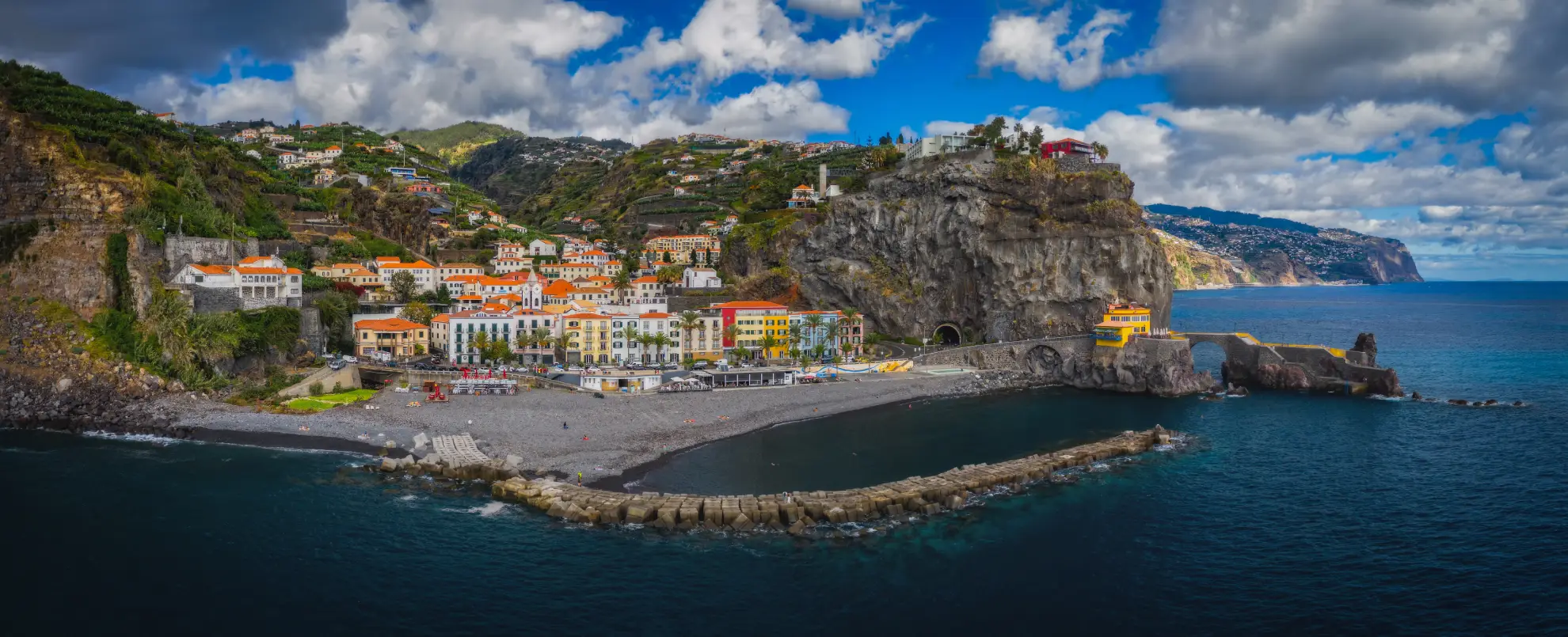
January and February are Madeira's coolest and wettest months in Funchal, yet average daytime temperatures still reach 19°C on the south coast. The villages of Ponta do Sol and Calheta, sheltered by cliffs from northerly winds, record Madeira's highest sunshine hours in winter — often exceeding 5 hours of direct sun per day even in January. Sea temperature drops to around 18°C, cool for swimming but manageable in a wetsuit. These months are ideal for culture, gastronomy, and the Funchal Carnival, traditionally held in February and one of the largest carnivals in Portugal.
March marks the transition toward spring. Almond trees have been blooming in the Jardim da Serra since late January, and by March mimosa fills the valley roads with yellow. Rain remains possible, particularly on northern slopes, but Funchal begins its drier run. Sea temperatures hold at 18°C. March is an excellent month for levada hiking at mid-altitude — the trails are lush and waterfalls are still well-fed — and the first whale-watching departures targeting migratory Fin Whales begin in earnest.
April and May: Best for hiking, flowers, and early whale watching. Funchal averages 22°C in May. The Madeira Flower Festival (April 2026) brings a week of processions, floral carpets in Funchal's Sé Cathedral square, and the children's Wall of Hope on Avenida Arriaga. Sea temperature rises to 19-20°C. Rainfall in Funchal drops to an average of 40 millimetres in April and 25 millimetres in May.
June, July, and August: The summer season brings Madeira's most reliable sunshine, with Funchal averaging 26°C in August and sea temperatures reaching 23°C by late summer — warm enough for comfortable ocean swimming. The Madeiran Atlantic Festival in June features international fireworks competitions launched from the Funchal waterfront. The São João Festival on 23 June is celebrated across the island. Hiking above 1,500 metres is best undertaken before 10:00 local time as cumulus cloud often builds by midday. These months attract the island's highest visitor volumes, and accommodation in central Funchal commands premium prices from July onward.
September and October: Best all-round months. Crowds thin after the first week of September, prices moderate, and the weather stabilises. Average temperatures in Funchal are 25°C in September and 23°C in October. Sea temperature remains at 23°C through September, dropping to 22°C in October — the best swimming window for those who prefer warmth without peak-season density. Sperm Whale departures continue reliably through October. The grape harvest, or vindima, takes place across the island's terraced vineyards in September, particularly in Câmara de Lobos and Estreito de Câmara de Lobos.
November and December: Rainfall increases across the island, but south-coast days are often clear and warm at 20-21°C. December is dominated by Funchal's famous Christmas and New Year celebrations — the city has been ranked among Europe's top Christmas destinations and hosts one of the world's largest New Year fireworks displays, viewable from the hillside hotels above the bay. The display on 31 December 2025 and planned again for 31 December 2026 typically fires from multiple points along the waterfront simultaneously for approximately eight minutes. Sea temperature drops to 19°C in December.
Is the South Coast Always Sunnier Than the North?
The short answer is yes, structurally and reliably. The northeast trade winds carry moisture that condenses against the northern escarpments, depositing rainfall on the slopes above São Jorge, Faial, and Santana while the south coast often sits in the rain shadow. Funchal, on the sheltered south, records an annual average of approximately 2,700 sunshine hours. Porto Moniz on the northwest tip records closer to 1,800 hours. That 900-hour annual difference is roughly equivalent to comparing Barcelona with coastal Ireland.
The western south coast villages of Ponta do Sol (whose name translates literally as "point of the sun") and Calheta are positioned to catch maximum winter sun. In January, when the sun's arc is low and much of northern Europe sits under persistent overcast, these two villages can record 6 to 7 hours of direct sunshine on calm high-pressure days. The Calheta artificial beach, one of only two sand beaches on the main island, sits at the base of cliffs that block the prevailing northeasterly wind for most of the year.
The north coast is not without its appeal in summer, however. Between June and September, when the Azores High dominates and the trade winds weaken or shift direction, Santana and Porto Moniz enjoy warm, sunny days, and the natural rock pools at Porto Moniz fill with clear Atlantic water at 22°C. The weekly drive along the north coast VR1 motorway via the Encumeada pass, descending through São Vicente's basalt gorge, is one of the island's more satisfying road journeys regardless of season.
Hiking and Nature Tours: Best Booked for Spring and Autumn
Jeep and 4x4 Tours: Exploring the Interior Year-Round
Full-Day Cultural and Farm Experiences
Madeira's seasons reward different travellers differently. Whether you are timing a visit around the April 2026 Flower Festival, planning an autumn levada walk, or targeting Sperm Whale season, ToursXplorer has guided departures across every category. Browse all available Madeira tours and filter by activity type to match your travel window.
Click hereHow ToursXplorer Curates Madeira Tours by Season
At ToursXplorer, each Madeira listing is evaluated not just for quality but for seasonal relevance. The Areeiro Peak Sunrise Tour, for instance, is flagged as most reliable between September and November based on summit visibility data. The 25 Fontes Levada tour is highlighted from March through June when the Rabaçal springs run at full volume. Farm tours and jeep itineraries carry no seasonal restriction and are available year-round.
When you browse Madeira tours on ToursXplorer, the operator descriptions include practical notes on weather suitability and optimal timing. This reflects the editorial team's position that the question "when to go" is inseparable from "what you want to do" — and that no single month is universally best for every type of traveller on this island.
Practical Planning Notes for 2026
The Madeira Flower Festival is confirmed for late April 2026 in Funchal. Accommodation books out several months in advance for festival week, and many levada tour operators also fill up during this period. Booking guided hikes at least 6 to 8 weeks ahead is advisable for April and May departures.
For the New Year fireworks on 31 December 2026, Funchal hotels on the hillside above the bay — particularly along Caminho do Monte and Estrada Monumental — command the best views and charge their highest annual rates. A stay of at least 3 nights is typically required by most properties during this period.
Entry to Madeira for EU citizens requires only a national identity document. Non-EU travellers should confirm Portuguese Schengen Area requirements at least 90 days before departure. The island's two main airports are Funchal Cristiano Ronaldo International Airport on the main island and Santa Catarina Airport on Porto Santo, a 2-hour ferry ride or 15-minute flight northeast of Madeira.
Frequently Asked Questions
May and June offer the strongest combination of Sperm Whale presence and calm sea conditions. Migratory Sperm Whales and Baleen Whales pass through Madeiran waters most reliably from April to October. Resident species including Short-finned Pilot Whales and Atlantic Spotted Dolphins are present year-round within 30 kilometres of Funchal's Marina.
Winter hiking is possible but requires preparation. Funchal-area trails remain accessible at 17 to 19°C, but mountain routes above 1,400 metres can drop below 5°C with wind chill. The northern levada trails around Queimadas can close after heavy rainfall. South-facing routes like Levada do Caniçal near Machico stay more reliably open throughout December to February.
July and August record Funchal's highest sunshine totals, averaging over 8 hours of direct sun per day. The south coast villages of Ponta do Sol and Calheta are consistently sunnier than Funchal itself and receive 6 to 7 hours even in January, making them Madeira's best winter-sun destinations on the main island.
The Banana Line is an informal term for the altitude threshold of roughly 300 metres above sea level on Madeira's south coast. Below this line, subtropical warmth and sunshine are reliable for most of the year, and banana plantations thrive. Above it, conditions change rapidly with increased orographic rainfall, cloud cover, and significantly lower temperatures on the central plateau.
The Madeira Flower Festival is scheduled for late April 2026 in Funchal. The event includes the children's Wall of Hope on Avenida Arriaga, floral carpet displays in the Sé Cathedral square, and street processions through the city centre. It coincides with the island's peak spring vegetation period when waterfalls and levada streams are at maximum flow.
Madeira's sea temperatures range from approximately 18°C in January and February to a peak of 23°C in August and September. The ocean cools gradually through autumn, reaching 19°C by December. Temperatures above 22°C, suitable for comfortable swimming without a wetsuit, are typically available from late June through October on the south coast beaches and rock pools.