




When to Visit the Douro Valley: Weather, Harvest Season & Crowd Calendar
A month-by-month guide to choosing the right season for your Douro Valley trip, from harvest bustle to winter quiet.
The Douro Valley does not have a single best season — it has four distinct ones, each with its own character. Stretching roughly 100 kilometres east of Porto toward the Spanish border, the Alto Douro Wine Region (classified as a UNESCO World Heritage Site in 2001) shifts dramatically across the calendar. The question is not whether to go, but which version of the valley you want to experience.
What is the weather like in the Douro Valley month by month?
The Douro Valley sits in a rain shadow created by the Serra do Marão mountain range to the west. This geographical fact shapes everything. Porto, just 90 kilometres away, receives around 1,200 mm of rain per year. The town of Pinhão, at the heart of the Douro Superior, receives roughly 450 mm. The result is one of the most extreme mesoclimates in Portugal.
January and February bring cold nights, occasional frost on the higher quintas, and near-empty roads. Daytime temperatures range between 8°C and 14°C. The dormant vines are pruned by hand during this period, a quiet agricultural ritual that has defined the valley for centuries. Accommodation prices at properties like Quinta do Crasto and Quinta do Vallado drop significantly.
March through May sees the vines come back to life. Almond blossoms appear first, coating the lower terraces in white by mid-February and persisting into March. By April, the schist slopes are layered in emerald green as new shoots push out across the Corgo, Torto, and Pinhão sub-regions. Daytime temperatures settle between 16°C and 22°C, making this the most comfortable period for hiking the PR3 Pinhão trail or cycling the Linha do Douro railway corridor.
Spring in the Douro is a negotiation between the last cold nights and the first warm afternoons. The vines are the most vivid green they will be all year, and the terraces carry almost no one but the vineyard workers.
June is a transitional month. Temperatures climb toward 30°C. Crowds begin to arrive, the river cruise season accelerates, and the Douro's characteristic sun-scorched palette starts to replace the spring greens. This is a strong month for value, with good weather and pre-peak pricing.
July and August are the most demanding months climatically. Temperatures regularly exceed 35°C and can reach 40°C in the interior valleys around Foz Côa and Almendra. The vines are under water stress by design — Douro viticulture relies on this stress to concentrate flavour in the grapes. For visitors, the riverbank towns of Pinhão, Régua (formally Peso da Régua), and Tua offer shade and cold Branco wine, but a Douro River boat tour is genuinely the most sensible way to spend a July afternoon. The water surface temperature reaches around 24°C in some stretches.
September and October are the heart of the harvest season. More on this below.
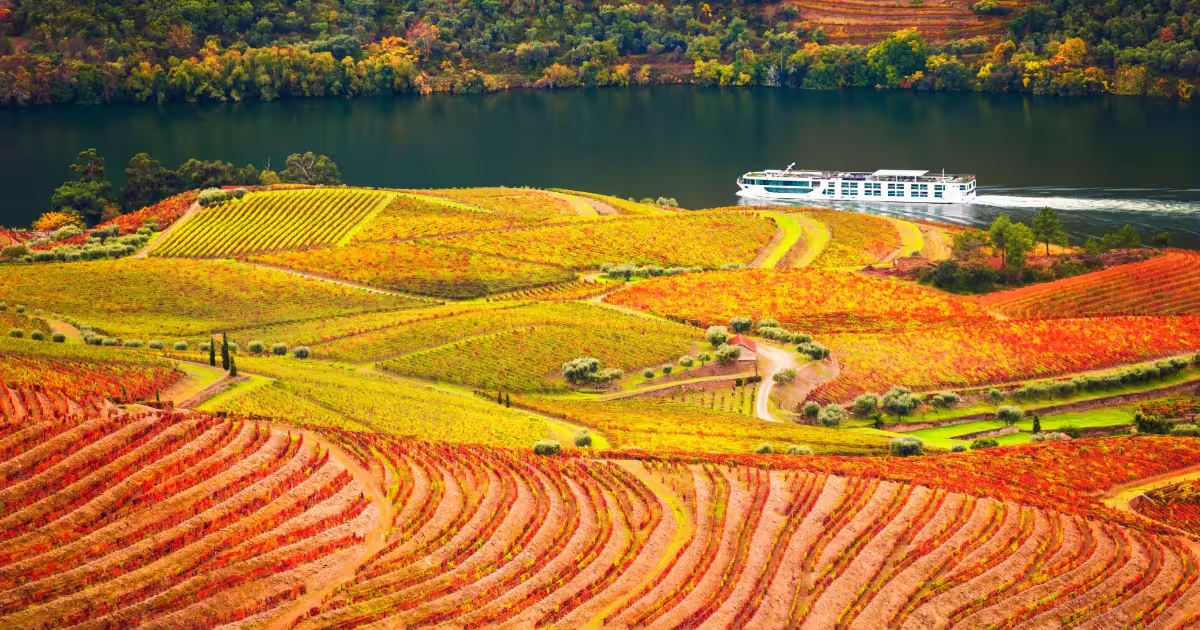
November transforms the valley into a photographer's subject. The vineyards shift from green through yellow, copper, and deep crimson before the leaves fall entirely by late November. Temperatures average between 10°C and 18°C. Crowds thin out noticeably after the first week of November, and the schist terraces above Pinhão take on a quality of light that is particular to this month.
December returns the valley to its winter quiet. The N222 road, frequently cited as one of the most scenic drives in Europe, carries very little traffic. Many quintas close their cellar doors for the season, though larger estates like Quinta da Aveleda and Ramos Pinto remain open for visits.
When is the grape harvest in the Douro Valley in 2026?
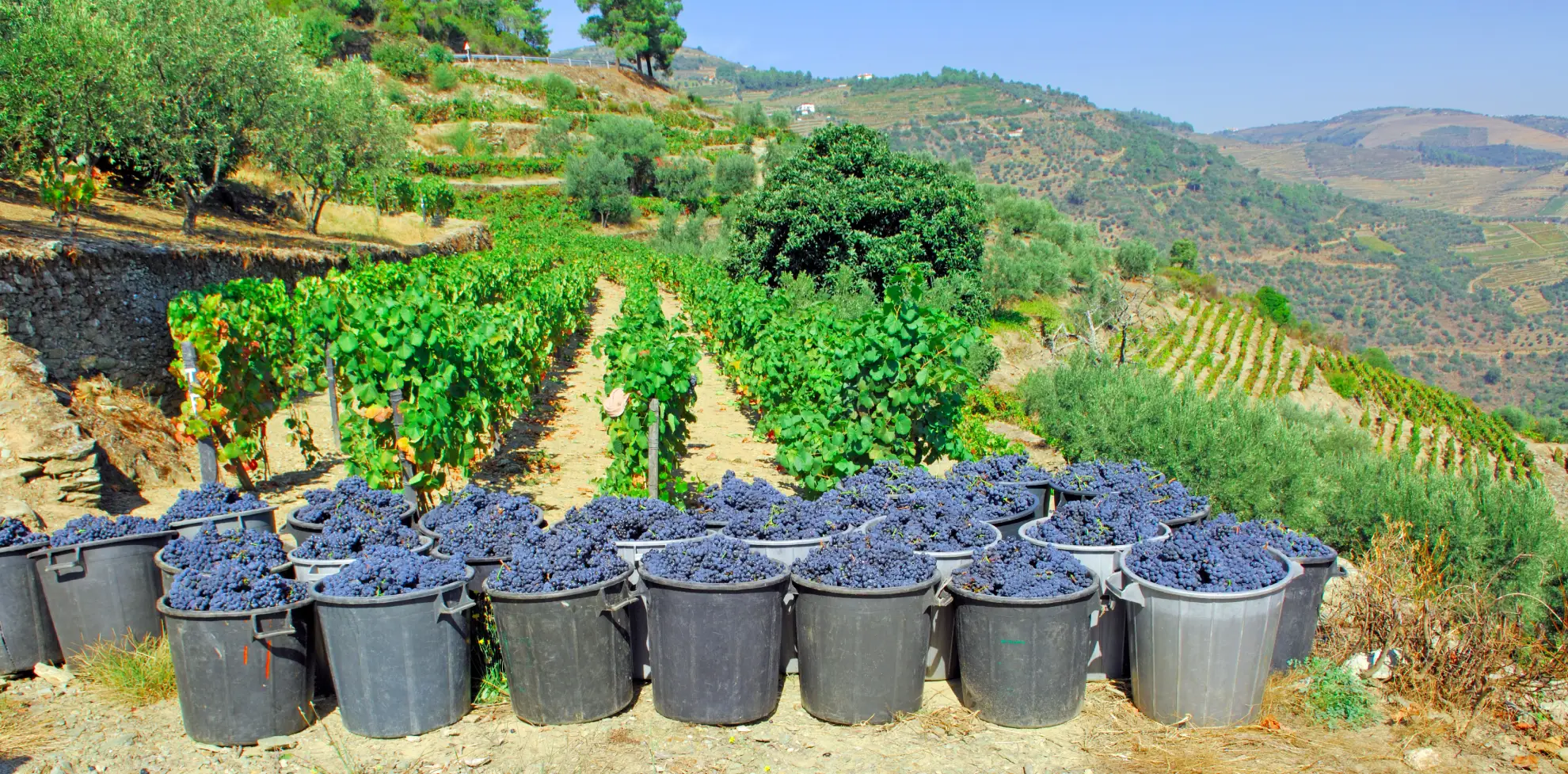
The Douro harvest, known locally as the vindima, typically begins in the first or second week of September in the warmer Douro Superior sub-region near the Spanish border, and progresses westward through the Cima Corgo and Baixo Corgo. In 2026, based on historical patterns and climate trends, the harvest window is expected to run from approximately 8 September to 15 October, with peak activity concentrated in the third and fourth weeks of September.
The vindima is not simply a logistical event. Estates hire teams of up to 80 pickers per day. The smell of fermenting must fills the lodges at Quinta do Portal and Quinta do Infantado. Traditional granite lagares — the stone treading tanks used at estates like Quinta do Vesuvio — are still used for premium Port production. The Douro Boys, a collective of five leading quintas including Quinta da Gaivosa and Niepoort's Redoma estate, produce their flagships during this period.
Booking a Douro Valley wine tour from Porto during the harvest is a reasonable ambition and a logistical challenge. Tours for late September 2026 will begin selling out by early spring. The itineraries on ToursXplorer that include winery visits during this period are among the most sought-after in northern Portugal.
Visitors who arrive during the vindima should understand they are entering a working landscape. The N222 between Régua and Pinhão sees tractor traffic. Winery visits may be shorter than usual as staff are occupied in the cellar. The trade-off is the atmosphere: the valley is at its most alive, purposeful, and photogenic.
Is it worth visiting the Douro Valley in winter?
The honest answer is yes, with calibrated expectations. Between December and February, the valley is genuinely quiet. The population of Pinhão, which numbers around 700 people year-round, feels present in a way that the summer crowds obscure. Local restaurants serve dishes like roasted kid with migas and caldo verde that taste more appropriate to the season.
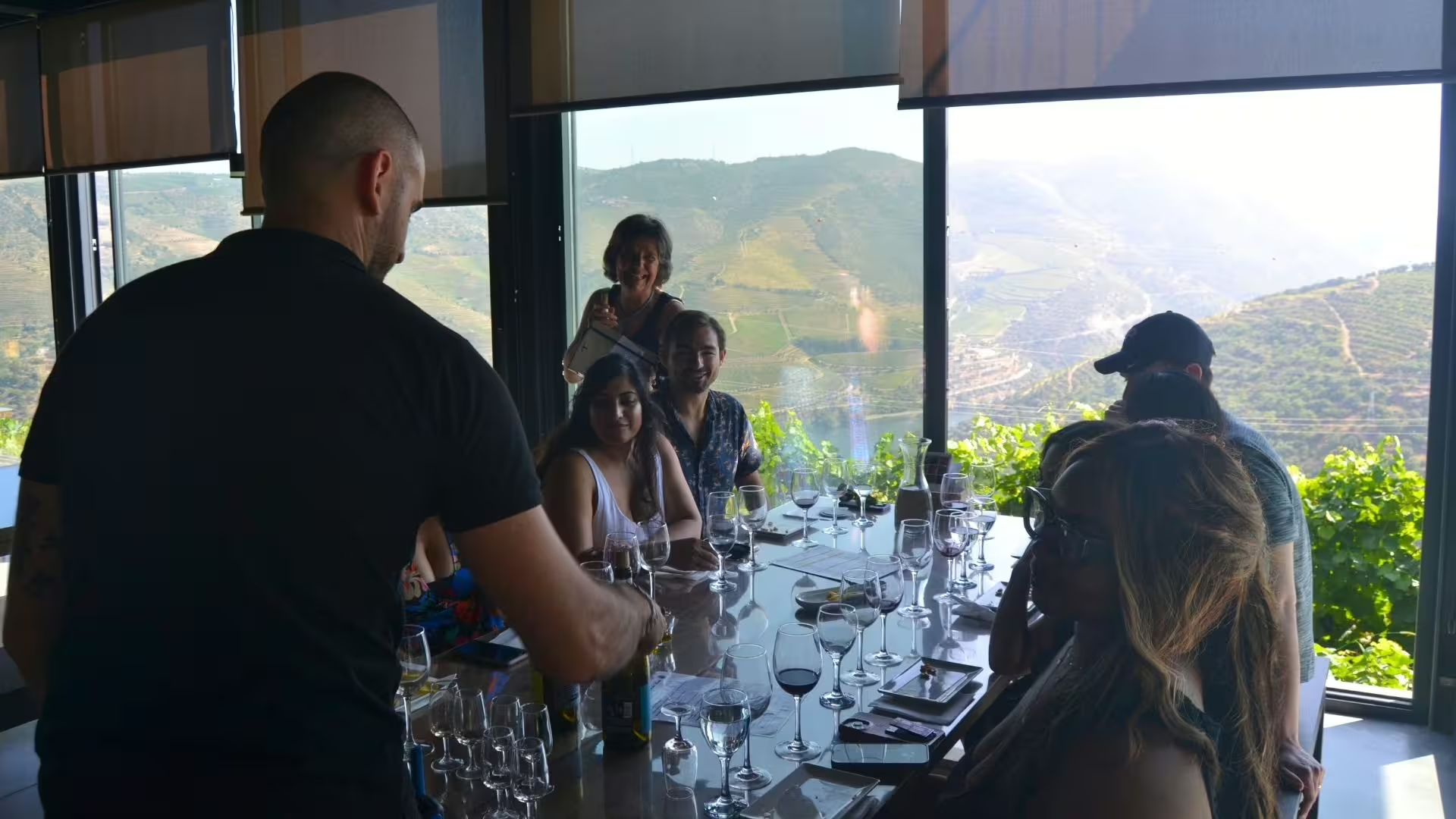
Where to stay in the Douro Valley in winter is a practical question. Several estate hotels and wine tourism properties remain open and reduce rates by 30 to 50 percent compared to September. A private Douro Valley wine tour from Porto in January costs noticeably less than the same itinerary in October, and the cellar visits are unhurried. Winemakers have time to talk. The schist walls hold the cold, but the interiors of the quintas are typically warm and well-appointed.
What winter does not offer is vineyard drama. The vines are bare and grey, the landscape stripped back to its geological bones. For travellers drawn to the terraced architecture of the valley — the dry-stone schist walls that date to Roman-era cultivation — this can be a more honest, less manicured view of the place. The UNESCO designation covers 250,000 hectares of continuous vineyard landscape, and in winter you can read that landscape clearly, without the distraction of foliage.
ToursXplorer lists several tours that operate year-round, including private departures suited to winter travellers seeking flexibility and smaller group sizes.
What are the best things to do in the Douro Valley by season?
Spring (March to May): Hiking the river-hugging PR3 trail between Pinhão and São Mamede de Riba Tua (approximately 16 kilometres one way). Cycling along the Linha do Douro railway from Régua to Barca d'Alva. Visiting the Museu do Douro in Régua. Attending the Festa das Amendoeiras em Flor in the Figueira de Castelo Rodrigo municipality in February or early March.
Summer (June to August): River cruises are the dominant activity, and rightly so. A Douro River boat tour provides shade, movement, and the best vantage point on the terraced slopes. The Douro International Natural Park, near Miranda do Douro on the Spanish border, offers dramatic gorge scenery and is home to the largest colony of griffon vultures (Gyps fulvus) in the Iberian Peninsula.
Autumn (September to November): Winery visits, harvest participation where estates offer it, and wine tastings across the three sub-regions. The Enogastronomy Festival in Lamego takes place each October. Photography from the Casal de Loivos viewpoint above Pinhão, widely considered the best panoramic point in the valley, is at its most rewarding in mid-October when the colour change is at peak saturation.
Winter (December to February): Cellar visits and extended tastings at larger estates. Exploring the Baroque architecture of Lamego Cathedral, constructed in its current form in the 18th century. Day trips to the rock art of the Côa Valley, specifically the Parque Arqueológico do Vale do Côa near Vila Nova de Foz Côa, which contains engravings estimated to be 22,000 years old and was designated a UNESCO World Heritage Site in 1998.
Across all seasons, ToursXplorer's curated selection of Douro tours connects visitors with the valley's core experiences in formats ranging from small-group shared departures to fully private itineraries.
Douro Valley Tours Available on ToursXplorer
Harvest season tours for September and October 2026 fill up months in advance. Browse all available Douro Valley departures on ToursXplorer and reserve your date before the vindima window closes.
Click hereHow to Choose Your Douro Valley Season: A Practical Summary
The decision comes down to what kind of experience you are looking for. If you want the valley at maximum energy, with working vineyards, the smell of fermentation in the air, and the widest selection of winery events, the harvest window from early September to mid-October is the clear answer. Book early: this is the single most in-demand period for Douro Valley wine tours from Porto, and availability on quality itineraries narrows sharply by May of any given year.
If the heat of July and August is acceptable, the river is the best tool available. A Douro River boat tour keeps temperatures manageable and provides unobstructed views of the terraced slopes that no road can replicate. Summer also brings the longest days, with sunset over the valley occurring after 9 pm in June and July.
For hikers, cyclists, and anyone prioritising outdoor things to do in the Douro Valley, the March-to-May window is the most physically comfortable and visually rewarding. The Baixo Corgo and Cima Corgo are green in a way they will not be again until the following spring.
November is the underrated choice for photographers and travellers who want the harvest aesthetics without the harvest crowds. The colour change on the terraced vineyards above the Torto and Pinhão rivers peaks in the second and third weeks of October, and by early November the foliage is in full transition toward gold and crimson.
Winter is for slow travel. It rewards visitors who want extended tastings, genuine conversations with winemakers, and access to a UNESCO landscape that feels, briefly, as though it belongs only to the people who work it.
Getting to the Douro Valley from Porto
Porto's Francisco Sá Carneiro Airport connects to most major European hubs, with flight times of approximately 2 hours from London, 2.5 hours from Paris, and 3.5 hours from Berlin. From the airport, the centre of Pinhão is approximately 130 kilometres east via the A4 motorway and the IC5. Driving time is around 1 hour 45 minutes.
The Linha do Douro regional train service runs from Porto Campanhã station to Régua (2 hours 10 minutes) and continues to Tua and Pocinho. The railway follows the river from Caíde eastward and is one of the more scenic train routes in Portugal, though service frequency is limited to 3 to 4 trains per day in each direction east of Régua.
Most organised Douro Valley tours from Porto include transport from the city, which removes the logistical complexity of driving on the narrow riverside roads of the N222 and the EN108, particularly for first-time visitors unfamiliar with the valley's geography.
Frequently Asked Questions
The Douro Valley vindima in 2026 is expected to run from approximately 8 September to 15 October, with peak harvest activity in the third and fourth weeks of September. The Douro Superior sub-region near the Spanish border harvests first, followed by the Cima Corgo around Pinhão. Tours during this period sell out months in advance.
October in the Douro Valley is generally mild and settled, with daytime temperatures between 16°C and 22°C and cool evenings around 10°C. Early October often retains the warmth of the harvest season, while late October brings the first autumn rain and the start of the vineyard colour change. It is one of the most reliably pleasant months to visit.
Yes, particularly for wine tourism. Between December and February, accommodation prices drop by 30 to 50 percent, winery visits are unhurried, and winemakers have time for extended conversations. The landscape is stripped back to its terraced schist architecture, which suits travellers interested in the valley's geology and history over its seasonal vineyard spectacle.
July and August are the most extreme months climatically in the Douro Valley. Temperatures regularly exceed 35°C and can reach 40°C in the interior valleys near Foz Côa and Almendra. A Douro River boat tour is the most practical way to manage the heat, as the river surface temperature reaches around 24°C in some stretches and movement on the water provides consistent airflow.
The town of Pinhão, considered the centre of the Douro Valley wine region, is approximately 130 kilometres east of Porto via the A4 motorway and the IC5, with a driving time of around 1 hour 45 minutes. The regional Linha do Douro train from Porto Campanhã to Régua takes around 2 hours 10 minutes and follows the river for much of the route.
November is the most underrated month for independent travellers. The harvest crowds have cleared, accommodation is more affordable than in September or October, and the vineyards are transitioning through yellow, copper, and crimson foliage. The Casal de Loivos viewpoint above Pinhão offers panoramic colour across the valley. January and February are quieter still, but the landscape is bare and many cellar doors are closed.