




Best Time to See Whales in the Azores: Month-by-Month Sighting Probabilities
A species-by-season guide to the Azores migration corridors, resident pods, and the windows when each baleen giant is most likely offshore.
The Azores archipelago sits at the crossroads of three major Atlantic migration corridors, placing it among the most productive whale watching destinations in the Northern Hemisphere. Nine permanently resident cetacean species and up to 28 recorded species overall mean the question is rarely whether you will see whales, but which whales you will encounter and in what numbers, depending on the month you choose to visit.
Why Does the Azores Produce Such Consistent Whale Sightings Year-Round?
The nine islands of the Azores sit on the Mid-Atlantic Ridge, a 16,000-kilometre submarine mountain chain that creates dramatic underwater topography and forces cold, nutrient-rich water upwards in a process called upwelling. These nutrient-rich upwellings concentrate squid, fish, and krill in densities that attract cetaceans from both sides of the Atlantic. The waters around São Miguel, Faial, and Pico drop to more than 1,000 metres within a few kilometres of the coast, providing deep-diving species with direct access to prey without travelling far from shore.
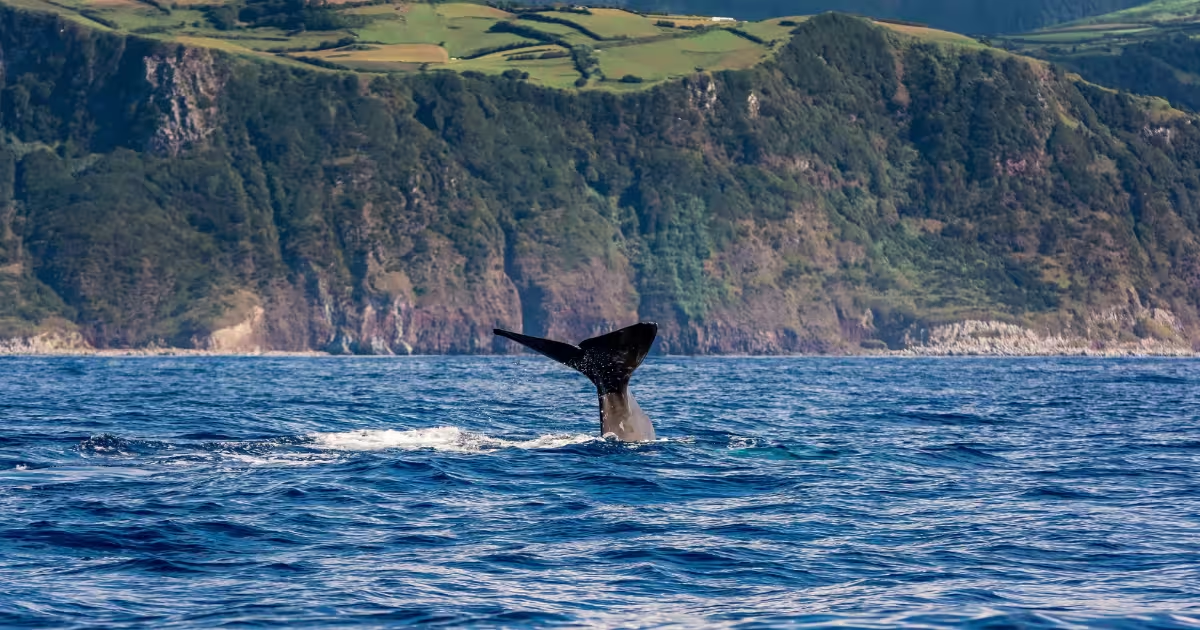
Sperm whales (Physeter macrocephalus), known locally as cachalotes, exploit these deep canyons year-round. Resident pods of common dolphins (Delphinus delphis), bottlenose dolphins (Tursiops truncatus), and Risso's dolphins (Grampus griseus) have similarly established permanent territories in Azorean waters. Operators running licensed whale watching tours in the Azores quote an overall cetacean sighting probability of approximately 90 percent across all twelve months, a figure supported by two decades of data collected by the regional marine biology institute IMAR at the University of the Azores.
"The Azores is not a seasonal destination for whale watchers. It is a year-round laboratory where the species lineup rotates rather than disappears." — Marine ecologist, University of the Azores, 2023.
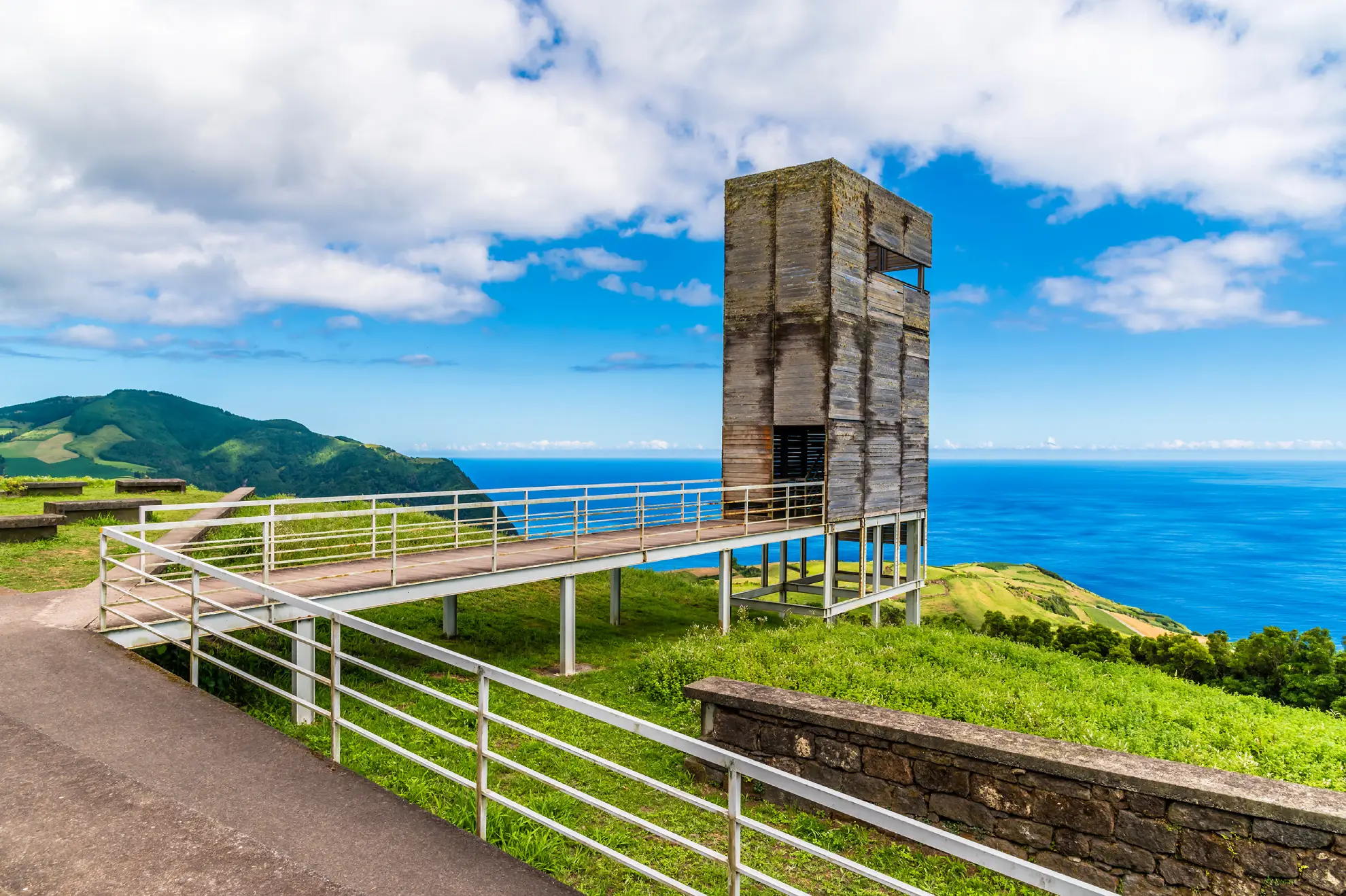
A further structural advantage is the network of historic land-based lookouts called vigias. Originally built by 19th-century whalers to spot sperm whales for commercial hunting, which peaked between the 1850s and the 1980s, these stone towers now serve licensed spotters who radio GPS coordinates directly to tour boats. The vigia system is unique to the Azores among whale watching destinations worldwide, and it measurably increases sighting rates regardless of month or weather conditions by reducing at-sea search time from hours to minutes.
What Is the Spring Golden Window and Which Giant Whales Pass Through?
April, May, and June represent what marine biologists classify as the peak migration transit season for large baleen whales in the Azores. During these three months, blue whales (Balaenoptera musculus), fin whales (Balaenoptera physalus), and sei whales (Balaenoptera borealis) move along the North Atlantic migration corridor that passes directly over the Azores Platform before heading to summer feeding grounds further north near Iceland and the Norwegian Sea. The Azores functions as a mandatory oceanic bypass on this route, not merely an accidental stopover.
Blue whale sighting frequency peaks sharply in April and May. These animals, the largest species ever to have existed on Earth at up to 30 metres in length, are present in Azorean waters primarily to feed on concentrations of krill before the longer crossing north. Sighting probability for blue whales is rated High in April and May, Medium in March and June, and Low from July onwards. Fin whales, the second-largest species at up to 27 metres, overlap with blue whales from late March through May. Sei whales, a more pelagic species, typically appear slightly later, with peak abundance in May and June.
"In April 2022, our lookout teams logged blue whale presence on 19 out of 30 operational days near Ponta Delgada. That is a sighting frequency that few destinations on the planet can match for an animal of that size." — Captain, licensed Azores whale watching operator, quoted in Cetacean Research & Management, 2023.
Spring sea conditions around São Miguel average 1 to 2-metre swells, making this window accessible for most travellers. Anyone specifically asking what are the chances of seeing blue whales in the Azores in May should note that May 2022 and 2023 both produced confirmed sightings on more than 60 percent of commercial tour departures from Ponta Delgada marina.
When Do Sperm Whales Peak and What Is the Best Month to Target Them?
Sperm whales are the anchor species of Azores whale watching precisely because they do not migrate. Family groups composed of females and calves maintain permanent home ranges around Faial, Pico, and São Miguel. Adult males undertake longer excursions but return seasonally. When operators advertise year-round whale watching in the Azores, the sperm whale is the species underwriting that promise.
Sighting probability for sperm whales runs at High from April through October and at Medium from November through March. The winter reduction in sighting success is not driven by whale absence but by weather: North Atlantic depressions between November and March generate swells regularly exceeding 3 metres, causing trip cancellations that can affect up to 40 percent of scheduled departures. Travellers weighing the winter gamble should budget for at least five to seven days in the archipelago to absorb potential cancellations.
For travellers specifically asking when is the peak season for sperm whales in São Miguel, the answer based on multi-year IMAR data is June through September. This window combines resident pod stability with calmer seas, longer daylight hours that allow morning and afternoon departures, and the highest average surface activity, including tail-lobbing and breaching, possibly linked to social behaviour within matriarchal groups.
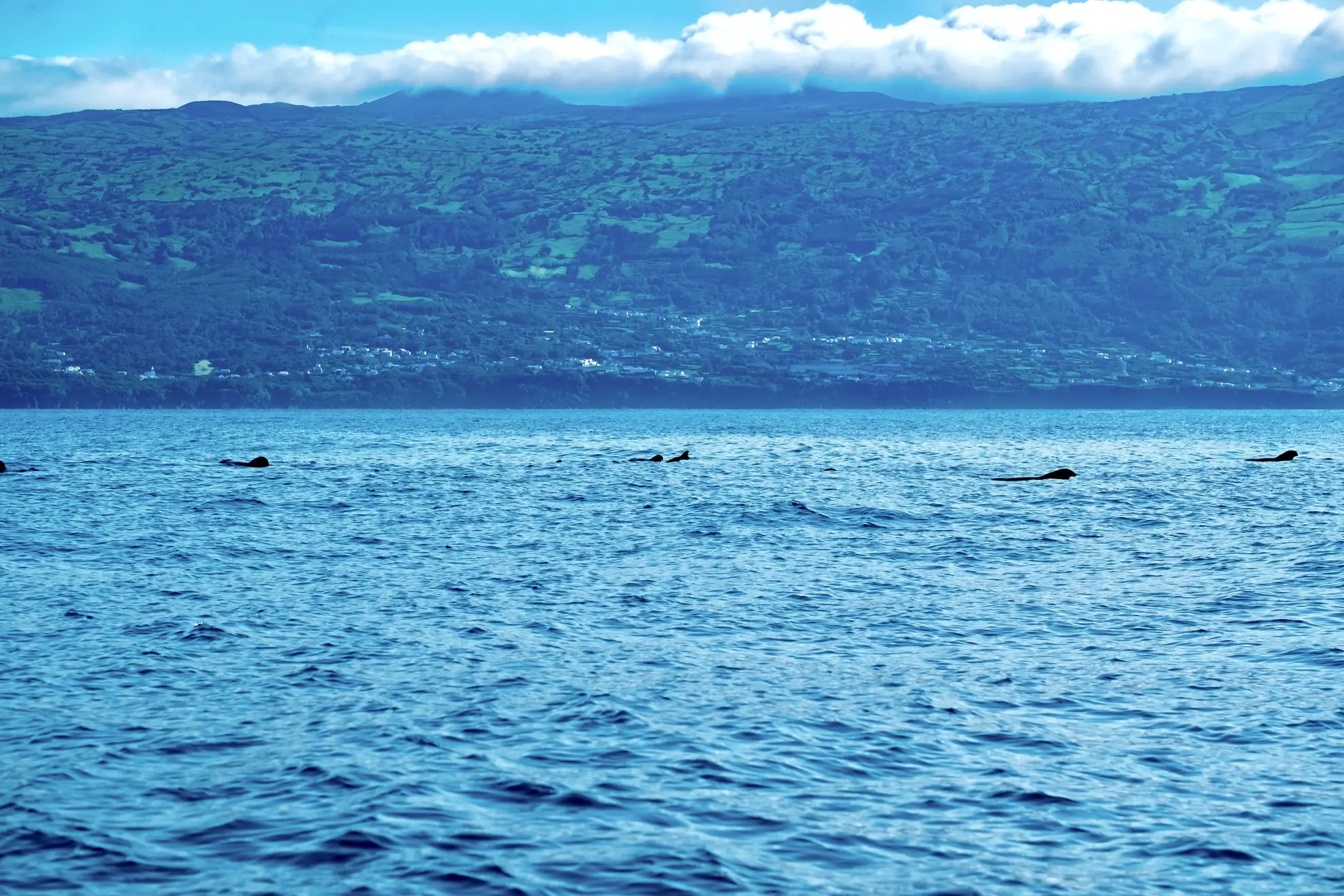
Pilot whales (Globicephala macrorhynchus) follow a complementary pattern. Short-finned pilot whales are most reliably encountered from July through September, when pods of 20 to 100 individuals are regularly sighted within 10 nautical miles of Ponta Delgada. Atlantic spotted dolphins (Stenella frontalis) reach peak abundance in the same window, making July to September the season operators call the Family Window for its combination of calm conditions and high pod activity.
How Do Sea Conditions Affect Sighting Quality and Motion Sickness Risk?
The Azores sit at latitude 37 to 39 degrees North, a transitional zone between the subtropical high-pressure belt to the south and the mid-latitude westerly storm track to the north. This geography produces calm, predictable conditions from approximately late May through September and progressively rougher seas from October through April, with the most severe weather concentrated in December through February.
For travellers specifically concerned about sea sickness, the window from mid-June to late September offers the lowest average significant wave heights, typically 1 to 1.5 metres around São Miguel's southern coast near Ponta Delgada. In contrast, April and May, despite their exceptional species diversity, can produce 2 to 3-metre swells on up to 30 percent of days. Modern tour vessels operating from Ponta Delgada marina are stabilised rigid inflatables or catamarans, which reduce motion significantly, but passengers with high sensitivity to motion should schedule departures for July or August rather than the spring migration window.
ToursXplorer lists tours operating from multiple Azorean ports, and the half-day format available for São Miguel departures is specifically suited to passengers who want to limit exposure time while still targeting sperm whales. Booking a half-day tour rather than a full-day excursion also reduces total time at sea and lowers motion sickness risk without eliminating sighting opportunity, given that sperm whales are regularly located within 5 to 8 nautical miles of the Ponta Delgada coastline.
Whale Watching and Dolphin Tours in the Azores
Browse all whale watching and dolphin tours in the Azores on ToursXplorer and filter by month, duration, and species focus to match your travel window.
Click hereSpecies Sighting Probability by Season: A Practical Reference
The table below consolidates multi-year observation data into four seasonal probability ratings for the five most sought-after species in the Azores. Use it to calibrate your expectations before booking.
Sperm Whale (Physeter macrocephalus) — Spring (April–June): High. Summer (July–September): High. Autumn (October–November): High. Winter (December–March): Medium.
Blue Whale (Balaenoptera musculus) — Spring: High. Summer: Low. Autumn: Low. Winter: Low.
Fin Whale (Balaenoptera physalus) — Spring: High. Summer: Low. Autumn: Low. Winter: Low.
Sei Whale (Balaenoptera borealis) — Spring: Medium–High. Summer: Low. Autumn: Low. Winter: Low.
Short-finned Pilot Whale (Globicephala macrorhynchus) — Spring: Medium. Summer: High. Autumn: Medium. Winter: Low.
These ratings reflect combined sighting frequency data from licensed operators and IMAR research logs. Individual departures can outperform or underperform seasonal averages depending on daily weather, lunar cycle, and prey availability. The vigia land-spotter network consistently improves on-tour sighting rates across all seasons by reducing unproductive search time.
ToursXplorer recommends pairing this probability index with real-time operator briefings on arrival in Ponta Delgada, where local captains update species presence weekly based on the most current vigia reports. Conditions in any given week can shift the effective probability by one full tier in either direction.
Choosing Between the Giant Season and the Family Season
The central planning decision for most travellers is whether to prioritise the spring Giant Season (April through June) or the summer Family Season (July through September). Both windows deliver high sighting rates, but the species profiles and sea conditions differ enough to warrant a deliberate choice rather than defaulting to convenience.
The Giant Season offers the only realistic window for blue whale and fin whale encounters, species whose sheer scale cannot be replicated by any summer alternative. Average whale length during spring transits runs to 22 to 30 metres for blue whales and 18 to 27 metres for fin whales. However, spring departures carry a higher weather cancellation risk, and passengers should hold flexible return tickets and plan a minimum of four nights on São Miguel to ensure at least two or three viable departure windows.
The Family Season trades baleen giants for higher frequency encounters with pilot whales, spotted dolphins, and resident sperm whale family groups in benign sea states. Children and first-time ocean travellers tend to find July and August departures more comfortable. The swim-with-dolphins format is also most reliably offered during this window, as calmer waters extend the viable weather window for in-water activities. For whale watching from Ponta Delgada specifically, July and August are the months when both morning and afternoon departures run most consistently without cancellation.
Travellers who can travel in late May find a natural overlap between the two seasons: the tail end of the spring baleen migration coincides with improving sea states and the gradual increase in pilot whale and dolphin pod presence. Late May is therefore the single month where the probability curves of both seasons intersect at a useful level, and it represents the closest the Azores comes to a unified best month for all species combined. ToursXplorer listings for this period reflect the full range of available formats, from half-day sperm whale tours to full-day combination itineraries with lunch.
Frequently Asked Questions
In May, blue whale sighting probability in the Azores is rated High based on multi-year operator and IMAR data. Commercial departures from Ponta Delgada recorded confirmed blue whale sightings on more than 60 percent of operational days in May 2022 and 2023. These animals are transiting north to Iceland and the Norwegian Sea, using the Azores Platform as a feeding stop on their migration corridor.
Sperm whales are present year-round off São Miguel, but peak sighting frequency and surface activity occur from June through September. During this window, resident matriarchal pods are most active near the surface, sea states average 1 to 1.5 metres, and both morning and afternoon departures from Ponta Delgada marina run consistently. Sighting probability for sperm whales drops to Medium only between November and March due to weather-driven cancellations.
July and August offer the calmest sea conditions for whale watching in the Azores, with average significant wave heights of 1 to 1.5 metres near São Miguel's southern coast. Mid-June to late September is the broader low-motion window. Passengers with high motion sensitivity should choose a half-day tour format, which limits total sea time to three to four hours while still targeting resident sperm whales within 5 to 8 nautical miles of Ponta Delgada.
Yes, whales are present in the Azores in winter, primarily resident sperm whales and common dolphins. The main challenge from November through March is weather: North Atlantic depressions regularly produce swells exceeding 3 metres, cancelling up to 40 percent of scheduled departures. Travellers visiting in winter should book accommodation flexibly and plan a stay of at least five to seven nights to maximise the chance of completing a tour.
São Miguel is the most accessible island for whale watching, with multiple licensed operators departing from Ponta Delgada marina and the largest vigia spotter network in the archipelago. Faial and Pico are also highly regarded, particularly for sperm whales, and the channel between those two islands is one of the most studied cetacean habitats in the Atlantic. São Miguel suits first-time visitors due to direct flight connections and the highest volume of tour departures.
Guided in-water dolphin encounters are offered by licensed operators from São Miguel and are legal within strict regional cetacean protection regulations. The best window is July through September, when calmer seas extend viable weather windows for in-water activities and Atlantic spotted dolphins reach peak abundance near São Miguel. Common and bottlenose dolphins are also encountered year-round, though in-water sessions are more frequently cancelled in spring and autumn due to swell conditions.