




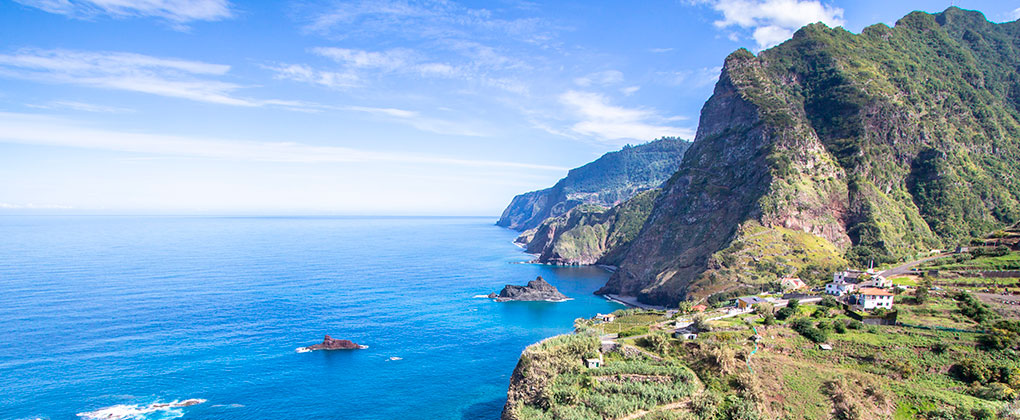
The rugged northern coastline of Madeira, where volcanic cliffs meet the open Atlantic.
Madeira Island — The Atlantic Pearl
Sightseeing in Madeira: Volcanic Peaks, Ancient Forests, and a Culture Worth Tasting
From the cloud-piercing summit of Pico do Arieiro to the salt-crusted lava pools of Porto Moniz, Madeira rewards those who look beyond the resort terrace.
Madeira sits roughly 1,000 kilometres southwest of Lisbon, yet it operates on an entirely different geological and ecological register. The island rose from the seabed through volcanic activity millions of years ago, and that turbulent origin is visible in every sea cliff, every ridge walk, and every pool of cooled lava that now shelters swimmers from the Atlantic swell. A mild, stable climate means the island is genuinely worth visiting in any month of the year.
What makes Madeira unusual among European island destinations is the density of distinct experiences packed into a relatively compact landmass. A single day can take a visitor from a misty laurel forest that predates the last ice age to a glass-floored skywalk hanging 580 metres above the ocean. The island's trail network — built around the levadas, irrigation channels that channel water from the wet north to the drier south — provides access to landscapes that would otherwise be entirely inaccessible. That infrastructure, laid down over centuries of agricultural necessity, has become one of Madeira's most compelling sightseeing assets.
"Madeira is one of those places where the geology is so recent, in planetary terms, that you feel the island is still being decided — still becoming something."
Cultural life is similarly layered. Funchal, the island's capital, contains Baroque churches, a vibrant covered market, and a cable car that ascends to the hillside neighbourhood of Monte in eight minutes. From there, the famous wicker toboggan ride — guided by the Carreiros in their traditional white uniforms and straw hats — descends the steep roads back toward the city. It is not a theme park attraction; the tradition dates to the nineteenth century and remains a genuine piece of local working culture.
The High Peaks: Arieiro and Ruivo
Pico do Arieiro, at 1,818 metres, is Madeira's third-highest peak and the only one accessible directly by road. On clear mornings, a dense cloud layer often sits below the summit, creating what locals describe as a mar de nuvens — a sea of clouds — with other volcanic peaks projecting through it like dark islands. The effect is most pronounced in the hours immediately after sunrise. The summit has a small café and a viewing platform, but the real reward is the ridge walk that connects Arieiro to Pico Ruivo, the island's highest point at 1,862 metres. The trail covers roughly eight kilometres one way and passes through tunnels, exposed ridgelines, and sharp saddles between peaks. It is rated moderate-to-difficult and requires solid footwear. The 360-degree panorama from Ruivo's summit, on a clear day, takes in the entire island.
Peaks & Ridge Walks
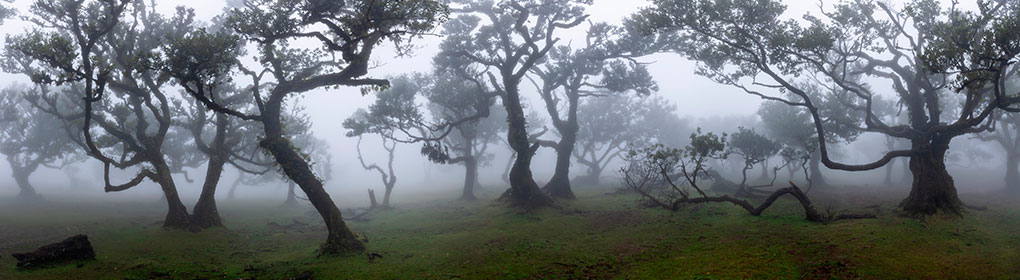
Fanal Forest in the Paul da Serra plateau — a UNESCO-protected laurisilva that has survived since before the last ice age.
Levadas and Forests: Walking Into the Interior
The levada system is unique to Madeira. These narrow irrigation channels were constructed from the fifteenth century onward to transport water from the rainy northern highlands to the agricultural terraces of the south. Maintenance paths running alongside them became walking routes, and today they form one of Europe's most unusual trail networks — mostly flat, mostly shaded, and passing through terrain that road infrastructure never reached. The Levada das 25 Fontes e Risco is one of the most-visited: a twelve-kilometre round trip through dense forest that ends at a circular lagoon fed by twenty-five separate spring-water falls, and branches to a dramatic single-drop waterfall called Risco. The path starts in Rabaçal and descends through laurel and heath tree forest.
Fanal Forest, on the Paul da Serra plateau in the island's northwest, represents something even older. The ancient laurisilva — a subtropical laurel forest ecosystem that once covered much of southern Europe and North Africa before the ice ages — survives here in fragmented but dense form. The trees at Fanal are particularly gnarled and large, their branches frequently draped in mist given the plateau's elevation. The UNESCO World Heritage designation covers this and related forest zones across the island. There are no admission fees, no facilities to speak of, and very little signage: the forest rewards visitors who simply walk slowly and pay attention.
Levada Trails & Forest Walks
Madeira offers a wide range of guided sightseeing experiences — from dawn summit walks to full-day jeep tours of the island's least-visited interior. Browse the full selection for every pace and interest level.
Explore all Madeira tours →Sea Level: Cliffs, Pools, and the Capital
Cabo Girão is listed among the highest sea cliffs in the world, rising 580 metres above the Atlantic on Madeira's southern coast. A glass-floored skywalk extends from the cliff edge, allowing visitors to look directly down to the ocean and the narrow strip of agricultural land — farmed by teneiros who descend by cable — that clings to the base. The vertigo is immediate and genuine. The site is accessed easily by car from Funchal in roughly thirty minutes, and it is often included in island jeep tours of the south coast.
Porto Moniz, at the island's northwestern tip, offers a different relationship with the sea. The natural swimming pools here were formed when lava flows cooled against the shoreline, creating interconnected basins that fill and refresh with each tidal cycle. The water is clear and well-protected from open-ocean currents, making this one of the few places on Madeira where swimming is both safe and comfortable. The drive to Porto Moniz along the north coast road is itself a sightseeing route, passing through tunnels carved into cliffs and brief stretches where the road is shielded from rockfall by concrete canopies.
"The lava pools at Porto Moniz feel less like a tourist attraction and more like a geographical accident that happened to be exactly what was needed."
Coastal Landmarks
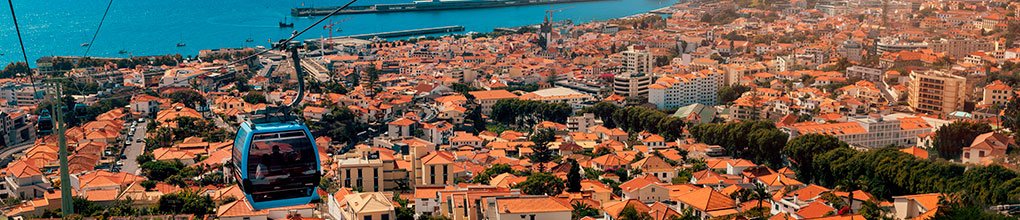
The Funchal–Monte cable car covers the ascent in eight minutes and provides a continuous view over the city's terracotta rooflines.
Funchal and Monte: Culture, Gardens, and Tradition
Funchal is not merely a gateway to the island's natural landmarks — it functions as a genuine destination in its own right. The Mercado dos Lavradores, the workers' market, is a working wholesale and retail market selling local produce, fish, and cut flowers. It is at its most active on Friday mornings when fishing boats arrive from the overnight catch. The cathedral, Sé do Funchal, dates to the early sixteenth century and contains one of the finest Manueline ceilings in Portugal. The cable car that ascends from the seafront to Monte provides eight minutes of uninterrupted city views before depositing visitors at the Jardim do Monte Palace — a thirty-hectare terraced garden containing koi ponds, European and African ceramics collections, and a museum dedicated to minerals and precious stones. The wicker basket toboggan departure point sits a short walk from the garden entrance, and the descent covers roughly two kilometres of residential streets in a matter of minutes.
Funchal & Monte Experiences
Whether you have two days or two weeks, Madeira's sightseeing options extend well beyond the standard highlights. Find guided tours matched to your schedule and preferred pace — from private jeep excursions to small-group levada walks.
Browse all Madeira Island experiences →Frequently Asked Questions
When is the best time to visit Madeira for sightseeing?
Madeira's climate is mild year-round, which means there is genuinely no bad season. Spring (March to May) brings wildflowers across the terraces, while autumn (September to November) tends to offer the most stable clear-sky days at altitude. Summer is the busiest period, particularly for Pico do Arieiro sunrise visits.
Do I need a hire car to see Madeira's main sights?
A hire car is useful and gives maximum flexibility, but it is not essential. Guided tours cover most major sights from Funchal, including Pico do Arieiro, Porto Moniz, and the west coast. Public bus routes connect Funchal to many trailheads, though timetables can be infrequent in rural areas.
How difficult are the levada walks?
Most levada trails are relatively flat, following the gentle gradient of the irrigation channels. The Levada das 25 Fontes is rated easy-to-moderate and is suitable for reasonably fit walkers without specialist equipment. The Arieiro-to-Ruivo ridge walk is a different category — it involves significant elevation change and exposed sections requiring proper footwear.
What should I know about the wicker toboggan ride?
The ride departs from Monte, above Funchal, and descends approximately two kilometres to Livramento. It is guided by two Carreiros who control the sled using ropes and their rubber-soled boots. The ride lasts around ten minutes and covers streets that are open to traffic, which adds to its unusual character. It costs roughly €30 per person.
Is Madeira Wine actually made on Madeira?
Yes. Madeira Wine is a fortified wine produced exclusively on the island under protected designation of origin rules. It is aged using a unique heating process — the estufagem — that gives it a distinctive caramelised complexity and exceptional longevity. The Funchal waterfront has several wine lodges offering tastings and cellar visits.
Are the Porto Moniz lava pools safe for children?
The natural pools are generally safe for families because the volcanic rock formations significantly reduce wave action and current. The municipality has also installed additional infrastructure including ladders and some enclosed sections. That said, conditions vary with the Atlantic swell, and the site posts daily safety assessments — it's worth checking before making a long drive.