




The Unexpected Places That Feel Like Home: True Travel Tales from Portugal
Some destinations do not impress you loudly. They simply, quietly, become part of who you are.
There is a particular feeling that arrives without warning in certain places. You step off a bus or round a bend in the road and something shifts, a calm settles in, and the unfamiliar suddenly feels known. Portugal has a way of doing this more consistently than almost anywhere else in Europe. It is a country of 92,212 square kilometres, roughly 830 kilometres of Atlantic coastline, and an accumulated quietness that travellers rarely expect and rarely forget.
Why Do Some Places Feel Like Home the Moment You Arrive?
Psychologists who study travel behaviour describe it as "place attachment": the emotional bond that forms between a person and a location. It does not require years of familiarity. Sometimes it forms within an hour, during a slow coffee on a village square, or while watching the Atlantic flatten out toward the horizon from a clifftop path. Portugal seems to generate this feeling with unusual frequency, and travellers who have experienced it often struggle to explain why.
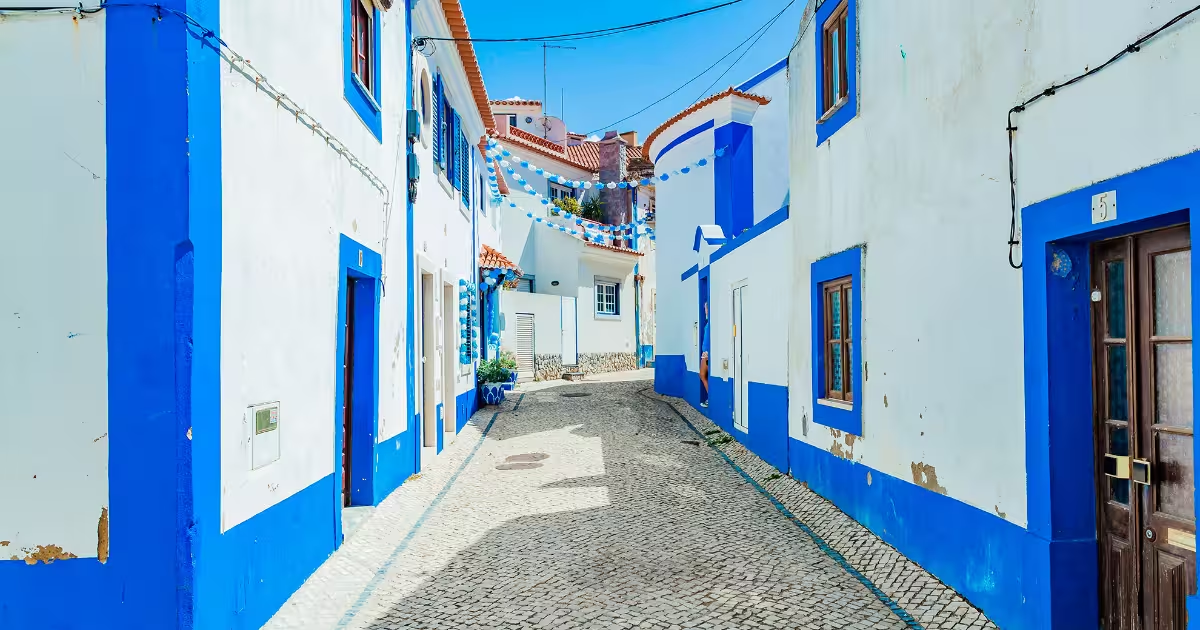
Part of the answer lies in scale. Many of Portugal's most resonant places are small enough to feel containable: a village of 300 residents, a harbour with a dozen fishing boats, a single main street lined with azulejo-tiled facades. The human scale of these places invites a kind of relaxation that larger, more performative destinations rarely allow. You are not a visitor consuming a spectacle. You are simply a person in a place.
"I arrived in Monsanto expecting to spend two hours and stayed for two days. Something about the silence between those rocks made the rest of the world feel very far away and entirely optional." — Traveller account collected via ToursXplorer community
The other element is saudade, the untranslatable Portuguese word for a bittersweet longing for something beautiful that is absent or past. It is embedded in the architecture, the music, the way locals pause in conversation. Even visitors who have never heard the word often describe feeling it. There is a melancholy warmth to Portugal that functions like recognition, as if you are remembering something you never actually experienced.
Monsanto and Óbidos: The Villages That Hold You Longer Than You Planned
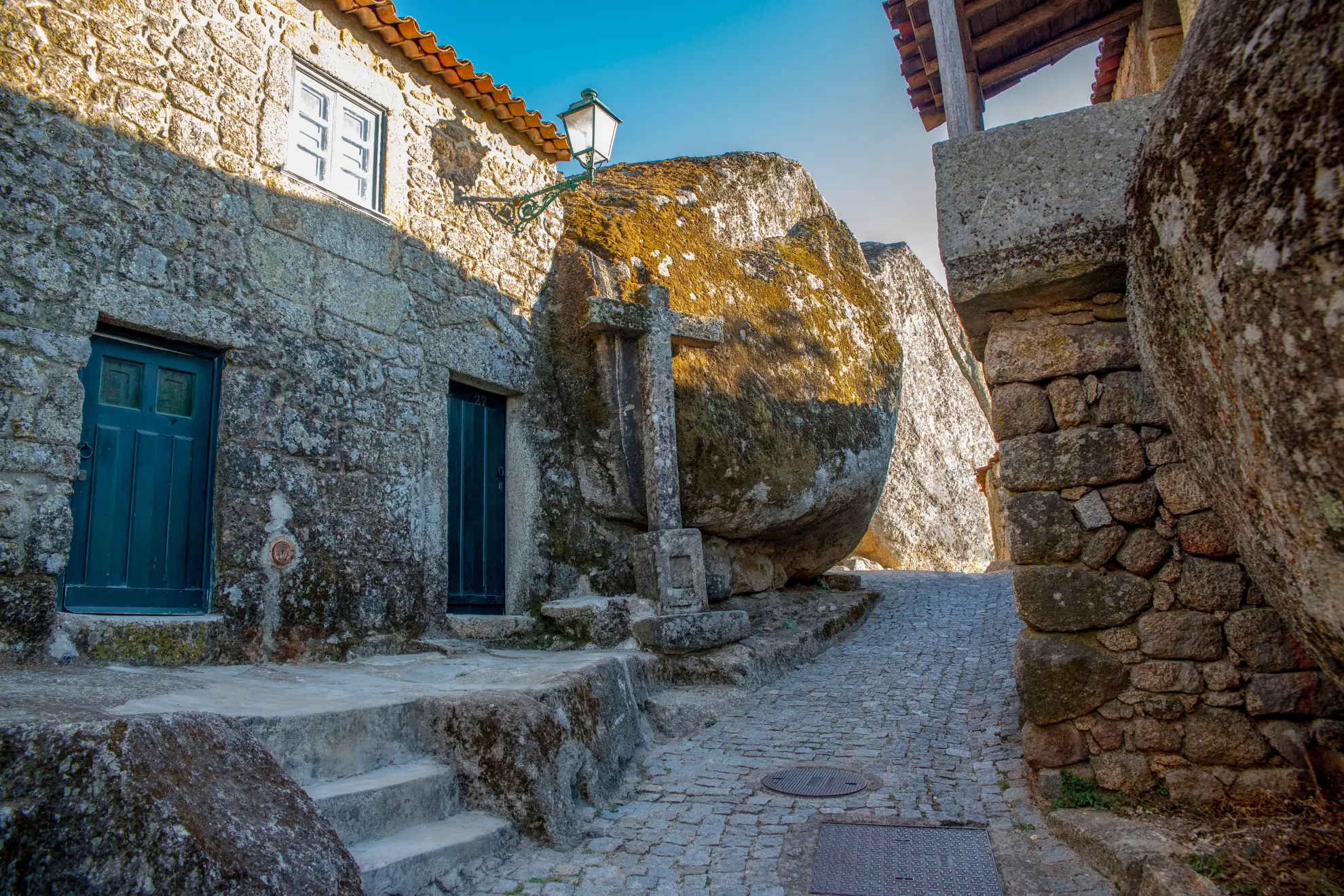
Monsanto sits in the Beira Baixa region of central Portugal, approximately 290 kilometres northeast of Lisbon. The village was built among and beneath enormous granite boulders, some as large as houses, so that the boundary between architecture and geology has almost entirely dissolved. Residents store wine in caves worn into the rock. Cats sleep on ledges 10 metres above street level. The lanes are so narrow that two people cannot walk abreast in places.
Monsanto was voted "the most Portuguese village in Portugal" in a national competition held in 1938, and it has resisted modernisation with quiet determination ever since. There are no chain restaurants. There is one small guesthouse. Mobile signal is intermittent. Most visitors arrive at midday and leave by late afternoon, which means that anyone who stays until evening experiences a transformation: the coach parties dissolve, the light turns amber, and the village becomes something closer to its actual self.
Óbidos, 80 kilometres north of Lisbon, operates on a different emotional register. It is enclosed within 14th-century walls, the interior a maze of whitewashed houses with borders of yellow and cobalt blue, cascades of bougainvillea, and at least six independent bookshops, one of which occupies a former church and sells second-hand editions by candlelight. The town has been inhabited continuously since Roman times and retains a density of history that becomes physically present when you walk its streets after dark.
Both villages share a quality that is difficult to name but easy to feel: they operate at a pace that recalibrates something in the traveller. Meals last longer. Conversations with strangers begin more naturally. The impulse to photograph everything gradually gives way to the impulse to simply sit.
The Atlantic Coast: Costa Nova, Azenhas do Mar, Ericeira and Comporta
Costa Nova, on the lagoon coast near Aveiro, is perhaps Portugal's most visually distinctive seaside settlement. Its palheiros, the striped fishermen's houses painted in bold vertical bands of red, green, white and black, line the narrow strip of land between the Ria de Aveiro and the Atlantic Ocean. The village dates to the 18th century and its visual identity has been preserved with notable consistency. Walking the main promenade on a November morning, with the Atlantic wind coming off the water and the houses reflected in wet sand, produces a sense of having arrived inside a painting.
Azenhas do Mar, 40 kilometres north of Lisbon along the Sintra coast, is carved into cliffs above a natural sea pool. The village is small enough that most visitors see all of it within 30 minutes, but the view from the clifftop cafe, looking down at the white houses stacked against the rock face with the Atlantic spreading west, is one of those compositions that stays in the memory with unusual clarity.
"Comporta does not try to impress you. It simply exists, quietly and beautifully, and eventually you realise you have been sitting on the same terrace for four hours watching rice fields turn gold." — ToursXplorer editorial research notes
Ericeira, 50 kilometres northwest of Lisbon, was declared a World Surfing Reserve in 2011, one of only a handful worldwide, and attracts a community of surfers, artists and slow travellers who give the town a creative energy that coexists, surprisingly gently, with its traditional fishing heritage. The harbour still operates. The pastelarias open at 7am. The surf schools fill by 9am. By evening, the combination produces a particular atmosphere: physical tiredness, salt air, the smell of grilled fish, and a communal ease that feels earned.
Comporta, in the Alentejo coast south of Setúbal, is harder to categorise. Rice fields extend to the horizon on one side; 30-kilometre Atlantic beaches on the other. The village itself is small and architecturally modest, which amplifies the contrast between its quietness and its natural abundance. It has become a destination for travellers who want luxury without display, and it does this more convincingly than almost anywhere else in Portugal.
Alentejo's Villages: Where Time Moves at the Speed of Light on Whitewashed Walls
The Alentejo region covers roughly one third of Portugal's total land area and contains fewer than 500,000 residents. The arithmetic produces a landscape of extraordinary spaciousness: cork oak forests stretching to flat horizons, olive groves silvering in afternoon light, rolling plains where the silence is not an absence of sound but a presence in itself.
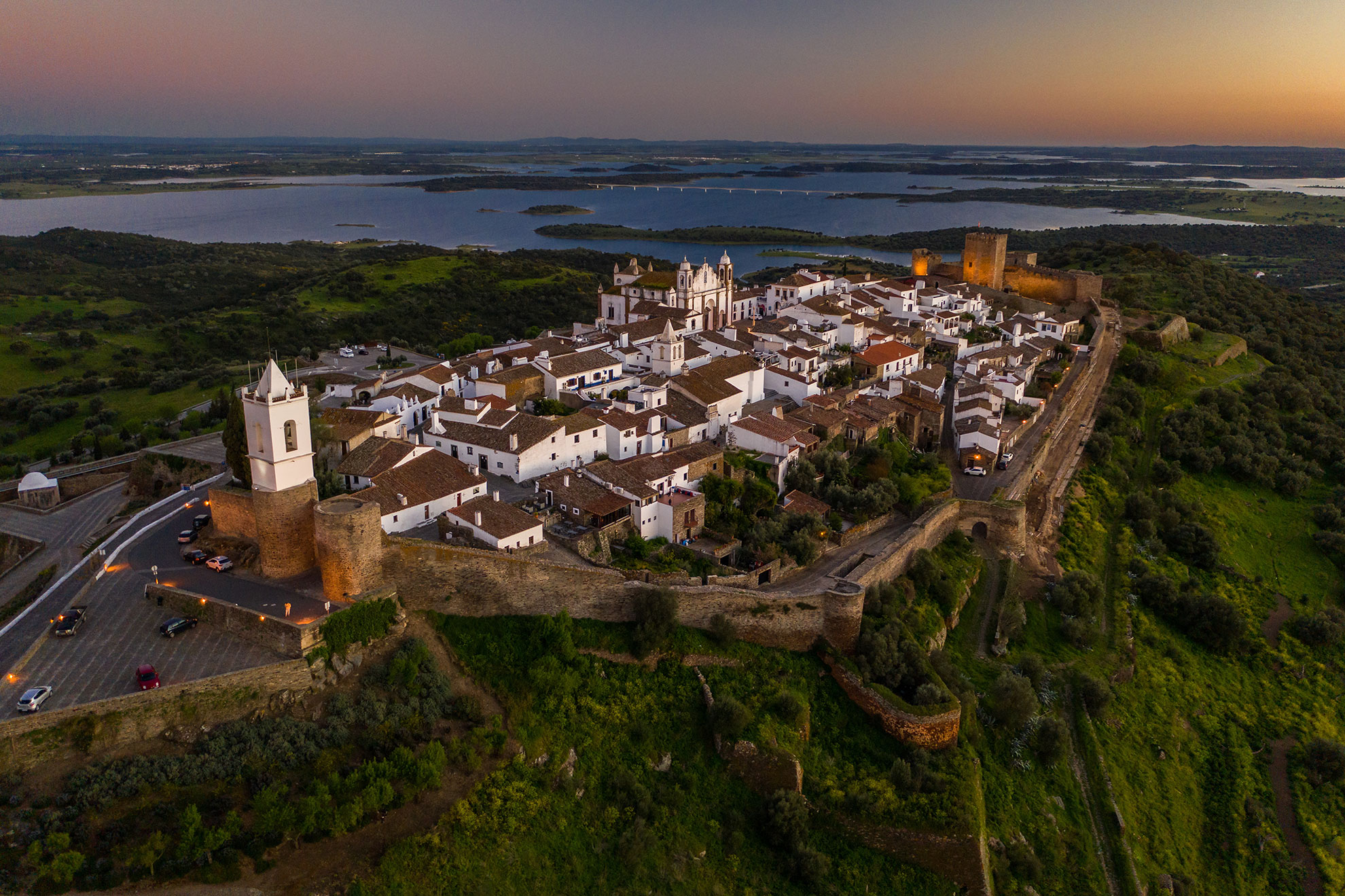
Monsaraz sits at 342 metres elevation above the Alqueva reservoir, the largest artificial lake in Western Europe at 250 square kilometres. The medieval walled village contains fewer than 150 permanent residents and a concentration of 13th and 14th-century architecture that has survived with exceptional integrity. The International Dark Sky Reserve designation, granted in 2011, means that nights in Monsaraz offer some of the clearest stargazing in Europe. Travellers who arrive expecting a daytime visit and stay until dark frequently describe the experience as genuinely transformative.
Marvão, near the Spanish border in the northeastern Alentejo, occupies a granite peak at 862 metres, the highest point in the Serra de São Mamede. The village is encircled by a 13th-century castle and walls that seem to grow directly from the cliff. Below, the Serra de São Mamede Natural Park extends across 75,000 hectares of mixed oak woodland and scrubland. The isolation here is not uncomfortable. It is the isolation of a place that has found its own internal logic and sees no reason to change it.
Alentejo wine culture reinforces the region's emotional texture. The Alentejo DOC produces wines from indigenous grape varieties including Aragonez, Trincadeira and Antão Vaz. Village adega visits, often informal and conducted by the same families who have farmed the land for generations, offer a directness of encounter that more commercial wine regions rarely match.
Madeira and the Azores: Islands That Feel Like the End of the World in the Best Possible Sense
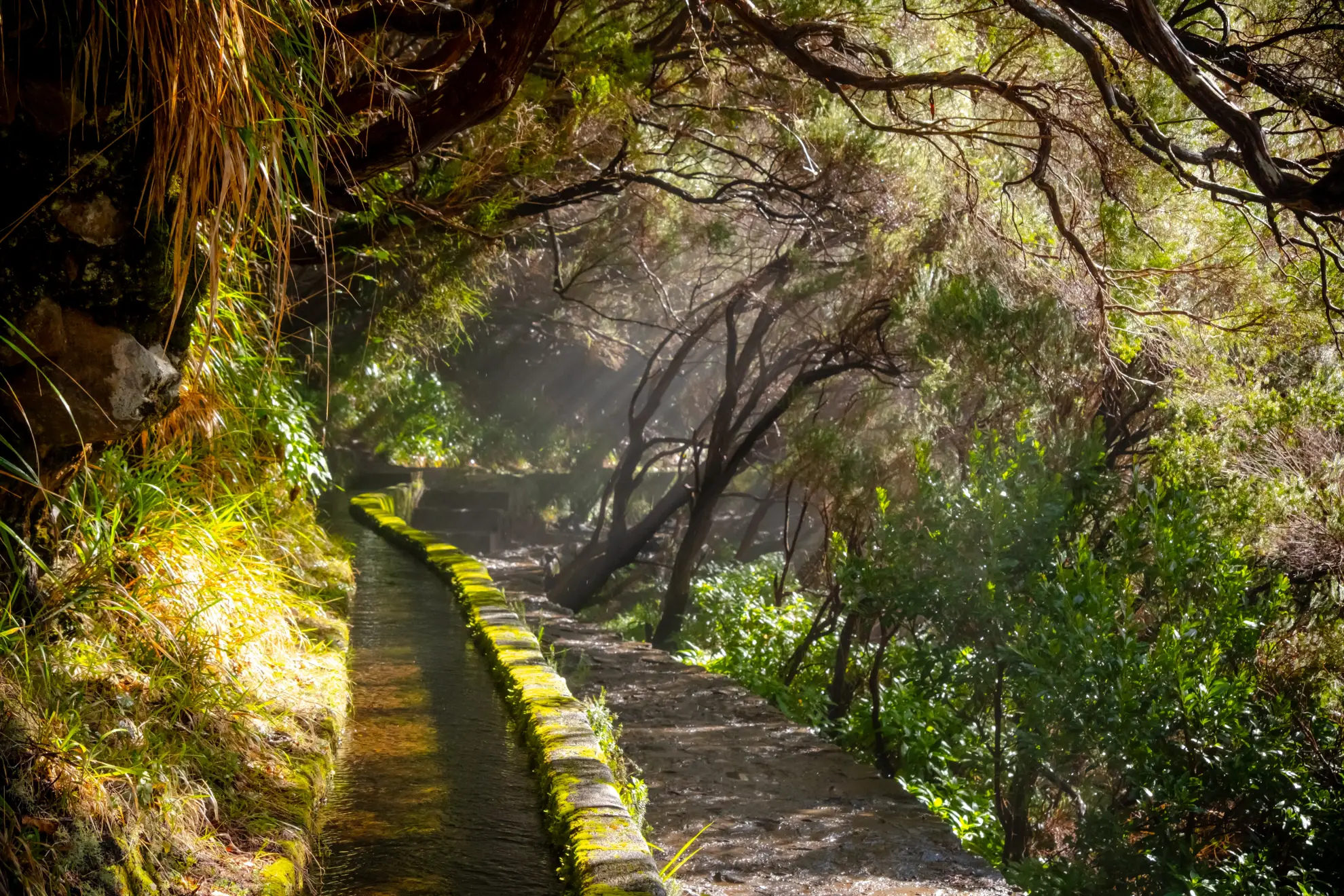
Madeira's interior remains one of Europe's most undervisited landscapes. The island, located 978 kilometres from Lisbon in the Atlantic, is often associated with its coastal resorts and the city of Funchal. But the mountain villages of the interior, places like Curral das Freiras, settled in a volcanic caldera and only accessible by road since 1959, or the levada paths that thread through laurisilva forest dating to the Tertiary period (approximately 15 to 40 million years old), constitute a different Portugal entirely.
The hike between Pico do Arieiro, at 1,818 metres, and Pico Ruivo, the island's highest point at 1,862 metres, passes through cloud forest, across ridgelines above the clouds, and through hand-cut tunnels in basalt. The route covers approximately 9 kilometres one way and requires 4 to 5 hours. At sunrise, when the clouds sit below the peaks and the first light catches the volcanic rock, the landscape achieves a kind of grandeur that is entirely unperformative.
The Azores archipelago, 1,500 kilometres west of Lisbon, consists of nine islands distributed across 600 kilometres of ocean. Terceira, the third-largest island at 400 square kilometres, contains Angra do Heroísmo, a UNESCO World Heritage city since 1983 and one of the most architecturally coherent historic centres in the Atlantic. The island's interior, a patchwork of green pasture divided by dark basalt walls and occasional calderas, has a quality of maintained intimacy that many Pacific or Caribbean islands have sacrificed to tourism infrastructure. São Miguel, the largest island, contains the Sete Cidades twin lakes (one blue, one green due to differing algae and light refraction), the Furnas geothermal valley, and a coastal character that shifts almost hourly with Atlantic weather patterns.
ToursXplorer has compiled a range of experiences across both archipelagos for travellers seeking the slower, less prescribed version of these destinations.
What Makes a Place Feel Like Home When You Are Far From It?
The question is worth sitting with. Researchers in environmental psychology suggest that the feeling of "place belonging" is triggered by a combination of factors: manageable scale, sensory familiarity (particular smells, sounds, temperatures), social warmth from local inhabitants, and a rhythm of daily life that the visitor can observe and partially join. Portugal, perhaps more than any other European country, consistently delivers all four.
The routine of a Portuguese morning, the particular weight of a ceramic coffee cup, the sound of trams on Lisbon's Alfama hills at 7am, the smell of pastéis de nata warm from the oven, the way a bakery owner will explain the difference between two types of bread with genuine investment in the answer, these are not theatrical performances of local culture. They are simply how life is conducted. Visitors who slow down enough to observe them often find themselves absorbed into the rhythm without effort.
Local markets, the Mercado de Loulé in the Algarve, the Feira de Barcelos in the Minho region (held every Thursday since the 12th century), the weekly markets in Alentejo villages, offer a form of human contact that is transactional on the surface but frequently becomes something warmer. Festival calendars across Portugal are dense with local celebrations: the Festa dos Tabuleiros in Tomar (held every four years, next in 2027), the Festas de Santo António in Lisbon each June, the vendimia grape harvest festivals in the Douro Valley each September. These are not staged for visitors. They are expressions of community, and the visitor who arrives by chance or by design is almost always included.
Family-owned guesthouses, rural quintas that have opened their doors to travellers, and local cooking experiences consistently appear in the accounts of travellers who describe Portugal as a place they felt at home. The physical comfort is secondary. The primary experience is of being welcomed rather than simply accommodated.
Experiences That Let Portugal Slow You Down
Portugal rewards travellers who resist the urge to move quickly through it. Browse ToursXplorer's full selection of Portugal experiences and find the places that will stay with you.
Click hereA Thematic Route: Places to Feel, Not Just See
Rather than a conventional itinerary, consider the following as a sequence of emotional registers. Begin in Lisbon, not to tick off monuments but to absorb the particular quality of its afternoon light on the Tagus, the sound of a fado guitar drifting from a Mouraria restaurant at 10pm, the weight of a ceramic coffee cup on a marble counter. Allow three days minimum.
Drive north along the Sintra coast to Azenhas do Mar, where the cliff village and its sea pool offer a morning of complete stillness. Continue to Óbidos for an overnight stay inside the medieval walls: the difference between a day visit and a night here is the difference between reading the first chapter of a book and finishing it.
Move south and east into the Alentejo. The drive from Lisbon to Monsaraz covers approximately 180 kilometres and passes through landscapes that become increasingly spacious and unhurried. Allow two nights: one for the village, one for the stars. Continue to Marvão, 75 kilometres north of Monsaraz via Portalegre, for a final Alentejo morning before descending west toward the coast.
Comporta and Ericeira offer contrasting coastal energies as a final act: the former meditative and barefoot, the latter salt-worn and communal. Either can hold a traveller for longer than planned.
For travellers extending to the islands, Madeira's interior and Terceira in the Azores represent not additions to a Portugal itinerary but separate emotional experiences that share Portugal's fundamental quality: the sense that time here is measured differently, and that the difference is welcome. ToursXplorer offers guided and self-guided options across all of these destinations, designed for travellers who prefer depth over distance.
How to Travel Portugal in a Way That Actually Stays With You
The practical conditions for the kind of travel described in this article are achievable without significant cost or complexity. They require principally a willingness to slow down and a resistance to the pressure to see more than you can meaningfully experience.
Stay in family-owned guesthouses and rural quintas rather than chain hotels. The difference is not merely aesthetic: it is the difference between being a guest and being a customer, and the emotional tone of an entire trip can be set by a single conversation over breakfast with someone who has lived in the same village for 60 years.
Eat where locals eat, which in Portugal is often a simple task: the restaurants closest to markets, the ones without photographs on the menu, the ones where the daily specials are written in chalk and change entirely the following day. In the Alentejo, this means dishes like migas (bread-thickened stew), açorda, and slow-cooked black pork from Alentejo pigs, the Alentejano breed known for its free-range diet of acorns and herbs. In the Azores, it means alcatra, a slow-cooked beef stew from Terceira unique to the island.
Use guided tours for experiences that genuinely benefit from local knowledge: Douro Valley wine tastings where the guide can explain the difference between Touriga Nacional and Touriga Franca in the context of a specific quinta's philosophy; Azores whale watching where a trained naturalist can identify species and explain the ecology; Sintra's gardens where the esoteric symbolism of Quinta da Regaleira becomes navigable rather than bewildering. ToursXplorer's Portugal listings are curated with exactly this principle in mind: local expertise in service of deeper understanding.
Finally, leave space in the schedule for nothing in particular. The moments that become memories are rarely the ones that were planned.
Frequently Asked Questions
The villages and coastal towns that consistently register as emotionally authentic include Monsanto (Beira Baixa), Óbidos (Estremadura), Monsaraz and Marvão (Alentejo), Costa Nova (near Aveiro), and Comporta (Alentejo coast). These places operate at a human scale, have preserved their architectural and social character, and offer genuine local life rather than tourism infrastructure.
Azenhas do Mar, 40 kilometres north of Lisbon, is frequently cited by travellers as a place that stays in the memory. Curral das Freiras in Madeira's volcanic interior, only accessible by road since 1959, and the island of Terceira in the Azores, home to UNESCO-listed Angra do Heroísmo, are also consistently described as places that exceed expectation through quietness rather than spectacle.
Research in environmental psychology identifies manageable scale, sensory familiarity, social warmth from locals, and a daily rhythm the visitor can observe as the main triggers for place belonging. Portugal combines all four: its villages are small enough to feel containable, its hospitality is direct and personal, and its daily routines, morning coffee, afternoon market, evening passeio, are stable enough to join within a day.
Slow travel in Portugal works best when organised around overnight stays in small villages rather than day trips, meals in family-run restaurants rather than tourist-facing establishments, and experiences that prioritise local knowledge: guided wine tastings in the Douro, cooking classes using Alentejo produce, or self-guided levada hikes in Madeira. Staying at rural quintas and avoiding high-season crowds in major cities (Lisbon and Porto are quietest from October to March) significantly changes the quality of the experience.
Spring (March to May) and autumn (September to November) offer the most comfortable conditions for village visits and hiking: temperatures between 15 and 22 degrees Celsius, smaller crowds, and the landscape at its most varied. The Alentejo is particularly rewarding in spring when wildflowers cover the plains. Madeira is accessible year-round due to its mild Atlantic climate, with average temperatures between 17 and 25 degrees Celsius throughout the year.
Geographically, the Azores lie 1,500 kilometres west of Lisbon and Madeira 978 kilometres to the southwest, making them separate air destinations rather than stops on a mainland itinerary. Both are served by direct flights from Lisbon (approximately 2 hours to Madeira, 2.5 hours to São Miguel in the Azores). Most travellers treat each as a dedicated 5 to 7 day trip rather than a combined island-hop, which allows enough time to move beyond the coastal highlights into the quieter interiors.