Discover Lisbon Street Art: Where Creativity Paints the City
Walk through the sunlit alleys of Lisbon, and you’ll notice something extraordinary. The walls speak. They hum with the pulse of resistance, joy, protest, and passion. This isn’t just graffiti—it’s a canvas of Lisbon’s soul. From haunting portraits carved into concrete by Vhils to giant raccoons made from trash by Bordalo II, Lisbon street art is more than visual flair; it’s a living, breathing narrative.
The city has become one of Europe’s most exciting urban art destinations, weaving history, culture, and creativity into every stroke and spray. With an ever-evolving tapestry of Lisbon murals, the Portuguese capital offers an authentic and edgy counterpoint to more traditional sightseeing. It invites you to look beyond the façades—to explore deeper stories of identity, struggle, rebirth, and imagination.
In this guide, we’ll uncover the magic of street art in Lisbon—showcasing vibrant neighborhoods, celebrated artists, and grassroots movements that fuel the scene. Whether you’re a culture junkie, art lover, or curious traveler, Lisbon’s graffiti scene promises a journey both thought-provoking and Instagram-worthy.
The Rise of Urban Art in Lisbon
The Cultural Roots of Lisbon's Graffiti Scene
Lisbon’s urban art culture didn’t just pop up overnight. It took root in the 1970s and 80s, growing out of a backdrop of political upheaval, economic hardship, and youth discontent. The fall of the Salazar dictatorship in 1974 unleashed a wave of expression—and much of it found an outlet on the streets. Walls that were once mute became bold stages for rebellion and identity.
At the time, graffiti was raw and unfiltered. Tags and throw-ups dominated the scene, often seen as vandalism rather than art. But slowly, a shift began. Influenced by the hip-hop movement, international street art styles, and local heritage, Lisbon’s graffiti evolved into something uniquely Portuguese. Mosaics of meaning emerged—combining visual storytelling with social commentary.
One of the major turning points was the creation of the Galeria de Arte Urbana (GAU) in 2008. This municipal project legitimized and celebrated street art, commissioning artists to work on public murals and curating exhibitions in outdoor spaces. It turned walls into galleries and gave young talent a respected platform.
How Urban Art Became a Voice of the People
Lisbon street art tells stories the history books don’t. It speaks for communities in transition—immigrants in Mouraria, creatives in Beato, dreamers in Marvila. Artists use their brushes and sprays to spotlight issues often overlooked: housing inequality, gentrification, sustainability, political frustration.
This art form isn’t confined to rebel voices, though. It has become a form of civic pride. The city embraces it not as a nuisance but as a cultural asset. Murals brighten crumbling walls, turning neglected buildings into vibrant landmarks. What once was illegal now feels integral to the city’s cultural landscape.
Today, walking through Lisbon’s neighborhoods is like flipping through a graphic novel. The walls share chapters of loss, love, laughter, and resistance. Each piece is a conversation, a reflection of Lisbon’s ever-shifting identity.
Meet the Masters: Vhils and Bordalo II
Vhils Lisbon: Carving Identity into the City’s Walls
No conversation about street art in Lisbon is complete without Vhils—aka Alexandre Farto. Born and raised in the outskirts of Lisbon, Vhils has turned destruction into creation. His signature technique? Using drills, chisels, and explosives to etch breathtaking portraits into crumbling walls.
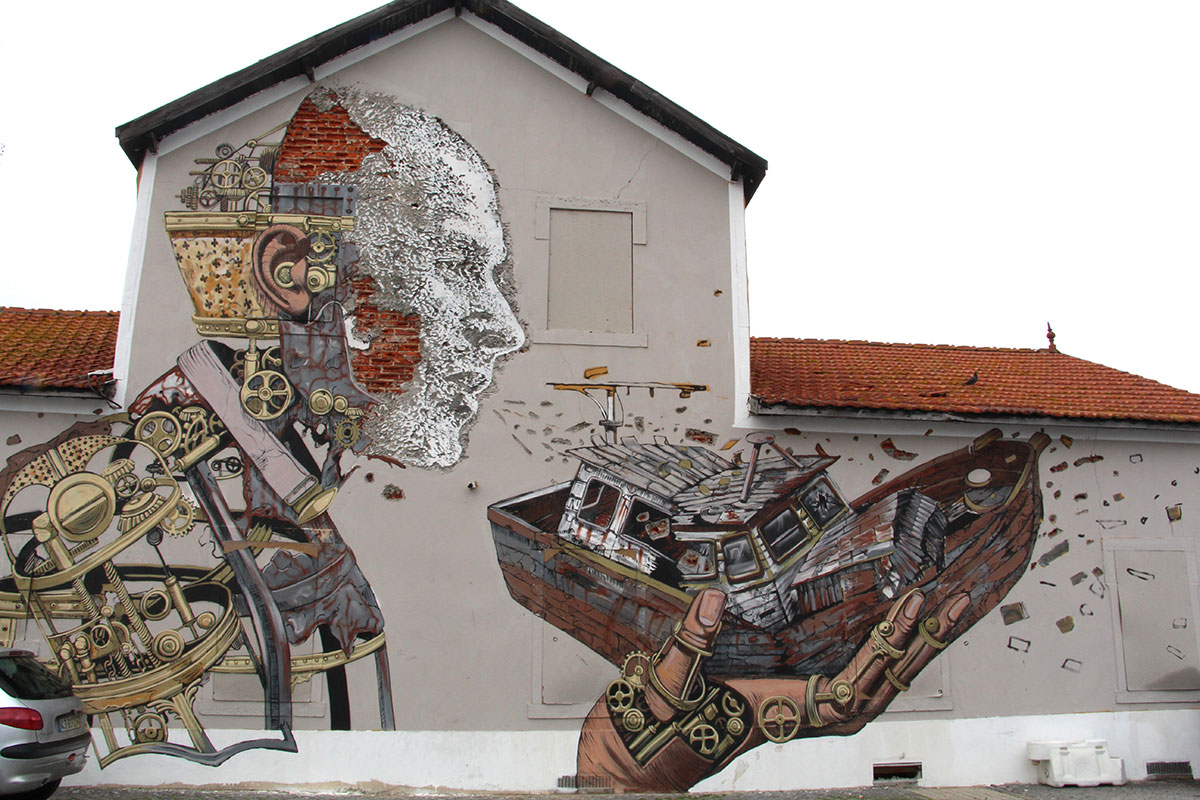 A striking Vhils mural in Lisbon, exemplifying the artist's signature carving style.
Vhils doesn’t paint over the city—he peels it back. His work reveals layers of Lisbon’s architecture and soul, often focusing on forgotten faces: working-class citizens, immigrants, children of change. The message? Every wall has a story. Every face matters.
His most iconic works can be found across the city, including in Mouraria and Alcântara. Vhils is also one of the minds behind the Underdogs Gallery, a platform that promotes urban art through exhibitions, residencies, and collaborations with global artists.
What makes Vhils special is not just his technique but his philosophy. He sees walls as living organisms, and his goal is to carve the identity of Lisbon into its very foundations. His art doesn't shout—it echoes.
Bordalo II Art: Trash Turned into Urban Treasure
Enter Bordalo II, Lisbon’s other heavyweight in the urban art scene. If Vhils is the poet of the city’s walls, Bordalo II is the provocateur. His medium? Trash. Literally.
Bordalo II (Artur Bordalo) creates massive, eye-popping sculptures of animals using discarded metal, plastic, and other urban waste. His mission is simple but powerful: to raise awareness about consumerism, pollution, and environmental destruction.
Stroll through LX Factory or the Beato district, and you’ll spot his creatures leaping from walls, staring down at passersby. Each piece—be it a fox, a raccoon, or an owl—is both beautiful and unsettling. It forces viewers to confront the waste we produce and the ecosystems we endanger.
Bordalo II’s work is more than artistic commentary—it’s activism. His “Big Trash Animals” project has become an international sensation, and yet, its heart remains in Lisbon. Here, his animals are more than mascots—they're mirrors.
Neighborhood Highlights: Lisbon’s Must-See Street Art Spots
Mouraria Street Art: The Soul of the Old City
Mouraria isn’t just a neighborhood—it’s a living museum of Lisbon’s multicultural spirit. Nestled near the historic Alfama district, Mouraria is the birthplace of Fado music and home to a vibrant immigrant community. It's also a street art hotspot that fuses heritage with rebellion.
Walk its narrow alleys and steep stairways, and you'll encounter stunning murals that tell stories of Lisbon’s forgotten and celebrated. One of the area’s highlights is the Portrait Gallery project—featuring massive murals of local residents created by artists like Camilla Watson and Vhils himself.
Here, art spills onto tiles, doors, and even balconies. It reflects Mouraria’s history, its struggles, and its resilience. It’s intimate, emotional, and deeply human.
And because it’s less touristy than nearby Alfama, you’ll get an authentic vibe—locals chatting on doorsteps, children playing in mural-lined courtyards. Mouraria is where Lisbon’s heart beats loudest, and its art is the pulse.
LX Factory Street Art: Industrial Meets Avant-Garde
If there’s one place where Lisbon’s industrial past collides beautifully with contemporary creativity, it’s LX Factory. Located in the Alcântara neighborhood, this former textile and manufacturing complex has been transformed into a cultural playground—and its walls are an open-air canvas for some of the most jaw-dropping LX Factory street art in the city.
From the moment you enter through its graffiti-covered gates, LX Factory feels alive with expression. Towering murals, intricate stencils, and bold slogans line the façades of warehouses, restaurants, cafés, and bookstores. It’s a place where no wall is wasted. The artwork here changes frequently, which means even repeat visitors will discover something new every time.
Artists from around the world have left their mark here, including local legends like Vhils and Bordalo II. You’ll spot Bordalo’s trash-based animals peering out from the corners of buildings, often camouflaged into the space yet impossible to ignore. His messages about sustainability strike especially hard in an area buzzing with consumption and commerce.
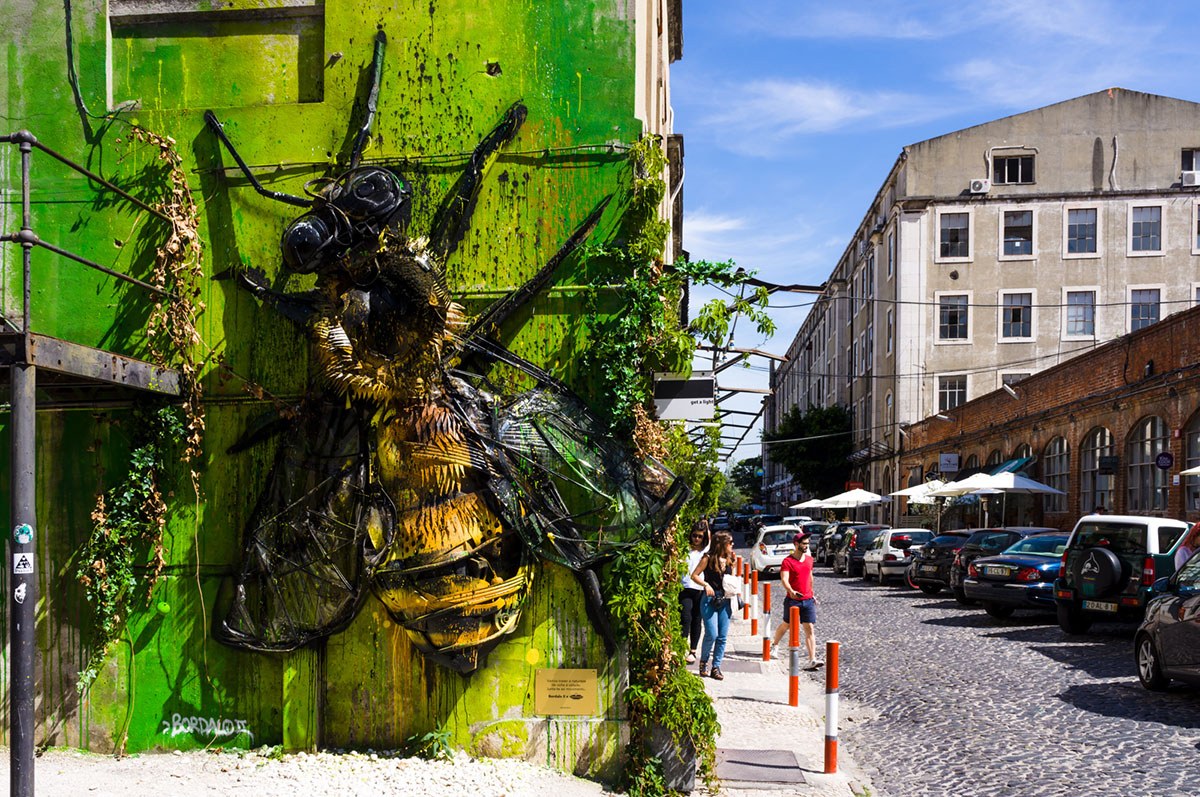 Bordalo II's 'Bee' installation at LX Factory highlights environmental themes through recycled art.
LX Factory isn’t just for viewing art—it’s for living it. Grab a coffee at an artsy café, catch a rooftop view next to a mural, or explore Ler Devagar, a massive bookstore wrapped in painted stories. This space doesn’t just display Lisbon’s creative edge—it is Lisbon’s creative edge.
It’s also a great place to hop on a street art tour in Lisbon, as many guided experiences include LX Factory in their itinerary. Whether you’re into photography, design, or simply enjoy a good mural, this is a must-visit stop.
Beato and Marvila: Creative Revival Through Murals
Tucked away from the tourist crowds, Beato and Marvila are Lisbon’s rising stars in the street art universe. These once-industrial zones have been undergoing a quiet revolution—one powered by art, innovation, and grassroots energy.
In Beato, old warehouses are now home to creative hubs and co-working spaces, and their outer walls have become bold declarations of transformation. The street art here feels raw and honest, reflecting the neighborhood’s evolution and Lisbon’s broader urban regeneration goals.
Marvila, just a bit further east, has become a magnet for large-scale murals that play with color, scale, and symbolism. You’ll find entire buildings cloaked in surrealist portraits, abstract shapes, and eco-conscious messages. International artists have been invited to contribute here, and the result is a mesmerizing mix of styles.
Both neighborhoods are also home to local initiatives like Underdogs Gallery, which curates installations that reflect Lisbon’s dynamic art identity. These aren’t just murals for murals’ sake—they’re statements about renewal, sustainability, and reimagining space.
For travelers seeking off-the-beaten-path cultural experiences in Lisbon, Beato and Marvila offer more than just cool walls. They offer a chance to witness transformation in real-time—to see how urban art is breathing life into forgotten corners and helping shape the city’s future.
Thematic Expressions: Social Commentary on the Walls
Politics, Resistance, and Urban Regeneration
One of the most compelling elements of Lisbon street art is its fearless social commentary. The city’s walls don’t whisper—they shout. Artists use them to protest corruption, highlight injustice, and honor resistance movements both past and present.
You’ll find murals that depict the Carnation Revolution, powerful images of political prisoners, and defiant anti-capitalist symbols. These pieces aren’t designed to please—they’re designed to provoke. And in a city with a complex political history, this form of public discourse is vital.
But it’s not just about anger—it’s about hope too. Many murals reflect themes of urban regeneration, portraying how neglected areas can be reimagined through creativity. Street art becomes both a mirror and a map, showing Lisbon where it’s been and where it’s going.
This type of artwork turns a casual walk into an education. It gives travelers a chance to engage deeply with the city’s values and conflicts—making it one of the most powerful forms of cultural tourism in Lisbon.
Sustainability in Spray Paint: Lisbon Murals with a Message
Sustainability isn’t just a buzzword in Lisbon—it’s a movement. And you’ll see it reflected clearly in the city’s murals. Artists like Bordalo II are leading the charge, crafting intricate sculptures from waste and transforming pollution into visual poetry.
His works, often depicting endangered animals, aren’t just impressive—they’re eye-opening. They remind us that the materials we throw away can tell stories. That art can inspire environmental action.
Other artists also contribute with murals that focus on climate change, rising sea levels, and biodiversity loss. In places like Marvila and Beato, entire buildings have been turned into eco-awareness billboards.
Many of these projects are supported by sustainable tourism in Lisbon initiatives, ensuring that public art aligns with broader goals of conservation and responsibility. For visitors, this means you’re not just consuming culture—you’re participating in a movement that values creativity, community, and the planet.
Galleries, Platforms & Community Projects
Galeria de Arte Urbana (GAU): Curating the Streets
The Galeria de Arte Urbana (GAU) is more than a gallery—it’s a guardian of Lisbon’s street art scene. Launched in 2008 by the city council, GAU has played a pivotal role in legitimizing and preserving urban art across Lisbon.
By allocating walls for artistic projects, GAU offers artists legal space to create while ensuring that high-quality, meaningful work enhances the urban landscape. They’ve curated dozens of large-scale murals, particularly in the Calçada da Glória area, transforming staircases and alleyways into vibrant galleries.
Their mission? To foster dialogue between the city, its residents, and artists—bridging gaps through public expression. For travelers, GAU’s work provides a rich, curated introduction to urban art in Lisbon, often guiding the way to lesser-known masterpieces.
Underdogs Gallery & Platform: Pioneering Lisbon's Art Movement
Founded by Vhils, the Underdogs Gallery is Lisbon’s epicenter for contemporary and street art. Located in a converted warehouse near the Tagus River, this space blends exhibitions, artist residencies, and community engagement.
Underdogs isn’t just about displaying art—it’s about storytelling. Their exhibitions dive deep into themes like identity, consumerism, and memory, featuring both local talents and international names. The gallery also partners with city projects, placing curated murals in public spaces that travelers often stumble upon in unexpected spots.
Whether you’re a collector, a casual fan, or just curious, Underdogs offers a unique lens into Lisbon’s evolving creative heartbeat.
YES YOU CAN Spray: Empowering Youth Through Art
More than just workshops, YES YOU CAN Spray is a social movement. This initiative runs graffiti and mural-making workshops for youth across Lisbon, empowering the next generation of artists to express themselves, develop skills, and connect with their communities.
Participants don’t just paint walls—they reclaim them. Through mentorship and hands-on experience, these workshops turn blank concrete into canvases of self-expression. It’s about more than art—it’s about empowerment.
For visitors, YES YOU CAN Spray also offers interactive workshops, letting you join in and contribute to Lisbon’s ever-growing street art scene. It’s the perfect blend of education, creativity, and meaningful travel.
How to Experience Lisbon’s Street Art Firsthand
Street Art Tours Lisbon: Guided Discoveries
One of the best ways to explore street art in Lisbon is by taking a curated street art tour. These tours are led by locals—often artists themselves—who give context to the murals, offer behind-the-scenes insights, and reveal the hidden meanings etched into every wall. It's more than just sightseeing; it’s story-hearing.
You’ll find various types of tours listed on www.toursxplorer.com, from small group walks to private, tailor-made experiences. Some focus on specific neighborhoods like Mouraria or Marvila, while others offer a broader sweep across the city’s best-known hotspots, including LX Factory, Alcântara, and Calçada da Glória.
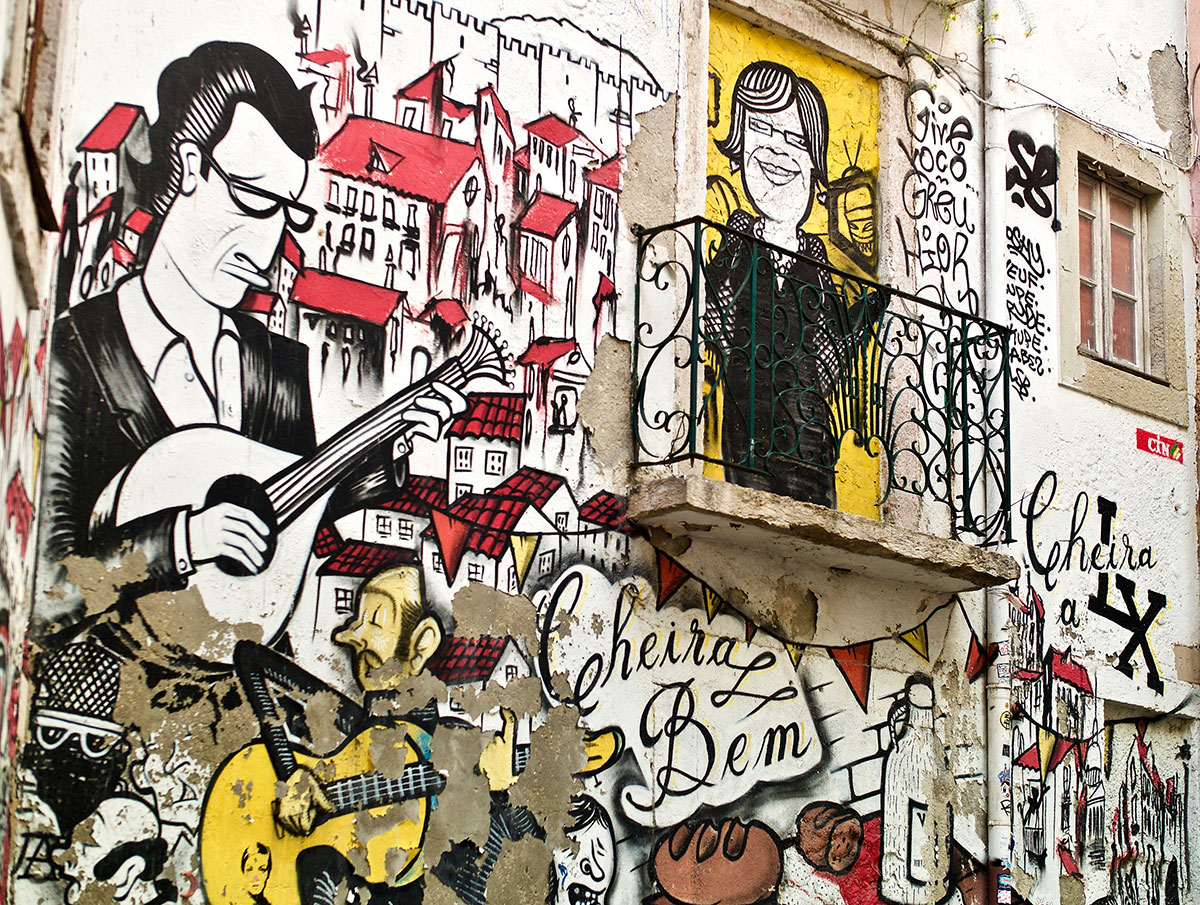 A colorful mural in Mouraria reflecting the neighborhood's rich cultural tapestry.
These tours not only help you discover the who, what, and why behind each piece but also offer cultural insights into Lisbon’s neighborhoods. Tour guides often highlight the social and political messages embedded in the art, helping travelers connect the dots between Lisbon’s history and its contemporary urban pulse.
Booking a street art tour is also a fantastic way to support sustainable tourism in Lisbon. Many of these tours are locally run, community-driven, and consciously designed to avoid over-tourism in more delicate areas.
Whether you're an art aficionado or a curious traveler, these guided tours are a must. They transform walls into open books—and you'll walk away with a newfound appreciation for the voices echoing across Lisbon’s streets.
E-bike, Tuk-Tuk & Walking Tours: Choose Your Style
Not a fan of walking the entire city? No worries. Lisbon has some hilly terrain, and the good news is, there are e-bike and tuk-tuk tours that make exploring its street art accessible and fun.
E-bike tours are perfect for travelers who want to cover more ground without breaking a sweat. These typically include stops in Graça, Alfama, Mouraria, and down along the riverside to Alcântara and Beato. With a local guide leading the way, you can zoom between art-filled neighborhoods while learning about the stories behind the paint.
Tuk-tuk tours, on the other hand, offer a laid-back, charming way to experience Lisbon’s vibrant street scenes. These compact electric vehicles weave through narrow streets and steep hills, making them a fun and efficient way to take in street art highlights, especially for families or those with mobility concerns.
Of course, if you prefer a more intimate experience, walking tours are unbeatable. They allow you to pause, snap photos, interact with locals, and maybe even spot an artist mid-creation. Many tours end with a snack or a stop at a local gallery—giving you a full sensory taste of Lisbon’s cultural scene.
Whichever mode of exploration you choose, the goal is the same: to engage with the city’s art in a way that’s immersive, insightful, and unforgettable.
Workshops and Spray Jams: Get Involved, Get Inspired
Want to go beyond just looking? Lisbon offers plenty of opportunities to get your hands dirty (with paint) and become part of its vibrant street art community. Participatory experiences like spray painting workshops, stencil classes, and community mural events are available for all skill levels.
YES YOU CAN Spray is a standout program that hosts workshops where travelers can learn the fundamentals of graffiti art—from sketching and layering to handling a spray can with confidence. These sessions are usually run by local street artists who guide you step by step, sharing tricks of the trade and stories from their own experiences.
Other creative hubs, like Underdogs Gallery, also offer occasional masterclasses, artist talks, and studio visits, allowing travelers to peek into the world of professional urban creators.
And if you're lucky, you might even catch an open-air Spray Jam—a street festival where artists paint live across designated walls while DJs spin music and food trucks dish out bites. These gatherings are vibrant celebrations of community, creativity, and cultural exchange.
Joining a workshop or jam session is not only a blast—it deepens your connection to Lisbon’s street art. It’s a way to support local artists, learn new skills, and leave your own tiny mark on a city that’s constantly being reimagined.
Embracing Sustainable Tourism Through Urban Art
Community Impact and Responsible Exploration
Urban art is more than eye candy—it’s a vehicle for community development and sustainable tourism. In Lisbon, murals have helped revitalize forgotten neighborhoods, attracted visitors to underappreciated areas, and sparked conversations about history, identity, and environment.
By exploring Lisbon’s street art scene, tourists can help redirect foot traffic away from overcrowded tourist hubs like Baixa and Belém into creative districts like Marvila, Beato, and Alcântara. This spread of tourism not only helps preserve the charm of the city center but also supports smaller businesses and local initiatives in outlying communities.
But with great interest comes great responsibility. Visitors are encouraged to travel mindfully—to respect the art, engage with local culture, and avoid tagging or vandalizing existing works. Many tours incorporate this ethos, educating participants on the do’s and don’ts of street art tourism.
Supporting responsible street art experiences also means spending money where it matters: booking local tours, buying from independent galleries, and contributing to neighborhood-driven projects. These actions ensure that Lisbon’s creative spirit isn’t just observed—it’s nurtured.
So, when you walk the painted alleys and color-drenched lanes of Lisbon, remember: you’re not just a spectator. You’re a participant in a living, evolving story.
Supporting Local Creatives and Cultural Experiences Lisbon
Lisbon’s street art culture thrives because of its people—bold artists, passionate curators, community leaders, and everyday residents who welcome change through creativity. To truly support this movement, tourists are encouraged to invest in cultural experiences Lisbon has to offer that celebrate this grassroots energy.
Whether it’s buying prints from a gallery like Underdogs, joining a mural workshop with YES YOU CAN Spray, or simply tipping your street art guide well, your contributions make a difference. These small actions fuel the local economy, encourage new creative projects, and show appreciation for the art and effort that make Lisbon such a vibrant cultural hub.
Another great way to show support? Share your experience. Post about your favorite murals on social media, tag the artists, and spread the word about tours and projects you loved. The more visibility Lisbon’s street art gets, the more it can grow and inspire.
Lisbon’s creative scene doesn’t exist in isolation—it thrives on connection. When you explore, engage, and support local, you help ensure that the city’s streets stay alive with art for generations to come.
Conclusion: Lisbon’s Living Canvas Awaits
Lisbon is a city that reveals itself in layers—stone by stone, tile by tile, mural by mural. Its street art is more than visual decoration. It’s the heartbeat of neighborhoods, the voice of the people, the soul of a city constantly rewriting its story.
From the chiseled portraits of Vhils to the eco-conscious creatures of Bordalo II, from the narrow lanes of Mouraria to the buzzing energy of LX Factory, Lisbon’s urban art invites you to slow down, look closer, and listen. There’s poetry in the paint, resistance in the color, and community in every brushstroke.
Whether you're hopping on a street art tour, joining a spray workshop, or wandering the alleys solo, you’re part of something bigger—a creative revolution shaped by vision, struggle, and imagination.
So go ahead. Let the walls guide you.
FAQs
Where can I find the best street art in Lisbon?
Some of the top spots include Mouraria, LX Factory, Marvila, Beato, and Calçada da Glória. Each offers a different vibe and selection of artwork—from iconic murals to hidden gems.
Can I join a street art tour in Lisbon?
Absolutely! Lisbon has fantastic street art tours, many of which are listed on Toursxplorer.com. You can choose from walking, e-bike, or tuk-tuk formats depending on your style and schedule.
Who are the top street artists in Lisbon?
Vhils and Bordalo II are Lisbon’s most internationally recognized street artists. Other notable names include Akacorleone, Odeith, and Add Fuel—each bringing their unique style to the city’s canvas.
Is Lisbon street art legal or sanctioned?
Much of Lisbon’s street art is legal and supported by city initiatives like Galeria de Arte Urbana (GAU). Some areas are designated for public art, while others host commissioned works.
How does street art contribute to sustainable tourism in Lisbon?
Street art spreads tourism to lesser-known neighborhoods, supports local artists, and promotes cultural exchange. It also encourages responsible travel through educational tours and eco-conscious art themes.