




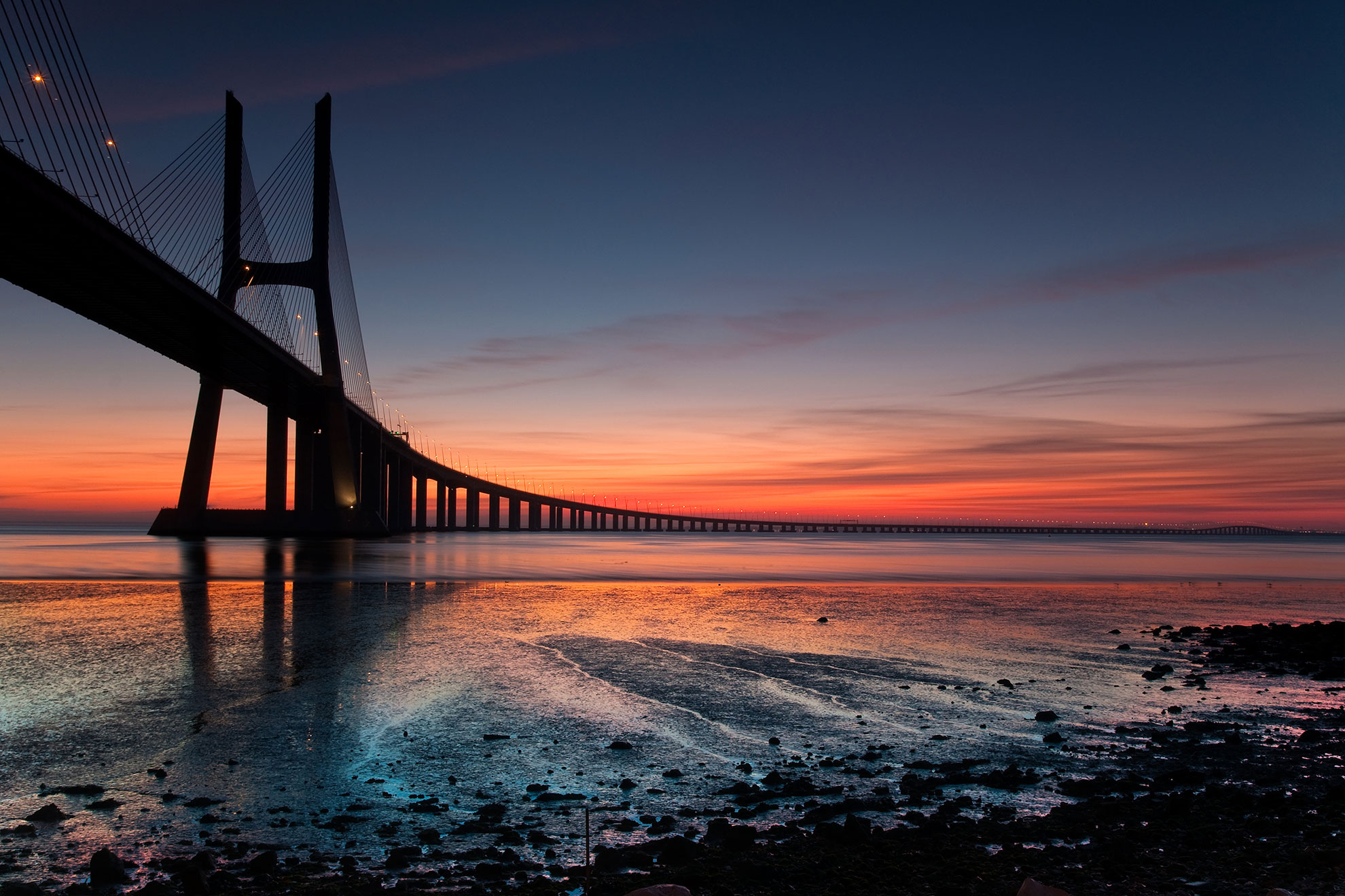
The Tagus at its widest point near Lisbon — locals call it the Mar da Palha, the Sea of Straw, for the way afternoon light catches the water.
River & Sailing Tours · Lisbon · 2026
On the Tagus: A Practical Guide to Lisbon's Boat Tours in 2026
From traditional wooden vessels to private sunset sloops, here is what the river actually looks like — and how to choose the right way to see it.
Lisbon is a city that turns its back on its own river in daily life, then faces it completely once you step onto a boat. The Tagus here stretches nearly 15 kilometres wide at the Alcochete narrows, and the skyline — the Alfama terraces, the 25 de Abril bridge, the Cristo Rei statue across the water — rearranges itself into something unfamiliar the moment you leave the dock at Cais do Sodré or Belém.
Boat tours on the Tagus range from short 75-minute group sails aboard traditional caravela replicas to full-afternoon private charters with a skipper and cold wine. The differences in experience are not minor. A group catamaran in July carries 30 passengers and sets a fixed route; a private wooden vessel in September lets you anchor off Trafaria and swim. Understanding what each format offers — before prices, before departure times — saves a significant amount of post-trip regret.
What has shifted noticeably heading into 2026 is the rise of multi-modal day tours. Operators are increasingly pairing a river leg with a cycling segment, letting passengers disembark at Belém or Cacilhas and continue on two wheels through territory that is genuinely difficult to cover on foot. It is a format borrowed directly from the cycling tour hype that has reshaped how visitors move through European cities over the past three years — and on the flat riverside paths between Lisbon and Cascais, it works.
"The river gives you the city's proportion. From the water, you understand why the Moors built here and why the navigators left from here — the geography explains everything."
Choosing Your Departure Point and Format
Most Lisbon river tours depart from one of three zones: the Ribeira waterfront near the Praça do Comércio, the Belém docks roughly 7 kilometres west, or the Parque das Nações marina in the east. Each gives a different view. Ribeira departures place you immediately beneath the old city; Belém departures frame the Torre and the Jerónimos Monastery from the water; Parque das Nações opens toward the Vasco da Gama bridge and the wider estuary. A tour departing from Belém is not better or worse — it is a different river.
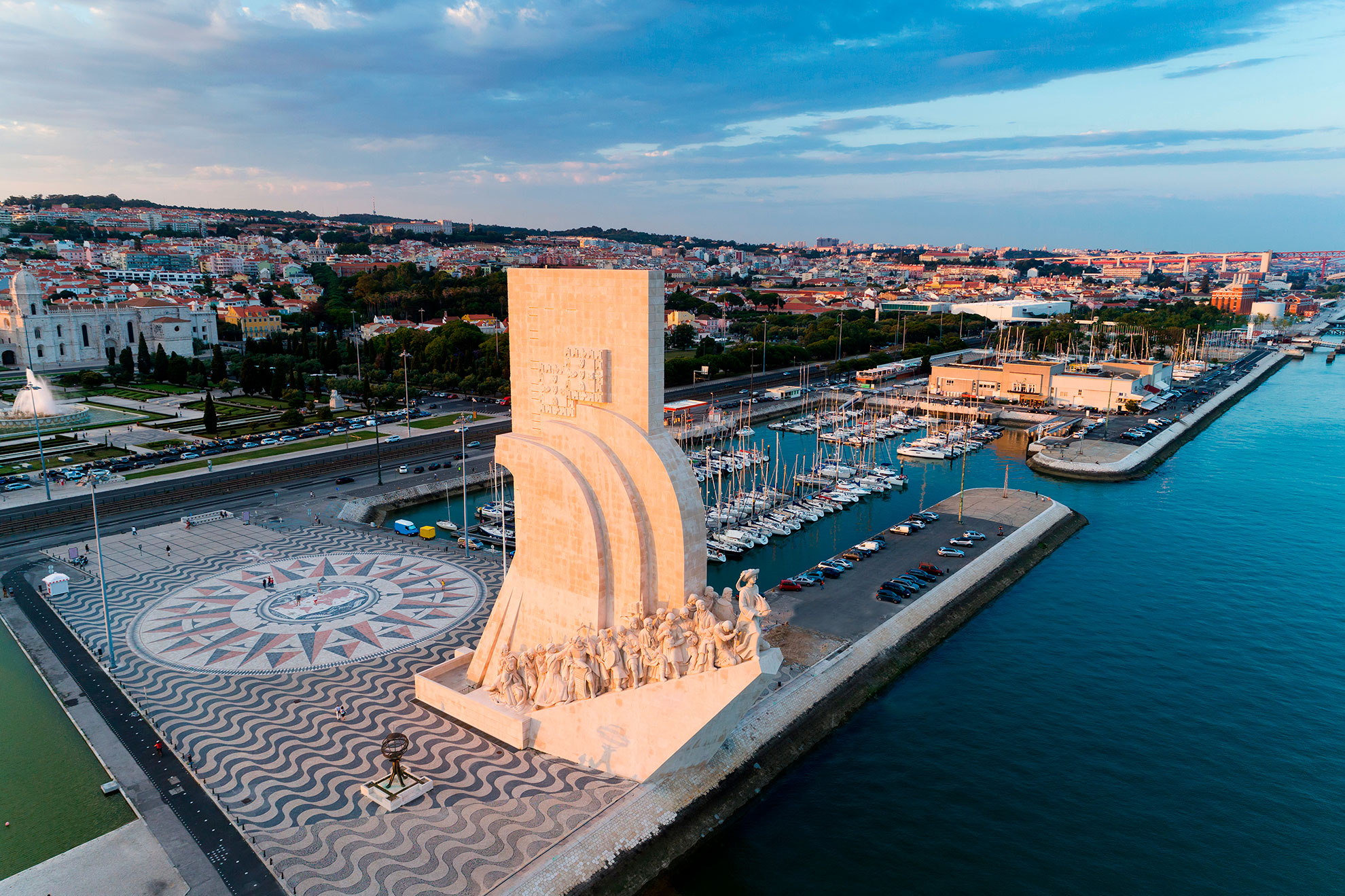
The Belém docks in late afternoon. Several operators depart from here specifically to frame the Torre and the Descobrimentos monument from the water.
Featured River & Sailing Experiences
Looking for more boat tours, sailing experiences, and river excursions departing from Lisbon? Browse the full selection on ToursXplorer — filterable by duration, group size, and departure point.
Browse all Lisbon tours →The Bike-Boat Format: What the Trend Actually Looks Like on the Ground
The pairing of cycling and water tours is not a new idea — canal bike tours in Amsterdam have operated for decades — but the format has expanded rapidly into cities where the geography supports it. Lisbon's riverfront path, the Ecovia do Tejo, now runs nearly continuously from the Parque das Nações westward past Belém to Algés, and several operators have noticed that a passenger who arrives by boat at Belém and departs by bicycle toward Cascais covers more ground and retains more of the experience than one who returns by taxi.
The appeal is partly practical: the Tagus riverside is flat, which makes it accessible to riders of average fitness, and the bike path is separated from traffic for most of its length. But there is also a narrative logic to the combination. The water gives you the city's historical proportions — the monuments read differently from 200 metres offshore — and the bike gives you the texture of the city at street level: the fishing boats at Belém, the vendors along the Ribeira, the kite-surfers at the mouth of the estuary. Neither format alone gives you both scales.
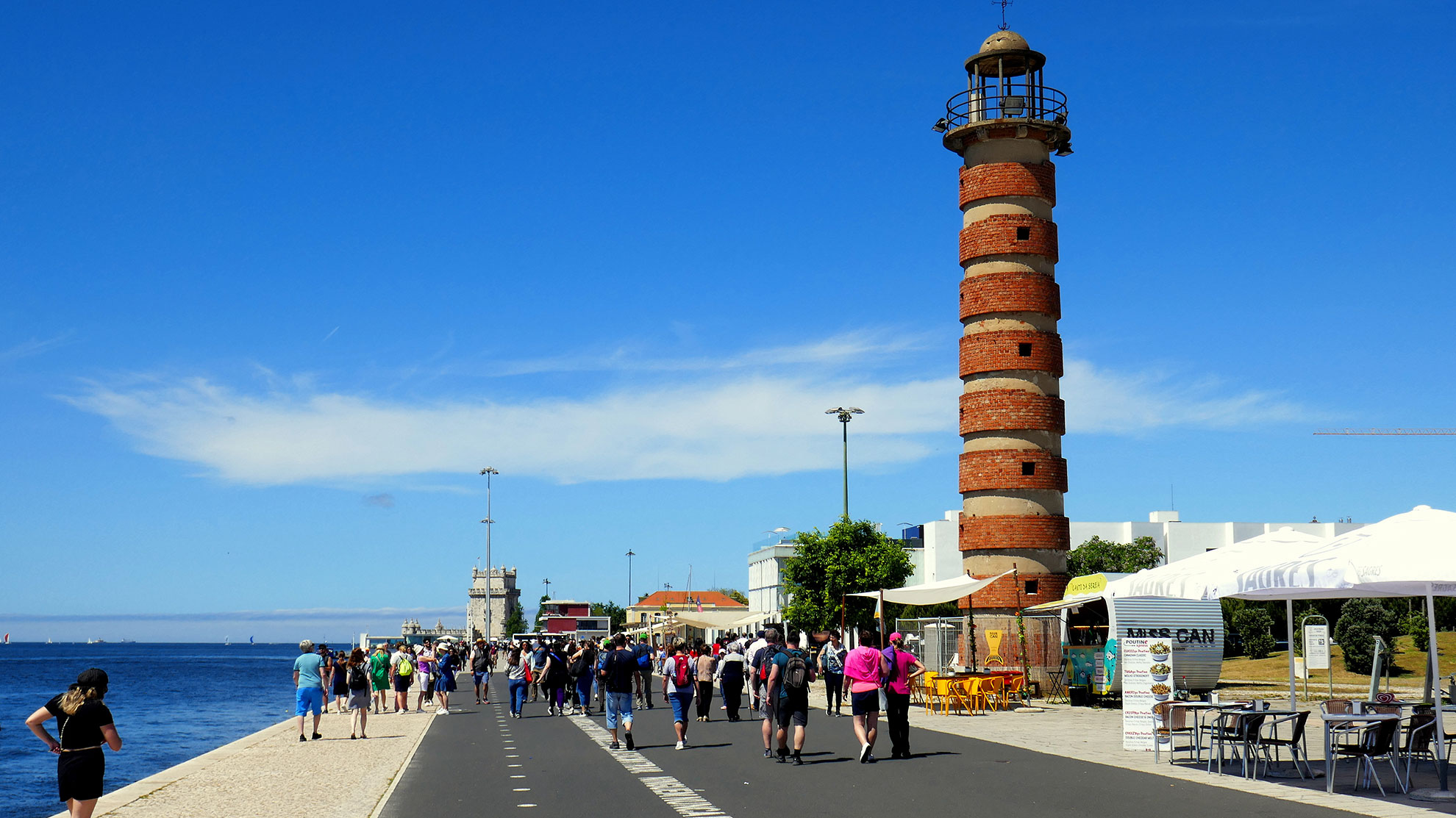
The Ecovia do Tejo path near Belém — largely flat and separated from traffic, it connects several of the main boat tour departure points.
"The best river tours are not about the monuments you pass — it is about learning how a city was built around water, and then deciding whether to stay in it."
What to Know Before You Book in 2026
Capacity limits on smaller private vessels — particularly those under 12 metres — have been more consistently enforced since 2024, meaning the private tour options advertised as holding eight passengers genuinely hold eight, not ten. This matters for groups: if you are travelling with six or more people, confirm vessel size and passenger limits at booking rather than at the dock. Group tours on larger catamarans (30+ passengers) are more flexible and typically allow last-minute additions, though July and August remain busy enough that pre-booking is still advisable.
Language is rarely an issue on guided tours — nearly all operators offer English as a default, with Portuguese and Spanish usually available on request. What varies more than language is the ratio of commentary to silence. Some boats run near-constant narration; others brief passengers at departure and then let the river speak. If you are travelling with children, the narration-heavy formats tend to work better. If you are primarily interested in the landscape and the light, ask operators explicitly whether guides narrate continuously or selectively — it is an answerable question and a meaningful one.
Ready to get on the water? Find and compare river cruises, sailing tours, and sunset departures from Lisbon's main docks — all in one place on ToursXplorer.
Find your Lisbon boat tour →Frequently Asked Questions
What is the best time of year for a boat tour on the Tagus?
Late April through early October offers the most reliable weather. September is particularly good — the summer crowds have thinned, the water is still warm if you are combining a tour with swimming, and sunset departures are less competitive to book. December through February can be cold and grey, and some private charter operators reduce their schedules significantly.
How far in advance should I book a sunset cruise?
For July and August, three to four weeks ahead is a reasonable minimum for sunset slots. Outside peak summer, one week is usually sufficient. Private charter tours require more lead time year-round — most operators prefer at least a week's notice to confirm crew and provisioning.
Are there boat tours that include a cycling component?
Yes, and the format is growing. Several operators now offer combination experiences where passengers arrive at a riverside point by boat and continue on a provided bicycle, or vice versa. The Tagus riverside path makes this logistically straightforward between Parque das Nações and Cascais. Check individual tour descriptions for multi-modal options.
Can I book a private boat tour for a small group?
Private charters for groups of two to eight people are widely available from Lisbon's main docks. Most private tours use vessels between 8 and 14 metres and include a skipper; some include food and drink. Pricing is typically per-vessel rather than per-person, which makes small groups more cost-effective than they initially appear when compared to per-person group rates.
Do Lisbon boat tours operate in winter?
Some do, though the range narrows considerably. Large group catamaran operators typically run reduced schedules from November through March. Private charters are available year-round for those willing to book around the weather. The Tagus in winter has its own character — low light, few other boats, the city quieter on the banks — but it requires more flexibility around last-minute cancellations.
Is seasickness a concern on Tagus river tours?
The Tagus within the Lisbon estuary is sheltered and rarely rough in the way open-ocean sailing can be. Most passengers with mild susceptibility to motion sickness experience no problems on standard river tours. Tours that exit the estuary toward the Atlantic near the Tagus bar can be choppier — if you are concerned, look for tours that stay within the estuary and ask operators about typical wave conditions on their routes.