




Azores Honeymoon Guide: Most Romantic Stays, Tours and Hidden Spots
A curated 2026 guide for couples discovering boutique retreats, volcanic thermal baths, and intimate island escapes across the Azores archipelago.
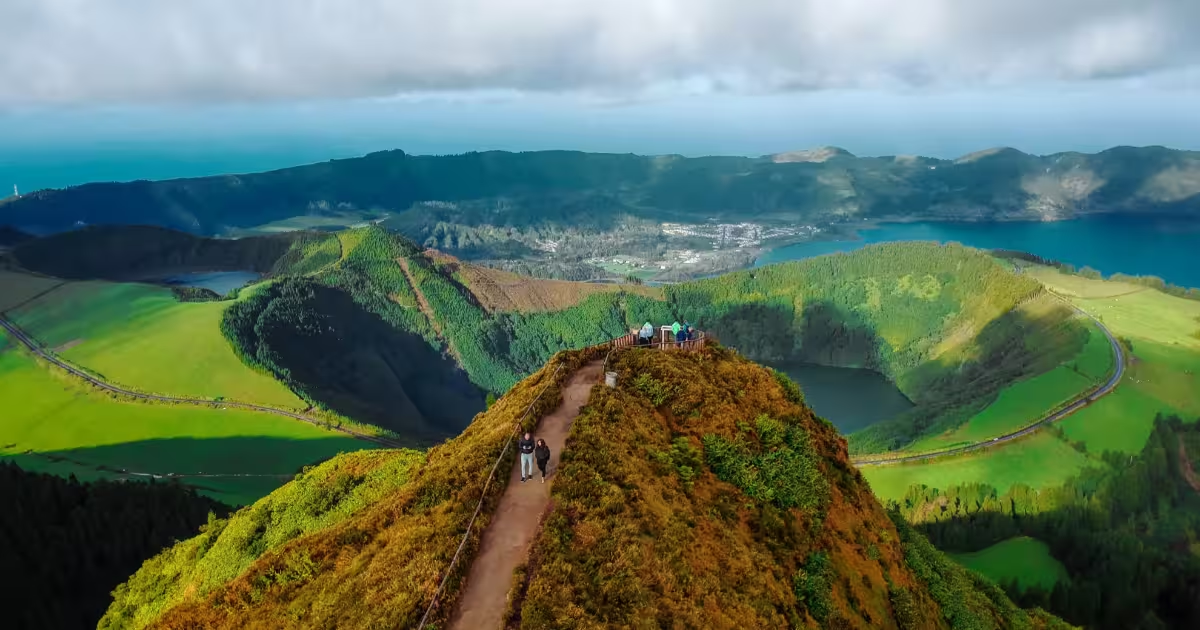
Nine volcanic islands rising from the mid-Atlantic, the Azores sit roughly 1,500 kilometres west of Lisbon, equidistant from Europe and North America. The archipelago receives around 1.8 million visitors a year, yet its nine islands absorb that number with unusual quiet. For honeymooners, this translates to uncrowded caldera viewpoints, thermal springs shared with a handful of other guests, and coastal kayaking routes where the only sounds are paddle strokes and shearwater calls.
Is the Azores a Good Destination for a Honeymoon in 2026?
The short answer is yes, and the reasons are structural rather than promotional. The Azores benefit from a subtropical climate, moderated year-round by the Gulf Stream. Average temperatures on São Miguel range from 14°C in January to 24°C in August, with rainfall distributed across the year rather than concentrated in a single monsoon season. That means no hard "off-season" for couples willing to trade summer crowds for misty caldera mornings in October or February.
The archipelago divides into three geographic groups. The Eastern Group holds São Miguel (the largest island, 747 sq km) and Santa Maria. The Central Group includes Faial, Pico, São Jorge, Graciosa, and Terceira. The Western Group, the most remote, consists of Flores and Corvo. SATA Air Açores connects all nine islands with inter-island flights, most under 40 minutes, making multi-island honeymoons logistically practical when booked in advance.
"The Azores do not perform romance. The landscape simply is romantic: crater lakes the colour of celadon, basalt shorelines polished by the Atlantic, and thermal valleys where the earth exhales warm sulphurous breath into the cold morning air."
For 2026, demand for Azores Portugal travel packages tailored to couples is rising, driven partly by the archipelago's UNESCO Biosphere Reserve status across all nine islands, confirmed in 2022. Several specialist operators now bundle inter-island flight management, boutique hotel blocks, and private activity booking into single itineraries, removing the coordination burden that can turn a honeymoon into a logistics project.
Where to Stay in Azores Portugal: The Most Romantic Hotels
Accommodation on São Miguel ranges from international hotel brands in Ponta Delgada to intimate rural properties tucked into the Furnas Valley. For honeymooners, the most consistent recommendation among returning visitors is the Furnas Boutique Hotel Thermal and Spa, a 55-room property built over a geothermal spring in the village of Furnas. Guests can access the hotel's outdoor thermal pool, fed by water at approximately 36°C, after the day-trip crowds have departed. The surrounding valley, known for its caldeiras (volcanic fumaroles), produces the famous Cozido das Furnas, a slow-cooked stew buried underground for six hours and served in the hotel's restaurant and at the nearby Tony's restaurant.
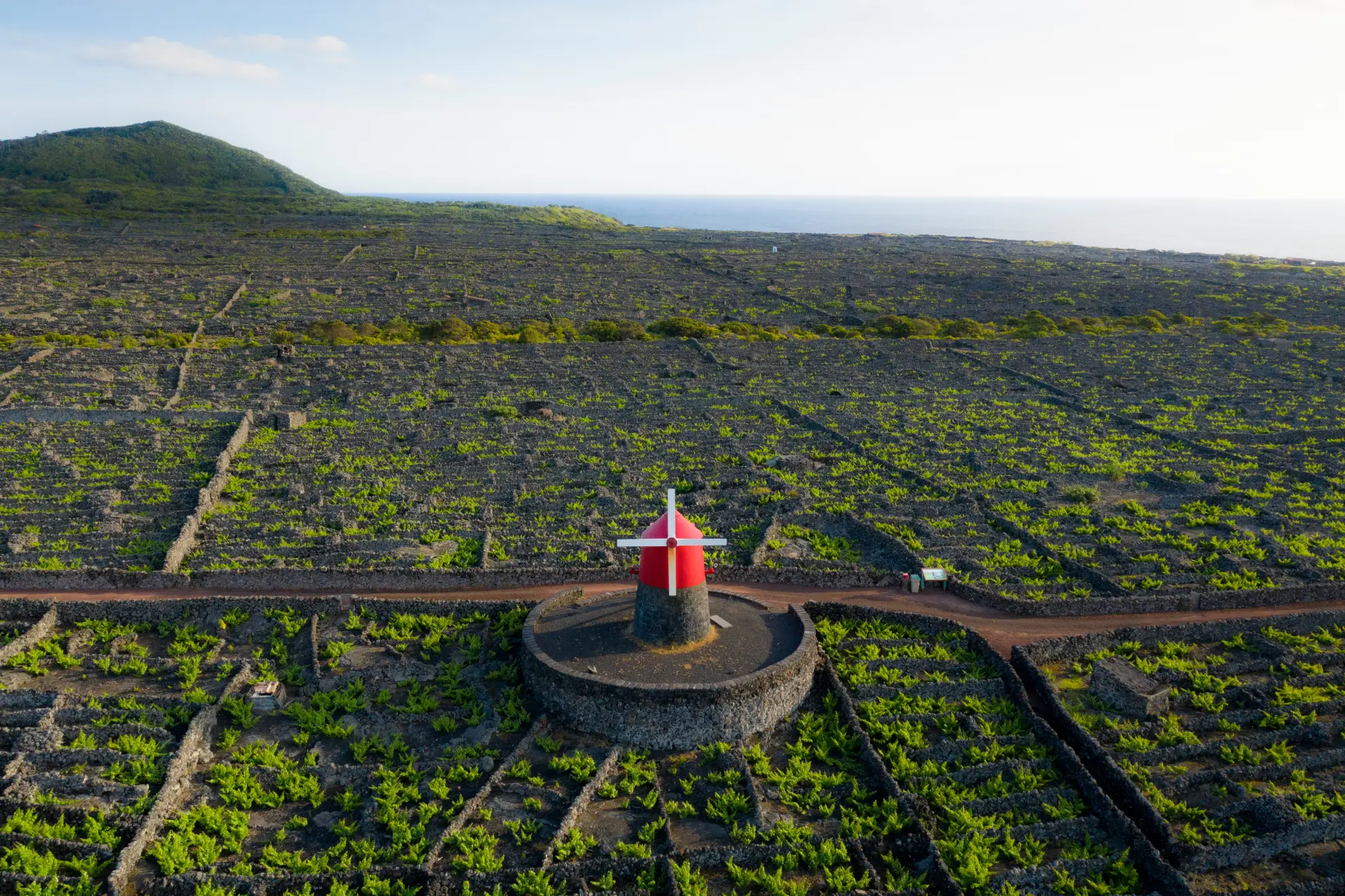
In Ponta Delgada, White Exclusive Suites occupies a restored 18th-century manor house on Rua Francisca Hedwiges. The property has 14 suites, a rooftop pool overlooking the harbour, and a location within walking distance of the city's baroque church of São Sebastião, completed in 1547. For couples who prefer self-contained privacy, Lava Homes on Pico Island offers stone cottages built into the island's UNESCO-listed currais landscape, the network of low basalt-wall enclosures that protect Pico's Verdelho vines from Atlantic wind. These properties sit directly above the sea, with private terraces and unobstructed views of Faial Island, approximately 8 kilometres to the west across the Canal do Faial.
"Sleeping inside a lava-stone cottage on Pico, with the dark pyramid of the island's volcano visible from the bedroom window and the lights of Faial reflected on the canal below, feels less like a hotel stay and more like a temporary claim on a piece of geography."
On Faial, the port city of Horta offers boutique guesthouses near the Marina da Horta, famous as a transatlantic sailing waypoint since the 1950s. Walls of the marina are covered in crew paintings left by yachts passing through, a tradition dating back to at least 1967. Couples interested in sailing can arrange a private sunset sail in Horta Bay through local operators, rounding the Ponta dos Capelos lighthouse as the sun drops behind the Caldeira do Faial, a caldera 2.4 kilometres wide and 400 metres deep.
What to Do in Azores Portugal: Romantic Experiences Beyond the Standard Tour
The activities most consistently cited by honeymooning couples in the Azores fall into two categories: those involving water (thermal, oceanic, or freshwater) and those involving elevated terrain with caldera views. Both are well-supplied across São Miguel in particular.
The Ferraria natural hot springs on the northwest tip of São Miguel merge geothermally heated water with the Atlantic tide. The pools are accessible for approximately two hours either side of low tide, with water temperatures rising to around 40°C near the volcanic vents. The site is most visited at sunset, when the light drops behind the sea cliffs of the Ferraria headland. There are no facilities beyond a basic changing area, which preserves the sense of genuine discovery. Access is via a steep path from the car park above, roughly a five-minute descent.
On the island of Flores, the westernmost island in the European Union at longitude 31°13'W, a series of waterfalls descend into natural lagoons fed by the island's exceptionally high rainfall (approximately 2,500 mm annually). Poço do Bacalhau falls drop roughly 100 metres into a crater pool. This island is best suited to couples with itineraries of ten days or longer, as it requires a dedicated inter-island flight from Faial (approximately 30 minutes).
The "Triangle" of Pico, Faial, and São Jorge deserves specific mention for couples who combine wine, sailing, and dramatic topography. Pico produces the Azores' most celebrated wines from Verdelho grapes grown in the currais landscape, classified as a UNESCO World Heritage Site in 2004. The ferry crossing between Madalena (Pico) and Horta (Faial) takes 30 minutes and runs multiple times daily. São Jorge adds a third dimension: the island's famous fajãs, flat coastal platforms created by lava flows or landslides, host small fishing communities accessible only by foot or boat, including the Fajã dos Cubres, a lagoon habitat for European eels.
For an intimate dinner experience, the restaurant inside the Terra Nostra Garden Hotel in Furnas serves the underground-cooked Cozido das Furnas daily. The hotel's botanical garden, established in 1775, contains one of the largest collections of cycad palms in Europe and a large thermal pool open to hotel guests and day visitors. A private evening garden walk, arranged through the hotel concierge, offers the garden without the midday visitor volume.
For couples building a 2026 itinerary, ToursXplorer lists the full range of activity options across São Miguel and Terceira, with filtering by activity type and group size to help identify private or small-group experiences suited to honeymoon travel.
Best Time to Visit Azores Portugal for a Honeymoon
The question of timing depends on what a couple prioritises. June through September offers the warmest sea temperatures (peaking around 22-23°C in August) and the longest daylight hours, with sunset in Ponta Delgada occurring after 20:45 in late June. These months also bring the highest visitor numbers, though the islands remain significantly quieter than comparable European destinations in the same period.
April and May are particularly suited to couples interested in whale watching, as sperm whales (Physeter macrocephalus) are present in Azorean waters year-round but peak sightings for multiple species, including blue whales (Balaenoptera musculus) and common dolphins (Delphinus delphis), occur in spring migration. The water temperatures in this period sit between 16°C and 18°C, comfortable for wetsuit-equipped activities. Hydrangeas, which line nearly every road on São Miguel, bloom from May through July, lining the island's interior with dense blue borders.
October and November suit couples who prefer lower prices, smaller crowds at thermal pools, and the particular atmospheric quality of the Azorean autumn: low cloud sitting in caldera basins at dawn, burning off by mid-morning to reveal clear skies. Hotel rates in this period can run 20-35% below summer peaks. The one trade-off is that sea conditions become more variable, making some boat-based activities weather-dependent.
Water-Based Experiences for Couples
Land and Nature Tours for Honeymooners
Island Exploration Beyond São Miguel
Ready to plan your Azores honeymoon? Browse romantic tours across São Miguel, Pico, Faial, and Terceira on ToursXplorer, with options for private groups and small-group experiences suited to couples.
Click herePlanning a Luxury Honeymoon in the Azores: Practical Advice for 2026
The most common logistical challenge for couples planning a multi-island Azores honeymoon is coordinating SATA Air Açores inter-island flights with hotel check-in and activity bookings. Flights between islands operate from Ponta Delgada's João Paulo II Airport (PDL) as the main hub, with connections to Horta (Faial), Madalena (Pico), and Angra do Heroísmo (Terceira) running between two and six times daily depending on the route and season. Booking inter-island segments at least 60 days in advance is advisable for June through September travel, when seat availability on small turboprop aircraft fills quickly.
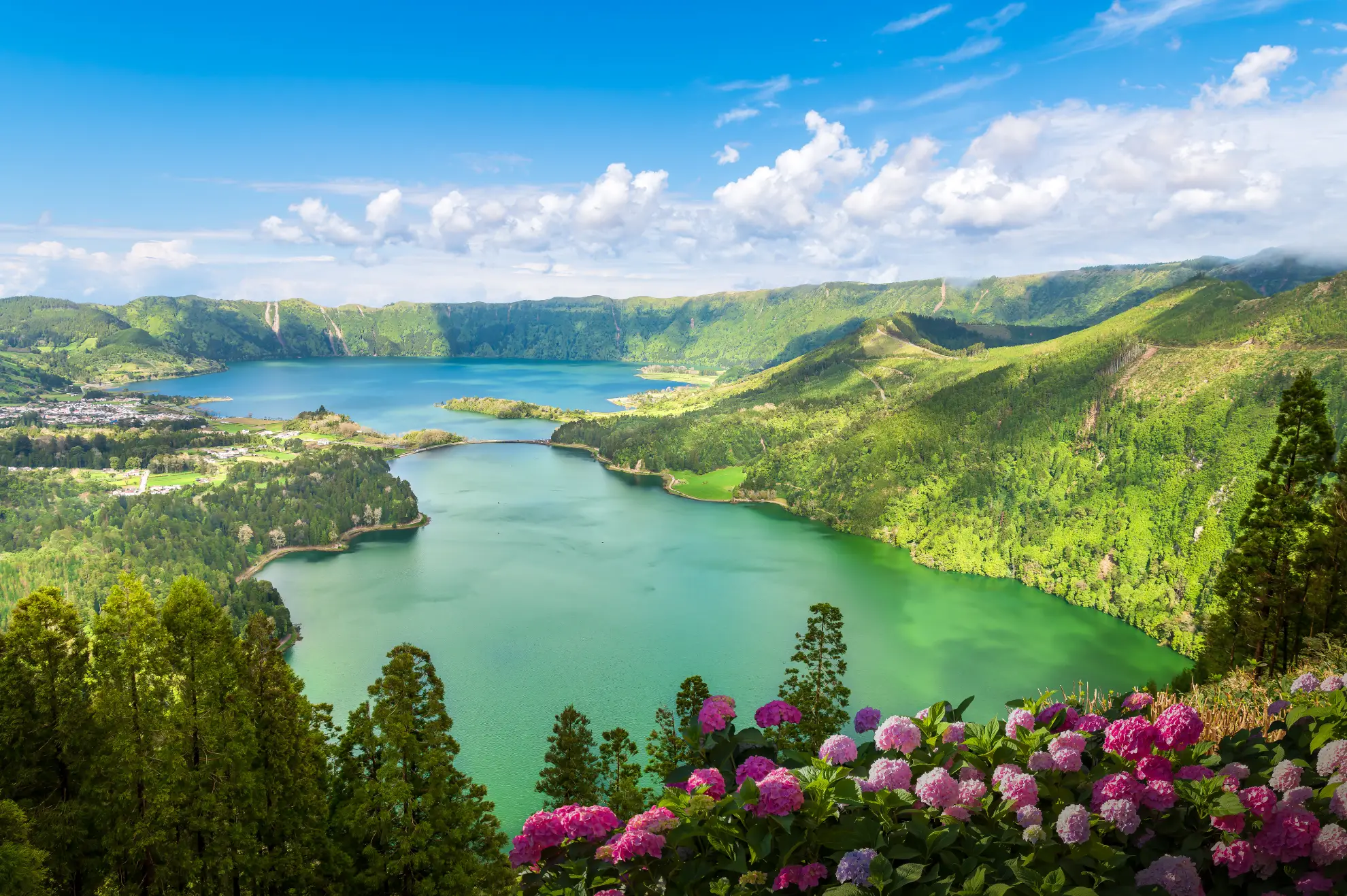
For couples focused on São Miguel alone, a seven-night itinerary covers the island's main circuits without rushing. A suggested structure: two nights in Ponta Delgada for the city's historic centre and harbour walks, two nights in Furnas for thermal access and valley exploration, and three nights in the Sete Cidades area for the caldera and west coast. Private picnic arrangements at the Sete Cidades lakeside can be organised through hotel concierge services or local catering providers in the village of Sete Cidades itself.
For couples extending to the Triangle of Pico, Faial, and São Jorge, a minimum of ten to twelve nights is recommended. The ferry network operated by Atlanticoline connects Madalena, Horta, and Velas (São Jorge) with daily crossings in summer, but schedules reduce significantly between November and March. The Pico-Faial crossing (30 minutes) is the most reliable year-round; the Faial-São Jorge crossing (90 minutes) is more weather-dependent in winter months.
Couples considering the Ferraria hot springs for a sunset soak should note that the pools are publicly accessible, free of charge, and require timing to low tide. The Tide tables for the northwest tip of São Miguel are available through the Portuguese Hydrographic Institute (Instituto Hidrográfico). The access path requires sturdy footwear, and the pools are exposed to Atlantic swell on incoming tides, so the experience is tide-dependent rather than guaranteed. That contingency, for many couples, is precisely the point.
ToursXplorer covers the full tour inventory across the Azores islands, with category filters for nature, water activities, and cultural experiences to help couples build day-by-day itineraries without duplicating activity types. The platform's Azores location page groups tours by island and activity format, which simplifies the process of matching each day's experience to the couple's energy level and preferred pace.
Dining and Wine: The Sensory Landscape of an Azores Honeymoon
The Azores' food culture is rooted in Atlantic abundance and volcanic geography. Lapas (limpets), grilled on a flat stone with garlic and lemon butter, are served at nearly every coastal restaurant on São Miguel, most reliably at the seafront restaurants of Ribeira Grande on the island's north coast. Queijo da ilha, a semi-hard cured cheese from Terceira, appears across the archipelago and pairs directly with Pico's Verdelho wines, which carry a mineral salinity from the basalt soil that no other Portuguese wine region replicates.
The Pico wine co-operative, Cooperativa Vitivinícola da Ilha do Pico (Coop Pico), offers cellar visits and tastings in Madalena. The Verdelho grape, originally imported from Madeira in the 15th century, produces both a dry white and a naturally sweet wine style. The sweet Pico Verdelho, historically exported to the Russian imperial court in the 19th century, is now produced in small quantities and represents one of the more distinctive wine experiences available in the Portuguese Atlantic islands.
For the Cozido das Furnas, the most theatrically volcanic meal in the Azores, the basic principle is straightforward: a pot of meat (beef, pork, chicken), blood sausage, and root vegetables is sealed and lowered into a geothermal vent near Lagoa das Furnas before dawn, cooked underground at around 100°C for six to seven hours, and retrieved at midday. The result is a one-pot stew with a distinctive mineral character from the steam. Tony's restaurant in Furnas village and the restaurant of the Terra Nostra Garden Hotel both serve it daily, with the underground cooking site viewable from the lakeside path at the northern end of Lagoa das Furnas, approximately 1.5 kilometres from the village centre.
Looking for Azores Portugal travel packages that handle inter-island flights and boutique hotel bookings? Use ToursXplorer's Azores location page to compare itinerary options and activity pairings for your 2026 trip.
Frequently Asked Questions
Yes. The Azores offer thermal baths, crater lake scenery, whale watching, and boutique hotels across nine islands, all with significantly lower visitor density than comparable southern European destinations. The subtropical climate keeps temperatures between 14°C and 24°C year-round, meaning there is no single "bad" month for travel, though June to September offers the warmest sea temperatures.
The Furnas Boutique Hotel Thermal and Spa in the Furnas Valley provides direct access to geothermal pools at around 36°C. White Exclusive Suites in Ponta Delgada occupies a restored 18th-century manor with a rooftop pool. On Pico Island, Lava Homes offers stone cottages built into the UNESCO-listed basalt vineyards, with sea views across to Faial, approximately 8 kilometres distant.
June through September offers peak sea temperatures (22-23°C) and longest daylight hours, ideal for water activities and sunset sailing. April and May are best for whale watching, particularly blue whales and common dolphins. October brings lower hotel rates (20-35% below summer peaks), smaller crowds at thermal pools, and distinctive misty caldera mornings, though boat-based activities become more weather-dependent.
For a seven to nine-night trip, São Miguel alone provides sufficient variety, from Sete Cidades caldera to Furnas thermal valley. For ten to twelve nights, adding Pico and Faial creates the romantic "Triangle" circuit combining wine tasting, sailing, and dramatic coastal scenery. Inter-island SATA flights between islands run in under 40 minutes; the Pico-Faial ferry crossing takes 30 minutes.
Yes. Poça da Dona Beija in Furnas is a public thermal pool facility open daily, with temperatures around 40°C. Terra Nostra Garden Hotel's thermal pool is accessible to hotel guests and day visitors. The Ferraria natural hot springs on São Miguel's northwest tip merge volcanic heat with the Atlantic at low tide, free of charge, though access timing depends on the tidal schedule published by the Portuguese Hydrographic Institute.
The SUP tour on Sete Cidades lake provides calm-water paddleboarding inside a 5-kilometre caldera. The swim-with-dolphins and Lagoa do Fogo combination covers open-ocean wildlife and high-altitude crater lake scenery in one day. The Furnas Valley guided tour includes underground geothermal cooking, the Terra Nostra botanical garden, and thermal pool access. All are available through ToursXplorer's Azores listings.