




São Miguel Adventure Guide: Kayak, Canyoning, Hot Springs and Hiking in 7 Days
A day-by-day multi-sport itinerary across volcanic lakes, geothermal valleys, and jagged Atlantic coastlines on Portugal's largest Azorean island.
São Miguel packs an unusual density of natural contrasts into 747 square kilometres. Volcanic craters hold twin lakes. Geothermal vents heat outdoor pools to 39°C. Coastal cliffs drop into clear Atlantic water above seamounts frequented by common dolphins (Delphinus delphis) and sperm whales (Physeter macrocephalus). The following seven-day plan is designed to move through each of these environments systematically, combining physical effort with thermal recovery at every stage.
What makes São Miguel a genuine multi-sport destination?
Portugal's largest Azorean island sits at approximately 37°N latitude, roughly 1,500 km west of Lisbon. Its geology is recent and active. The island's central ridge, the Sete Cidades massif in the west and the Fogo caldeira in the centre, was formed through overlapping eruptive cycles, the most recent significant activity dating to 1652 near Furnas. That volcanic architecture has created a landscape that functions like a natural gym: steep ridges demand aerobic effort, rivers descend in waterfalls ideal for canyoning, and caldera lakes offer flat-water paddling sheltered from Atlantic swells.
The island's road network, anchored by the EN1-1A that runs east-west along the northern coast, connects all seven municipalities within 90 minutes. That accessibility makes multi-sport itineraries practical. A kayaking session at Sete Cidades in the morning and a soak in Terra Nostra's 39°C iron-rich pool in Furnas the same evening involves roughly 65 km of driving.
"The Azores don't reward the passive visitor. Every patch of emerald ridge above you is a trail, every cascade a rappel point, every geothermal vent an invitation to rest."
Guides operating in the marine zone around Vila Franca do Campo Islet, a 5,000-year-old submerged volcanic crater designated a nature reserve, are required to hold Portuguese Maritime Authority permits. Group sizes for snorkeling tours inside the islet lagoon are capped at 40 people per session. For canyoning in Ribeira dos Caldeirões Natural Park in the northeast municipality of Nordeste, certified guides must accompany all groups, and parties are typically limited to 8-10 participants. These restrictions, enforced with greater consistency since 2023, make advance booking for 2026 essential.
How do you structure a 7-day São Miguel adventure itinerary?
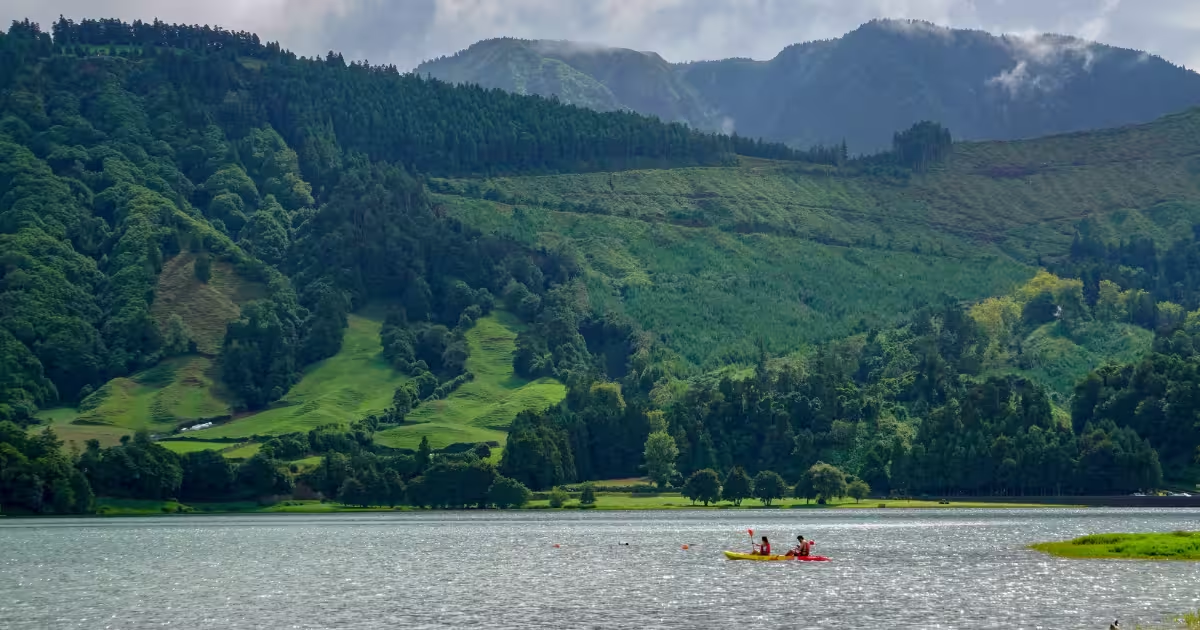
Days 1-2: The Water Kingdom (Sete Cidades and Coast). The twin lakes of Sete Cidades, Lagoa Azul and Lagoa Verde, sit inside a caldera 12 km in circumference at roughly 200 m elevation. Morning kayaking on Lagoa Azul covers flat water with views of the 300 m crater walls and the 1780 Mosteiro de São Nicolau on the northern rim. In the afternoon of Day 2, transition to the coast below Sete Cidades, where basalt columns and sea caves can be explored by ocean kayak from Ginetes village. The water temperature in summer averages 22°C at surface level.
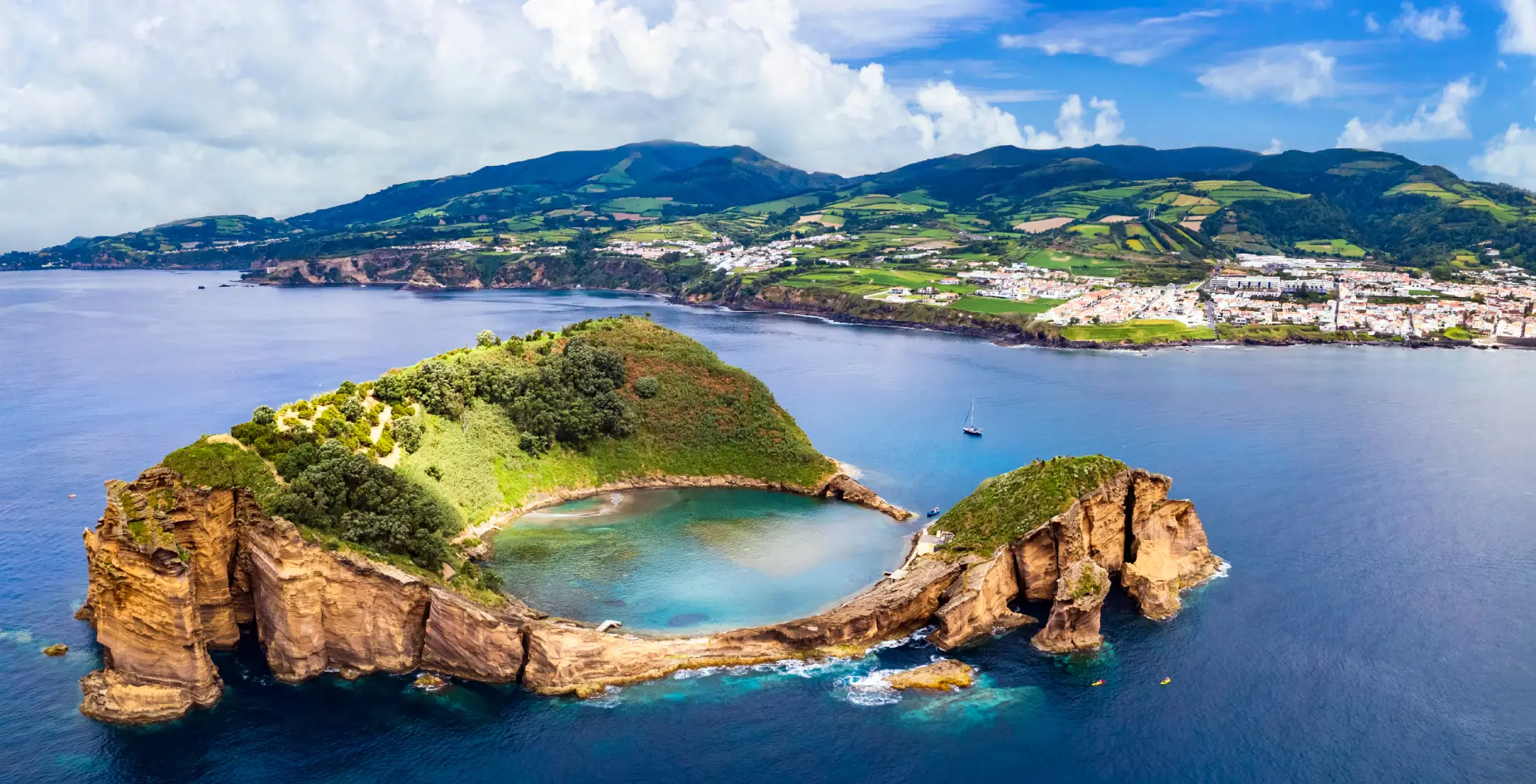
Day 3: Vila Franca do Campo Islet. The islet lies 400 m offshore from the town of Vila Franca do Campo on the south coast. Boat tours reach the site in under 10 minutes from the local marina. Snorkeling inside the crater lagoon, which is approximately 100 m in diameter, offers visibility up to 15 m in calm conditions. Species regularly observed include Azorean chromis (Chromis limbata) and moray eels (Muraena helena). Access is strictly by licensed tour only; independent landings on the islet are prohibited.
Day 4: Vertical Adrenaline (Canyoning). Ribeira dos Caldeirões, near Achada, Nordeste municipality, is the primary canyoning venue on São Miguel. The route descends through a series of waterfalls, the tallest of which reaches approximately 20 m, into pools carved from basalt. Rappels are rigged with fixed anchors maintained by licensed operators. An alternative route, Salto do Cabrito in the Ribeira Grande area, suits intermediate canyoneers. Wetsuits are standard issue; water temperature in the gorges averages 16°C year-round. Full sessions run approximately 4-5 hours.
Day 5: The Thermal Heart (Furnas). Furnas Valley lies 40 km east of Ponta Delgada. The valley floor holds active fumaroles and mudpots, a lakeside cemetery where the traditional cozido das Furnas stew cooks underground in geothermal pots, and two public thermal facilities. Terra Nostra Park, established in 1780, contains a large outdoor pool fed by a 37-39°C ferruginous spring that tints the water amber. Poça da Dona Beija, 1 km from the village centre, offers a cluster of smaller pools in a forest setting at similar temperatures. A morning circuit of Lagoa das Furnas (7 km, approximately 2.5 hours) precedes an afternoon soak. This is the restorative pivot of the week.
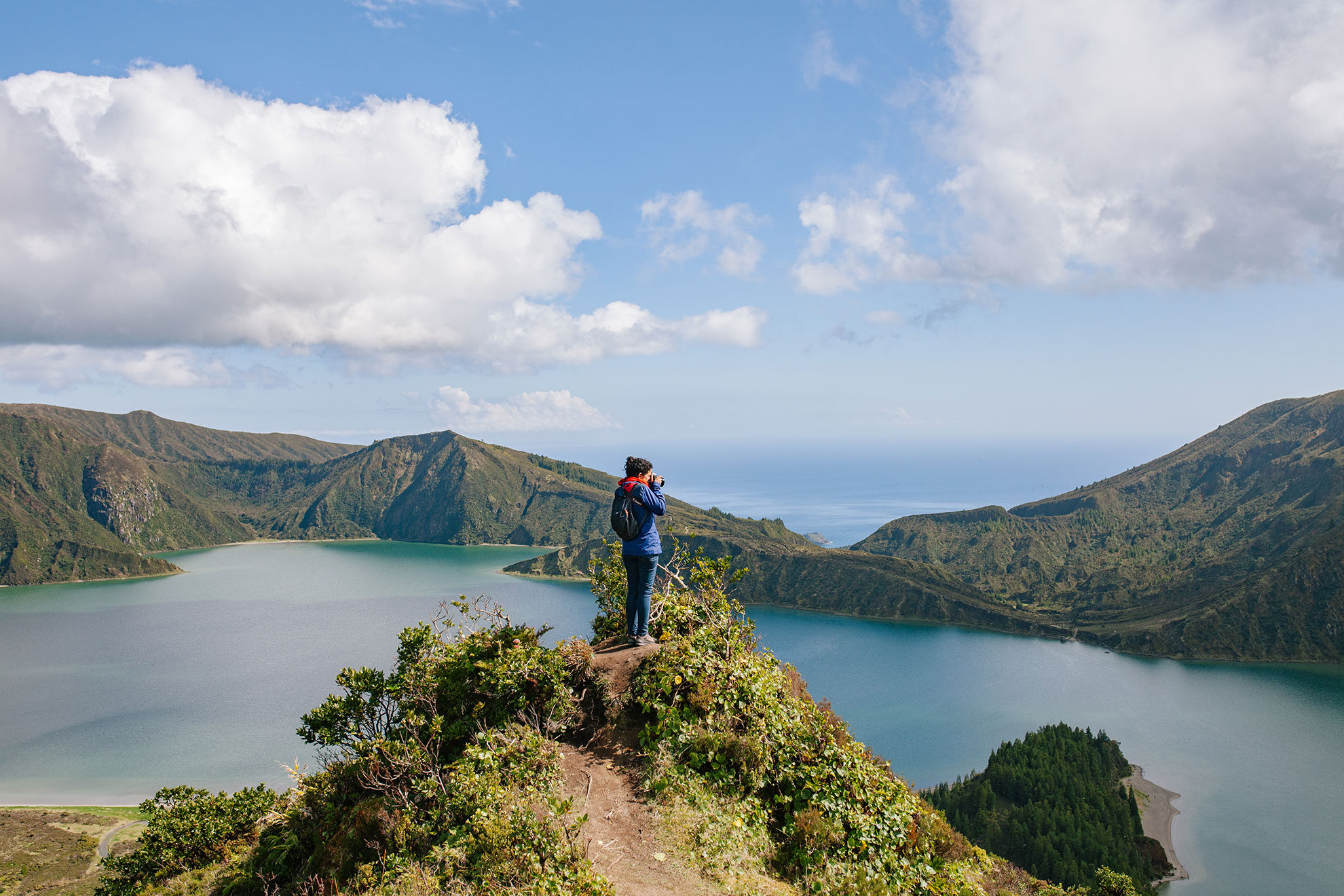
Day 6: The High Ridges (Lagoa do Fogo). Lagoa do Fogo, the Lake of Fire, sits at 590 m above sea level inside a pristine caldera in the island's central massif. The access trail from Miradouro da Serra Devassa descends 300 m over approximately 2 km of uneven volcanic terrain. The lake has no tourist infrastructure by regulation, preserving nesting habitat for the Monteiro's storm petrel (Hydrobates monteiroi), a species endemic to the Azores. After the hike, Caldeira Velha thermal pools, 4 km north of the crater and situated beneath a waterfall, offer a natural endpoint before returning to Ponta Delgada.
Day 7: Coastal Finale. The final day moves offshore. Whale watching operations from Ponta Delgada run year-round; resident sperm whales are present throughout the year, while common dolphins are encountered on most departures. A sunset paddle from a sheltered south-coast beach consolidates a week that has covered approximately 40 km of paddling, 2,000 m of elevation gain on foot, and four distinct ecosystems.
"Furnas rewards the tired body. After four days of descents and paddles, the iron-rich water of Terra Nostra acts on sore muscles the way nothing mechanical can replicate."
When is the best time to book adventure tours in São Miguel for 2026?
The practical window for multi-sport itineraries on São Miguel runs from May through October. Sea temperatures peak at 24°C in August and September, optimal for snorkeling at Vila Franca do Campo. Canyoning is accessible from April onwards but flow volumes in Ribeira dos Caldeirões are higher and more photogenic in spring. Whale watching success rates are highest between April and June, when multiple species including fin whales (Balaenoptera physalus) transit the Azorean mid-Atlantic ridge.
July and August represent peak visitor season. Guided kayaking tours on Sete Cidades lakes and canyoning sessions in Nordeste reach capacity weeks in advance during this period. ToursXplorer lists availability in real time, but operators surveyed for this guide recommend booking at least 6-8 weeks ahead for any July or August date. The island's regional government has signalled further group-size restrictions for marine activities entering the 2026 season, making early reservations a practical necessity rather than a precaution.
Shoulder season travellers in May, June, September and October encounter shorter queues at thermal pools, lower accommodation costs, and similar activity access. The trade-off is more variable weather, particularly relevant for multi-day itineraries that depend on calm sea conditions for the Vila Franca do Campo boat day.
On-Water Adventures: Lakes, Coast, and Ocean
Off-Road and High-Energy Land Adventures
Canyoning and Valley Immersion
Browse the full list of São Miguel adventure tours on ToursXplorer and check real-time availability for your 2026 dates before group slots fill.
Click herePractical logistics for a 7-day São Miguel adventure trip
Ponta Delgada's João Paulo II Airport (IATA: PDL) receives direct flights from Lisbon (90 minutes), Porto (80 minutes), London Gatwick (approximately 3 hours), and several other European hubs. Car hire is available from all major operators at the airport and is the most practical transport solution for a multi-sport itinerary requiring early morning departures to Sete Cidades or Nordeste.
Accommodation clusters in Ponta Delgada offer the best logistical base. The city sits centrally on the south coast, 35 km from Sete Cidades to the west and 40 km from Furnas to the east. For the canyoning day (Day 4) and the Lagoa do Fogo hike (Day 6), early starts from Ponta Delgada are feasible. Travellers prioritising the Furnas experience may consider one night at a guesthouse in the valley to access the Terra Nostra pool in the early morning before tour groups arrive.
Budget planning for the 7-day itinerary should account for guided tour costs (typically 50-120 EUR per person per activity), car hire (approximately 40-70 EUR per day in 2025 rates), and thermal pool entries: Terra Nostra Park charges a separate admission. ToursXplorer consolidates operator listings for São Miguel in one search, which reduces the time spent comparing platforms. All tours listed in this guide link directly to verified operator pages with up-to-date pricing and availability calendars.
Sustainability note: the Azores Regional Government's ANAG (Agência para o Ambiente e Ordenamento do Território) oversees activity permits in protected areas. Visitors should verify that any canyoning or marine tour operator displays a valid ANAG permit. This is standard practice for all operators listed through ToursXplorer's vetting process.
Packing and preparation for São Miguel's multi-sport conditions
The island's Atlantic climate produces rapid weather changes at elevation. The Sete Cidades caldera at 200 m and Lagoa do Fogo at 590 m can be overcast or foggy when the coast is clear. A waterproof mid-layer and a compact packable rain jacket are functional necessities, not optional additions.
For water activities, operators provide wetsuits for canyoning and snorkeling. A personal 3mm wetsuit improves comfort for kayaking in spring or autumn when sea surface temperatures drop toward 18°C. Reef-safe sunscreen is required at Vila Franca do Campo Islet; the reserve's management enforces this rule and operators brief participants before entry.
Footwear deserves specific attention. Canyon approach shoes or old trail runners with drainage holes are standard for canyoning. For Lagoa do Fogo, the descent path from Serra Devassa involves loose volcanic gravel; trail running shoes or low hiking boots with grip are appropriate. Sandals and flat-soled shoes are inadequate on all active volcanic terrain.
Ready to book your Day 3 Vila Franca do Campo snorkeling tour or your canyoning session in Ribeira dos Caldeirões? Check operator availability on ToursXplorer now.
Frequently Asked Questions
Structure the week by geography: Days 1-2 in the Sete Cidades caldera for lake kayaking and coastal exploration, Day 3 at Vila Franca do Campo Islet for snorkeling, Day 4 for canyoning in Ribeira dos Caldeirões in Nordeste municipality, Day 5 for Furnas Valley and the 39°C Terra Nostra pool, Day 6 for Lagoa do Fogo hiking at 590 m elevation, and Day 7 for a dolphin or whale-watching boat tour. Book all guided activities at least 6-8 weeks in advance for July and August.
Yes. Kayaking on Lagoa das Furnas takes approximately 2-3 hours, and Terra Nostra Park is a 15-minute walk from the lake. Poça da Dona Beija is 1 km from Furnas village centre. Both pools operate at 37-39°C. A morning paddle followed by an afternoon soak is a standard local combination. The guided canoeing tour at Furnas finishes in time to reach either thermal facility before evening closure.
The most operationally distinct activities for 2026 are: canyoning in Ribeira dos Caldeirões (rappels on 20 m waterfalls), snorkeling at Vila Franca do Campo Islet (visibility up to 15 m, endemic species), kayaking on Sete Cidades lakes inside a 12 km-circumference caldera, and whale watching from Ponta Delgada with resident sperm whales year-round. Group size restrictions across all marine and canyon activities make early booking the primary planning priority.
Canyoning routes in São Miguel range from introductory to intermediate difficulty. Ribeira dos Caldeirões involves rappels of up to 20 m and swims through pools in a basalt gorge; it is suitable for physically fit beginners with no prior technical experience when led by a certified guide. All operators provide wetsuits, helmets, and harnesses. Guides hold certifications from Portuguese climbing and canyon federations and maintain fixed anchor points throughout the season.
Vila Franca do Campo Islet is typically open from May through October, subject to sea conditions and weather. Access is by licensed boat tour only from the Vila Franca do Campo marina, approximately 400 m from the islet. The volcanic lagoon inside the crater accommodates a maximum of 40 snorkelers per session. Independent landings are prohibited under the nature reserve regulations managed by the Azores Regional Government.
Pack a waterproof mid-layer and packable rain jacket for elevation above 200 m, where fog and rain are common regardless of coastal conditions. Operators provide wetsuits and harnesses for canyoning and snorkeling. Bring trail running shoes or low hiking boots with grip for Lagoa do Fogo's volcanic terrain. Reef-safe sunscreen is mandatory at Vila Franca do Campo Islet and is enforced by tour guides before entering the reserve.