




Berlenga Island Guide: Beaches, Fortress, Hiking and Boat Tours Explained
Everything you need to plan a day trip to one of Portugal's most protected and visually striking Atlantic islands, just 12 kilometres off the coast of Peniche.
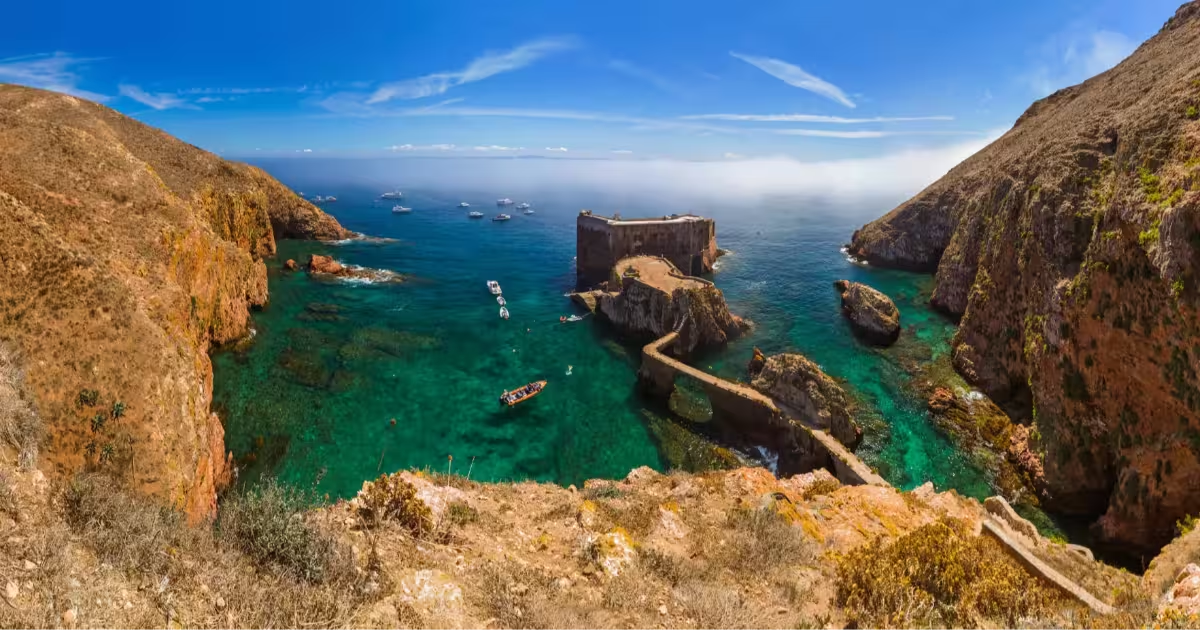
Ilha Berlenga lies 12 kilometres off the coast of Peniche in central Portugal, isolated enough to feel genuinely remote yet reachable in under an hour by ferry. It is the largest island in the Berlengas Archipelago, a UNESCO Biosphere Reserve since 1984, and one of the few places along the Portuguese Atlantic coast where access is actively restricted to protect a fragile marine and terrestrial ecosystem. For travellers willing to plan ahead, it rewards with clarity of water, density of birdlife, and a 17th-century fortress that still dominates the harbour.
Where Is Berlenga Island and What Makes It Different?
Berlenga Grande, the main island of the Berlengas Archipelago, sits in the Atlantic Ocean approximately 12 kilometres west of Peniche, a fishing town on Portugal's Silver Coast about 100 kilometres north of Lisbon. The archipelago also includes the smaller Estelas and Farilhões rock groups, but only Berlenga Grande receives visitors.
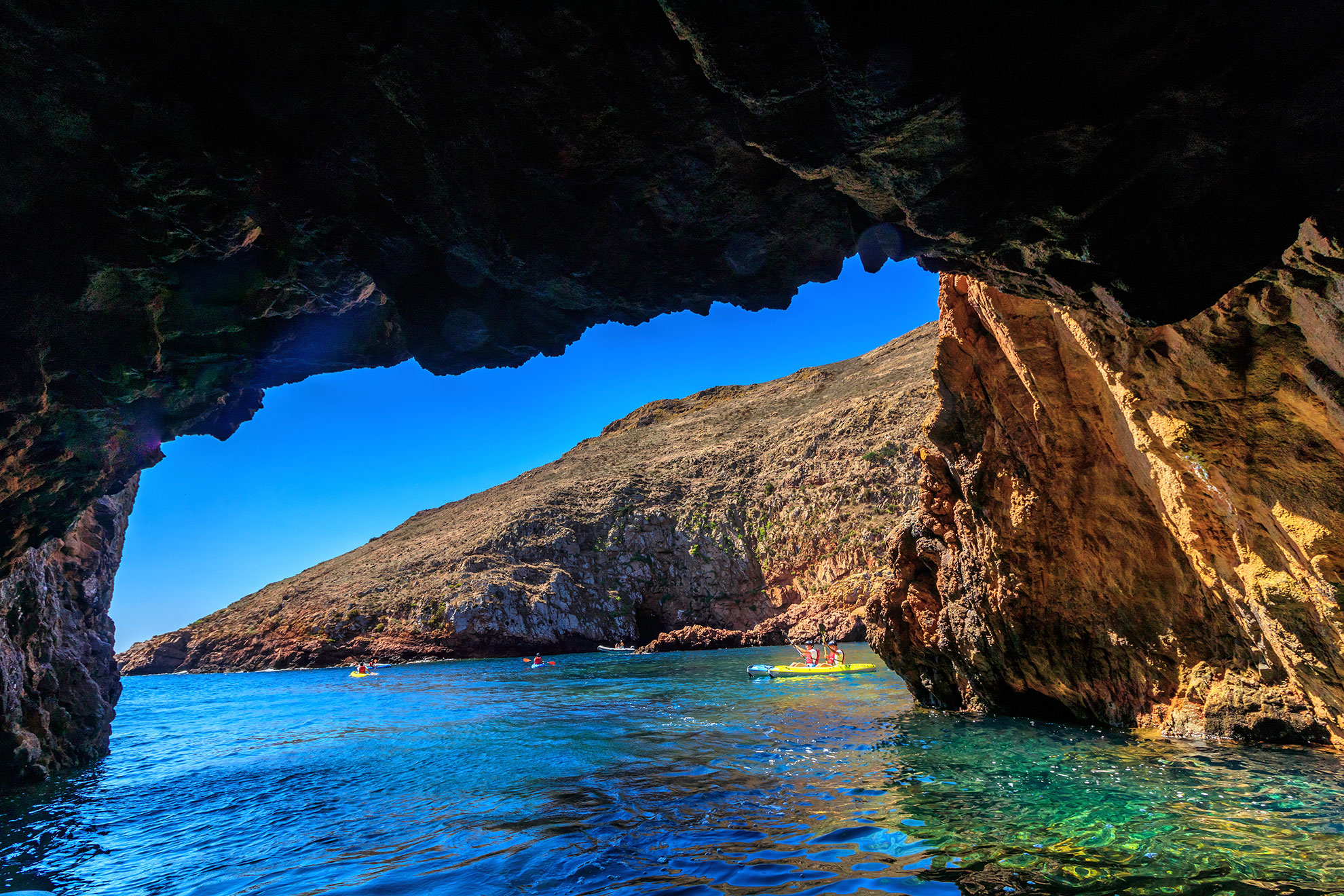
The island covers roughly 1.5 square kilometres and rises to a maximum elevation of around 77 metres above sea level. Its geology is dominated by Precambrian granite, which gives the coastline its characteristic red and orange tones. Erosion over millennia has carved an intricate network of sea caves, tunnels, and natural arches into the rock, making it one of the most sculpted coastlines in Portugal.
What separates Berlenga from other Portuguese islands is the combination of its protected status and its small physical scale. Daily visitor numbers are capped during summer months to prevent ecological degradation. The Berlengas Nature Reserve was established in 1981, and UNESCO Biosphere Reserve designation followed in 1984, recognising the exceptional biodiversity of both the marine and terrestrial environments.
"The island functions as a natural laboratory for marine conservation. The water clarity is a direct result of restricted human activity, not luck." — local marine biologist quoted in regional conservation reports.
The surrounding waters support populations of bottlenose dolphins (Tursiops truncatus), common dolphins (Delphinus delphis), harbour porpoises (Phocoena phocoena), and a variety of seabirds including the European shag (Phalacrocorax aristotelis), Cory's shearwater (Calonectris borealis), and the yellow-legged gull (Larus michahellis). The island also hosts one of the last significant breeding colonies of common murres in Portuguese waters.
How Do You Get to Berlenga Island from Peniche?
The standard route to Berlenga Grande departs from the Porto de Pesca (fishing harbour) in Peniche. Viamar, the licensed ferry operator, runs scheduled crossings from June to September, with additional departures in May and October depending on sea conditions. The crossing takes approximately 35 to 45 minutes depending on swell and vessel type.
Ferry tickets must typically be booked in advance during July and August, when daily visitor limits mean spaces sell out days or weeks ahead. Departures generally leave Peniche at 09:30, with return crossings in the late afternoon around 16:00 and 18:00. Timetables shift year to year, so checking directly with the operator before travel is essential.
Speedboat tours offer a faster alternative to the standard ferry, with crossing times as low as 20 minutes. These are particularly popular for travellers who want to maximise time on the island or combine the crossing with sea cave exploration along the way. Several operators listed on ToursXplorer include the boat crossing as part of a full-day package, removing the need to coordinate separate ferry and activity bookings.
Travellers prone to seasickness should be aware that the open Atlantic crossing between Peniche and Berlenga can be choppy even on clear days. Swells of one to two metres are common outside the summer window. Sitting at the front of the vessel in open air and facing forward is generally recommended. Medication taken 30 minutes before departure is advisable for sensitive travellers.
"The crossing is part of the experience. The moment Berlenga appears on the horizon, a granite outline rising from the water with no other land in sight, the distance feels earned."
If you are travelling from Lisbon without a car, Peniche is accessible by direct bus from Lisbon's Rodoviária terminal, with journey times of approximately 1 hour 45 minutes. Several guided day-trip operators also run coach-plus-ferry packages departing directly from Lisbon, which simplifies logistics considerably for visitors without private transport.
What Are the Best Things to Do on Berlenga Island?
Fort São João Baptista: Built between 1651 and 1666 under the direction of Portuguese military engineers, Fort São João Baptista (São João Baptista Fortress) stands on a small islet connected to the main island by a narrow stone causeway. It was constructed to defend the Portuguese coast against pirate raids and Dutch naval incursions following decades of attacks on Peniche itself. The fort now operates as a basic hostel and restaurant during summer months, and walking across the causeway at low tide is one of the defining moments of any visit to the island.
Sea cave exploration: The western and southern coastlines of Berlenga contain a series of sea caves, tunnels, and grottos carved by Atlantic erosion. The most visited is the Furado Grande, a natural tunnel roughly 70 metres long that connects two sections of coastline and is navigable by small boat. Guided boat tours depart from the small harbour and take passengers through the cave system with commentary on the geology and marine life.
Praia do Carreiro do Mosteiro: The island's principal beach sits in a sheltered cove on the eastern side, protected from the prevailing westerly winds by the island's granite mass. The water is exceptionally clear with visibility often exceeding 10 metres, and the sandy bottom is visible from the surface. Swimming here is safe during summer months and is one of the primary reasons visitors make the crossing.
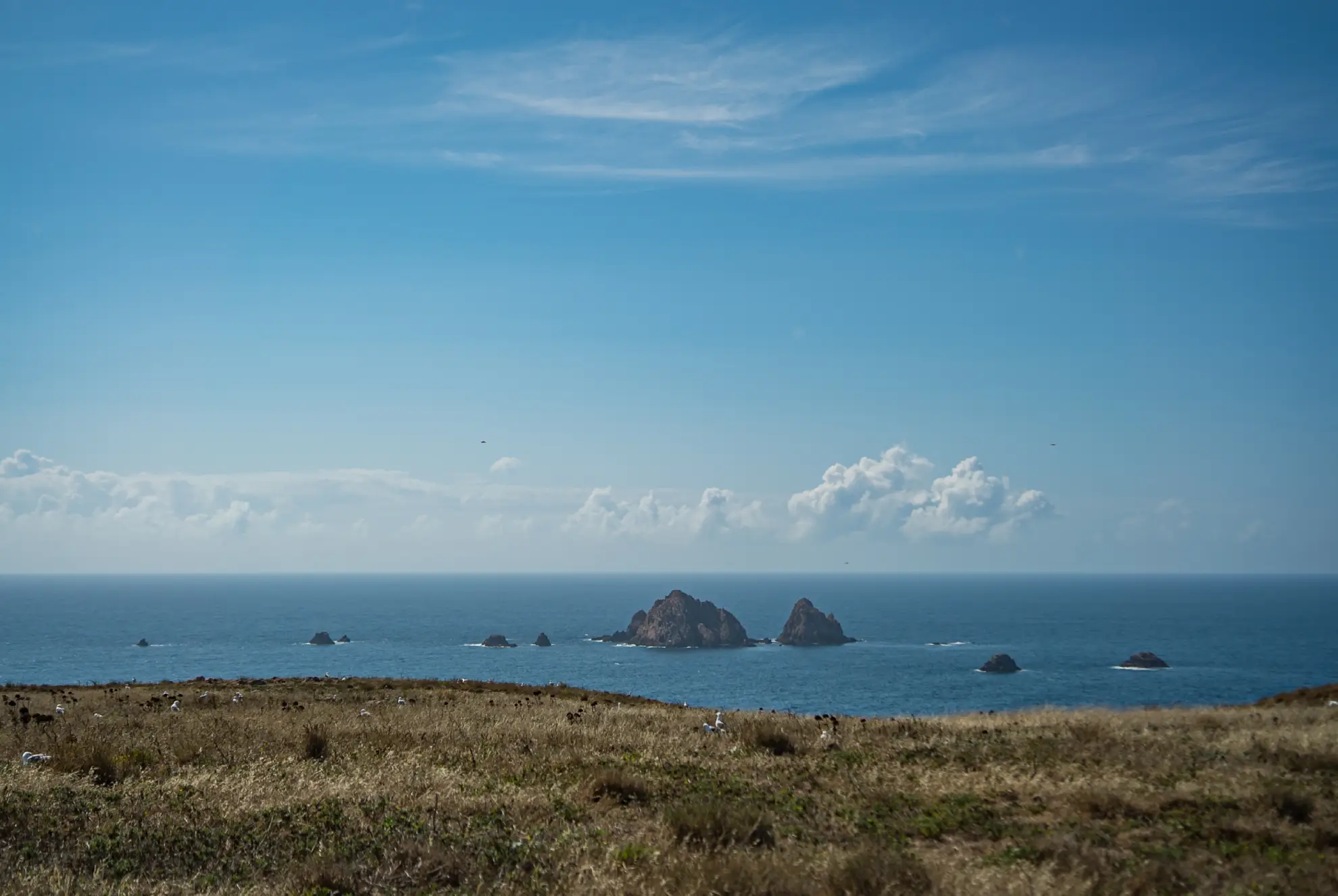
Hiking: The island has a small network of marked trails covering its main ridge and perimeter. The full circuit of the island takes approximately two hours at a moderate pace. The northern headland offers unobstructed views of the Farilhões rocks 8 kilometres to the northwest, and the lighthouse on the island's high point dates to 1841. Trails are unshaded and rocky in places, so appropriate footwear and sun protection are necessary.
Snorkelling and diving: The marine reserve status of the surrounding waters means fish populations are notably higher than on the mainland coast. Snorkellers regularly encounter painted combers (Serranus scriba), ornate wrasse (Thalassoma pavo), and octopus in the rocky shallows. Scuba diving requires coordination with licensed operators in Peniche and is subject to reserve regulations. Anchoring is prohibited in most of the surrounding marine zone.
Wildlife observation: Early morning and late afternoon are the most productive times for birdwatching. The cliffs on the island's western face host nesting seabirds from April through August. Peregrine falcons (Falco peregrinus) are resident year-round. Cetaceans are sometimes visible from the crossing or from the island's higher points, particularly common dolphins that follow the ferry wakes in spring.
Can You Stay Overnight on Berlenga Island?
Overnight stays on Berlenga are possible but limited to two options. The first is the hostel located within Fort São João Baptista, which offers basic dormitory-style accommodation for a small number of guests from June to September. Bookings are managed through the Peniche municipal authority and tend to fill months in advance. Facilities are minimal: no private rooms, shared bathrooms, and no air conditioning.
The second option is wild camping in the designated camping area (Parque de Campismo da Berlenga), a small regulated campsite near the harbour. Camping is restricted to the designated zone and requires advance permits. Open fires are prohibited, and all waste must be removed from the island. The campsite has basic toilet facilities and fresh water access.
For most visitors, a day trip is both practical and sufficient to cover the island's main attractions. The last ferry back to Peniche in summer typically departs around 18:00 or 19:00, allowing roughly six to seven hours on the island if you take the morning crossing.
Mobile phone signal is weak to non-existent across most of the island. One small café and a basic restaurant operate near the harbour during summer, offering simple meals and drinks, but selection is limited and prices reflect the logistics of supplying a remote island. Bringing your own food and water is advisable, particularly for hikers heading away from the harbour area.
Is Berlenga Island a Protected Area and What Does That Mean for Visitors?
Yes. Berlenga Island and its surrounding waters are protected under multiple overlapping designations. The Berlengas Nature Reserve (Reserva Natural das Berlengas), established by Decree-Law 264/81 in 1981, governs land and marine use. The UNESCO Biosphere Reserve designation from 1984 adds an international layer of recognition. The surrounding sea is also classified as a Special Protection Area (SPA) under the EU Birds Directive and a Site of Community Importance (SCI) under the Habitats Directive, forming part of the Natura 2000 network.
In practical terms, this means visitor numbers to the island are capped at approximately 1,500 people per day during peak season (exact figures are reviewed annually by ICNF, the Institute for Nature Conservation and Forests). Certain areas of the island are closed to the public year-round to protect nesting seabirds. Fishing within the inner reserve zone is restricted, and recreational diving requires permits.
Visitors are expected to stay on marked paths, avoid disturbing nesting sites, and remove all litter. The ecological rules are enforced by reserve wardens present on the island during summer months. Drone use is prohibited without authorisation from ICNF.
ToursXplorer encourages travellers to treat Berlenga as a guest rather than a tourist destination: the island's extraordinary water clarity and wildlife density exist precisely because access has been managed carefully for over four decades. The most responsible way to visit is through a structured boat tour that includes a licensed local operator familiar with the reserve's current regulations.
When Is the Best Time to Visit Berlenga Island?
Summer (June to August): This is the peak season, with the warmest water temperatures (reaching 19 to 21 degrees Celsius by August), calmest sea conditions, and longest daylight hours. Ferries run daily and reliably. The trade-off is that the island is at its busiest, trails are crowded near the harbour, and booking well in advance is essential. Photography is best in the early morning before the midday haze sets in.
Shoulder season (May and September): These months offer a practical balance. Sea conditions are generally manageable, visitor numbers are lower, and the natural light is often more interesting for photography than the flat midday glare of high summer. Migratory birds passing through in September add value for wildlife observers. Water temperatures are cooler (around 16 to 18 degrees Celsius) but still comfortable for snorkelling with a wetsuit.
Winter and spring (October to April): Ferry services are reduced or suspended during this period due to Atlantic swell. The island is largely inaccessible for casual visitors, and some years see no public crossings between November and April. This is not a season for casual travel to Berlenga, though licensed research and conservation work continues year-round.
For wildlife photography, May and June offer the best combination of nesting seabird activity, reasonable weather, and manageable crowds. For swimming and general island exploration, late July and August provide the most reliable conditions but require the most advance planning.
Boat Tours to Berlenga Island and Sea Caves
Browse all available Berlenga Island boat tours on ToursXplorer and book your spot before summer availability closes. Day-trip slots during July and August fill weeks in advance.
Click herePlanning Your Berlenga Trip: What ToursXplorer Recommends
Berlenga Island rewards visitors who plan rather than improvise. Given the daily visitor cap, the limited ferry schedule, and the logistical complexity of reaching Peniche from Lisbon or Porto, the single most effective way to guarantee a smooth experience is to book a structured tour that handles crossing, timing, and on-island orientation in one package.
ToursXplorer lists tours operating from both Peniche and Lisbon, covering different durations and formats. Whether you want a focused two-hour cave boat tour or a full day that includes swimming, fortress exploration, and guided trail walking, the options reflect the main ways visitors actually use the island rather than generic sightseeing formats.
Key practical points to confirm before departure: check that your chosen operator is licensed by ICNF to operate within the Berlengas Nature Reserve. Confirm the cancellation policy for weather-related disruptions, as Atlantic swell can prevent crossings even in summer with limited notice. Bring cash, as card payment infrastructure on the island itself is unreliable. Pack sun protection, a windproof layer, and more water than you expect to need. The island has no pharmacy, no ATM, and no reliable mobile connectivity beyond the immediate harbour area.
For travellers interested in combining Berlenga with other Peniche experiences, the town itself has a well-regarded surf scene centred on Supertubos beach, a 16th-century fortress (Fortaleza de Peniche) now housing a municipal museum, and a working fishing harbour worth visiting in the early morning when the catch arrives. A two-night stay in Peniche comfortably allows one day on Berlenga and one day exploring the town and surrounding coastline.
Is Berlenga Island Worth Visiting?
For a specific type of traveller, yes, without qualification. If your interest lies in coastal nature, clear water swimming, raw Atlantic landscapes, historical fortifications, or birdwatching, Berlenga delivers a quality of experience that few easily accessible European islands match at its price point.
It is not the right destination for visitors expecting resort infrastructure, nightlife, dining options, or beach comfort. The island is small, exposed, and deliberately undeveloped. The single beach is beautiful but not large, the café is basic, and the walking trails are short by hiking standards.
What Berlenga offers is rarity: a 1.5 square kilometre piece of pre-human Portugal sitting in the open Atlantic, where the water is clear because it has been protected for 40 years, where the birds are undisturbed because access is limited, and where a 17th-century fort still stands guard over a harbour that looks much as it did three centuries ago. That combination is genuinely uncommon in Western Europe within 90 minutes of a major capital city.
Visitors who go with realistic expectations and a spirit of genuine curiosity about the natural environment consistently rate the experience as one of the most distinctive day trips available in Portugal. Those expecting a typical beach resort day may find it austere. The island does not meet you halfway. You go to it on its terms.
Frequently Asked Questions
The standard route is by ferry from the Porto de Pesca (fishing harbour) in Peniche, operated by Viamar. The crossing takes 35 to 45 minutes. Speedboat tours offer a faster 20-minute alternative. Ferries run regularly from June to September, with limited sailings in May and October. Advance booking is strongly recommended in July and August due to daily visitor caps.
The standard ferry crossing from Peniche takes approximately 35 to 45 minutes depending on sea conditions and vessel type. Speedboat tours can complete the same crossing in around 20 minutes. The open Atlantic route can be choppy even in calm weather, so travellers sensitive to motion should take precautions before departure.
Yes. The main swimming beach, Praia do Carreiro do Mosteiro, sits in a sheltered eastern cove with exceptional water clarity, often exceeding 10 metres of visibility. Swimming is safe during summer months. The water temperature reaches 19 to 21 degrees Celsius in July and August. Snorkelling in the rocky shallows is also popular, with varied marine life protected by the nature reserve.
Yes. Berlenga Island and its surrounding waters are protected under multiple designations: the Berlengas Nature Reserve (established 1981), a UNESCO Biosphere Reserve (1984), and EU Natura 2000 network designations covering both bird and habitat protection. Visitor numbers are capped during summer, certain zones are closed year-round, drone use requires ICNF authorisation, and all waste must be removed from the island.
Overnight stays are possible but limited. Fort São João Baptista contains a small hostel with basic dormitory accommodation, bookable through Peniche's municipal authority, open June to September. A regulated camping area (Parque de Campismo da Berlenga) near the harbour accepts campers with advance permits. Both options fill quickly. Most visitors make a day trip, with the last summer ferry returning around 18:00 to 19:00.
Berlenga is known for its 17th-century Fort São João Baptista (built 1651 to 1666), its sea caves including the Furado Grande tunnel, its exceptionally clear Atlantic water, and its UNESCO Biosphere Reserve status. The island hosts significant seabird colonies including Cory's shearwater and European shag, and its marine waters support dolphins, porpoises, and dense fish populations due to decades of protected status.