




Ferragudo, Algarve: The Complete Village Guide to Walks, Culture & Nearby Tours
A practical guide to one of the Algarve's last genuinely traditional fishing villages, from riverside castle walks to cliffside day trips across the western coast.
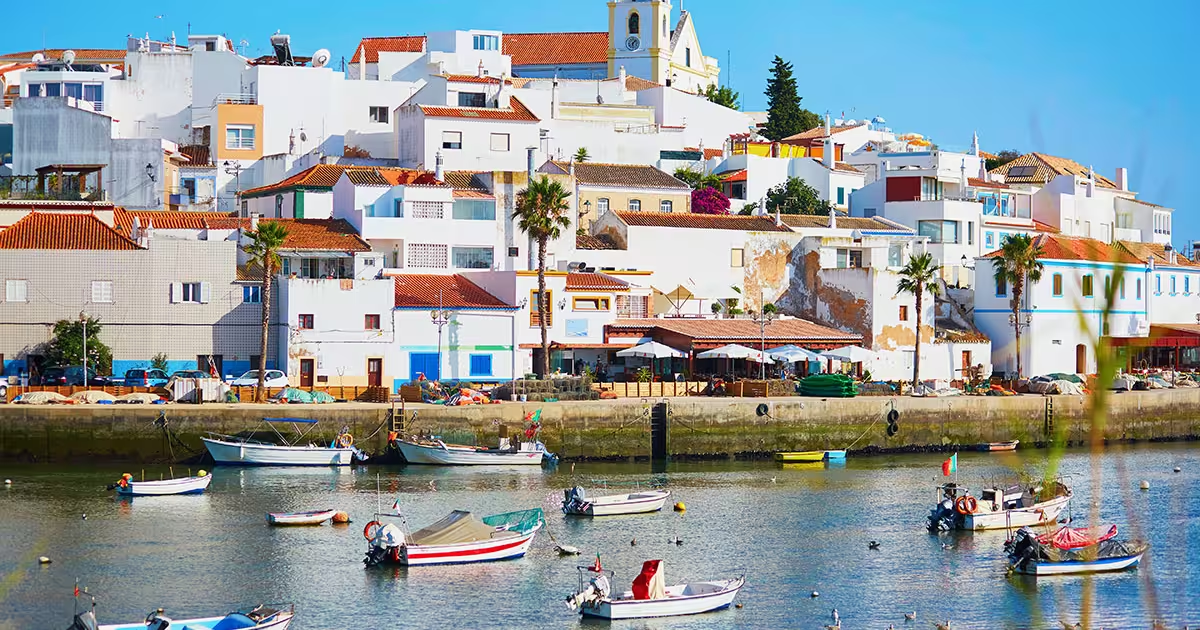
Ferragudo sits on the western bank of the Arade River estuary in the Algarve, directly across from the city of Portimão. The village retains its working character — cobbled lanes, a 16th-century castle, active fishing boats, and seafood restaurants without laminated tourist menus. For travellers looking beyond the Algarve's busier resorts, Ferragudo offers a grounded entry point into southern Portugal's coastal culture.
What makes Ferragudo different from other Algarve villages?
Most visitors to the Algarve arrive in Albufeira, Lagos, or Vilamoura. Ferragudo, by contrast, receives a fraction of that traffic despite sitting less than 3 kilometres from central Portimão. The reasons are partly geographic and partly structural. The village has no direct railway station, no large hotel blocks, and no beachfront strip of bars. What it has is a functioning fishing community that has existed on the Arade estuary since at least the medieval period.
The street plan has changed little in centuries. The main praça opens onto the river, flanked by cafés and tascas where the menu of the day tends to cost between 8 and 12 euros. Cataplana, a slow-cooked seafood stew prepared in a traditional copper clam-shaped vessel, is a local staple. The sardine season runs from June through September, and during those months grilled sardines appear on nearly every table along the waterfront.
"Ferragudo is the kind of place that rewards walking without a plan. The lanes behind the main square lead to viewpoints, chapels, and doorways painted in colours that take a moment to register properly." — ToursXplorer Editorial Team
The village falls within the municipality of Lagoa, a detail that matters for administrative purposes but rarely comes up in conversation. What does come up is the light. The Arade estuary faces west, which means late afternoons produce a quality of reflected light on the water that photographers and painters have documented since at least the 19th century.
What are the key sights in Ferragudo?
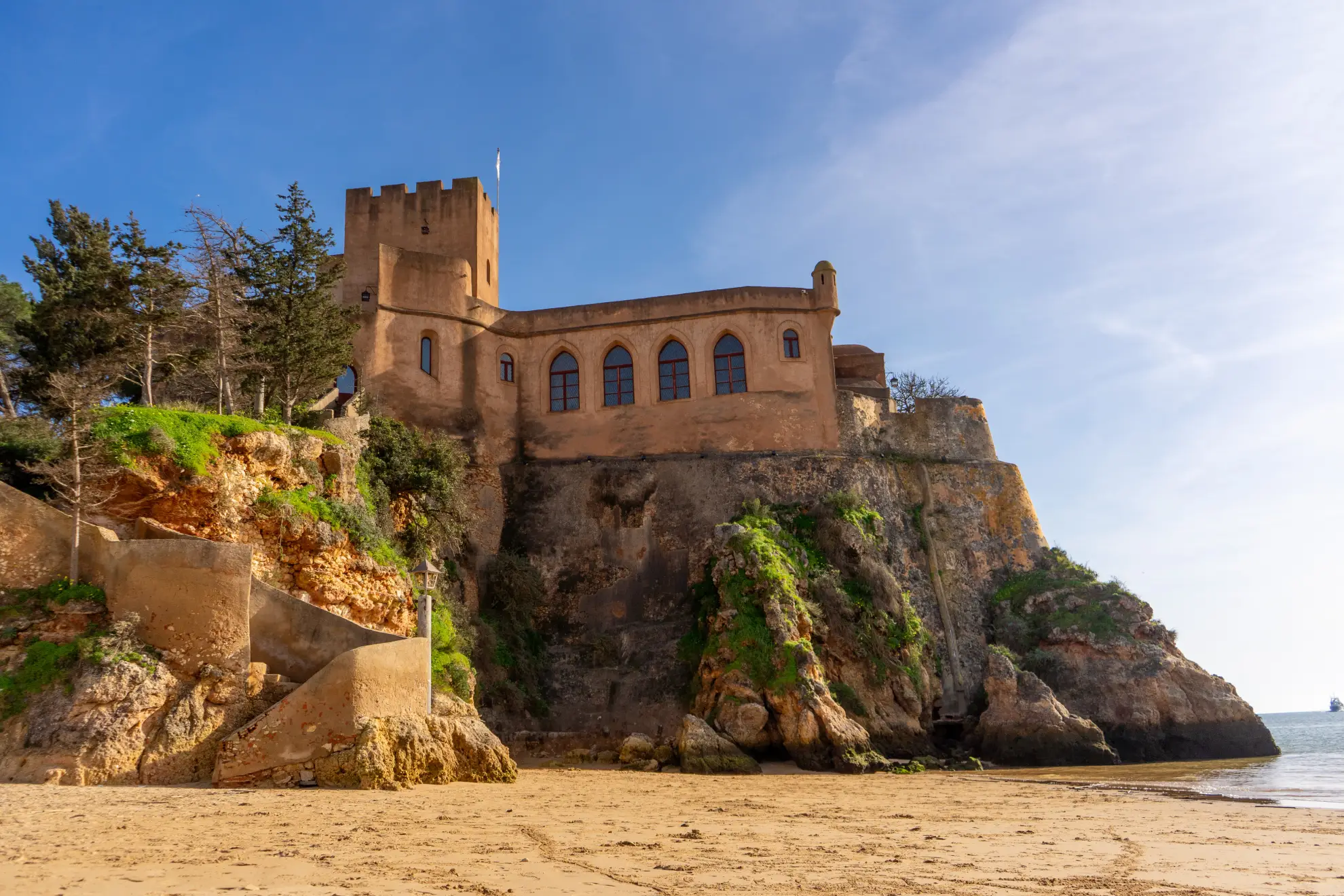
The Castelo de São João do Arade stands at the southern edge of the village, directly above the river mouth. Built in the 16th century, the castle was constructed as a defensive counterpart to the Fortaleza de Santa Catarina on the Portimão side of the estuary. Together the two fortifications controlled access to the Arade River and protected the inland town of Silves, once a Moorish capital of considerable importance. The castle is privately owned and not open to the public interior, but the exterior and its position above the water are a focal point of any walk through the village.
Praia Grande de Ferragudo lies roughly 500 metres south of the castle along the coastal path. It is a broad, sheltered beach with calm conditions in summer, popular with local families and largely absent from the international package-holiday circuit. The beach faces southwest and receives afternoon sun until late. A second, smaller beach called Praia da Angrinha sits just to the north of the main quay, within the estuary itself, and is used mainly by residents and boaters.
The Igreja de Nossa Senhora da Conceição, the village's main parish church, dates to the 17th century and sits on elevated ground above the central square. Its whitewashed facade is visible from the Portimão waterfront across the river. The interior holds azulejo tile panels depicting maritime scenes, a recurring decorative motif in coastal Algarve churches.
"The 16th-century Castelo de São João do Arade and the Fortaleza de Santa Catarina in Portimão once formed one of the Algarve's key river-mouth defence systems, controlling trade routes that reached as far as Silves." — ToursXplorer Editorial Team
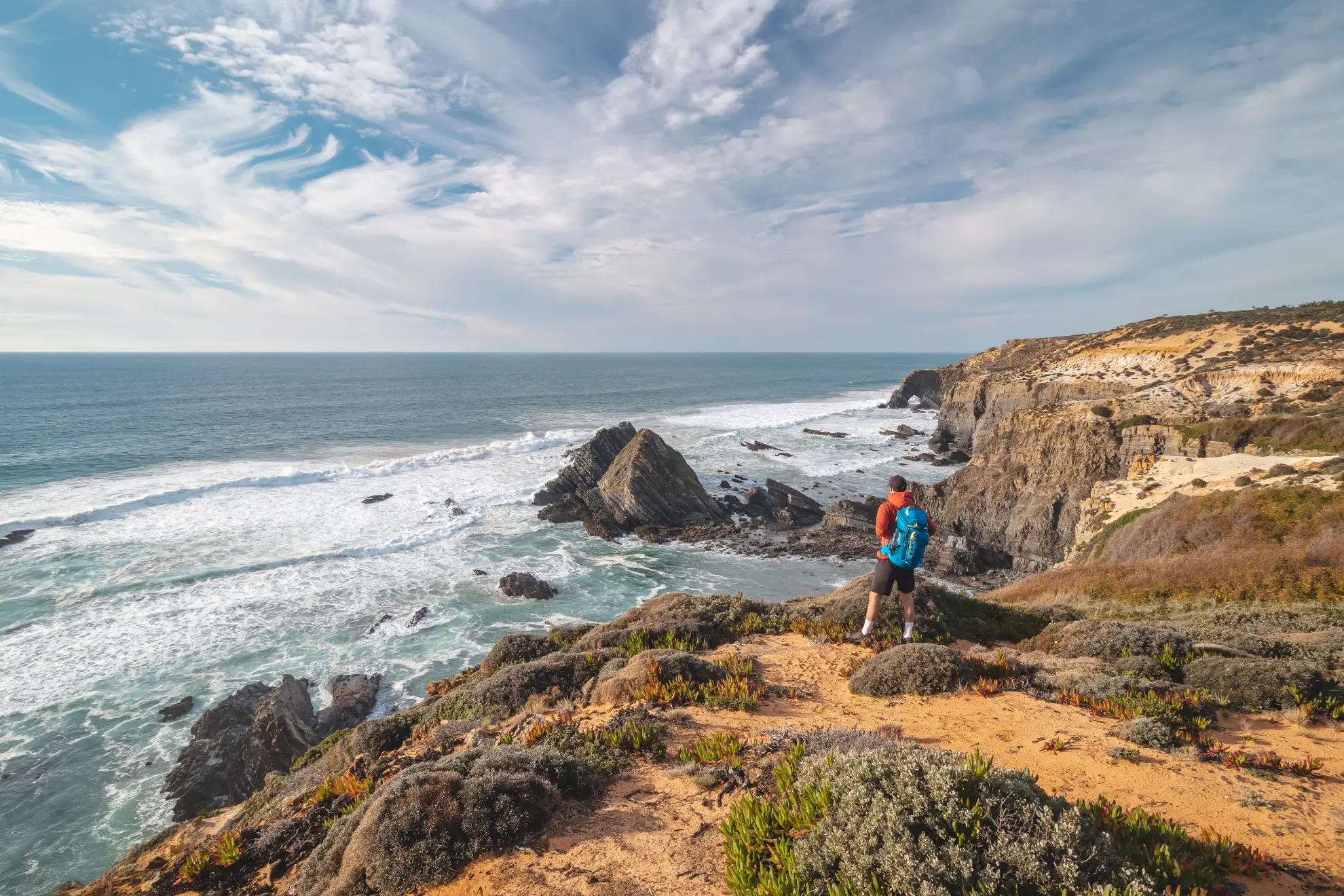
A notable feature of Ferragudo for walkers is the network of informal coastal paths linking the village to Carvoeiro, approximately 10 kilometres to the east. The route passes through low scrubland dominated by Pinus pinea and Cistus ladanifer (common rockrose), with cliff-edge sections offering unobstructed views of the Algarve's characteristic sandstone formations.
How do you get to Ferragudo from Portimão?
The most direct crossing from Portimão to Ferragudo is by small passenger ferry operating seasonally from the Portimão riverside quay, near the Museu de Portimão. The crossing takes approximately 5 minutes and costs around 1.50 euros each way. Ferry frequency varies by season, with departures roughly every 30 minutes during summer months (June to September) and reduced service in the off-season.
By road, Ferragudo is reached via the N124-1, crossing the Arade River on the Ponte Velha bridge approximately 3 kilometres north of the village centre, then heading south along the EN125-6. Driving from central Portimão takes around 10 minutes without traffic. Parking in the village is limited, particularly in July and August. A free car park near the football pitch, approximately 400 metres from the main square, is the most reliable option in high season.
There is no direct bus service into the centre of Ferragudo from Portimão's main EVA Transportes terminal. Regional buses on the Lagos-Portimão-Faro corridor stop at the Parchal junction, roughly 1.5 kilometres from the village, from which the walk into Ferragudo takes around 20 minutes along a flat riverside road.
| Method | From | Duration | Approx. Cost | Notes |
|---|---|---|---|---|
| Passenger Ferry | Portimão Riverside Quay | 5 min | €1.50 each way | Seasonal; reduced service Oct–May |
| Car | Portimão centre | 10 min | Fuel + parking | Limited parking in village; use Parchal car park in high season |
| Taxi / Rideshare | Portimão centre | 10–15 min | €8–12 est. | Bolt and Uber available in Portimão |
| Walking from Parchal bus stop | EN125-6 junction | 20 min | Bus fare only | Flat riverside road; no dedicated cycle lane |
What day trips from Ferragudo are worth planning?
Ferragudo's position on the central Algarve coast makes it a practical base for day trips across the western region. Silves, the historic Moorish capital of the Algarve, sits approximately 17 kilometres northeast via the N124. The red sandstone Castelo de Silves, dating to the Moorish period and substantially rebuilt in the 13th century under Sancho I of Portugal, is the largest medieval castle in the Algarve and contains a Moorish cistern still in its original condition. The town's cathedral, the Sé de Silves, dates to 1189 and occupies the site of a former mosque.
Cape St. Vincent (Cabo de São Vicente), the southwestern tip of continental Europe, is approximately 70 kilometres west of Ferragudo via the N125. The lighthouse at the cape was established in 1846, replacing an earlier convent structure, and is one of the most powerful on the European Atlantic coast. The cliffs at Cape St. Vincent reach 75 metres above sea level. The drive west from Ferragudo passes through the Parque Natural do Sudoeste Alentejano e Costa Vicentina, a protected coastal zone designated under EU Natura 2000 regulations, where Calendula suffruticosa and Armeria pungens grow in the cliff-top sand.
Carvoeiro, 10 kilometres east, is a smaller resort known for its horseshoe-shaped beach and the Algar Seco rock formations at its eastern end. Benagil Cave, accessible only by sea, lies a further 5 kilometres along the coast from Algar Seco. The cave ceiling contains a natural oculus approximately 15 metres in diameter, through which sunlight illuminates a small sand beach inside the cavern at midday.
Guided Tours of the Western Algarve from Ferragudo
Ferragudo sits within easy reach of some of the western Algarve's most visited landmarks. Browse ToursXplorer's selection of private and small-group tours covering Silves, Carvoeiro, Cape St. Vincent, and the Costa Vicentina coast.
Browse all Ferragudo tours on ToursXplorerPlanning Your Time in Ferragudo: What ToursXplorer Recommends
Ferragudo works as both a base and a standalone day trip. Travellers staying in Portimão can reach the village by ferry in 5 minutes and spend a half-day walking the lanes, visiting the castle exterior, and eating at one of the riverside tascas before returning. Those based in Ferragudo itself benefit from immediate access to Praia Grande and the coastal path toward Carvoeiro, while remaining within 20 minutes of Portimão's train connections to Faro (approximately 70 kilometres east) and Lagos (approximately 18 kilometres west).
The ToursXplorer tours listed above are designed for travellers who want structured access to the broader western Algarve. None of the three tours is Ferragudo-specific, but all three cover landmarks that form a natural extension of a stay in the village. The private Silves, Carvoeiro, and Lagos tour in particular pairs well with a morning spent in Ferragudo, since Silves is just 17 kilometres away and Carvoeiro is reachable in under 15 minutes by car.
Peak season in the western Algarve runs from mid-June to early September. During this period, Praia Grande de Ferragudo becomes busy on weekends but rarely reaches the density of beaches near Albufeira or Vilamoura. Shoulder season, particularly May and October, offers stable temperatures averaging 20 to 23 degrees Celsius, lower accommodation prices, and significantly reduced crowds at sites like Silves Castle and Benagil Cave.
Travellers with an interest in bird migration should note that the western Algarve coast, particularly the Cape St. Vincent headland, is one of Europe's most significant raptor migration corridors in October and November. Species recorded at the cape during autumn passage include Buteo buteo (common buzzard), Circus aeruginosus (marsh harrier), and Pandion haliaetus (osprey), alongside large counts of Ciconia ciconia (white stork).
Eating and Drinking in Ferragudo
The village has a small concentration of restaurants along the riverside promenade and in the streets immediately behind it. Most operate on a lunch-focused schedule, with kitchens closing between approximately 15:00 and 19:00. Reservations are advisable in July and August for dinner at the more established tascas, particularly those that do not have outdoor seating capacity.
Fresh fish and shellfish dominate menus. Percebes (goose barnacles), harvested from Atlantic rocks further west along the Costa Vicentina, appear as a seasonal starter. Amêijoas à Bulhão Pato, clams cooked with garlic, olive oil, white wine, and coriander, is a standard opening course in most restaurants. The regional wine to look for is from the Algarve DOC, though many restaurants also carry Alentejo wines from estates 60 to 100 kilometres north.
For coffee and pastry, the local café culture centres on the main praça. A bica (espresso) costs around 0.80 to 1.00 euros in a village café. Pastel de nata, the custard tart ubiquitous across Portugal, is available but not the local speciality. Look instead for Dom Rodrigo, a sweet from the Algarve made with egg yolk, almonds, and cinnamon, more commonly found in confeitarias in Faro or Silves but occasionally available in Ferragudo's bakeries.
Frequently Asked Questions
Ferragudo's main sights include the exterior of the 16th-century Castelo de São João do Arade, the 17th-century Igreja de Nossa Senhora da Conceição, and the broad sandy Praia Grande de Ferragudo approximately 500 metres south of the castle. The village is also known for its riverside seafood restaurants, cobbled lanes, and a coastal walking path that extends roughly 10 kilometres east toward Carvoeiro.
A seasonal passenger ferry runs from Portimão's riverside quay to Ferragudo in approximately 5 minutes, costing around 1.50 euros each way. By road, the drive takes about 10 minutes via the N124-1 and EN125-6. There is no direct bus into the village centre, but regional buses stop at the Parchal junction, a 20-minute walk from the main square.
Yes. Praia Grande de Ferragudo is a sheltered, southwest-facing beach with calm summer conditions, and the village is small and walkable. The estuary beach at Praia da Angrinha is calmer still and is used by local families. Facilities are limited compared to larger resorts, with no waterpark or large hotel amenities, but the environment is low-traffic and relaxed.
Silves, with its red sandstone Moorish castle and 12th-century cathedral, is 17 kilometres northeast. Carvoeiro and the Algar Seco rock formations are 10 kilometres east. Lagos historic centre is approximately 18 kilometres west. Cape St. Vincent, the southwestern tip of continental Europe, is around 70 kilometres from Ferragudo via the N125.
May and October offer stable temperatures of 20 to 23 degrees Celsius, fewer crowds, and lower prices than the June-to-September peak. The sardine season runs June through September, when grilled sardines are widely available. October and November are notable for raptor migration at nearby Cape St. Vincent, attracting birdwatchers from across Europe.
No dedicated Ferragudo-specific tour currently operates, but ToursXplorer lists private and small-group tours of the wider western Algarve that cover nearby landmarks. These include a full-day cliffs and cape tour, a private tour combining Silves Castle, Carvoeiro, and Lagos, and a sunset off-road tour through the Costa Vicentina natural park, all accessible from Ferragudo or Portimão.