




Faro Boat Tours & Wildlife Watching: The Best Ways to Explore Ria Formosa and the Algarve Coast
From dolphin-spotting in a protected lagoon to off-road traversals of Europe's largest Atlantic park, these guided experiences open the Algarve beyond its famous beaches.
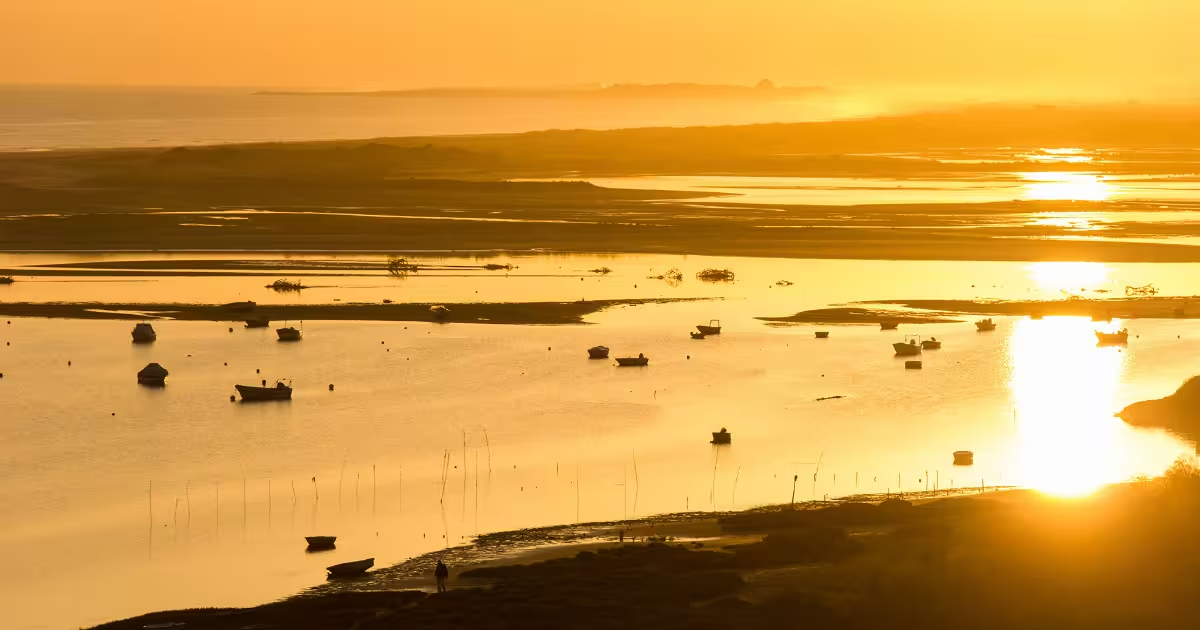
Ria Formosa Natural Park stretches 60 kilometres along the Algarve coast, enclosing a mosaic of tidal channels, barrier islands, and salt marshes within one of Portugal's most biodiverse protected areas. Faro, the regional capital and gateway to the lagoon, sits at its centre, offering direct boat access to a habitat that shelters over 200 bird species and resident dolphin populations year-round. Guided tours from Faro's marina provide the most practical and ecologically responsible entry point to this landscape.
What makes Ria Formosa the right starting point for Algarve nature tours?
Ria Formosa Natural Park was designated a protected area in 1987 and covers approximately 18,400 hectares of coastline between Ancão, near Loulé, and Manta Rota in the east. The park is composed of five barrier islands, two peninsulas, and a system of tidal inlets that flush twice daily with Atlantic water, sustaining a highly productive ecosystem used by flamingos (Phoenicopterus roseus), oystercatchers (Haematopus ostralegus), and the near-threatened purple gallinule (Porphyrio porphyrio), for which it is one of Europe's last strongholds.
Faro's marina, located approximately 700 metres from the city's historic centre and its medieval walls, is the principal departure point for lagoon boat tours. The shallow draft of the lagoon, rarely deeper than 3 metres at low tide, means that shallow-hulled vessels are required, and most licensed tour operators use traditional wooden or fibreglass boats suited to tidal navigation. The International Airport of Faro, just 6 kilometres west of the city centre, makes the destination among the most accessible in Portugal for European visitors.
Ria Formosa's tidal system exchanges approximately 70 percent of its water volume with every tidal cycle, a natural filtration process that supports the Algarve's clam and oyster aquaculture industry, which produces an estimated 80 percent of Portugal's bivalve output.
Boat tours typically operate from March through October, with the peak season running from June to September when calm sea conditions and longer daylight hours allow for extended itineraries. Winter tours are available but subject to weather conditions, and operators are required to comply with Portuguese Maritime Authority (AMN) regulations governing passenger vessel capacity and safety equipment.
Which wildlife species can travellers realistically expect to see on a Ria Formosa boat tour?
The common bottlenose dolphin (Tursiops truncatus) is the species most frequently encountered on open-water sections of Ria Formosa tours, particularly where the lagoon channels meet the Atlantic. Resident groups are documented year-round, though sightings are more consistent between April and October. Tour operators are bound by Decree-Law No. 9/2006, which regulates cetacean watching in Portuguese waters and sets minimum approach distances of 50 metres for motorised vessels.
Within the lagoon itself, the birdlife is the dominant wildlife draw. The park's mudflats and salt pans attract large concentrations of wading birds during the autumn and spring migration periods, with greater flamingo numbers peaking between August and March. The chameleon (Chamaeleo chamaeleon), one of only two chameleon species native to Europe, inhabits the dune vegetation of several barrier islands and is occasionally spotted by attentive guides familiar with the terrain.
The Ria Formosa barrier island of Culatra, permanently inhabited by approximately 800 residents who rely on fishing and shellfish harvesting, has no road connection to the mainland and is accessible only by boat, giving visitors an encounter with a genuinely isolated coastal community.
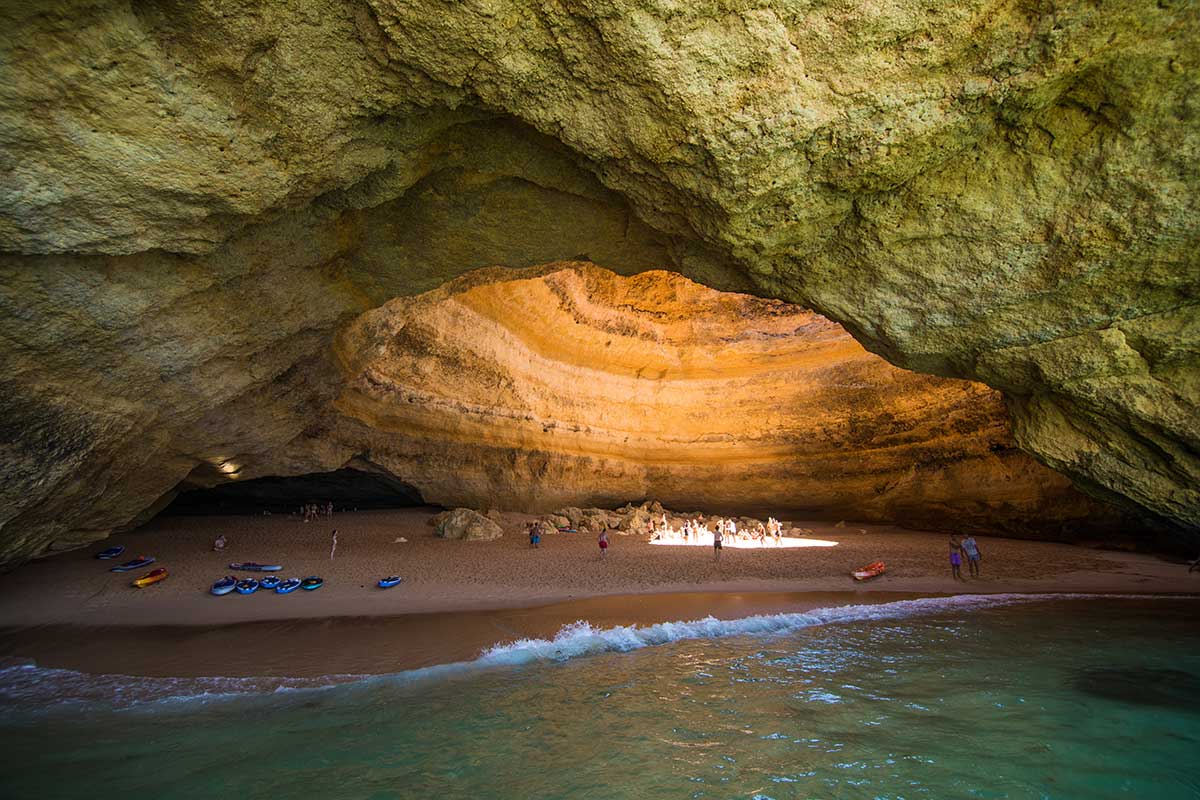
On the outer Atlantic coast, seabird populations including Cory's shearwater (Calonectris borealis) and gannet (Morus bassanus) are visible from offshore tours. The Benagil sea cave, located approximately 90 kilometres west of Faro along the Algarve coast near Lagoa municipality, represents a geological rather than biological spectacle: a collapsed marine cave with a circular roof opening that channels light onto an interior beach.
How does the western Algarve compare as a nature destination for travellers based in Faro?
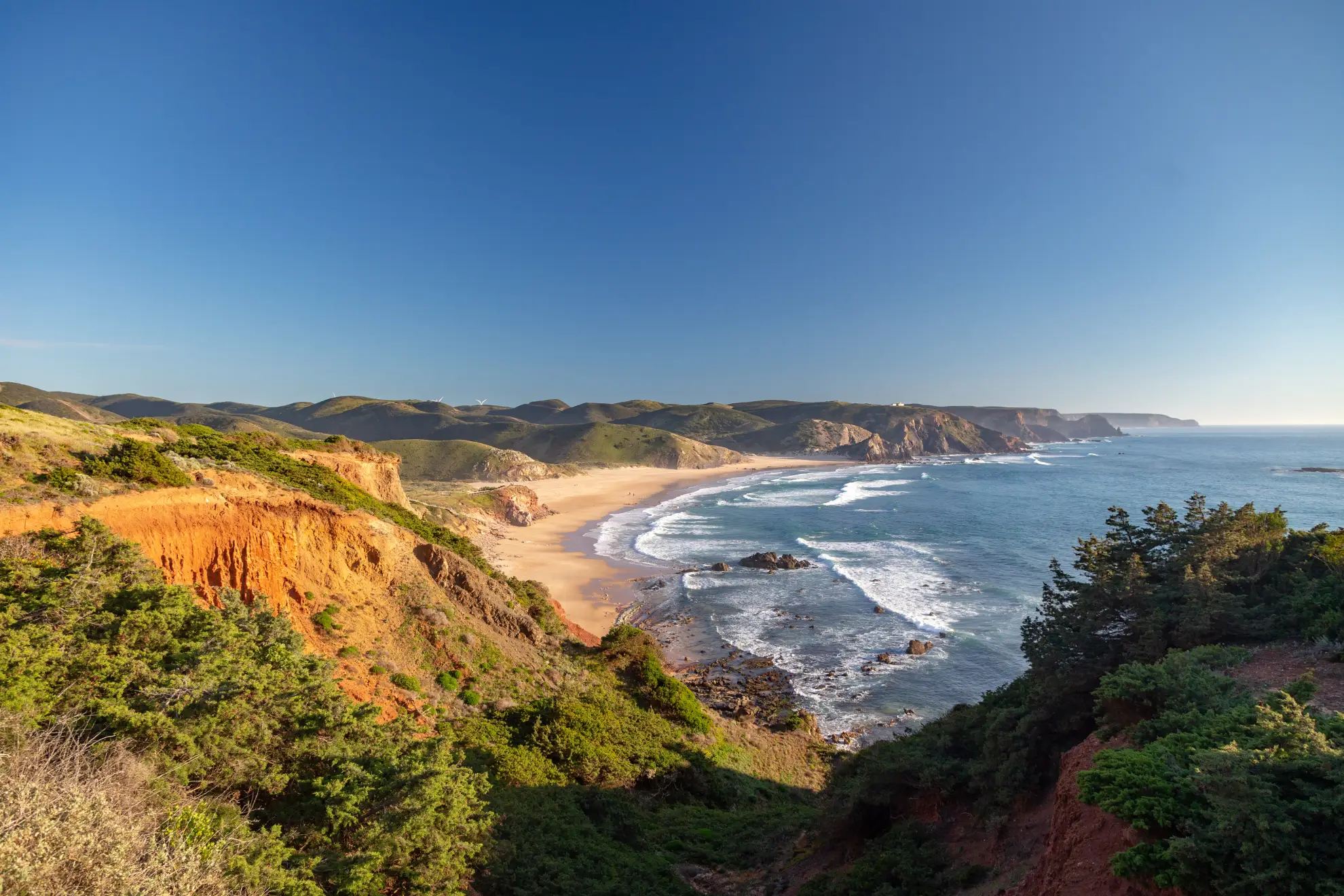
The Costa Vicentina, which forms the Atlantic-facing coastline of Sagres and the western Algarve, is protected under the Southwest Alentejo and Vicentine Coast Natural Park (Parque Natural do Sudoeste Alentejano e Costa Vicentina), established in 1995. At approximately 110,000 hectares, it is the largest coastal protected area in western Europe and extends northward from Sagres, at Portugal's southwestern tip, into the Alentejo region. The park's cliffs, Atlantic heath, and ancient cork oak woodland support populations of Bonelli's eagle (Aquila fasciata) and the white stork (Ciconia ciconia).
For travellers based in Faro who have already taken a Ria Formosa boat tour, or for those for whom lagoon tours are unavailable on their travel dates, the Costa Vicentina provides a comparable immersion in protected Algarve landscape with a very different character: dramatic sea cliffs rising to 100 metres, Atlantic-facing surf beaches, and semi-arid inland terrain accessible primarily by off-road vehicle. Sagres, the nearest town on the Cape St. Vincent peninsula, sits approximately 120 kilometres west of Faro along the A22 motorway.
ToursXplorer lists guided tours in both ecosystems, allowing travellers to compare itineraries, durations, and operator profiles within a single platform. Whether a visitor's priority is birdwatching in a tidal lagoon or geological scenery on an Atlantic cliff coast, both regions are reachable on day-trip itineraries from Faro or from Lagos, which sits approximately 75 kilometres west of Faro.
| Tour Type | Ecosystem | Duration | Primary Draw | Departure Point |
|---|---|---|---|---|
| Ria Formosa Full-Day Island Tour | Tidal lagoon | Full day | Island-hopping, beaches | Faro Marina |
| Dolphin Watching Boat Tour | Lagoon + open sea | Half day | Cetaceans, birdlife | Faro Marina |
| Sunset Dolphin Watching | Lagoon + open sea | 2-3 hours | Dolphins, golden-hour light | Faro Marina |
| Benagil Cave Boat Tour | Atlantic coast | Half day | Sea cave geology | Faro (transfer to Lagoa) |
| Costa Vicentina Off-Road Tour | Atlantic cliff coast | Half day / full day | Cliffs, wildlife, Sagres | Sagres / Lagos |
Ria Formosa Boat Tours from Faro
Algarve Coast Boat Tours
Costa Vicentina & Western Algarve Nature Tours
Ready to explore Ria Formosa or the Costa Vicentina? Browse all available guided tours from Faro and the Algarve on ToursXplorer and book your place on a licensed operator's vessel or vehicle.
Browse all Faro, Ria Formosa, Algarve, Portugal tours on ToursXplorerHow to choose between a Ria Formosa boat tour and a Costa Vicentina off-road tour
The decision between a lagoon boat tour and an off-road coastal tour depends primarily on two factors: the traveller's tolerance for open-water conditions and their interest in specific wildlife categories. Ria Formosa boat tours are conducted in sheltered tidal channels for most of their duration, making seasickness an unlikely concern. The exception is the dolphin-watching section, which moves into open Atlantic water south of the barrier islands. Travellers with sensitivity to ocean swell should confirm with operators whether the tour's open-water section can be shortened.
Costa Vicentina off-road tours involve no water exposure but do require comfort on unpaved tracks and occasionally steep cliff-top terrain. The tours are conducted in 4x4 vehicles driven by licensed guides, and no prior off-road experience is needed. The park's restricted access zones mean that guided tours provide entry to areas that independent visitors in standard hire cars cannot legally reach.
Both tour types are bookable through ToursXplorer, which lists the full operator details, departure locations, and availability calendars for each experience. Travellers visiting the Algarve for more than three nights may find value in combining both: a morning boat tour in Ria Formosa and a sunset off-road session on the Costa Vicentina within the same trip, given that the driving time between Faro and Sagres on the A22 and EN125 roads is approximately 90 minutes each way.
Practical information for first-time visitors to Faro's nature tours
Faro Marina, the standard departure point for Ria Formosa boat tours, is located on the southern edge of the city at Doca de Faro, approximately a 10-minute walk from Faro railway station. Parking is available at the marina for self-driving visitors. Most Ria Formosa boat tours require advance booking, particularly in July and August when vessel capacity, regulated by the Portuguese Maritime Authority, sells out several days ahead.
Appropriate clothing for lagoon tours includes sun protection (the lagoon's open water provides little shade between 10:00 and 16:00), non-slip footwear for boarding and island walking, and a light layer for early morning or evening departures. Operators are required to provide life jackets, and most provide basic shade structures on their vessels.
For the Costa Vicentina off-road tours, Sagres is served by bus from Lagos (approximately 1 hour) and by regional road from Faro via the A22 motorway and EN125. The Fortaleza de Sagres, the area's primary historical site, is managed by the Portuguese Environment Agency (APA) and charges a modest entry fee. Most off-road tour operators include a stop at the cape or the fort in their itinerary, giving the tour a dual nature-and-history character that suits a broad range of travellers.
Frequently Asked Questions
Boat tours operate from March through October, with the most consistent conditions between May and September. Dolphin sightings are most frequent from April to October. Birdwatching is productive year-round, with flamingo numbers peaking between August and March during migration. Summer tours (July and August) book out quickly due to vessel capacity limits set by the Portuguese Maritime Authority.
The closest barrier island, Ilha de Faro, is approximately 3 kilometres by boat from Faro Marina, reachable in under 15 minutes. Culatra island, a regularly visited stop on lagoon tours, is roughly 8 kilometres from the marina. Armona, the furthest island on most itineraries, is around 14 kilometres away and takes 25 to 35 minutes to reach by tour vessel at standard lagoon speed.
No reputable operator guarantees dolphin sightings. Resident bottlenose dolphin groups are documented year-round in the waters south of Ria Formosa's barrier islands, and encounter rates are high between April and October. Under Portuguese Decree-Law No. 9/2006, vessels must maintain a minimum 50-metre distance from cetaceans and must not pursue or alter dolphin behaviour to attract interaction.
Yes. The Benagil sea cave is located approximately 90 kilometres west of Faro near Benagil village in Lagoa municipality. Dedicated tour departures from Faro include coastal navigation to the cave and back within a half-day format. Access inside the cave depends on Atlantic swell conditions and is not guaranteed on all departures. Visitors should book early as this is one of the most in-demand Algarve coastal experiences.
Both are guided nature experiences in protected areas but in contrasting environments. Ria Formosa tours navigate a sheltered tidal lagoon by boat, focusing on birdlife, dolphins, and barrier islands. Costa Vicentina off-road tours cover Atlantic cliff terrain and inland heath by 4x4 vehicle within the Southwest Alentejo and Vicentine Coast Natural Park. The western park covers 110,000 hectares, compared to Ria Formosa's 18,400 hectares.
Faro works well as a base for both areas. Ria Formosa boat tours depart directly from Faro Marina, 700 metres from the city centre. The Costa Vicentina and Sagres are approximately 120 kilometres west of Faro, accessible via the A22 motorway in roughly 90 minutes by car. Day-trip logistics are manageable for most travellers, and Lagos, 75 kilometres west of Faro, provides an alternative staging point for western Algarve tours.