




The Moment You Fall in Love with Portugal: A Journey That Stays With You Forever
From Fado-lit Lisbon streets to golden Douro evenings, Portugal reaches into something quiet and does not let go.
There’s a moment in Portugal when the country quietly stops being just another destination — and begins to feel like the start of a love story.
It rarely arrives with fanfare. It might catch you off guard at dusk in the Douro Valley, as golden light spills across ancient terraced vineyards. Or deep in the narrow streets of Lisbon’s Alfama, when a solitary Fado voice drifts through an open window and time seems to pause. For others, it happens above the clouds on a Madeira mountain ridge at sunrise, or while floating inside the glowing Benagil Cave as the Atlantic whispers outside.
Portugal doesn’t overwhelm you with spectacle. Instead, it slowly slips into your soul — through its light, its people, its saudade, and an unmistakable sense of presence that lingers long after you’ve left.
This is the story of that moment — the moment you fall in love with Portugal.
What Is the Exact Moment Travelers Fall in Love with Portugal?
It rarely announces itself. Travelers who come to Portugal expecting a pleasant European holiday often describe a specific, unplanned instant when the experience shifts register entirely. For some, it arrives just after midnight in Lisbon's Alfama district, when a Fado voice drifts from behind a half-open door and the narrow street seems to hold its breath. For others, it is the first proper view of the Atlantic from the Algarve cliffs, roughly 200 meters above the water, where the ocean stretches without interruption all the way toward the Americas.
What Portugal offers is not spectacle in the conventional sense. There are no manufactured thrills. What it offers instead is presence: an atmosphere so specific and so consistent across regions that travelers begin to recognize it as something irreducibly Portuguese. The saudade, that untranslatable Portuguese word describing a kind of tender longing for something beautiful that has passed or is just out of reach, is not simply a concept. You breathe it in the streets, hear it in the music, see it in the way locals watch the sea.
"I came for a long weekend," one traveler wrote after a visit to Porto. "I stayed for two weeks. I still have not fully left."
This is the quality that separates Portugal from destinations you merely enjoy. It is a place that leaves a residue. The ToursXplorer editorial team has spoken with hundreds of travelers who describe Portugal using the same language: not excited, but moved.
What Does Portugal Sound, Look and Feel Like Across Its Regions?
Understanding why Portugal provokes such a strong emotional response requires moving through it region by region, because the country's moods are remarkably distinct across relatively short distances.
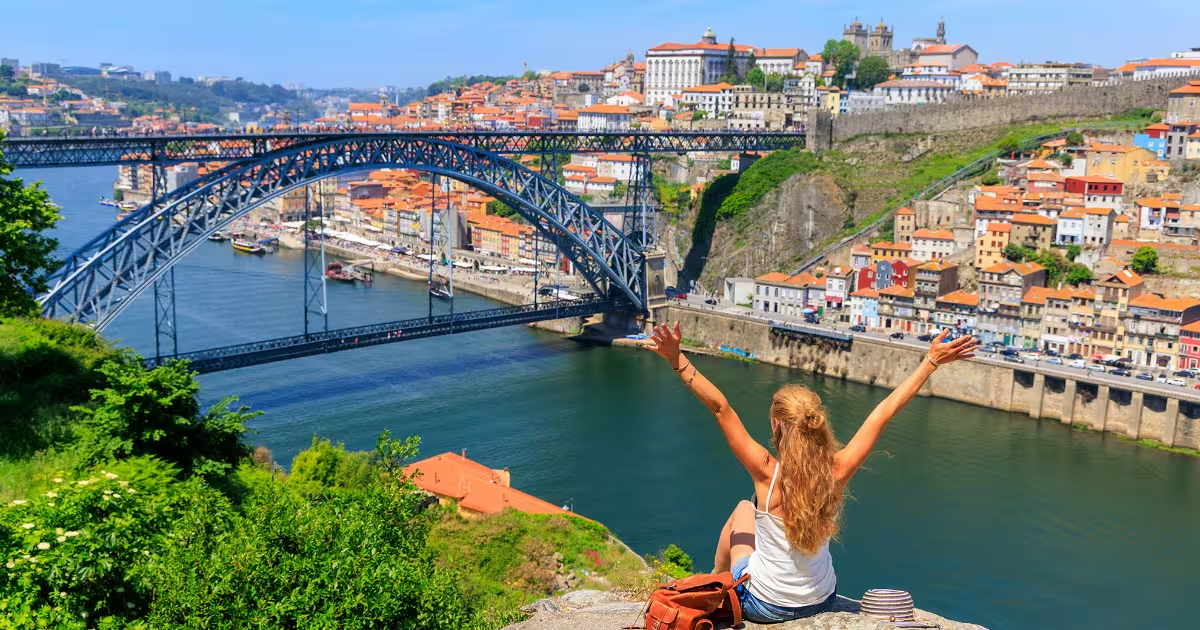
Lisbon and Sintra operate on romanticism. Lisbon, a city of approximately 550,000 inhabitants arranged across seven hills above the Tagus River estuary, rewards slow walking more than any itinerary. The yellow Tram 28, rattling through the Graça and Alfama neighborhoods since its introduction in 1901, is not merely a transport link but a moving window onto a city that has not rushed to erase its past. Sintra, located only 28 kilometers west of Lisbon, contains the Pena Palace, completed in 1854 under King Ferdinand II, whose deliberately theatrical architecture looks designed for fairy tales rather than governance. The combination of pine-forested hills, ocean proximity and layered history makes the Lisbon-Sintra corridor feel unlike anywhere else in Europe.
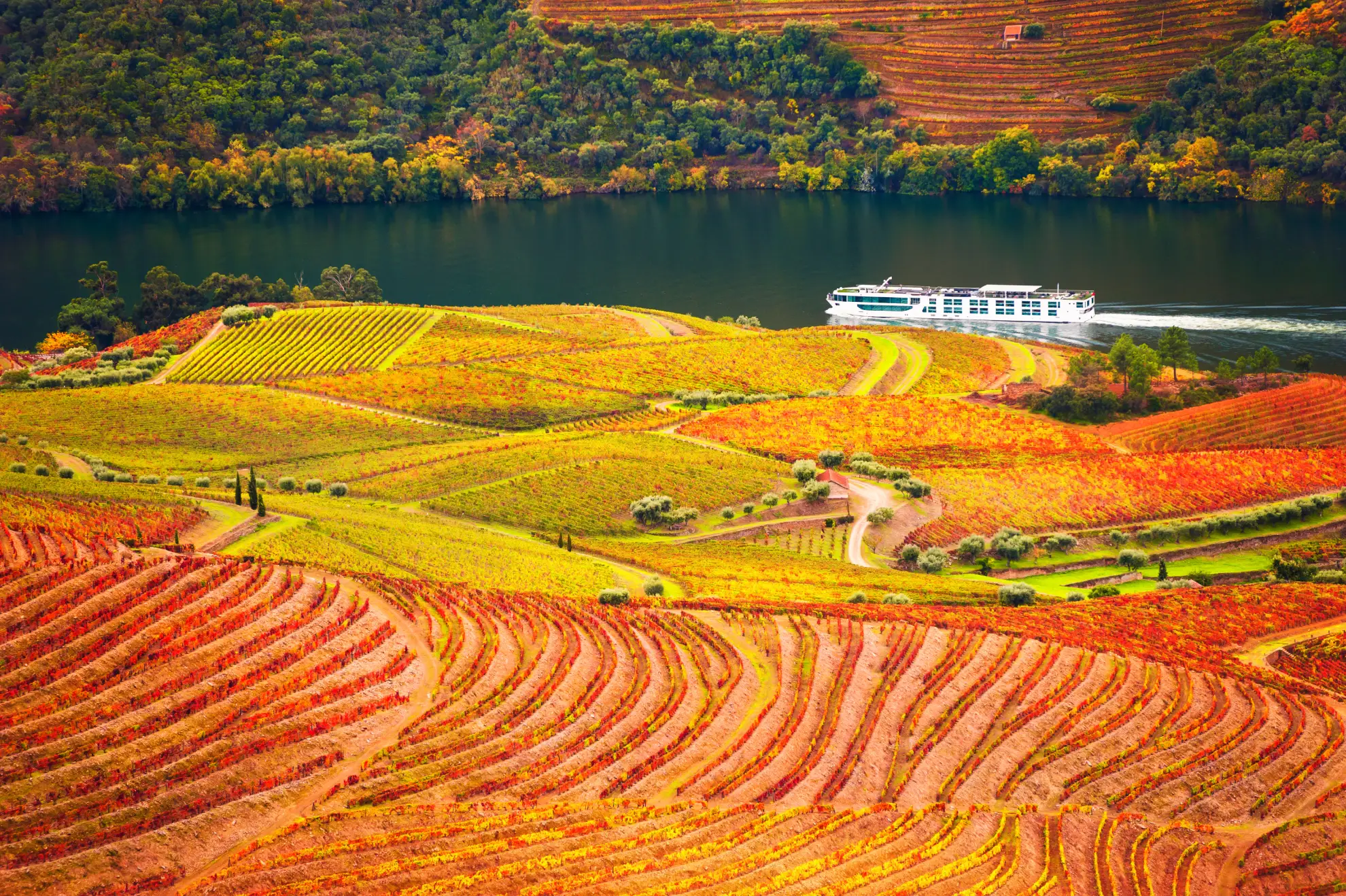
Porto and the Douro Valley operate on warmth and deliberate pace. Porto, Portugal's second city with around 230,000 residents in the municipality, is built on granite terraces above the Douro River. Its wine cellars, most of which line the Vila Nova de Gaia bank directly across the river, have operated continuously since the 17th century. The Douro Valley, designated a UNESCO World Heritage Site in 2001, extends roughly 200 kilometers inland from Porto into one of Europe's oldest demarcated wine regions, established formally in 1756 under the Marquis of Pombal. Terraced vineyards, schist villages and the river itself create an atmosphere that feels suspended in time.
"The Douro at sunset is a kind of slow fire," wrote one traveler who had visited three times. "The light does something to the water that I have not seen replicated anywhere."
Alentejo is quieter still. Rolling cork oak landscapes, whitewashed villages painted with blue trim, and an agricultural pace that predates the industrial era combine to make this inland region Portugal's most meditative corner. Towns like Monsaraz and Évora, the latter containing a Roman temple dating to the 1st century AD, offer an experience of Portugal that tourist infrastructure has not yet smoothed into uniformity.
Madeira, an autonomous archipelago located approximately 1,000 kilometers southwest of Lisbon and only 520 kilometers from the African coast, occupies a category of its own. Its interior mountains reach 1,862 meters at Pico Ruivo, and the combination of volcanic geology, subtropical vegetation and Atlantic cloud formations creates landscapes that feel genuinely removed from ordinary geography. Sunrises from Pico do Arieiro, at 1,818 meters, frequently place the hiker above the cloud layer, looking out over a sea of white while the surrounding peaks emerge like islands. It is one of the most disorienting and genuinely moving natural experiences available within European territory.
The Algarve is Portugal at its most cinematically dramatic. The sea-carved limestone cliffs between Lagos and Albufeira, formed over millions of years, create sheltered coves, sea caves and arched rock formations that become luminous at certain angles of evening light. Benagil Cave, accessible only from the water, contains a natural oculus in its dome that throws a column of light onto the cave floor, a geological accident that produces an effect of deliberate design.
Why Do Portuguese People Make Travelers Feel So Unexpectedly Welcome?
Hospitality is a word used loosely in travel writing, but in Portugal it refers to something concrete and specific. It is not a hotel welcome or a rehearsed service encounter. It is the tasca owner in Porto who brings an unrequested glass of local wine because you looked cold. It is the farmer in Alentejo who waves from a tractor without any particular reason beyond the fact that you are there. It is the elderly woman in an Alfama neighborhood who corrects your attempt at Portuguese pronunciation, then smiles and walks you three streets further than she needed to.
Portugal received approximately 30 million international tourists in 2023, yet many visitors report that interactions with locals feel unhurried and genuine. Part of this comes from the cultural concept of hospitalidade, a tradition of welcome that predates the tourism industry. Part of it comes from the particular Portuguese relationship with the sea and with departure: a maritime culture that has understood for centuries what it means to leave, and therefore what it means to arrive.
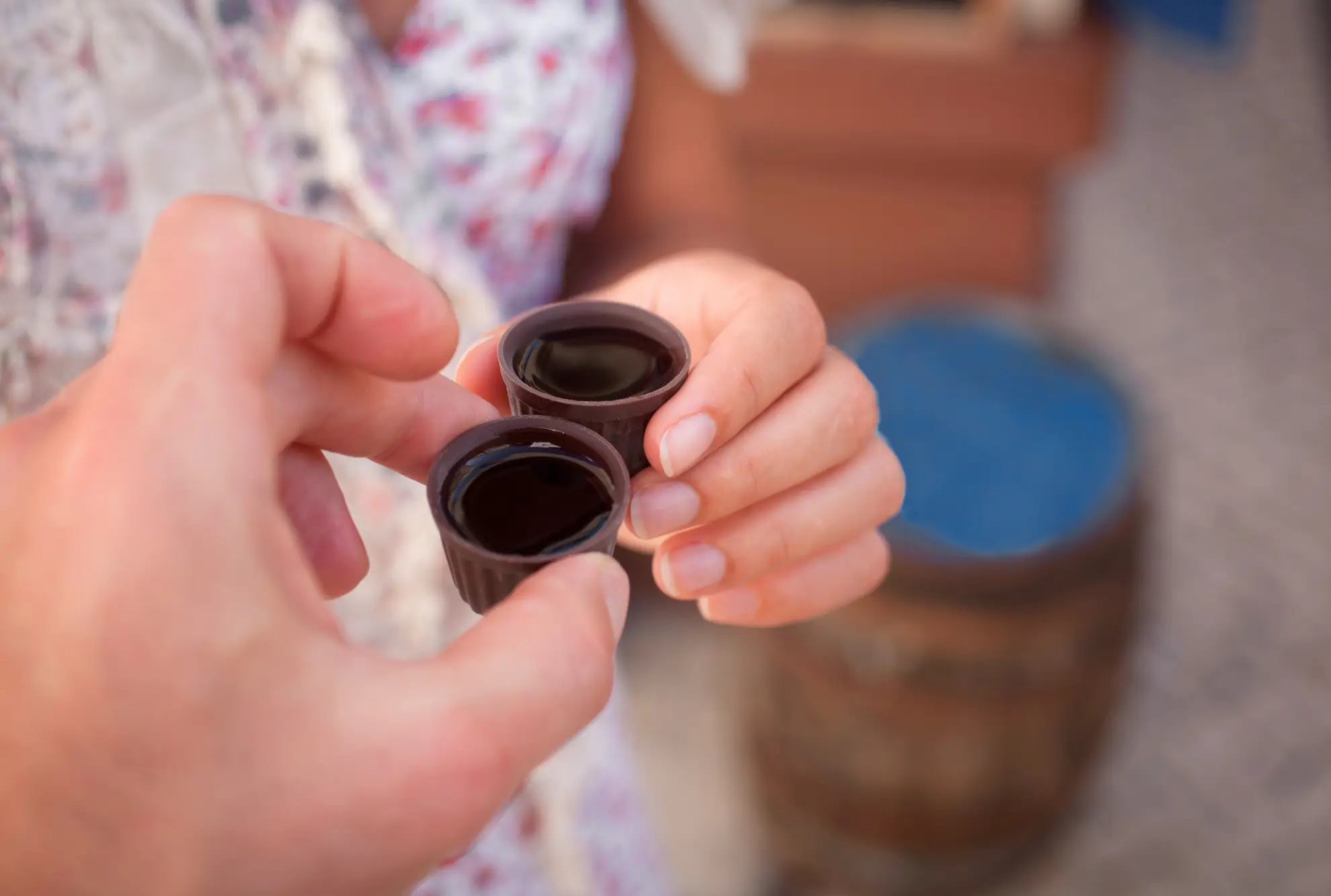
These human moments, a shared meal of bacalhau à brás (salt cod with scrambled eggs and potatoes), a conversation over ginjinha (a sour cherry liqueur served in tiny ceramic cups) in a Lisbon doorway, a toast with local Vinho Verde in a vine-draped courtyard, are often what travelers cite when they try to explain why Portugal affected them differently from other countries. ToursXplorer curates experiences that are built around access to these encounters, not simply around sights.
When Is the Best Time to Visit Portugal for an Authentic, Unhurried Experience?
Portugal is a year-round destination, but the emotional quality of travel changes significantly with the season. The shoulder months of March to May and September to November offer a combination of mild temperatures, lower visitor numbers and an atmosphere that feels closer to daily Portuguese life than the compressed intensity of July and August.
In spring, the Douro Valley vineyards are in early leaf, and the almond and cherry blossoms that carpet the Alentejo and Douro Superior regions in February have given way to green hillsides. In autumn, the grape harvest (locally known as the vindima) runs roughly from mid-September through October, filling the Douro Valley with activity, color and an openness among winemakers that rarely exists during the tourist peak.
For Madeira specifically, spring is when levada walks, the island's 2,500-kilometer network of ancient irrigation channels repurposed as hiking trails, are at their most lush. For the Algarve, September offers sea temperatures that remain at approximately 21 degrees Celsius while the beaches are significantly less crowded than in August.
Travelers who come to Portugal looking for emotional depth rather than efficient sightseeing are consistently advised by the ToursXplorer team to stay longer than planned. Portugal rewards the extra day. It rewards the unscheduled afternoon. It does not deliver its best to visitors who are moving too quickly to notice.
Experiences That Capture Portugal's Emotional Heart
Portugal leaves its mark on every traveler who gives it time. Browse all Portugal tours on ToursXplorer and find the experience that will become part of your own story.
Click herePractical Notes: How to Give Portugal the Time It Deserves
Portugal is compact enough to cover quickly and layered enough to reward staying far longer than most itineraries suggest. The country spans roughly 560 kilometers north to south on the mainland, making it possible to move from the vine-covered terraces of the Minho region in the north to the sea cliffs of the Algarve in a single day of driving. Most travelers, however, find that this kind of efficiency defeats the purpose.
A minimum of ten days on the mainland allows for genuine immersion: three or four days in Lisbon and Sintra, two days in Porto, and two to three days in either the Douro Valley, Alentejo or the Algarve, depending on the traveler's temperament. Madeira warrants a separate trip of at least five days, given that the island's interior hiking network alone could occupy a week without repetition.
Shoulder season travel, specifically April, May, September and October, offers not only more comfortable temperatures (typically 18 to 24 degrees Celsius) but a quality of social access to Portuguese life that the summer peak does not easily provide. Markets, local festivals and neighborhood restaurants are less adjusted to tourist expectations and more plainly themselves. The festas of June, including the Festa de Santo António in Lisbon on June 12 and 13, offer an unfiltered view of urban Portuguese culture that no guided tour can fully replicate.
The ToursXplorer Portugal collection is organized around this philosophy: experiences that create the conditions for genuine connection rather than efficient consumption. Portugal will do the rest.
Portugal Is Not Just a Trip. It Becomes Part of Your Story.
There is a particular kind of travel memory that does not fade with distance or time. It does not live in photographs. It lives in the body: in the smell of salt air and roasting chestnuts in a Lisbon street in November, in the muscle memory of a mountain trail above the clouds in Madeira, in the warmth of a conversation that happened in a language neither party fully shared.
Portugal produces these memories with a consistency that is difficult to explain rationally. It may be the light, which at certain latitudes and certain hours takes on a quality that painters have noted since at least the 16th century. It may be the cultural weight of a small country that was once, briefly and improbably, the center of a global empire, and that has since found a particular kind of grace in its own scale. It may simply be the people, who have a capacity for unhurried welcome that the pressures of modern tourism have not entirely eroded.
Whatever the cause, the effect is consistent: travelers who come to Portugal planning a holiday often leave carrying something they did not arrive with. A word they cannot translate. A melody they cannot name. A view they did not expect. Portugal is not a place you simply visit. It is a place you carry with you long after you leave.
Whether it’s your first visit or your fifth, one thing is certain: you will arrive as a traveler… and leave carrying a quiet longing to return. Because once Portugal touches your heart, it never really lets go.
Are you ready to experience that moment?
Explore our carefully curated tours and create your own unforgettable story with Portugal.
Frequently Asked Questions
Portugal combines several qualities that are rarely found together: dramatic natural landscapes within short distances of historic cities, a music and food culture that is genuinely distinctive rather than generically European, and a population known for unhurried and authentic hospitality. The concept of saudade, an emotional warmth tinged with gentle longing, permeates daily life in ways that many visitors find unexpectedly moving.
Sintra, 28 kilometers west of Lisbon, is consistently cited for its fairytale atmosphere: the Pena Palace sits at 529 meters among forested hills, and the town itself is threaded with quintas and hidden gardens. The Douro Valley at harvest season (September to October) offers a slower, wine-country romanticism. Azenhas do Mar, a cliffside village north of Sintra, combines ocean views with whitewashed architecture in a setting that remains relatively undiscovered.
April, May, September and October offer the most balanced combination of mild temperatures, manageable visitor numbers and access to local life. The grape harvest in the Douro Valley runs mid-September through October and is one of the most atmospheric periods. Summer (July to August) is peak season and can feel crowded in Lisbon, Porto and the Algarve. Winter in Portugal is mild by northern European standards, with Lisbon averaging 15 degrees Celsius in January.
Saudade is a Portuguese word with no precise English equivalent. It describes a bittersweet longing for something beautiful that has passed, is absent, or may never return. It appears in Fado music, in the work of poet Fernando Pessoa, and in ordinary conversation. Understanding it helps visitors interpret the particular emotional register of Portugal: warm but reflective, welcoming but aware of loss. Many travelers find, after leaving, that Portugal itself becomes the object of their own saudade.
Ten to fourteen days on the mainland gives enough time for Lisbon (3 to 4 days), Porto and the Douro Valley (3 days), and one further region such as the Algarve or Alentejo (2 to 3 days). Madeira warrants a separate trip of at least 5 days given its distinct landscape, climate and hiking network. Travelers consistently report that Portugal rewards extended stays: an extra day in any region tends to produce the most lasting memories.
Hearing Fado performed live in Lisbon's Alfama neighborhood is the experience most often cited as the one travelers wish they had prioritized. A sunset in the Douro Valley, viewed from a hillside quinta or during a river cruise, is a close second. For natural landscapes, a sunrise hike in Madeira from Pico do Arieiro places you above the cloud layer at first light, which is among the most unusual visual experiences available within European territory.