




Dolphin Watching from Lagos: What to Expect on the Water
From bow-riding common dolphins to bottlenose pods near Ponta da Piedade, here is everything you need to know before stepping onto a Lagos wildlife boat.
The waters off Lagos, on Portugal's Algarve coast, sit at the edge of a productive Atlantic current system that supports year-round populations of common dolphins (Delphinus delphis) and bottlenose dolphins (Tursiops truncatus). Boats leave from Marina de Lagos within minutes of the open ocean, giving wildlife watchers a realistic chance of encountering free-ranging cetaceans on a half-day excursion, without long transits or ocean crossings.
Which dolphin species can you see off Lagos?
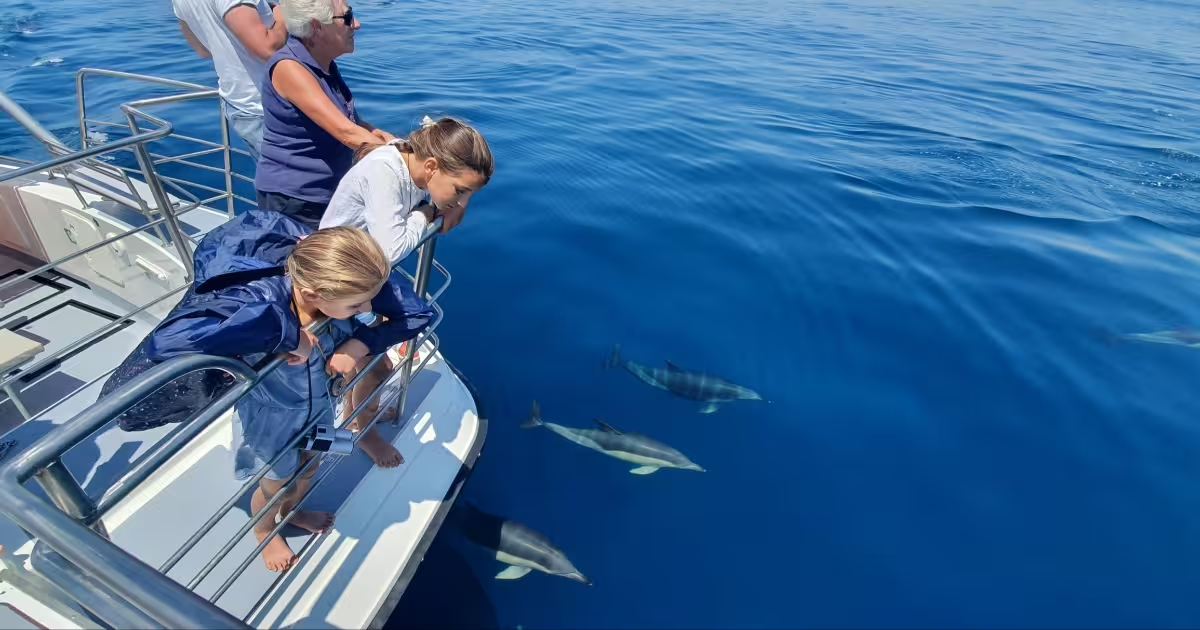
Two species account for the vast majority of sightings in the waters between Lagos and Sagres. The common dolphin (Delphinus delphis) is by far the most frequently encountered, often travelling in fast-moving super-pods of 50 to several hundred individuals. These animals are highly gregarious and regularly approach vessels to ride the bow wave, a behaviour known as bow-riding, giving passengers close and sustained views without the boat needing to chase them.
The bottlenose dolphin (Tursiops truncatus) tends to move in smaller, more stable family groups of 10 to 30 animals. Bottlenose individuals are larger, reaching up to 3.8 metres in length, and their coastal range brings them close to the rocky headlands around Ponta da Piedade, roughly 2 kilometres south-west of Lagos marina. Guides familiar with this stretch of coastline often know the resident groups by their dorsal fin markings, a technique called photo-identification used in long-term population monitoring.
On rarer occasions, striped dolphins (Stenella coeruleoalba) push inshore during warm summer months, particularly between June and September. Minke whales (Balaenoptera acutorostrata) and even orca (Orcinus orca) have been recorded in Algarve waters during spring migrations, though these sightings remain exceptional rather than predictable.
"The common dolphin does not merely tolerate boats. It actively seeks them out, using the pressure wave generated by the hull as an effortless, fuel-free ride across the azure depths." — ToursXplorer Editorial Team
What is the best month for dolphin watching in Lagos?
Dolphin sightings in the Lagos area occur in every month of the year, but several environmental factors influence the probability of close encounters. Water temperature in the Algarve ranges from around 16°C in February to 22°C in August, and common dolphin activity tends to peak when sea surface temperatures are rising, broadly from April through October.
May, June, and September are widely considered the most consistent months. Sea conditions are calmer than in winter, visibility is high, and the Atlantic thermocline supports dense concentrations of small pelagic fish, the primary prey of common dolphins, close to shore. Tour operators running year-round from Marina de Lagos report sighting rates above 90 percent during these months.
July and August bring the highest passenger volumes and can mean more vessels on the water, though professional operators are bound by Portuguese maritime regulations and wildlife approach guidelines that limit how many boats may be present around a single pod. Winter months (November through January) see fewer tour departures due to Atlantic swells, but sightings remain possible on calm days, and pods are often larger at this time of year as fish schools aggregate offshore.
"September offers a practical combination of warm water, settled Atlantic conditions, and school-holiday crowds that have begun to thin — a reliable window for photographers who need calm, predictable light on the water." — ToursXplorer Editorial Team
How do tours locate dolphins in open water?
Finding free-ranging cetaceans in open ocean requires both local knowledge and systematic search techniques. Lagos-based operators use a combination of methods: experienced skippers memorise productive feeding grounds and seasonal movement corridors between the continental shelf edge (approximately 30 nautical miles offshore) and the inshore banks around Cabo de São Vicente, 22 kilometres west of Lagos.
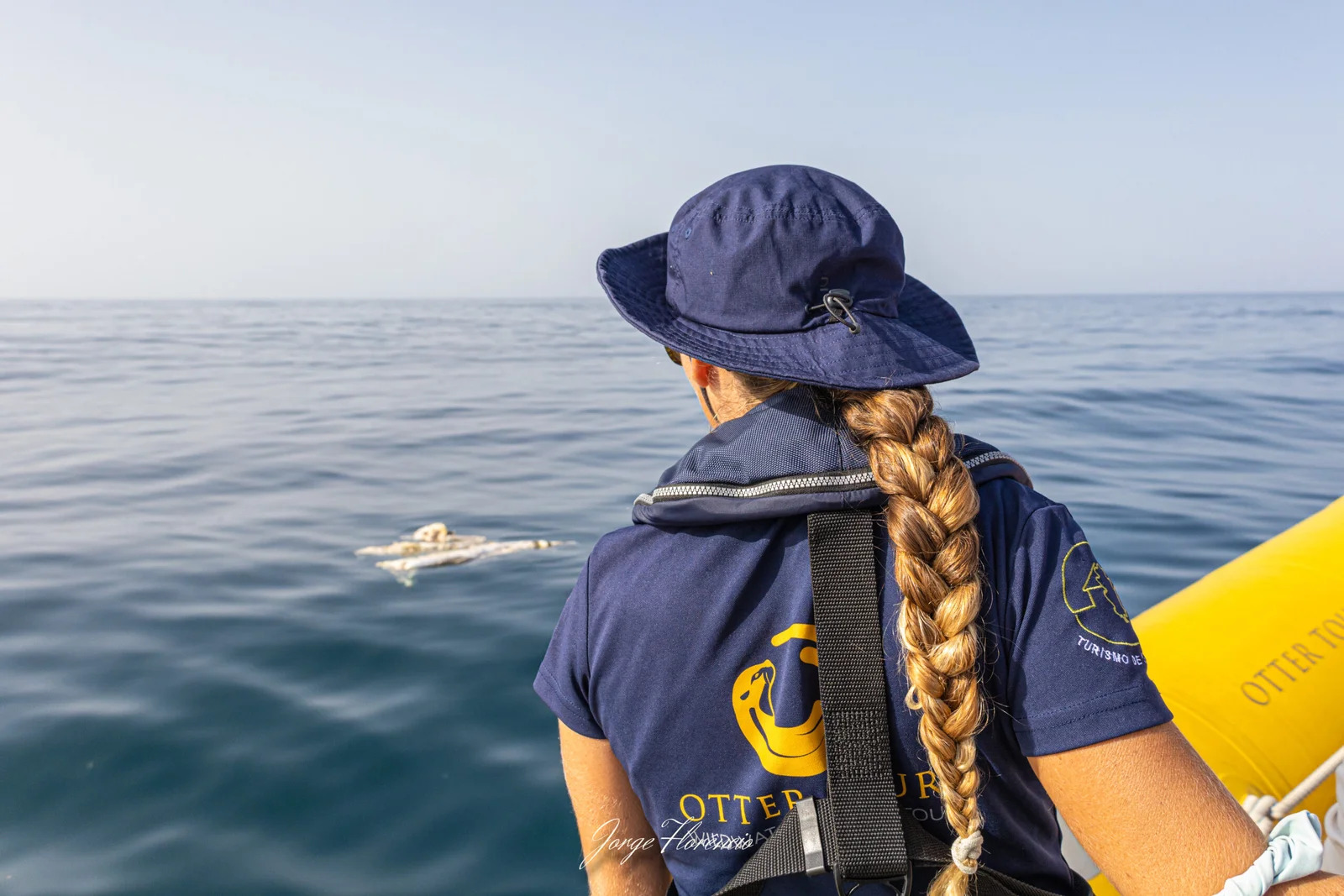
Modern vessels use marine VHF radio to share real-time sighting information between boats, a cooperative system that reduces search time for all operators and minimises vessel disturbance to individual pods. Many tours carry marine biologists or certified wildlife guides who scan the horizon for behavioural cues: surface disturbance from feeding activity, seabirds diving on bait balls pushed upward by dolphins below, and the characteristic dorsal fin break of a moving pod.
High-speed RIB (rigid inflatable boat) vessels are the craft of choice for most Lagos operators. Their shallow draft, low freeboard, and speed of up to 40 knots allow guides to respond quickly to a sighting, reach pods before they move out of range, and position the boat alongside without the engine wash that larger catamarans can generate. The open sides of a RIB also place passengers at near-water level, which intensifies the experience of watching dolphins at close quarters.
What ethical guidelines do Lagos dolphin tours follow?
Portugal is a signatory to the Agreement on the Conservation of Cetaceans in the Black Sea, Mediterranean Sea and Contiguous Atlantic Area (ACCOBAMS), and tour operators licensed by the Instituto Português do Mar e da Atmosfera (IPMA) are required to follow approach protocols designed to minimise stress to wild cetaceans.
In practice, this means Lagos operators maintain a minimum approach distance of 50 metres when dolphins are resting or caring for calves, limit the number of boats alongside any single pod to two at any given time, and never attempt to intercept a pod's travel path. Feeding dolphins from boats is strictly prohibited. Engines are throttled back or cut when animals are present, and passengers are briefed not to enter the water or make sudden loud noises that could startle the pod.
ToursXplorer lists only operators who comply with these standards, and the tour descriptions on the platform specify whether a licensed marine biologist or accredited naturalist guide accompanies the trip. Choosing a compliant operator is not simply an ethical decision: pods that are approached calmly are more likely to remain alongside the vessel, producing better sightings and longer interactions for passengers.
Dolphin Watching & Cave Combination Tours from Lagos
Dolphin & Coastal Scenery Tours from Lagos
Ready to search for dolphins off the Lagos coast? Browse all certified wildlife boat tours on ToursXplorer and book the departure that fits your schedule and group size.
Click herePlanning your Lagos dolphin watching trip: practical details
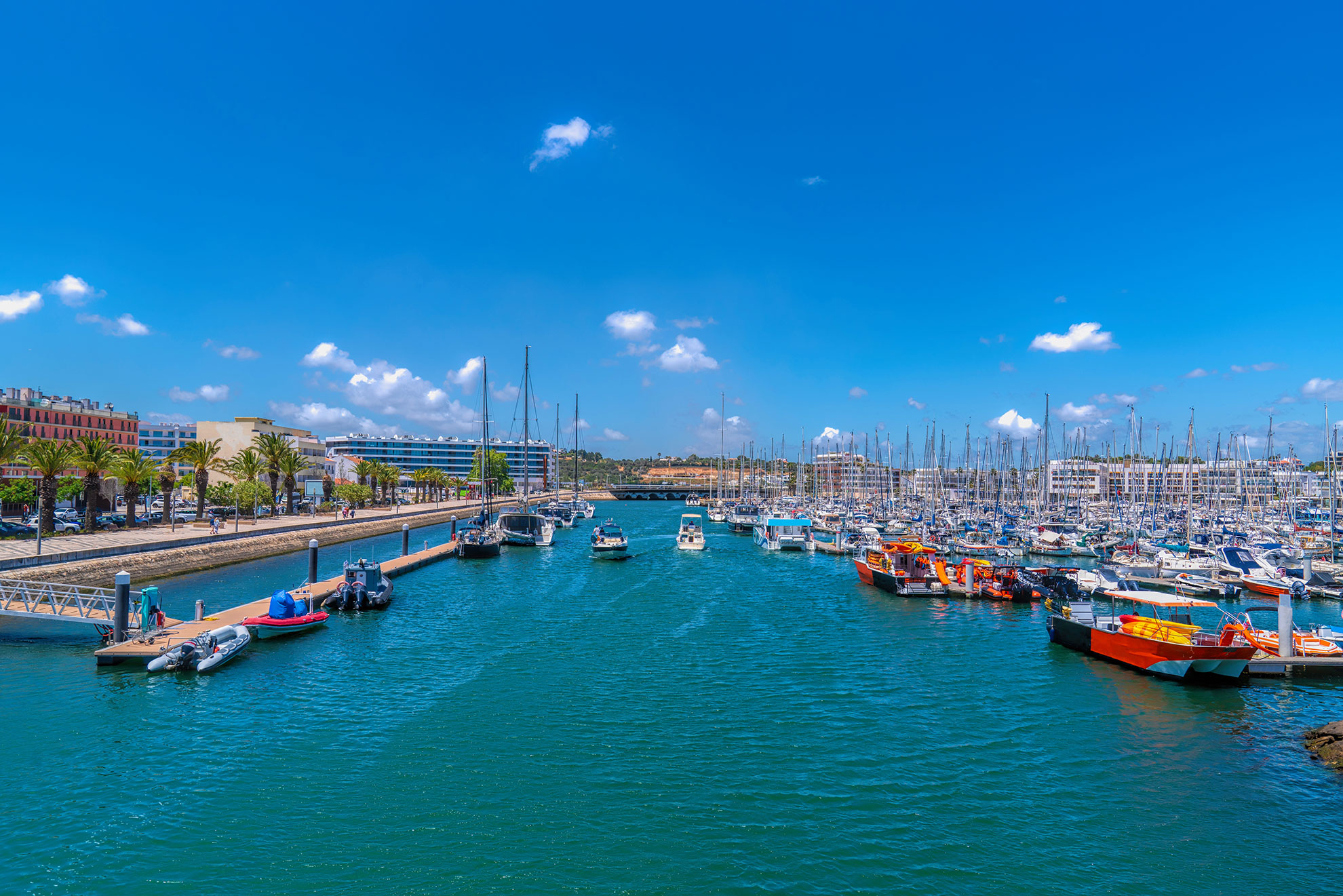
All dolphin watching tours from Lagos depart from Marina de Lagos, located on the western edge of the town centre and accessible on foot from most central accommodation in approximately 10 to 15 minutes. Parking is available at the marina for self-drive visitors. Tour durations range from two hours for short wildlife-only RIB departures to five or six hours for full-day catamaran combinations that include Benagil Cave.
Passengers should bring sunscreen, a light windproof layer (sea breezes on an open RIB feel significantly cooler than air temperature on shore), and a secure bag for cameras and phones. Most operators provide life jackets as standard. Sea sickness is uncommon on catamaran tours but can affect some passengers on smaller RIB vessels in choppy conditions; consulting a pharmacist about preventive medication before departure is advisable for those with a history of motion sickness.
ToursXplorer's search page for Lagos wildlife and dolphin tours allows filtering by vessel type, group size, and departure time, making it straightforward to compare the catamaran and RIB options available from Marina de Lagos in a single view. Booking in advance is recommended during July and August, when popular departures fill several days ahead.
The wider Algarve marine environment
The stretch of Atlantic coast between Lagos and Cabo de São Vicente forms part of the Parque Natural do Sudoeste Alentejano e Costa Vicentina, one of the most ecologically intact coastlines in western Europe. The park encompasses 74,000 hectares of land and marine territory and was designated under European Union Habitats Directive to protect a range of priority species, including all resident cetaceans.
The productivity of these waters is driven by seasonal upwelling of cold, nutrient-rich water from depth along the continental shelf edge west of Sagres. This upwelling supports large populations of sardine (Sardina pilchardus) and anchovy (Engraulis encrasicolus), which in turn sustain the dolphin populations that wildlife tours target. Understanding this food web helps explain why sightings are most reliable when upwelling conditions are active, broadly from spring through early autumn.
Loggerhead sea turtles (Caretta caretta) are also present in Algarve waters and are occasionally observed from dolphin watching boats during summer months, adding a further dimension to the marine wildlife experience without any change to the tour route.
Frequently Asked Questions
The common dolphin (Delphinus delphis) is the species most frequently encountered off Lagos, often in pods of 50 or more individuals. Bottlenose dolphins (Tursiops truncatus) are the second most common species, usually found in smaller coastal groups near Ponta da Piedade. Striped dolphins appear occasionally in summer, and minke whale or orca sightings are rare but on record.
May, June, and September are considered the most reliable months, with sighting rates above 90 percent reported by year-round operators. Sea conditions are generally calmer than winter, water temperatures are rising, and prey fish are abundant close to shore. July and August are also productive but see higher boat traffic. Winter tours operate on suitable days but are less frequent.
Tour durations range from approximately two hours for a dedicated wildlife RIB trip to four to five hours for half-day catamaran options that combine dolphins with Benagil Cave or Ponta da Piedade. All tours depart from Marina de Lagos. Checking individual listings on ToursXplorer will confirm exact departure times and durations for each operator.
Licensed operators in Lagos follow approach guidelines set under ACCOBAMS and regulated by the Instituto Português do Mar e da Atmosfera (IPMA). Rules include a minimum 50-metre approach distance near resting or nursing dolphins, a limit on the number of boats alongside a pod, and a total ban on feeding cetaceans. Only tours from accredited operators with naturalist guides fully comply with these standards.
Yes. Most Lagos dolphin tours accept children, though minimum age and height restrictions vary by vessel type. Catamaran tours are generally more suitable for younger children due to their stability, while open RIB boats provide a more physically dynamic ride. Operators specify age restrictions on their individual booking pages. Life jackets are provided as standard on all licensed departures from Marina de Lagos.
Advance booking is strongly recommended from June through August, when popular departures from Marina de Lagos fill several days ahead. Outside peak season, same-day availability is more common but not guaranteed on smaller-capacity RIB tours. Booking online through a platform such as ToursXplorer confirms your place and allows you to compare vessel types, group sizes, and departure times before committing.