There is a moment that every first-time dolphin watcher remembers. The boat is somewhere between five and fifteen kilometres offshore, the cliffs of the Algarve are a thin golden line on the horizon, and then, without warning, a fin cuts the surface. Then another. Then a whole pod, surfing the bow wave, leaping, spinning, utterly indifferent to the humans watching from above with wide eyes and cameras. It lasts minutes. It feels like hours. And it is, without question, one of the best things you can do on Portugal's southern coast.
This guide covers everything you need to know before you book: which species you might see, where to go, when to go, how to choose a responsible operator, and what to expect on the water.
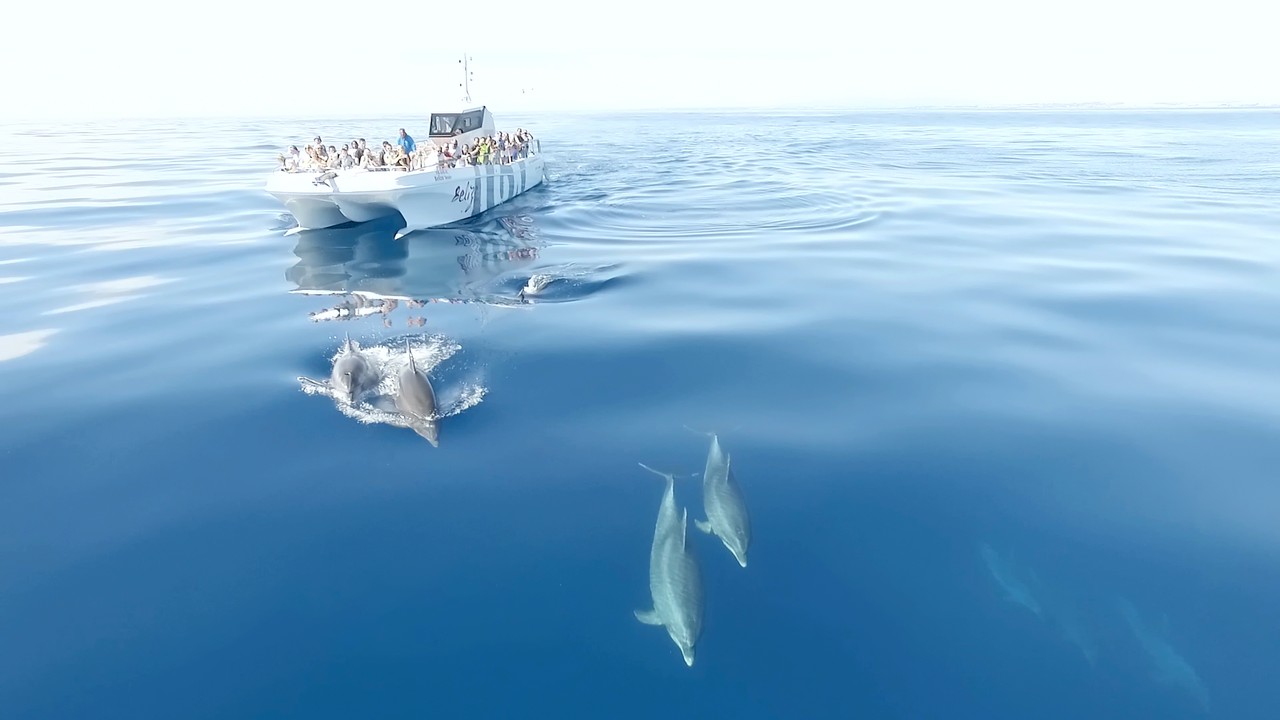
In the southern Algarve region, bottlenose and common dolphins are most regularly observed, but striped and Risso's dolphins, minke and fin whales can also be seen. Each species has its own personality on the water.
Common Dolphin is the most frequently encountered species and the one most likely to approach your boat. Recognisable by its distinctive hourglass pattern of yellow, grey, and white on its flanks, the common dolphin is fast, acrobatic, and social. Pods of dozens, sometimes hundreds, are not unusual in productive feeding conditions.
Bottlenose Dolphin is the larger, more familiar species, the one most people picture when they think of dolphins. Recognised by their grey-brown backs and white bellies, bottlenose dolphins often swim close to the Portuguese shoreline and are a regular sight off the Algarve coast. They are more deliberate in their movements than common dolphins but equally willing to interact with boats.
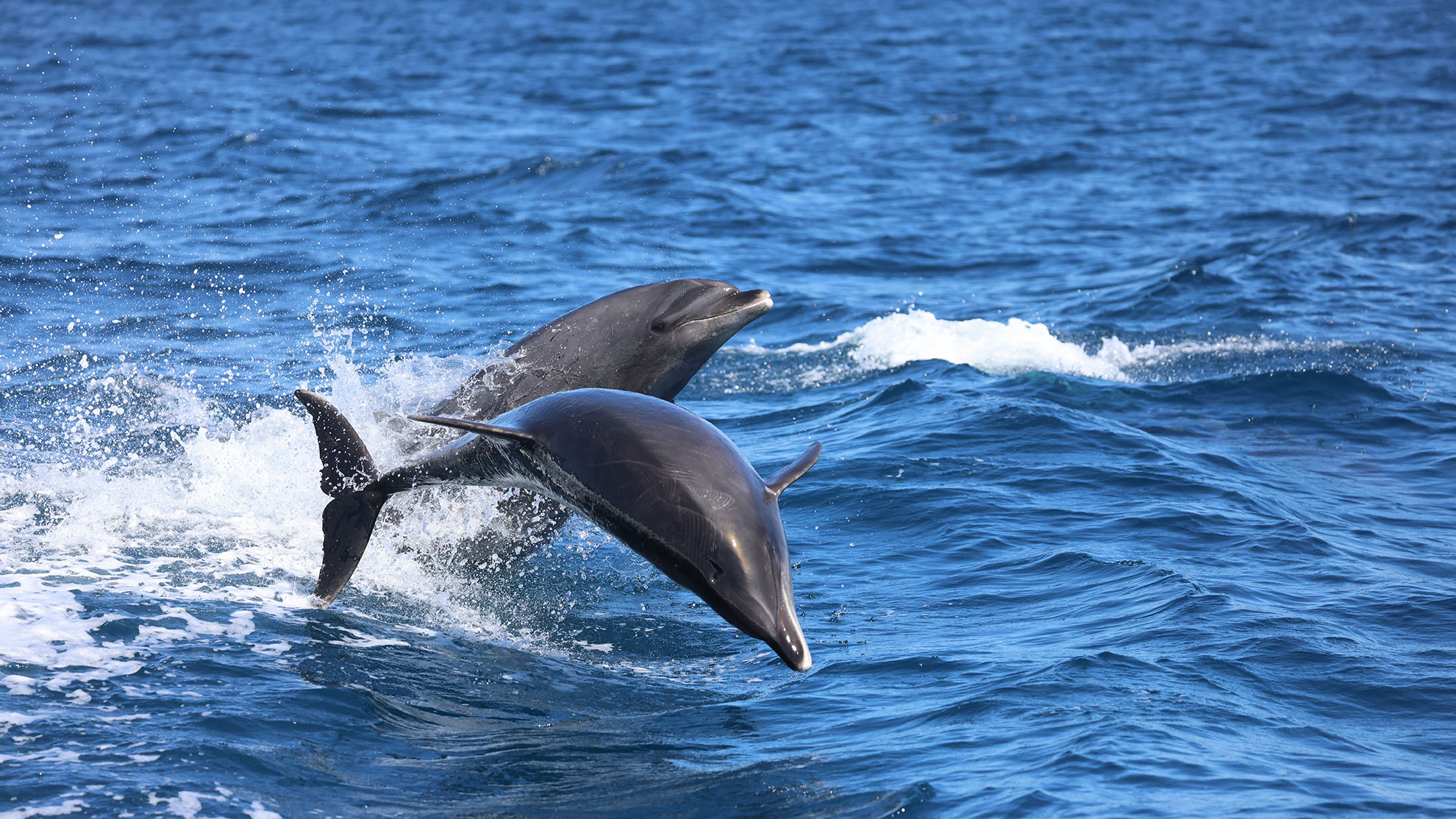
Striped Dolphin is sleeker and faster, with a distinctive dark stripe running from eye to tail. Often seen in deeper offshore waters, striped dolphins are less predictable but spectacular when encountered at speed.
Risso's Dolphin is the most distinctive of the four regular species. Pale grey and heavily scarred from interactions with other dolphins and squid, Risso's dolphins favour deeper water and tend to be calmer at the surface. A specialist find rather than an everyday sighting.
In certain seasons it is also possible to observe orcas during their migratory passage along the Algarve coast. At other times of the year, different species of whales may also appear, including the fin whale, the minke whale, and Bryde's whale, making each trip unique and scientifically enriching.
The Algarve coastline stretches over 150 kilometres and dolphin watching tours depart from multiple marinas and harbours. Each location has its own character.
Lagos and Sagres anchor the western end of the coast and offer access to some of the richest marine waters in Portugal. The confluence of Atlantic currents around Cabo de São Vicente creates productive feeding grounds that attract large pods year-round. Seafaris was actually the first company in the Algarve to offer dolphin watching tours, with a sighting rate on tours of over 95%. Bluefleet offers a one hour and 45 minute boat trip with small boats and a maximum of four tourists per boat, departing from the marina of Lagos.
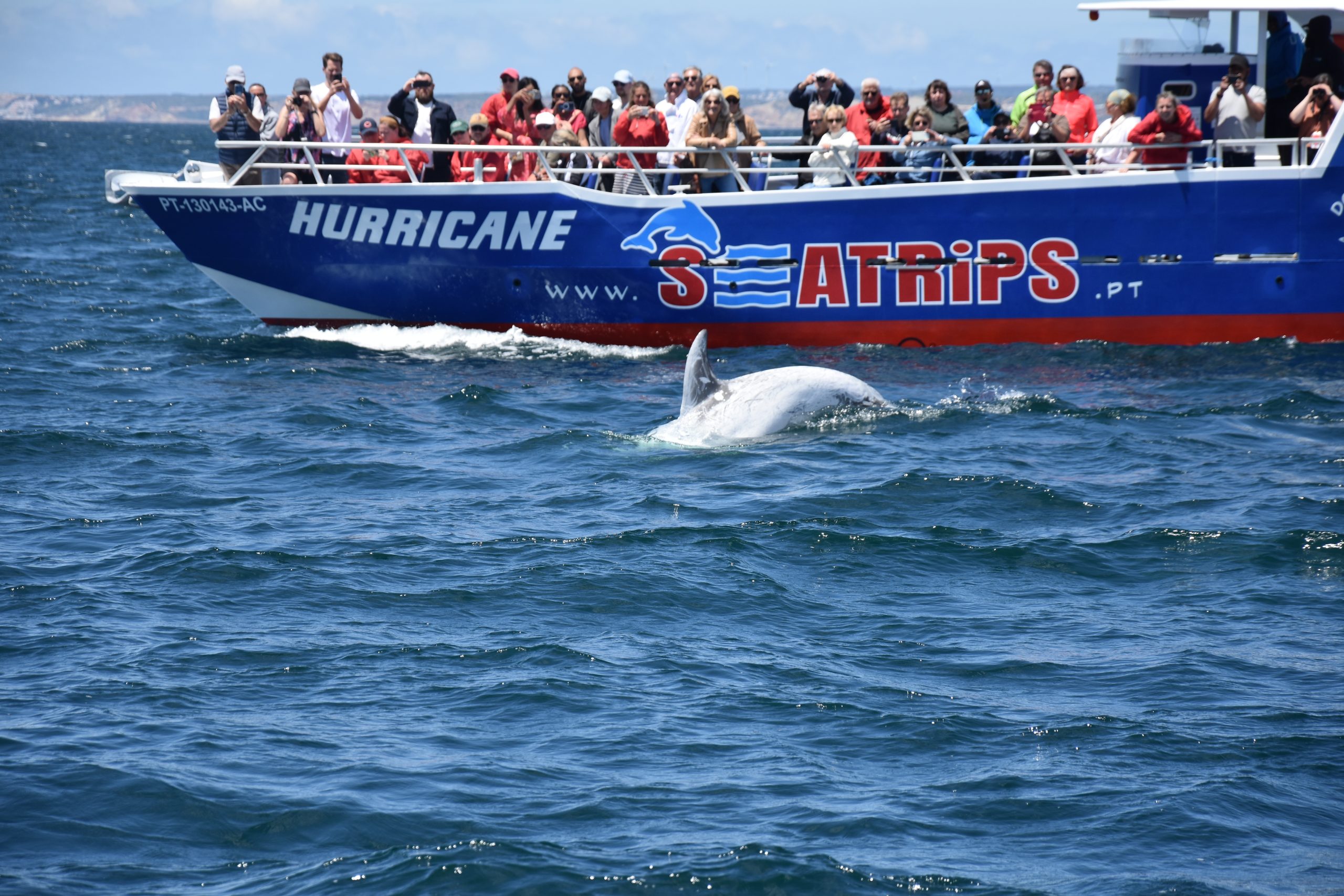
Portimão and Ferragudo sit in the centre of the coast and are home to some of the most respected operators in the region. The best tours departing from this stretch of coast typically include a marine biologist on board, a post-trip presentation about the species encountered, and a clear refund or rescheduling policy if no dolphins are sighted. This combination of scientific rigour and visitor transparency is what separates a genuinely responsible experience from a standard boat trip, and Portimão has become known for attracting operators who take that distinction seriously.
Vilamoura and Albufeira are the busiest departure points, with the highest volume of tours and the widest range of options. The confluence of Atlantic Ocean currents and the Mediterranean Sea's warmer waters creates a rich feeding ground for fish, attracting dolphins in large numbers to these central waters. Tours here often combine dolphin watching with visits to the famous sea caves, making for a longer and more varied day on the water.
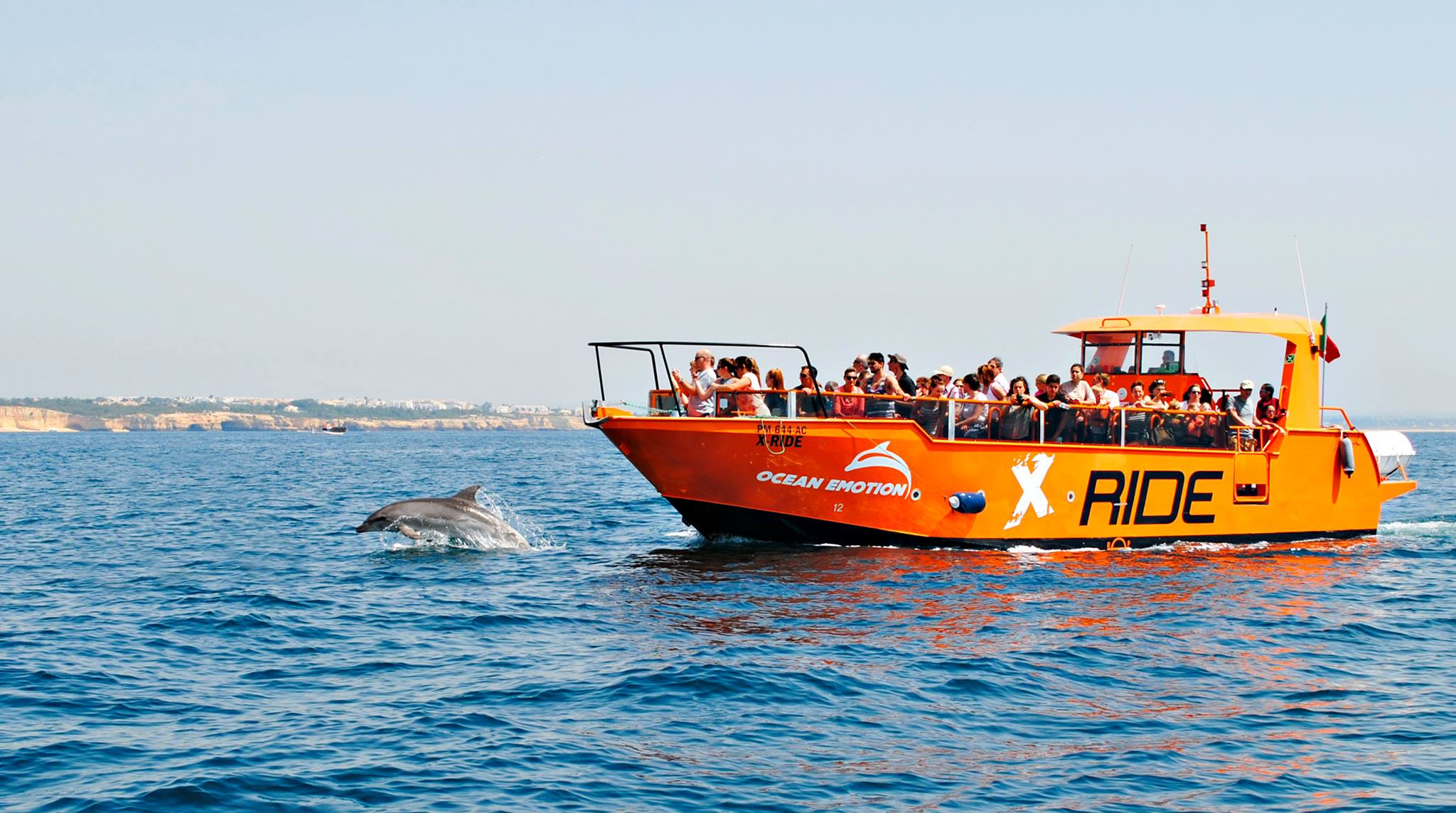
Faro and the Ria Formosa offer a different kind of experience at the eastern end of the coast. The coastal waters of the Ria Formosa, especially in the Faro area, constitute the natural habitat of bottlenose dolphins, common dolphins, and striped dolphins. Some operators here connect tourism with science, gathering valuable data for marine research on every trip. Their success rate for dolphin sightings is around 94 to 95%.
Dolphins of different species can be spotted year-round in the Algarve, but the best time for dolphin watching and the highest sighting rates are between April and October. During these months, sea conditions are ideal and the chances of sightings are higher.
Spring, from April to June, is particularly rewarding. The sea is calm, the light is extraordinary in the early morning, and dolphin pods are often large and active as feeding conditions improve. The coast is also less crowded than in summer, which means smaller groups on the boats and a more intimate experience.
Summer, from July to September, brings the warmest weather and the calmest seas, making it the most comfortable time for families with young children and for anyone prone to seasickness. Book early as tours fill quickly in July and August.
Autumn, from September to October, is an underrated season for dolphin watching. The summer tourists have gone, the sea remains warm, and the pods are often at their most active as fish populations peak before winter. The best time to go is usually early in the morning when the dolphins are most active, with most operators departing at around 9am.
Winter tours are available and the Algarve's mild climate means conditions are often better than you might expect. Sighting rates are slightly lower, but the experience of being almost alone on the open sea in December or January has its own particular quality.
Not all dolphin watching experiences are equal. The difference between a responsible operator and a careless one matters both to the dolphins and to the quality of your experience.
The conservation of dolphins and their habitat is essential for their long-term survival. Human activities such as pollution, habitat degradation, and disturbance from boats pose significant threats to these marine mammals. A good operator understands this and builds it into every decision they make on the water.
When choosing a tour, look for these markers of responsible practice. The operator should be licensed for cetacean observation activities by the Portuguese maritime authority. Boats should maintain a respectful distance from pods and never chase or intercept dolphins. Group sizes should be small, ideally under 12 passengers per vessel. A marine biologist or trained naturalist should be on board. The operator should have a clear policy on what happens if dolphins are not encountered.
The best operators will not overcrowd dolphins even when there are too many boats nearby, giving visitors the sense of being with a responsible company that genuinely cares about the marine life. That commitment to the animals is also what produces the best sightings. Dolphins are curious creatures and approach boats on their own terms when they feel safe.
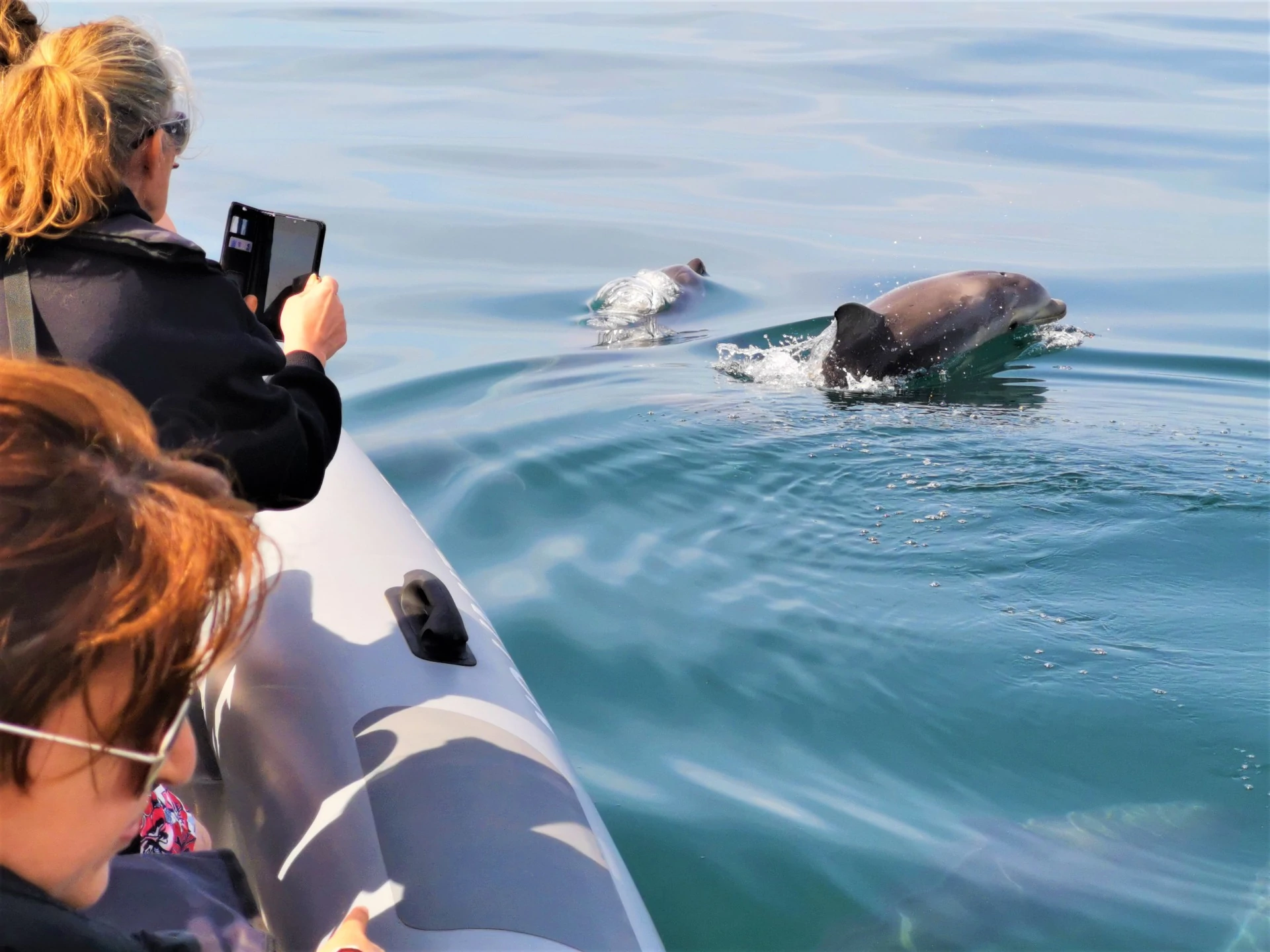
Tours usually last between one and three hours and cost around €25 to €45 per adult, with discounts for children. Safety equipment such as life jackets is always provided, and most operators give a short briefing before departure. Families, couples, and solo travellers all enjoy these tours, whether on a thrilling RIB close to the water or a larger catamaran with shade and seating.
A few practical details make the difference between a comfortable outing and an uncomfortable one. Bring a light windproof layer even on warm days: the temperature on the open water is consistently cooler than on shore. Apply sun protection before boarding, as UV exposure is higher at sea than on the beach. If you are prone to motion sickness, take medication the night before rather than the morning of the trip. Bring a camera with a fast shutter speed if possible: dolphins move quickly and standard smartphone cameras often struggle to capture them in motion.
Do not be disappointed if the sea looks flat and empty for the first 20 minutes. Finding dolphins is a skill built over years of local knowledge. Trust the crew and stay patient. When the pod arrives, you will know.
It is very important to be aware that a dolphin watching tour is 100% natural and not a zoo. Therefore it is never possible to guarantee that cetaceans will be sighted, but experienced operators will do their best to find them. The honest operators are upfront about this. The ones who promise guaranteed sightings with no conditions are the ones to treat with caution.
What the best operators can promise is local expertise, a genuine commitment to the animals, and an experience that is worth taking whether or not the dolphins appear. On a clear Algarve morning, with the coast behind you and the Atlantic ahead, the journey is already half the experience.
Looking for dolphin watching tours along the Algarve coast? Browse our selection of responsible marine wildlife experiences from Sagres to Faro, with certified operators and marine biologists on board.