




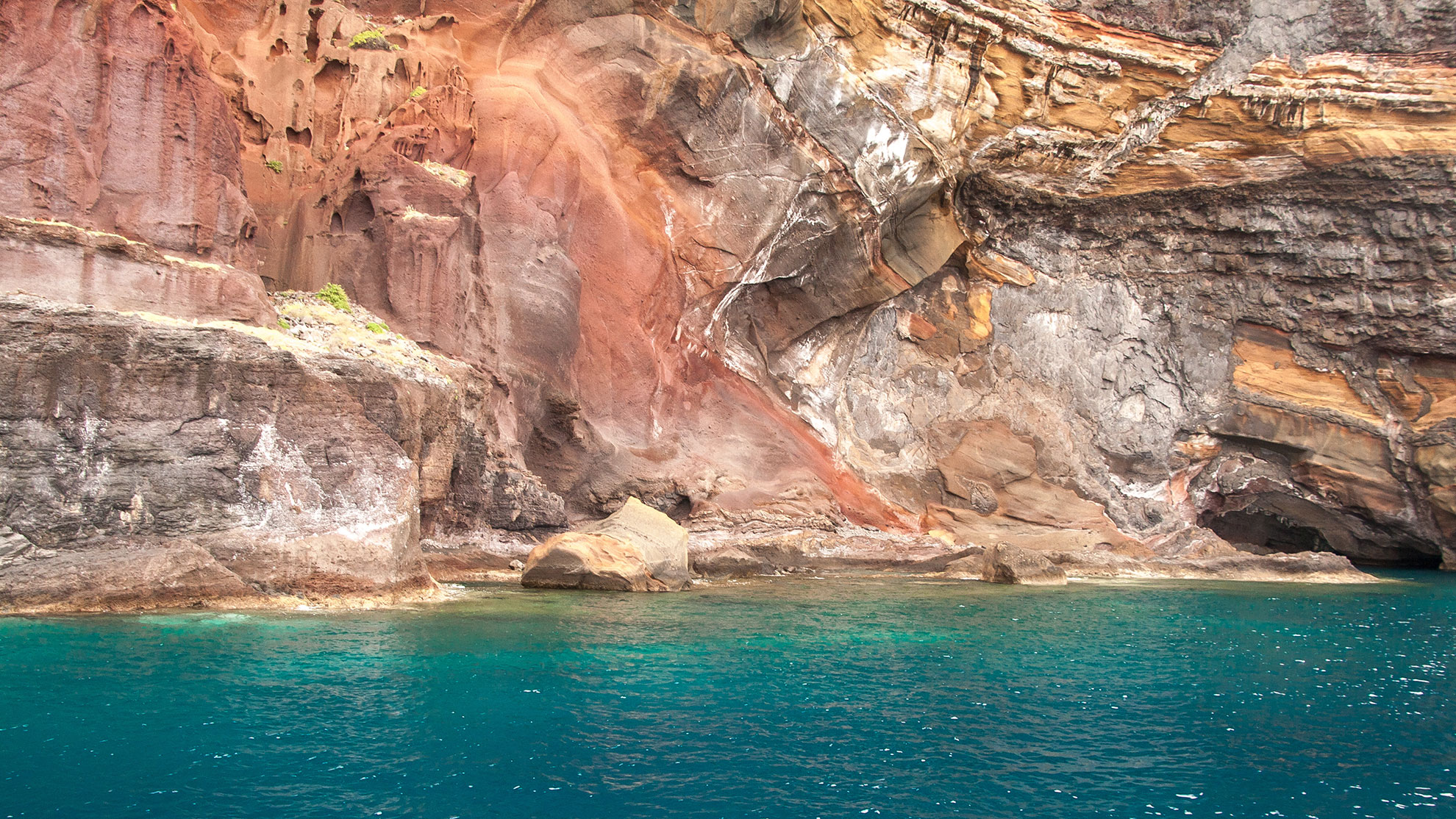
The volcanic ramparts of the Desertas Islands — a Nature Reserve sealed from the modern world for decades.
The Forbidden Archipelago
Guardians of the Atlantic: A Journey to the Untamed Desertas Islands
Where prehistoric silence meets the deep blue, and the rarest seal on Earth still holds its ground against extinction.
Roughly 26 kilometres southeast of Funchal, three volcanic sentinels rise from the Atlantic without apology. The Desertas Islands — Deserta Grande, Bugio, and Ilhéu Chão — are not a destination in the conventional sense. They are a living testament to what coastlines looked like long before harbours, boardwalks, and sunloungers claimed every available metre of rock. Visiting them is less a holiday excursion and more a quiet act of pilgrimage.
Designated a Nature Reserve under Portuguese law and forming part of the Madeira Natural Park, the Desertas are closed to casual visitors. Access is strictly regulated, with only a handful of authorised guided boats permitted to approach the shores on any given day. The limitation is intentional: this is one of the most biodiverse marine corridors in the North Atlantic, and the fragility of its ecosystems demands a level of restraint that few modern travel experiences still require.
The islands stretch across approximately 14 kilometres of coastline, dominated by sheer escarpments of dark basalt — walls of geological memory carved by millennia of Atlantic swell. Their interiors are arid, wind-scoured, and almost entirely uninhabited, save for a small team of conservation rangers stationed at a remote biological monitoring post. The human footprint here is deliberate, minimal, and fiercely protected.
"The Desertas do not welcome you — they tolerate your presence. And that restraint, that indifference to tourism, is precisely what makes them extraordinary."
The Crossing: Forty Kilometres of Living Ocean
The journey from Funchal's marina typically takes between 90 minutes and two hours each way, depending on sea conditions. This is not dead time. The deep-water channel between Madeira and the Desertas sits within a migratory corridor used by sperm whales, bottlenose dolphins, loggerhead sea turtles, and, during certain seasons, fin whales. Most full-day tours slow the vessel deliberately in these waters, giving passengers the chance to observe pelagic wildlife in conditions that few tourist circuits can offer — open ocean, no crowd, no noise pollution from a nearby road.
The approach to the islands is its own event. As the dark outlines of the cliffs emerge from the Atlantic haze, the scale of the place becomes clear. Deserta Grande, the largest of the three, presents an unbroken face of reddish-black basalt that drops almost vertically into the sea. There are no beaches visible from the water, no coves, no concessions to arrival. The maritime bastion simply stands there, indifferent to the open ocean on all sides.
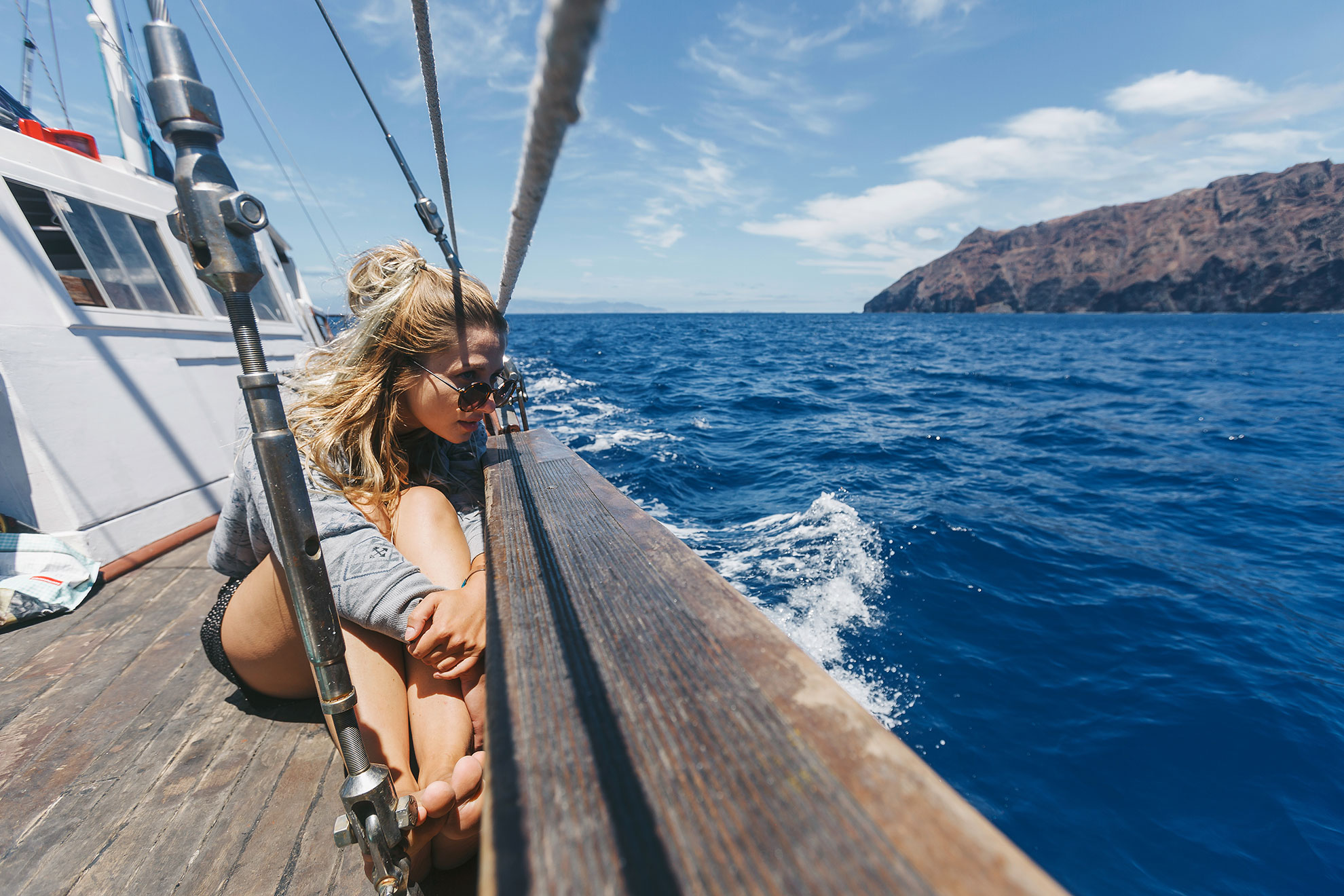
The crossing from Funchal passes through one of the Atlantic's richest cetacean corridors — dolphin sightings are common before the islands even come into view.
Featured Tour — Desertas Islands
The Desertas Islands are one of the few places in European waters where access is genuinely limited. If you are planning to visit during the peak summer months, checking availability early is worth the effort.
See all Desertas Islands tours →The Last Refuge: Monachus monachus
The central reason the Desertas remain under such strict protection is not the landscape itself — remarkable as it is — but a single animal. The Mediterranean Monk Seal (Monachus monachus) is among the most endangered marine mammals on the planet. Global estimates place the surviving population at fewer than 800 individuals, with the Desertas colony representing one of the most significant — and closely monitored — breeding groups in the world.
The seals use the sea caves at the base of Deserta Grande's cliffs as pupping and resting sites. These subterranean grottos, accessible only from the water at low swell, are off-limits to visitors entirely. Observation from a regulated distance is possible from the boat, and on certain days, individuals can be seen hauled out on the narrow rock ledges just above the waterline. The sight of a monk seal — greyish-brown, barrel-bodied, unhurried — resting in the shadow of those dark cliffs is one that tends to recalibrate a person's sense of what wildlife actually looks like outside of a zoo or a nature documentary.
"Standing at the bow with the cliffs behind you and a monk seal resting thirty metres away, it is genuinely difficult to remember that the twenty-first century exists."
Obsidian Cliffs and Endemic Life: The Ecosystem Beyond the Seal
The terrestrial ecology of the Desertas is equally singular. The steep cliff faces host nesting colonies of Cory's shearwaters, Bulwer's petrels, and the endemic Madeiran storm petrel — seabirds that have used these ledges as breeding grounds for thousands of years and now find in the Desertas one of the last Atlantic refuges where ground predators remain absent. The sound at dusk, when the shearwater colony returns from the open ocean, is layered and ancient.
Perhaps the most unexpected resident of the islands is the Desertas wolf spider — commonly referred to as the Desertas tarantula (Hogna ingens). This large, ground-dwelling spider is found nowhere else on Earth. Classified as critically endangered, it persists in the dry interior grasslands of Deserta Grande, making it a genuine endemic species in the strictest biological sense. It is not visible from the boat, and approaching the interior on foot requires special conservation permits, but its existence here underlines a broader point: the Desertas are not simply scenic. They are genetically irreplaceable.
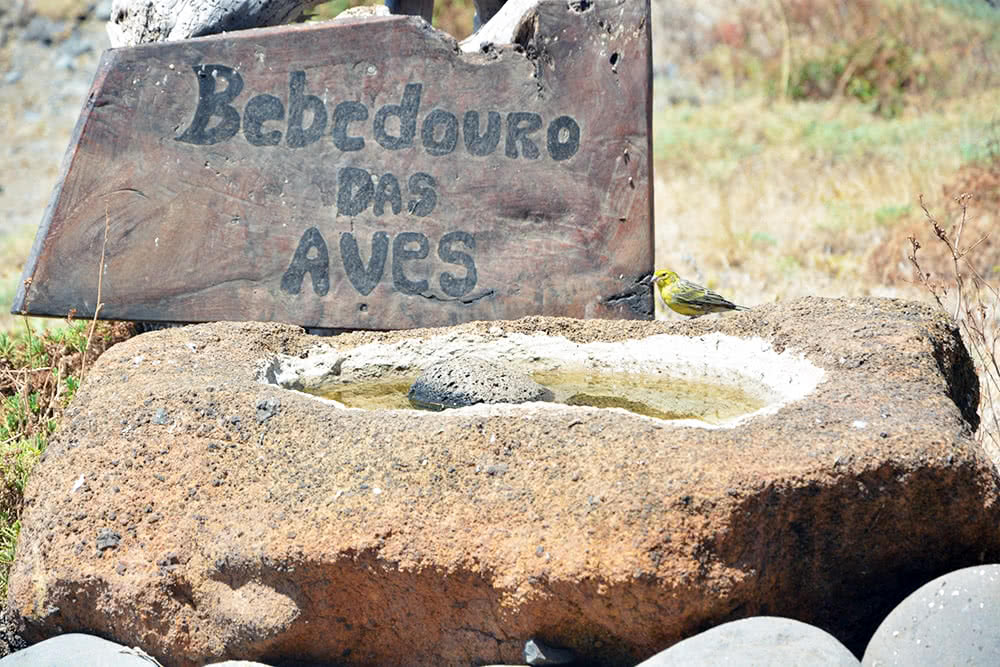
A vital oasis in the arid landscape of Madeira's Desertas Islands: a stone birdbath providing a sanctuary for local wildlife.
Responsible Access: Why the Limits Matter
The strict visitor limits enforced in the Desertas are not bureaucratic inconvenience — they are the mechanism by which the ecosystem continues to function. The monk seal colony's slow but measurable recovery over the past three decades is directly attributable to the removal of human disturbance that began with the Nature Reserve designation. Visitor quotas ensure that tourism revenue can coexist with ecological stability without one undermining the other.
Authorised tour operators work within these quotas and are required to follow approach protocols near sensitive areas. Guides brief passengers on behaviour before the islands come into view: no swimming near the caves, no loud noise near the cliff base, engines cut or reduced to idle during wildlife observation. The constraints, once explained in context, tend to feel less like restrictions and more like the basic requirements of being a guest somewhere that does not need you.
Visits to the Desertas Islands operate on a limited quota basis. ToursXplorer lists authorised full-day tours departing from Funchal that include wildlife crossings, guided cliff observation, and snorkelling in reserve waters.
Browse available departures →Frequently Asked Questions
How far are the Desertas Islands from Funchal?
The Desertas Islands lie approximately 26 kilometres southeast of Funchal. By boat, the crossing takes between 90 minutes and two hours depending on sea conditions and vessel speed. Most full-day tours depart from the Funchal marina in the early morning.
Can I visit the Desertas Islands independently?
No. The Desertas are a Nature Reserve and access is regulated. Independent landings are not permitted. Visits must be conducted with an authorised tour operator that holds the required permits from the Madeira Natural Park authority.
Is it possible to see Mediterranean Monk Seals on a boat tour?
Sightings are not guaranteed, as the seals move freely and often rest inside inaccessible sea caves. However, individuals are regularly spotted hauled out on rock ledges near Deserta Grande, and experienced guides know the most likely observation points along the coastline.
What wildlife might be seen during the boat crossing from Funchal?
The deep-water channel between Madeira and the Desertas is a productive pelagic habitat. Bottlenose dolphins, common dolphins, loggerhead sea turtles, and sperm whales have all been recorded on this crossing. Fin whale sightings occur seasonally, particularly in spring.
What time of year is best to visit the Desertas Islands?
Tours operate year-round, though sea conditions are most favourable between April and October. Summer months offer the calmest crossings but also the most competition for limited permit slots. Spring visits — particularly May and June — tend to coincide with peak seabird nesting activity on the cliffs.
Are the Desertas Islands suitable for snorkelling?
Yes. Authorised tours typically include a snorkelling stop in the reserve's protected waters, which are clear, cold, and largely undisturbed by boat traffic. The seabed around the islands hosts sea urchins, moray eels, and various Atlantic reef species in conditions rarely found this close to an inhabited archipelago.