




Dolphin Watching from Lagos: What to Expect on the Water
From resident bottlenose pods to breaching common dolphins, the Atlantic off the Algarve coast offers genuine wildlife encounters within minutes of the marina.
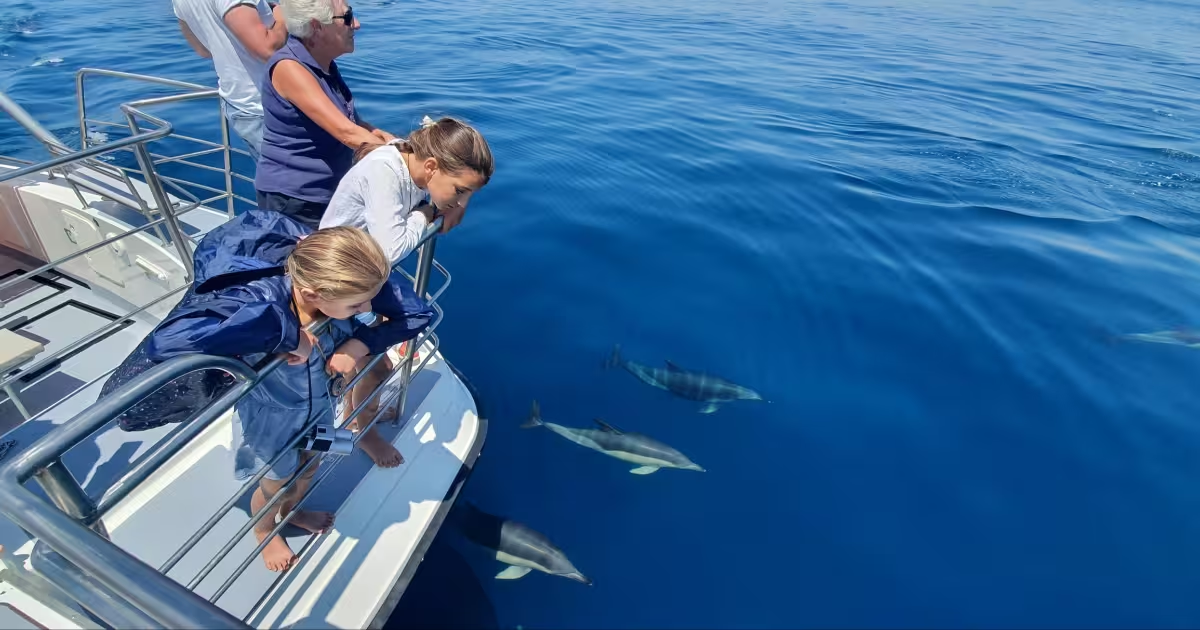
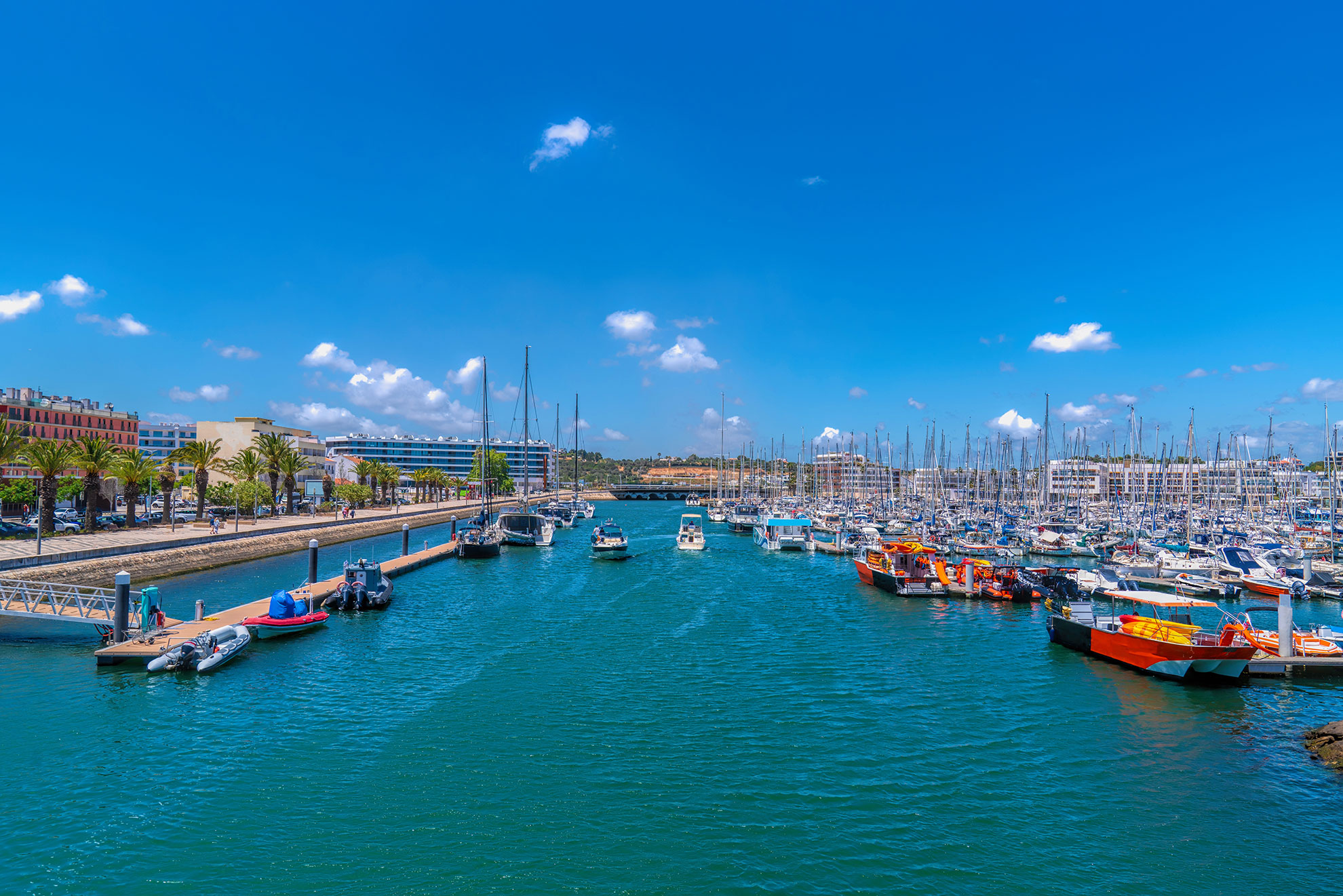
The waters off Lagos, in Portugal's Algarve region, sit within one of the eastern Atlantic's most active dolphin corridors. Two resident species, the common dolphin (Delphinus delphis) and the bottlenose dolphin (Tursiops truncatus), are sighted on the majority of licensed excursions year-round. Trips depart from Marina de Lagos and typically reach the open ocean within 10 to 15 minutes, placing passengers alongside wild pods in their natural habitat.
Which dolphin species can you see off Lagos?
The common dolphin is the most frequently encountered species in the waters west of Lagos. Smaller and more acrobatic than its bottlenose counterpart, it typically travels in large pods of 20 to over 200 individuals, and is well known for bow-riding alongside vessels at speed. Adults reach approximately 1.7 to 2.4 metres in length and are identified by their distinctive hourglass flank pattern of yellow and grey.
The bottlenose dolphin, by contrast, tends to form tighter family groups of 5 to 30 individuals. Measuring up to 3.8 metres, bottlenose dolphins are more commonly observed close to the coastal shelf, where they hunt mullet, mackerel, and squid. Their curiosity around boats is well documented, and interactions where animals approach on their own initiative are among the most memorable moments a passenger can experience.
On rarer occasions, operators have logged sightings of striped dolphins (Stenella coeruleoalba) further offshore, and seasonal visitors such as minke whales (Balaenoptera acutorostrata) have been recorded in the deeper Atlantic channels south and west of the cape. Orca (Orcinus orca) sightings, while uncommon, have been reported in the Strait of Gibraltar corridor, which lies approximately 150 kilometres to the east.
"Common dolphins off the Algarve can reach speeds of 60 kilometres per hour in short bursts, a fact that surprises most passengers when they first see a pod overtake the boat." — ToursXplorer Editorial Team
The biodiversity of this stretch of coast reflects the confluence of Atlantic currents and the upwelling system along the Portuguese continental shelf, which brings nutrient-rich cold water to the surface and sustains the fish stocks on which these species depend.
What is the best month for dolphin watching in Lagos?
Dolphin watching in Lagos is possible throughout the year, and this is one of its practical advantages over destinations further north in Europe. However, sighting rates and sea conditions vary across seasons. Late spring through early autumn, roughly May to October, combines the highest frequency of calm sea days with elevated dolphin activity near the surface.
July and August offer the most settled Atlantic swell, with Beaufort scale readings frequently at 2 or below, meaning comfortable conditions for passengers who are sensitive to motion on the water. Water temperatures in this period range from 19 to 22 degrees Celsius, and the extended daylight hours allow for both morning and afternoon departures from Marina de Lagos.
September and October are considered by many local operators to be the optimal months in terms of the balance between sighting quality and crowd levels. Pod sizes of common dolphins tend to be large in this period, and the light in the late afternoon produces ideal conditions for photography around Ponta da Piedade.
Winter tours between November and March do operate, and bottlenose dolphins in particular remain active close to the coast throughout the colder months. However, operators may cancel departures more frequently due to Atlantic swells, and advance booking with flexible cancellation is advisable during this window.
"September often delivers the largest common dolphin aggregations we record in a calendar year, with pods sometimes extending across a kilometre of ocean surface." — Local marine biologist, Lagos-based operator
How do ethical dolphin watching tours operate in Lagos?
Since 2008, dolphin watching in Portugal has been regulated under national legislation (Portaria No. 1038/2009) that sets minimum approach distances, speed restrictions near animals, and time limits on vessel proximity to pods. Licensed operators in Lagos are required to adhere to these guidelines, and vessels must carry documentation of compliance on board.
In practice, this means captains cut engine speed when within 50 metres of a pod and do not pursue dolphins that are displaying avoidance behaviour. The SEAPRO protocol, adopted by several Algarve operators, adds a further layer of self-regulation, including restrictions on how many boats can be present near a single group simultaneously.
Many excursions now include a qualified marine biologist or trained naturalist on board. These guides identify individual animals where possible, explain social behaviour such as synchronised breathing or play, and collect opportunistic sighting data that contributes to long-term population monitoring in the region. The information gathered feeds into the Algarve Dolphin Project and similar research initiatives that have been active since the early 2000s.
ToursXplorer lists only operators whose vessels hold current licences issued by the Instituto Português do Mar e da Atmosfera (IPMA), Portugal's national meteorological and maritime authority. Passengers can confirm licensing status directly with the operator before departure from the marina.
What is the boat ride like, and how long does a trip take?
Most dolphin watching trips from Lagos use either semi-rigid inflatable boats (RIBs) or catamarans, each with different characteristics. RIB vessels carry between 8 and 12 passengers, are lower to the waterline, and can reach speeds of up to 45 knots, which makes them effective at covering the open water quickly to locate pods. The ride is physically dynamic, and passengers are typically asked to sit astride bench-style seating and hold grip handles.
Catamaran tours are slower but significantly more stable, making them the preferred option for families with young children or passengers who are prone to seasickness. Catamarans also allow for a combined itinerary that includes the Benagil sea cave, located approximately 30 kilometres east of Lagos along the Algarve coastline, adding geological sightseeing to the wildlife element.
A standard half-day dolphin watching excursion lasts between 2.5 and 3.5 hours from departure at Marina de Lagos. Full-day combinations that include the Benagil cave can run to 5 or 6 hours on the water. Operators recommend passengers eat a light meal beforehand and bring sunscreen, a windproof layer, and a hat regardless of the air temperature on shore.
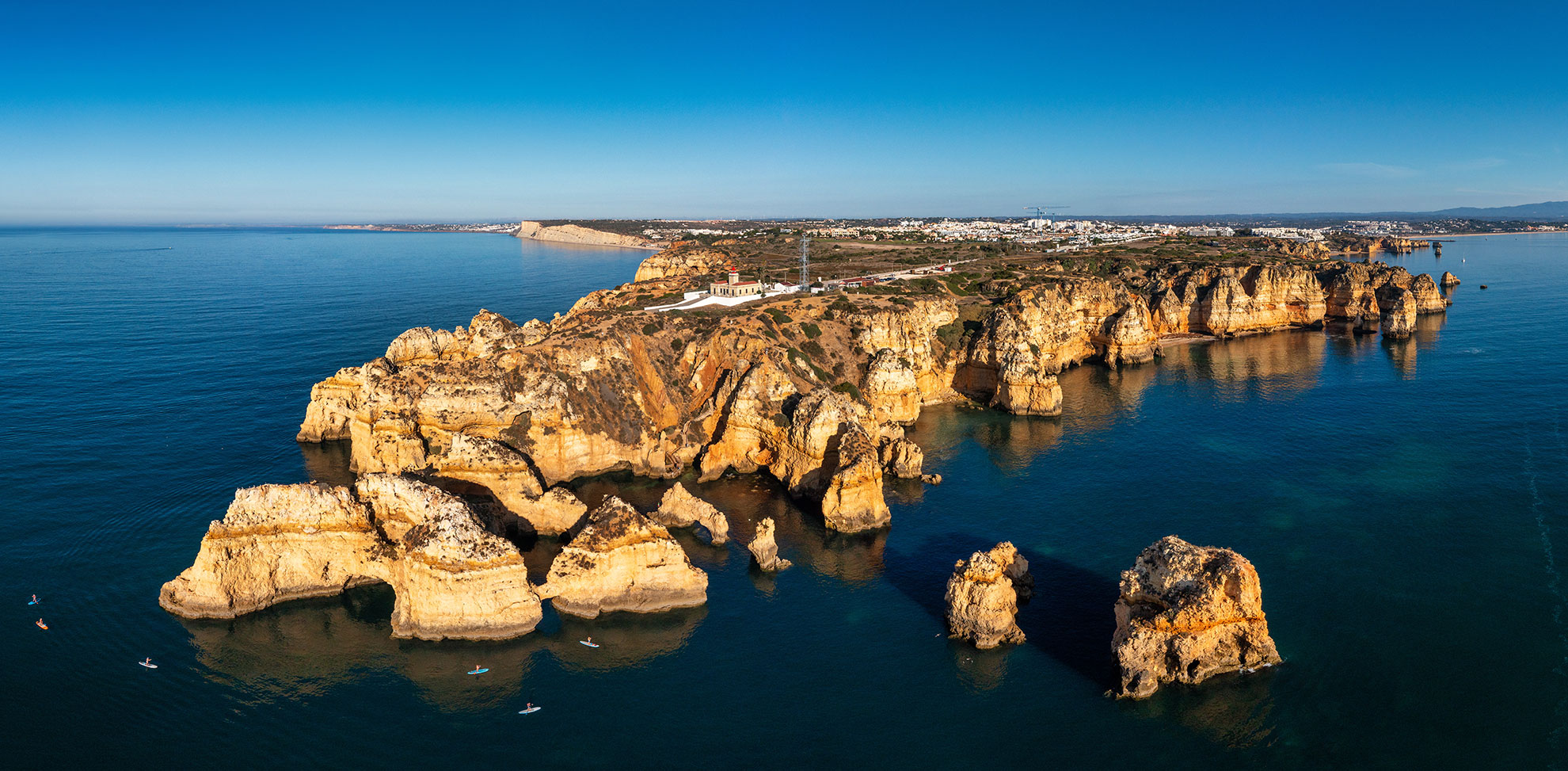
On the return journey, most routes pass below the Ponta da Piedade headland, a sequence of ochre limestone sea stacks and arched grottos that extends approximately 2 kilometres south of the historic centre of Lagos. This final section of the route provides a natural coastal panorama that is distinct from anything visible from the clifftop walking path above.
Dolphin Watching and Coastal Tours from Lagos
Ready to search for wild dolphins off the Algarve coast? Browse all licensed dolphin watching and marine wildlife tours departing from Lagos on ToursXplorer and secure your place on the water for 2026.
Click hereHow to Choose the Right Lagos Dolphin Tour for Your Group
The choice between a RIB boat and a catamaran largely determines the character of the experience. RIB tours are faster and more physically engaging, making them popular with solo travellers and small groups of adults who want to cover more open water. Catamarans offer more deck space, shade, and stability, which is a meaningful difference for groups that include children under 12 or passengers who are unfamiliar with ocean travel.
For travellers whose primary goal is wildlife observation rather than sightseeing, the dedicated dolphin watching boat trip without the Benagil cave addition allows the operator to spend the full duration of the excursion in the marine corridor where pods are most consistently found. The cave adds approximately 45 minutes to an hour of transit time that is not focused on wildlife.
Photographers should note that light conditions are generally better on morning departures before 10:00, when the sun angle is lower and the water surface is calmer. Afternoon departures offer warmer tones closer to the Ponta da Piedade return section. A wide-angle zoom lens in the 18-55mm range and a fast shutter speed of at least 1/1000 second are standard recommendations for capturing dolphins in motion.
ToursXplorer organises all listed Lagos tours by category and departure time, making it straightforward to filter by group size, duration, and whether a marine biologist guide is included. All operators on the platform hold current licences from IPMA, and cancellation policies are displayed clearly before booking confirmation.
Getting to Marina de Lagos and What to Bring
Marina de Lagos is located at the mouth of the Bensafrim river, on the western edge of the historic town centre of Lagos, in the municipality of Lagos in the Faro District. It is accessible on foot from the old town in approximately 10 minutes. Paid car parking is available at Parque de Estacionamento da Marina, adjacent to the departure pontoons.
Travellers arriving from Faro can reach Lagos by train on the Linha do Algarve, a journey of approximately 1 hour and 40 minutes from Faro Intermodal station. The Lagos train station is roughly 15 minutes on foot from the marina. From Lisbon, the journey by road via the A2 motorway covers approximately 280 kilometres and takes around 2 hours and 45 minutes by car.
Standard packing for a dolphin watching excursion in Lagos should include: high-factor sunscreen (the sea reflection intensifies UV exposure significantly), a waterproof or windproof layer even in summer, a hat with a secure fit, non-slip footwear, and a dry bag for cameras and phones on RIB tours where spray is a regular feature of the ride. Operators provide life jackets on all vessels as a legal requirement under Portuguese maritime law.
Frequently Asked Questions
The two most commonly sighted species are the common dolphin (Delphinus delphis) and the bottlenose dolphin (Tursiops truncatus). Common dolphins typically appear in large pods of 20 to over 200 individuals, while bottlenose dolphins form smaller family groups closer to the coast. Striped dolphins and occasional minke whales have also been recorded in the area.
May through October offers the most consistent combination of calm sea conditions and high dolphin activity. September and October are particularly noted for large common dolphin pod aggregations. Winter tours between November and March do operate, but Atlantic swell is more likely to cause cancellations, so flexible booking terms are advisable during that period.
A standard half-day dolphin watching excursion from Marina de Lagos lasts between 2.5 and 3.5 hours on the water. Combined tours that include the Benagil sea cave, located approximately 30 kilometres east of Lagos, typically run 5 to 6 hours. All departure times and durations are listed on each tour page on ToursXplorer.
Licensed operators in Lagos follow Portuguese national regulations set out under Portaria No. 1038/2009, which specifies minimum approach distances, speed restrictions near animals, and time limits for vessel proximity to pods. Many tours also include a marine biologist on board. ToursXplorer lists only operators holding current licences from IPMA, Portugal's maritime authority.
Yes, children are welcome on most tours, though the recommended vessel type varies by age. Catamarans are generally preferred for families with children under 12 due to their stability and deck space. RIB boats offer a faster, more physically dynamic ride that some families with older children enjoy, but they involve more spray and require holding grip handles throughout.
Advance booking is strongly recommended, particularly between June and September when tours sell out several days ahead. Morning departures and weekend slots fill earliest. Booking through ToursXplorer allows you to compare available times across operators and review cancellation policies before committing, which is especially useful if weather flexibility is a priority.