Most visitors to Lisbon spend their day trips chasing the obvious: Sintra, Cascais, Óbidos. Those who take the train east into the Alentejo discover something rarer. Évora is a walled city that has been quietly accumulating history for two thousand years, and it wears it all with extraordinary grace. Roman columns, a Gothic cathedral, medieval streets, a chapel lined with human bones, and some of the best food in Portugal, all contained within a single afternoon's walk. This is one of those days you do not forget.
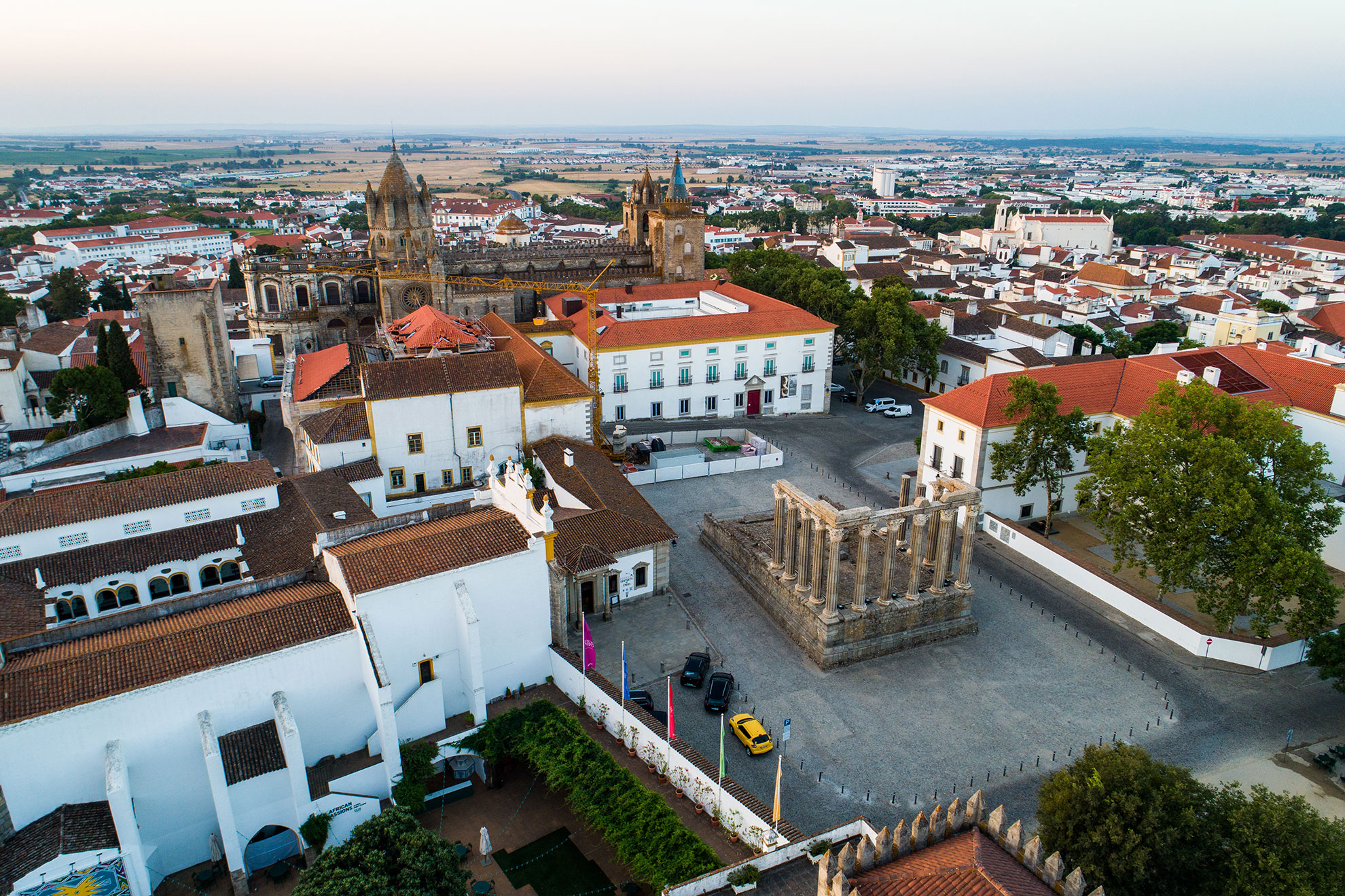
Évora boasts picturesque landscapes, a rich history, and a city centre that is a UNESCO World Heritage Site. Medieval walls, Roman remains, charming cobbled streets, and breathtaking views are all found here. The peaceful atmosphere offers travellers a welcome break from the pace of Lisbon.
The city preserves 2,000 years of architectural heritage, including a Roman temple, a Gothic cathedral, and medieval walls, all within a compact historic centre that can be explored comfortably on foot. It is less visited than Sintra, which means the streets feel like a real Portuguese city rather than a theme park. That authenticity is a large part of the appeal.
The express train to Évora takes approximately 1 hour and 33 minutes and departs from Oriente station in Lisbon. The return fare is €22.50. The weekday departure at 09:02 and the return from Évora at 16:57 are ideal for a day trip.
Direct buses depart Lisbon's Sete Rios terminal every one to two hours, reaching Évora in approximately 105 minutes for €23 return. The train is the more comfortable option and drops you within easy walking distance of the historic centre.
If you are travelling by car, the route is via the A6 expressway. There is a large free car park close to the city entrance, and this is the recommended location to park. The drive takes approximately 85 minutes from central Lisbon. Having a car also opens up the possibility of visiting the megalithic sites outside the city, which are not reachable by public transport.
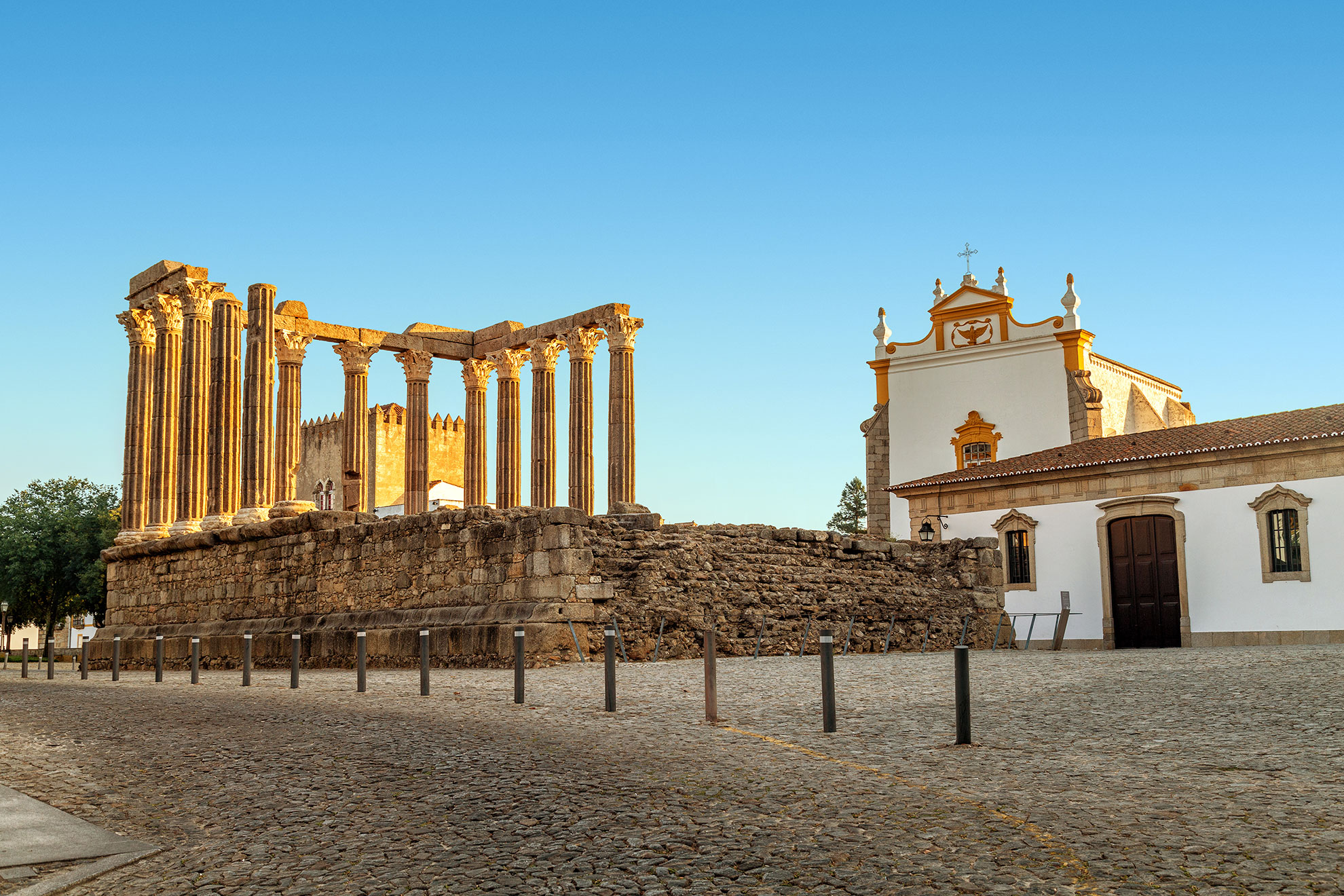
The Roman Temple of Évora is the centrepiece of the city and one of the best-preserved Roman structures on the Iberian Peninsula. Built on the highest hill, it dominated the Alentejo landscape when Évora became one of the most important trading outposts in the Roman Empire. It was more than likely built in honour of Emperor Augustus and later incorrectly named as a Temple to Diana. The columns are extraordinary at any time of day, but the late afternoon light turns the stone a deep amber that makes the whole structure glow.
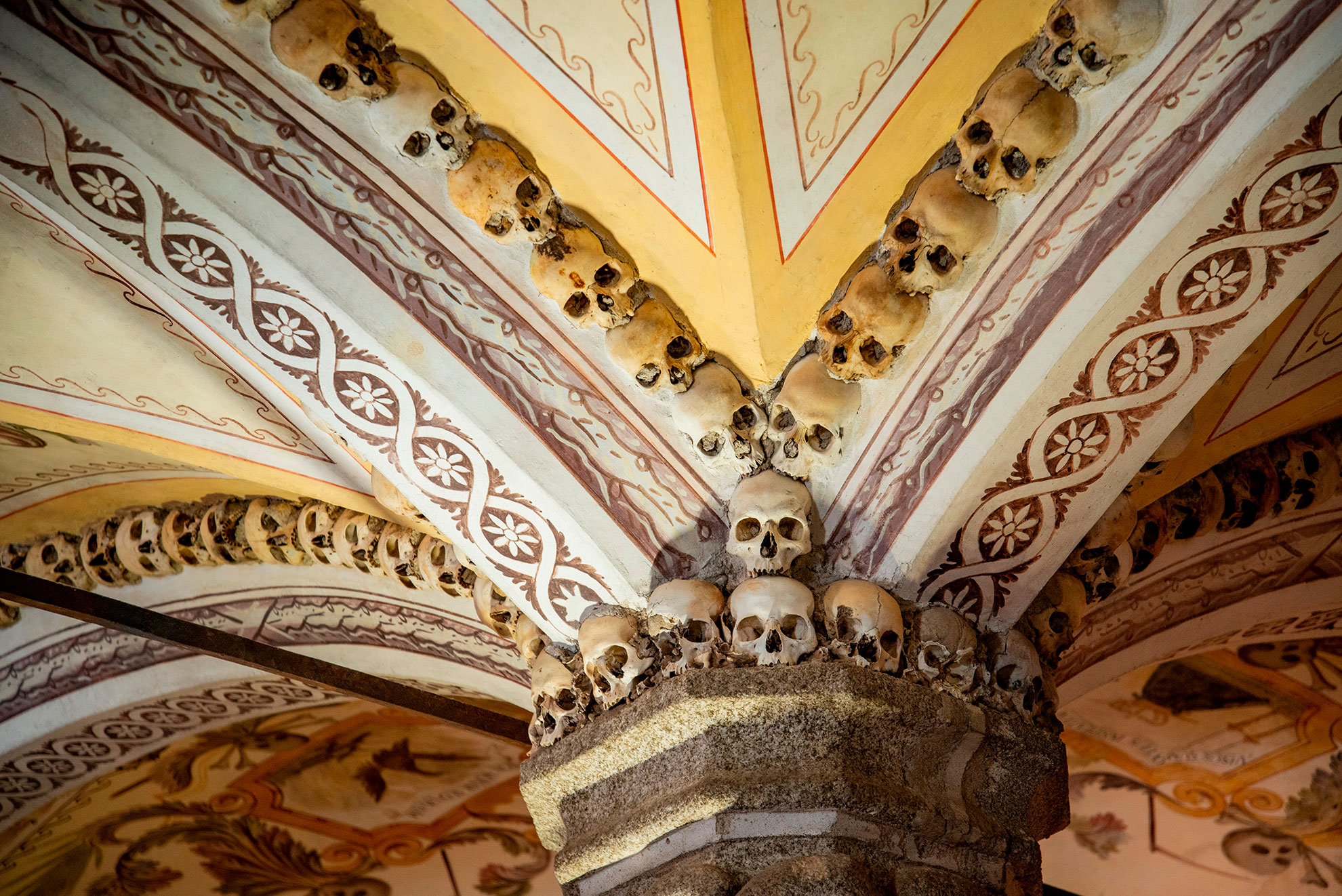
The Chapel of Bones at the Church of São Francisco is unlike anything else in Portugal. The interior walls and ceiling are lined with the bones and skulls of approximately 5,000 monks, arranged with a grim precision that is both disturbing and deeply meditative. The inscription above the entrance reads: "We bones that are here, for yours we wait." Allow at least 30 minutes and expect a queue in high season.
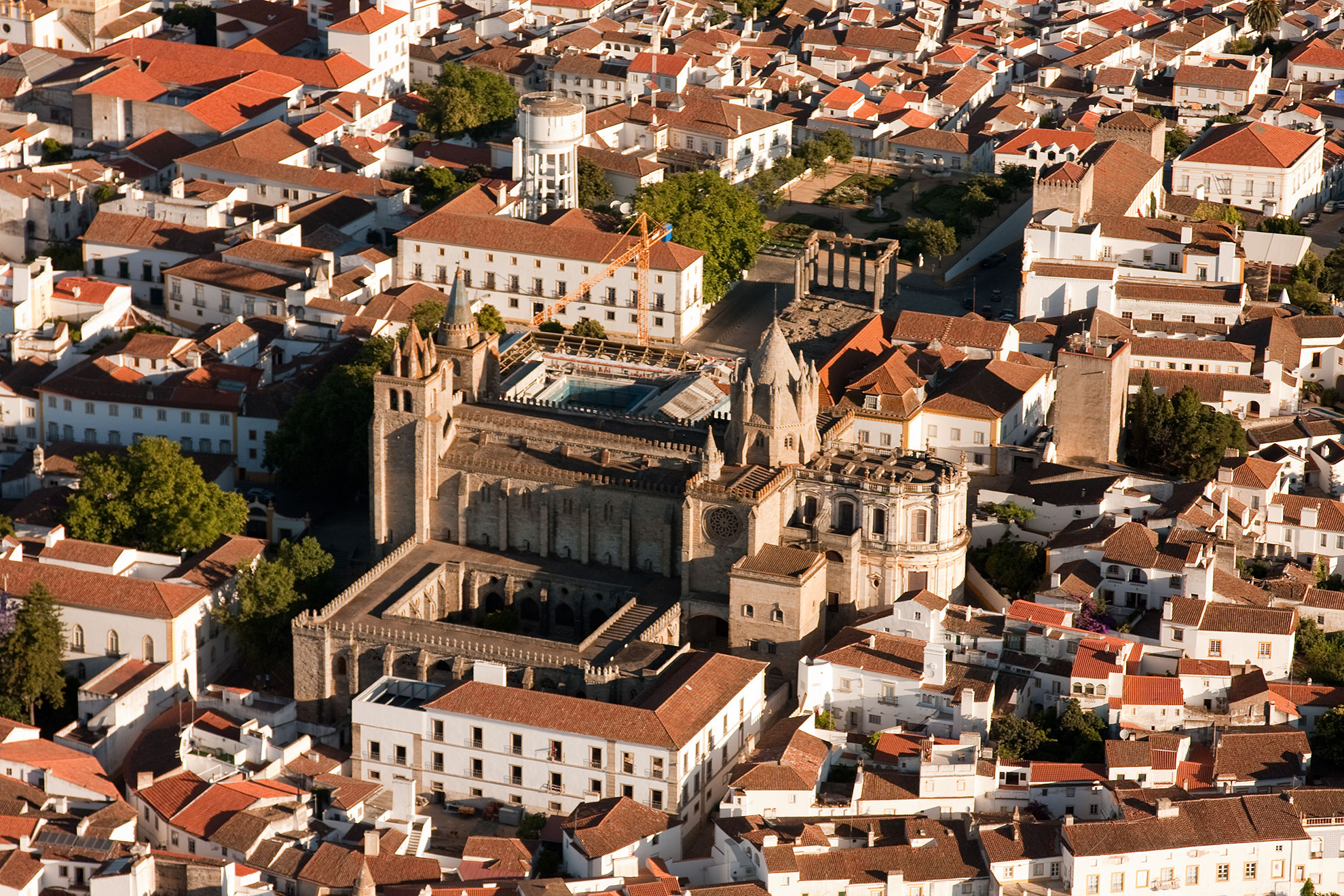
The Cathedral of Évora is the largest medieval cathedral in Portugal. Grab your camera because the highlight is at the top of its towers, where you can take in a breathtaking view of the serene Évora rooftops and the rolling Alentejo countryside, as well as the bright purple jacaranda trees that dot the surrounding area below. The cloister is one of the finest examples of Gothic architecture in the country.
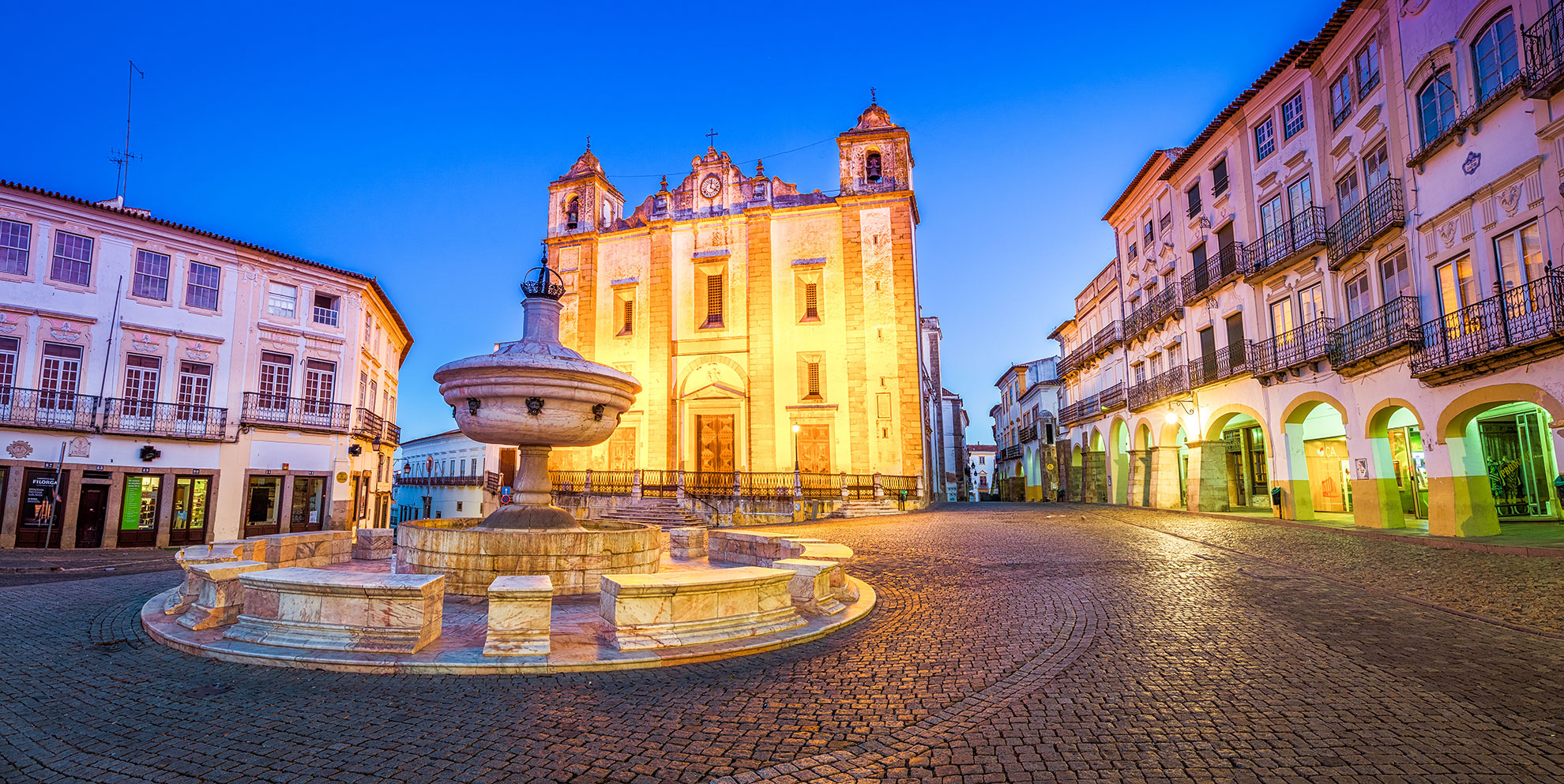
Praça do Giraldo is the beating heart of the city and the natural place to begin and end your day. The square is named after Giraldo the Fearless, the Christian knight whose bold surprise attack reclaimed Évora from the Moors in 1165. Sit at one of the cafe terraces, order a coffee, and watch the city go about its business.
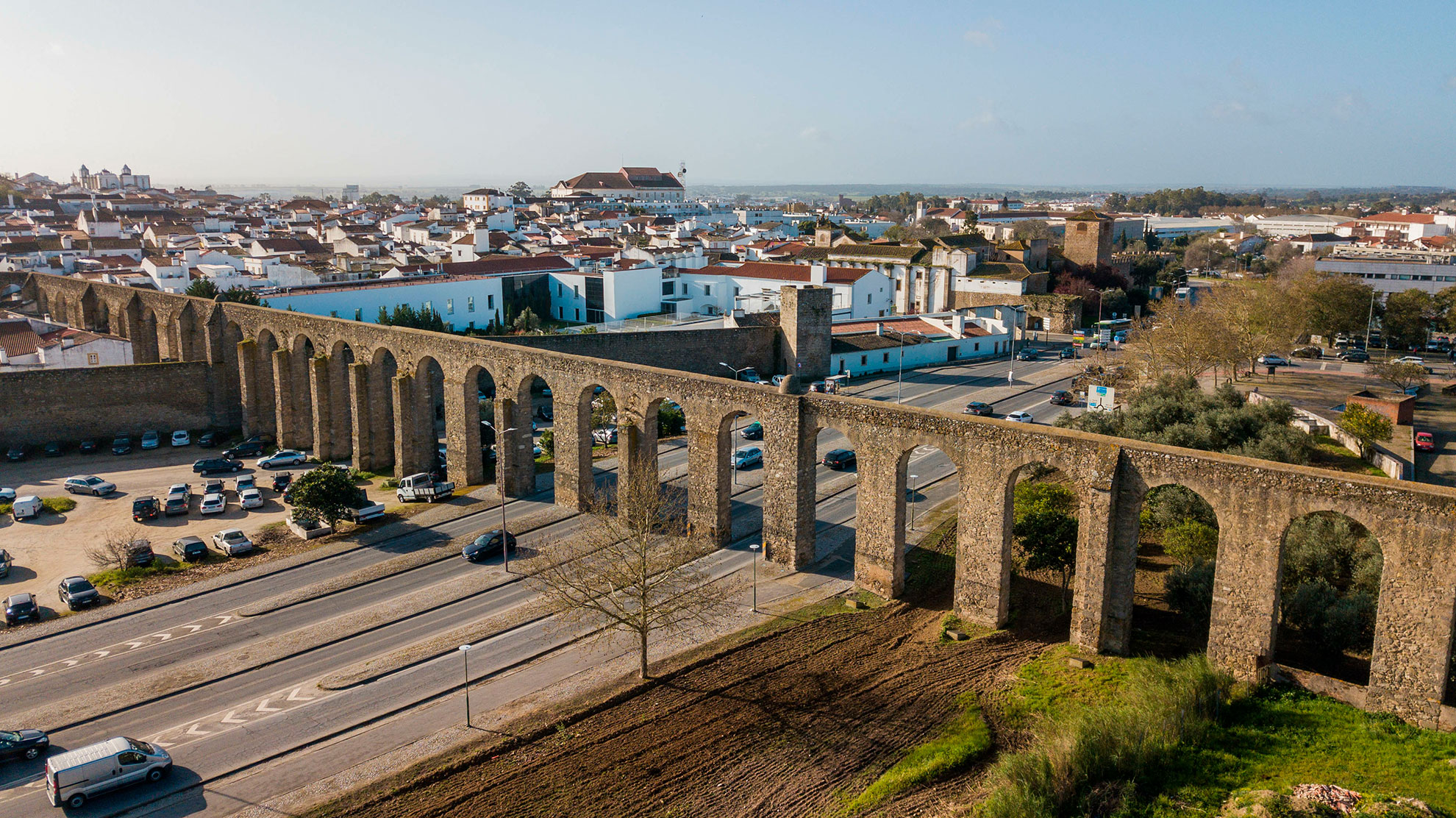
The Silver Water Aqueduct is easy to miss if you do not venture slightly beyond the centre. The Roman aqueduct straddles the town with tiny houses squeezed in between its arches, a detail so improbable it stops you in your tracks. It is a five-minute walk from the cathedral and well worth the detour.
If you are travelling by car, do not miss the Almendres Cromlech, located about 15 kilometres west of Évora. Older than Stonehenge, this megalithic complex reveals some of the secrets of ancient civilisations and their knowledge of astronomy. The circle of stones is mysteriously aligned with the sun and stars. It is one of the largest megalithic complexes in the Iberian Peninsula and sees a fraction of the visitors that comparable sites in the UK attract. The silence and the scale of it are remarkable.
Alentejo food is some of the most honest and satisfying in Portugal. The region produces excellent olive oil, cork oak honey, black pork, sheep's cheese, and powerful red wines from grapes like Aragonez and Trincadeira.
Migas is the dish to order at lunch: a thick, golden bread porridge cooked with garlic and olive oil, traditionally served alongside slow-cooked pork or lamb. It sounds simple and tastes extraordinary.
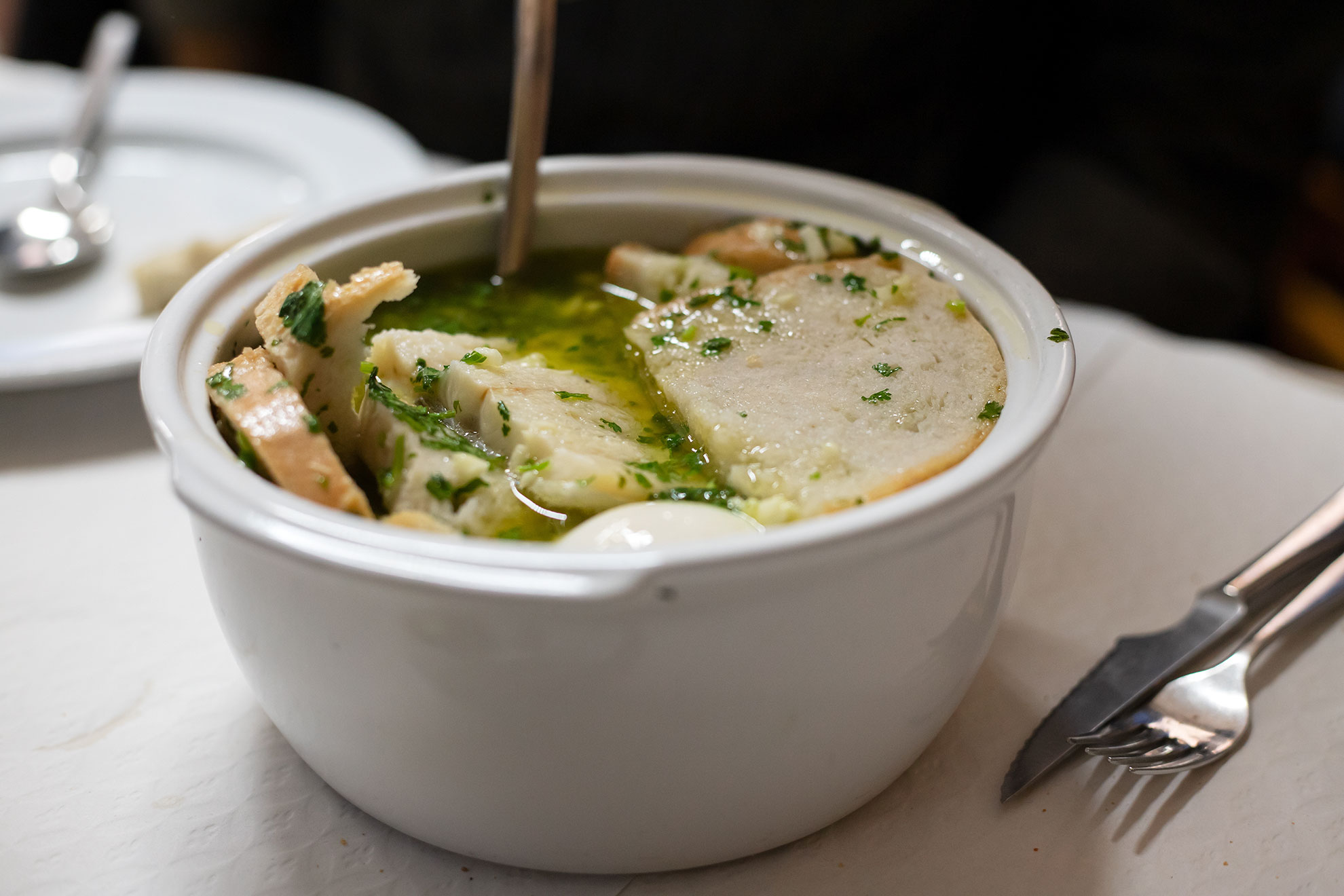
Açorda alentejana is a bread soup made with coriander, garlic, olive oil, and a poached egg on top. It is the kind of dish that makes you understand why people in this region have been eating the same things for centuries.
Alentejo wine deserves its own moment. A local guide will take you to a cosy family-owned restaurant where you can enjoy regional specialties including local wines, cheeses, and olive oils. Ask for a glass of the local red with your meal and you will not be disappointed. The wines are full-bodied, fruit-forward, and pair perfectly with the rich food of the region.
For lunch, the restaurant Guião, close to the Chapel of Bones, is a reliable choice that is not overly touristy. Do Largo Évora is a pleasant cafe for a coffee break.
Spring, from April to May, and autumn, from September to October, offer the most pleasant weather for a day trip. Summer requires early starts to avoid afternoon temperatures that regularly exceed 35°C.
Évora is known to be the hottest city in Portugal. The Alentejo region is particularly dry and hot, with summer days filled with sunshine. If you visit in July or August, take the earliest train, carry plenty of water, and plan to be indoors or in the shade between 1pm and 4pm.
Winter is genuinely underrated. The city is quiet, the light is clear and cool, and the monuments are at their most atmospheric without the summer crowds.
Book the morning train. The earlier you arrive, the more time you have before the afternoon heat sets in and before the handful of coach groups that visit daily arrive at the main monuments.
Wear comfortable shoes. The historic centre is entirely cobbled. Every street, every square, every path to every monument. This is non-negotiable.
Budget carefully. A comprehensive day trip including transport, monument admissions, lunch, and coffee breaks typically costs between €62 and €95 per person. Monument admission fees are modest individually but add up across a full day.
Consider a guided tour. If you want to visit the megalithic sites without renting a car, a guided day trip from Lisbon is the practical solution. A knowledgeable guide also transforms the Roman Temple and the Chapel of Bones from impressive sights into genuinely moving experiences.
Stay overnight if you can. At only 1.5 hours from Lisbon, Évora is an easy day trip, but for a longer trip we would definitely turn it into an overnight stay to explore the city and the surrounding region more fully. One night changes the experience completely: you get the city in the evening light, a proper dinner, and the morning before the day-trippers arrive.
Travelling from Lisbon and want to make the most of your day in Évora? Browse our guided day trips from Lisbon, including private tours that combine Évora with the Alentejo countryside and the megalithic sites of Almendres.