




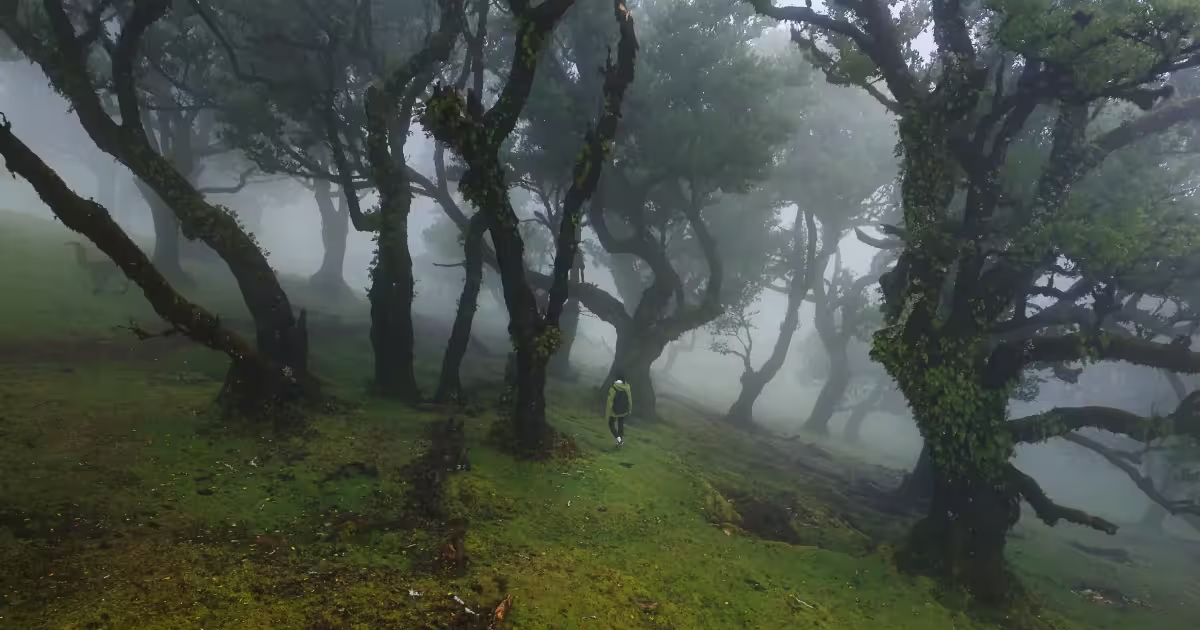
Unusual Things to Do in Madeira: Hidden Pools, Secret Trails & Local Bars
A 2026 insider guide to the pools, paths, and taverns that most visitors never find — from the vertiginous cliffs of Larano to the peanut-shell floors of Serra d'Água.
Madeira's tourism brochures always show the same levada walks and the same cliff at Cabo Girão. But the island keeps a parallel inventory of experiences: unnamed pools reachable only by boat, taverns where the floor is carpeted with peanut shells, a cable car so steep it feels like a controlled fall, and forest paths still perfumed with laurel fog at midday. This is the 2026 guide for travellers who turn left when everyone else turns right.
Where are Madeira's best hidden natural pools away from the crowds?
Porto Moniz is beautiful, but it is also on every itinerary sold at every hotel desk in Funchal. For something less catalogued, head to Poças das Lesmas near Seixal on the north coast. These volcanic rock pools sit beneath basalt cliffs that rise roughly 80 metres above sea level, and the access path is unmarked on most printed maps. Water temperature here hovers around 19–21°C in summer, fed directly by Atlantic swell that enters through gaps in the lava shelf. Arrive before 9 a.m. if you want solitude.
More remote still is Calhau da Lapa, a coastal shelf near Ponta do Pargo accessible either by a steep 45-minute descent on a crumbling footpath or by arriving via inflatable dinghy from the sea. The rocks here are streaked with mineral deposits of ochre and black, and on calm days the water clarity exceeds 15 metres. Neither site has lifeguards or formal infrastructure. Tidal conditions change quickly on Madeira's north and west coasts, and local advice — from fishing families in Seixal or Paul do Mar — is the most reliable safety briefing available.
"The real Madeira is not a place you find on a map. It is a place you find by asking the woman selling espetada by the roadside where she swims in August."
The island's coastline stretches approximately 150 kilometres, and only a fraction of accessible swimming spots appear in official tourism materials. The geological formation responsible — Madeira is a shield volcano that emerged from the Atlantic around 5 million years ago — continues to shape new rock platforms and collapse old ones, meaning the map is always slightly out of date.
What are the most unusual hiking trails in Madeira for 2026?
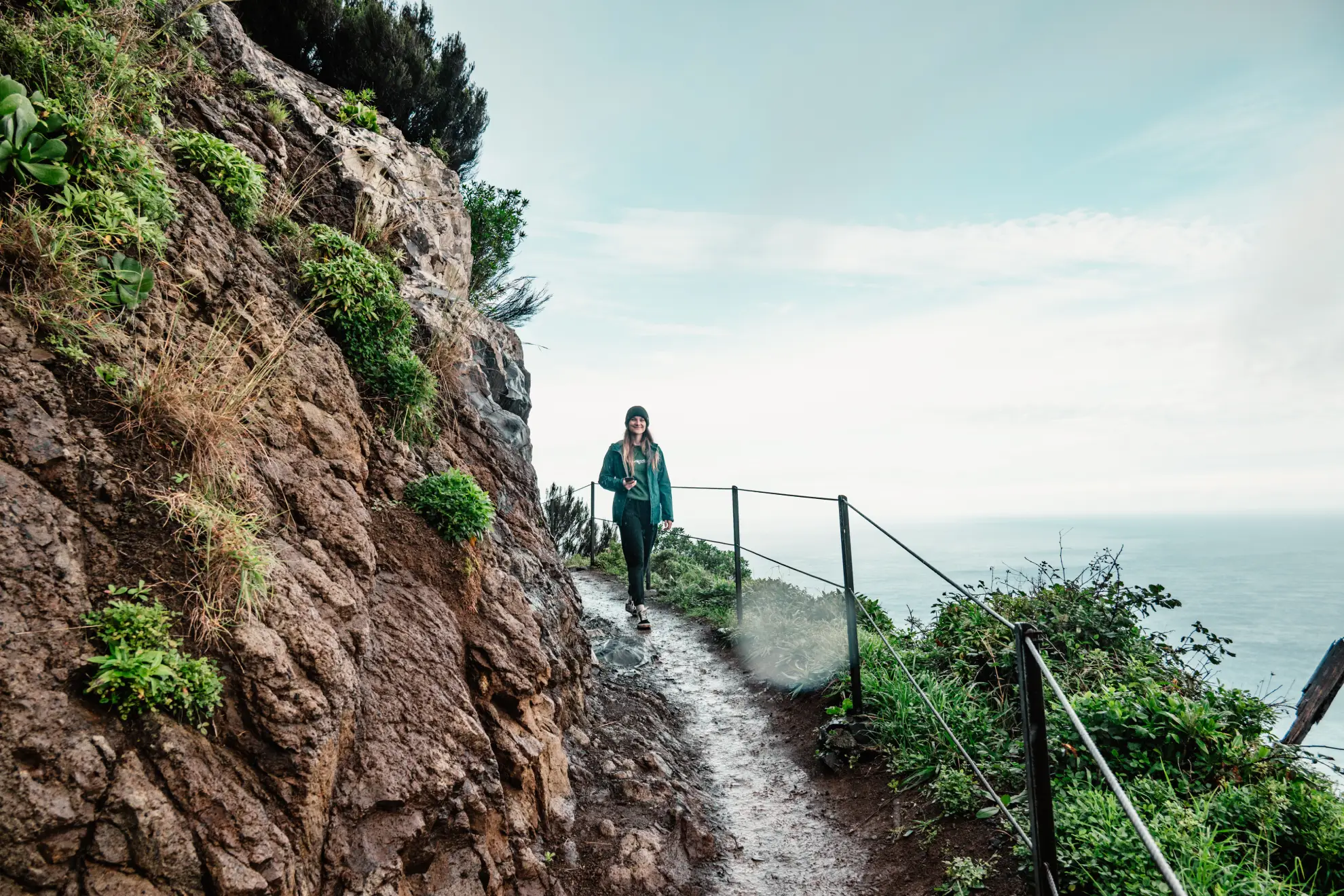
The Vereda do Larano (trail code PR8) runs 9 kilometres between Machico in the southeast and Porto da Cruz, traversing a ridge where the cliffs drop almost vertically to the ocean. Unlike the heavily walked Levada do Caldeirão Verde, this route sees perhaps a tenth of the foot traffic, partly because the trailhead in Machico requires a 20-minute walk from the nearest car park on Rua da Atalaia. The path crosses several landslide-prone gullies and demands reasonable fitness, but the payoff is a coastal panorama that includes the offshore islet of Ilhéu da Vigia and, on clear days, the eastern tip of Porto Santo island some 43 kilometres distant.
Inland, the canyon system locally known as Garganta Funda — sometimes called the Grand Canyon of Madeira — cuts through the central massif near Curral das Freiras. The descent into the gorge from the village of Boa Morte is not an official PR trail and involves scrambling over loose basalt scree for sections of around 300 vertical metres. This is a route for experienced walkers with proper footwear and a sense of orientation. The canyon walls support endemic ferns including Woodwardia radicans and the occasional sighting of the Trocaz pigeon (Columba trocaz), a species found nowhere else on Earth.
Important for 2026: Madeira's regional government now requires advance booking for all official PR and PL trails through the SIMplifica platform. The fee is 4.50 euros per person per trail. Booking opens 30 days in advance and some popular routes such as Levada das 25 Fontes fill within hours of opening. Unofficial routes like Garganta Funda are outside this system but carry their own risks without waymarking or rescue infrastructure.
"On the Vereda do Larano the path narrows to the width of a single boot and the Atlantic opens below you — 300 metres of nothing but briny ocean spray and the cry of yellow-legged gulls."
Where do locals actually drink poncha, and how do you find the real taverns?
Poncha — distilled from Madeiran aguardente de cana, mixed with honey and lemon or orange juice — is the island's most honest drink, and the best versions are made in kitchens that do not advertise on Google. The Taberna da Poncha in Serra d'Água, a village in the Ribeira Brava municipality roughly 25 kilometres northwest of Funchal via the ER228, is the kind of place where peanut shells accumulate on the floor and the barman makes each poncha to order with proportions that shift depending on the season and his mood. The village sits at approximately 400 metres elevation in a narrow valley flanked by terraced vineyards.
On the west coast, Maktub in Paul do Mar occupies a position directly above the Atlantic, where the sun sets directly over open ocean between October and March. The bar draws a mix of local surfers — Paul do Mar has hosted international big-wave competitions, with waves reaching 8–10 metres in winter — and a loose community of long-term residents who arrived decades ago and never left. The reggae soundtrack and the poncha de maracujá (passion fruit poncha) have become inseparable from the place.
Funchal has its own layer of authentic drinking culture away from the Zona Velha's tourist strip. The covered market, Mercado dos Lavradores, has two bars inside its structure that open at 6 a.m. for market traders. A small glass of aguardente at 7 a.m. surrounded by flower sellers unloading bird-of-paradise blooms (Strelitzia reginae) is an experience that no organised tour includes. ToursXplorer's farm and market tours do pass through the Lavradores area, however, and guides often point visitors toward these interior bars on request.
What is the Achadas da Cruz cable car and why is it worth the detour?
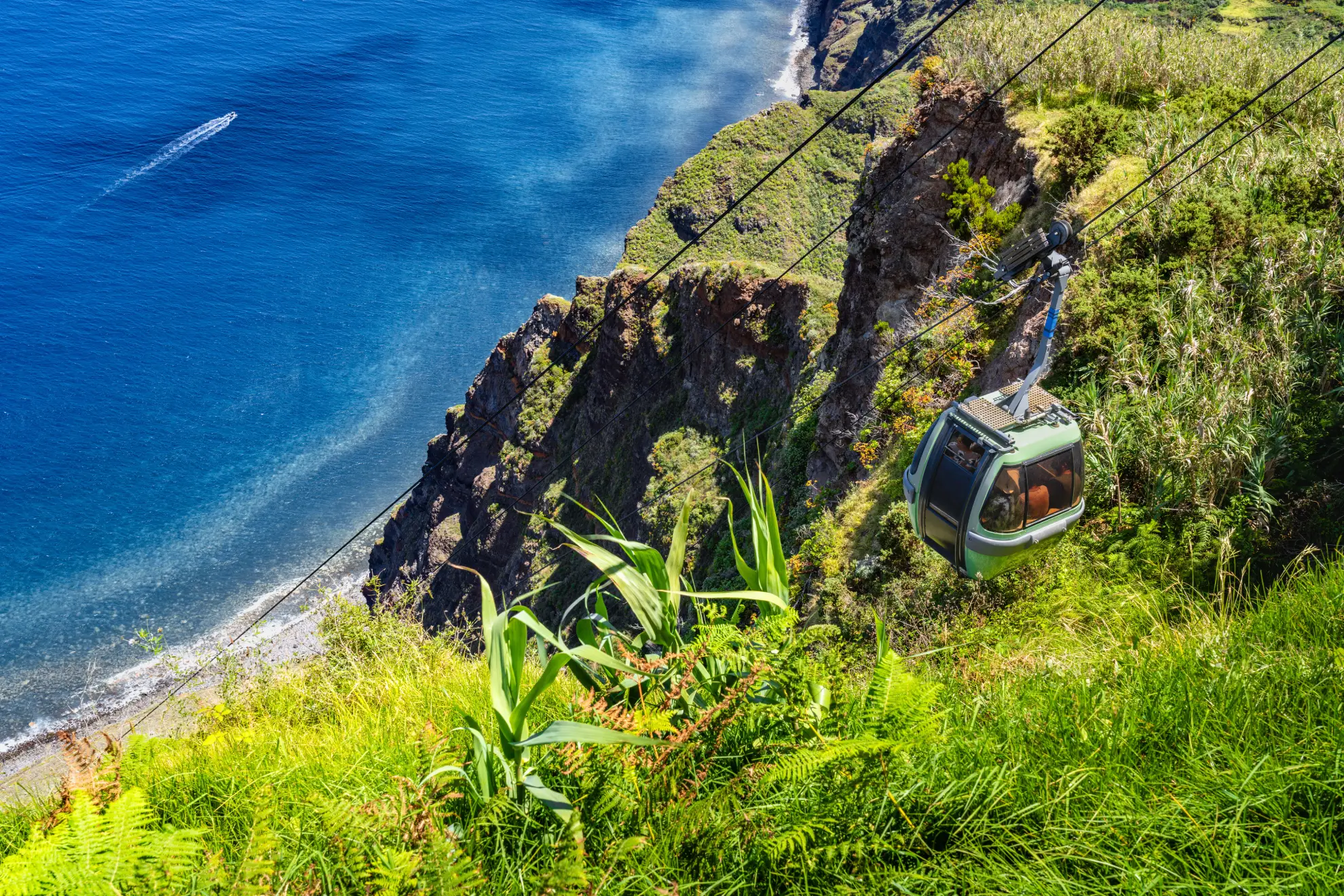
The Teleférico das Achadas da Cruz descends 450 metres from the clifftop village of Achadas da Cruz, in the northwest of the island, to an isolated fajã — a coastal terrace formed by ancient lava flows — at sea level. The cable car drops at a gradient of approximately 45 degrees, making it one of the steepest funiculars operating in Europe. The journey takes around four minutes and deposits passengers on a flat agricultural shelf where a handful of farming families still tend terraced plots of corn and beans using methods unchanged since the 18th century. There is no road access to the fajã from below.
The nearest town of any size is Porto Moniz, roughly 8 kilometres to the south. The cable car operates daily except Tuesdays, with departures from the top station on the hour. The return ticket costs approximately 4 euros. At the bottom, a path runs along the base of the cliffs for around 1.5 kilometres before ending at a rocky shoreline. The scale of the basalt walls above — dark, striated, and rising almost vertically from the agricultural plots — gives the fajã a quality of seclusion that is rare even by Madeiran standards. Mobile phone signal is absent at the base.
ToursXplorer's west coast full-day tours pass through the Achadas da Cruz area, and some 4x4 itineraries include a stop at the upper cable car station for visitors who want to make the descent independently before rejoining the group.
How does Madeira's new 2026 trail booking system affect independent walkers?
From January 2026, all officially designated walking trails on Madeira — classified as PR (Percurso Recomendado) and PL (Percurso Local) under the regional network — require prior reservation through the SIMplifica digital platform, operated by the Secretaria Regional de Turismo e Cultura. The fee of 4.50 euros per person covers a single trail on a single date. Group bookings above 10 people require a separate permit category and must be processed at least 72 hours in advance.
The system applies to approximately 30 official trails totalling over 400 kilometres of waymarked paths. Heavily visited routes including Levada do Caldeirão Verde (PR17, 13 kilometres from Queimadas), Levada das 25 Fontes (PR6, departing from Rabaçal), and Pico do Arieiro to Pico Ruivo (PR1, spanning 11.7 kilometres between the island's two highest peaks at 1818 and 1862 metres respectively) sell out days or weeks in advance during peak season from April through October.
Walkers who arrive at trailheads without a confirmed reservation can be turned away by wardens stationed at the main access points. The fines for non-compliance are set at between 50 and 250 euros. Visitors joining guided tours operated by licensed outfitters — including the operators listed on ToursXplorer — typically have reservations handled as part of the booking process, but it is worth confirming this with the provider before departure.
Explore Madeira's Interior: Farms, Vineyards & Market Culture
West Coast & Coastal Wilderness
Ocean & Underwater: Boat, Diving & Remote Islands
Ready to explore Madeira beyond the tourist trail? Browse all available tours on ToursXplorer and book your spot before the season fills up.
Click hereHow to plan an off-the-beaten-path trip to Madeira in 2026
The practical reality of visiting Madeira in 2026 is that the island's most popular experiences now require forward planning. Trail permits through SIMplifica, whale-watching departure slots, and guided 4x4 tours during peak months from April through October routinely book out two to three weeks ahead. The travellers who find the island most rewarding are those who alternate structured bookings with unstructured time: a morning on an official PR trail followed by an afternoon asking at the local café in Seixal or Porto da Cruz where to swim.
Transport into the interior is genuinely difficult without a hire car. The regional bus network operated by Horários do Funchal and Rodoeste connects Funchal to most coastal towns, but interior villages such as Serra d'Água, Boa Morte, and Achadas da Cruz run on infrequent schedules — sometimes one departure per day in each direction. A small 4x4 hire from Funchal opens the ER228 and ER110 mountain roads, but winter conditions above 1,200 metres can include ice and require snow chains between December and February.
For visitors who prefer not to self-navigate, the guided options available through ToursXplorer cover the west coast, the agricultural interior, and the marine environment with operators who carry the necessary permits and local relationships. The key is to treat organised tours not as a substitute for independent exploration but as an entry point — a guide who drops a name, points to a path, or mentions that the bar in Paul do Mar is worth staying for after sunset can reframe an entire trip.
Madeira's endemic wildlife: what you might see beyond the levadas
Madeira's ecological isolation over millions of years has produced a density of endemic species unusual for an island of its size (741 square kilometres). The laurisilva forest, a UNESCO World Heritage Site covering approximately 15,000 hectares in the north and west of the island, is the largest surviving remnant of a forest type that once covered much of southern Europe before the Pleistocene ice ages. Within it, the Madeira firecrest (Regulus madeirensis), separated from its continental relatives for long enough to be classified as a distinct species, forages in the canopy at elevations between 600 and 1,600 metres.
In the marine environment, Madeira sits within a migratory corridor used by 28 recorded cetacean species including short-finned pilot whale (Globicephala macrorhynchus), which is present year-round, and Bryde's whale (Balaenoptera edeni), more commonly sighted between March and October. The waters around the Desertas Islands, protected since 1990 under the Madeira Natural Park decree, support the only breeding population of Mediterranean monk seal in the northeastern Atlantic. Sightings during the Desertas boat tour are not guaranteed but are reported on roughly 60 percent of departures during summer months.
For hikers, the endemic Madeira wall lizard (Teira dugesii) is visible on almost every rocky surface across the island, and the endemic Madeiran long-toed pipistrelle bat (Pipistrellus maderensis) emerges at dusk over village squares island-wide. These species are not specialties requiring effort to find — they are simply part of the texture of a place that rewards attention.
Joining a guided tour on ToursXplorer means trail permits, local expertise, and transport are handled for you — leaving more energy for the places that don't appear on standard itineraries.
Frequently Asked Questions
The most consistently overlooked spots include the volcanic rock pools at Poças das Lesmas near Seixal, the Vereda do Larano clifftop trail between Machico and Porto da Cruz, the Achadas da Cruz cable car descending to an isolated coastal farming terrace, and the Taberna da Poncha in Serra d'Água. None of these appear in standard package tour itineraries, and all are reachable without specialist equipment.
Poças das Lesmas near Seixal on the north coast is reached via an unmarked path and sits below 80-metre basalt cliffs with water temperatures of 19–21°C in summer. Calhau da Lapa near Ponta do Pargo requires either a steep 45-minute descent on foot or arrival by boat. Neither site has lifeguards. Local advice from fishing communities in Seixal or Paul do Mar is the most reliable guide to current conditions.
The Vereda do Larano (PR8) between Machico and Porto da Cruz is 9 kilometres long, sees a fraction of normal levada traffic, and crosses clifftop ridges above vertiginous ocean drops. The unofficial Garganta Funda canyon route near Curral das Freiras is more demanding, involving 300 metres of scrambling over loose basalt. Both require booking via SIMplifica (4.50 euros) if classified as official PR trails from 2026.
Yes. From January 2026, all official PR and PL trails in Madeira require advance reservation through the SIMplifica platform at a cost of 4.50 euros per person per trail. Popular routes including Levada das 25 Fontes and the Pico do Arieiro to Pico Ruivo traverse (11.7 kilometres between 1,818 and 1,862 metres) sell out weeks ahead during the April–October peak season. Visitors on licensed guided tours typically have permits arranged by their operator.
The Taberna da Poncha in Serra d'Água, approximately 25 kilometres northwest of Funchal via the ER228, is a widely cited local favourite where poncha is made to order and peanut shells cover the floor. The bar Maktub in Paul do Mar on the west coast attracts surfers and long-term residents and is known for passion fruit poncha and Atlantic sunsets. Both are outside the tourist circuit and require independent transport to reach.
The Teleférico das Achadas da Cruz is one of the steepest cable cars in Europe, descending 450 metres at roughly 45 degrees to an isolated coastal farming terrace called a fajã with no road access from below. The return ticket costs approximately 4 euros. The cable car operates daily except Tuesdays from the village of Achadas da Cruz in the northwest, around 8 kilometres north of Porto Moniz. The base has no mobile signal and is farmed by a small number of families using traditional methods.