




From Earth to Table: Why You Must Try the Geothermal Food of São Miguel
A sensory-driven guide to the ritual, atmosphere, and ancestral flavors of volcano-cooked food in Furnas, São Miguel Island.
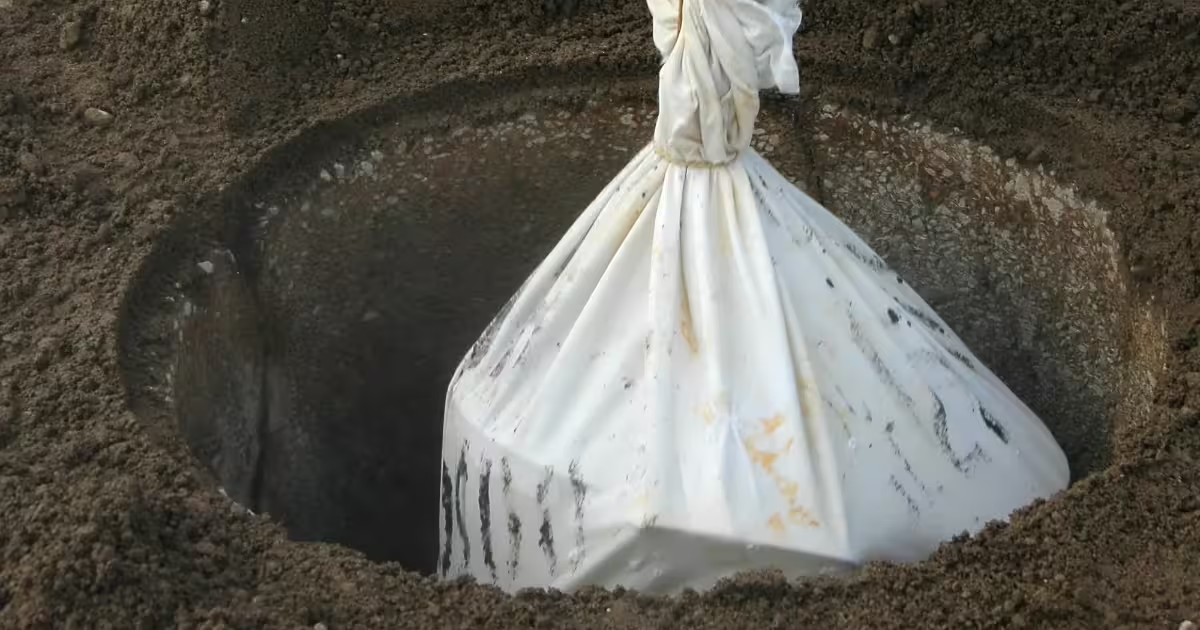
At the edge of Furnas Lake on São Miguel Island in the Azores, pots of raw meat, vegetables, and chouriço are buried each morning in volcanic soil that maintains a steady temperature of around 100°C. Six to seven hours later, without a single flame, those same pots emerge as Cozido das Furnas, one of the most geologically singular meals on the planet. This is not cooking as most travelers understand it. This is the earth doing the work.
What Happens Beneath the Soil at Furnas Lake?
The Furnas caldera sits roughly 30 kilometers east of Ponta Delgada, the capital of São Miguel Island, inside a volcanic depression that has been geothermally active for thousands of years. The lake itself covers approximately 1.9 square kilometers and is ringed by dozens of fumaroles and hot springs, collectively known as caldeiras, where ground temperatures routinely exceed 95°C at shallow depths.
Each morning, before most visitors arrive, local restaurant staff descend to a marked cooking ground on the northeastern shore of Furnas Lake. They lower large sealed pots into purpose-dug holes, pack volcanic mud around the lids, and leave them. What happens next requires no human intervention. The primordial heat from the island's magma chamber, which lies several kilometers below, conducts steadily upward through the basaltic rock and saturated soil, wrapping every ingredient in uniform, moist warmth for the next six to seven hours.
"There are no timers here, no adjustment of flame. The cook buries the pot at seven in the morning and trusts the island to finish the job by one in the afternoon. It is the oldest kitchen agreement in the Azores."
The subterranean alchemy that results is difficult to replicate by conventional means. The sealed environment traps moisture released by the meat and root vegetables, creating an internal vapor cycle that continuously bastes the contents. Geologists note that the hydrothermal system beneath Furnas is fed by rainwater percolating through the island's porous volcanic rock, heating as it descends toward a shallow magma body and returning to the surface as steam and mineral-rich water. The same tectonic forces that shaped the Azores archipelago — which began forming approximately 36 million years ago through Mid-Atlantic Ridge activity — are, in effect, the chef.
What Does Volcano-Cooked Food in the Azores Actually Taste Like?
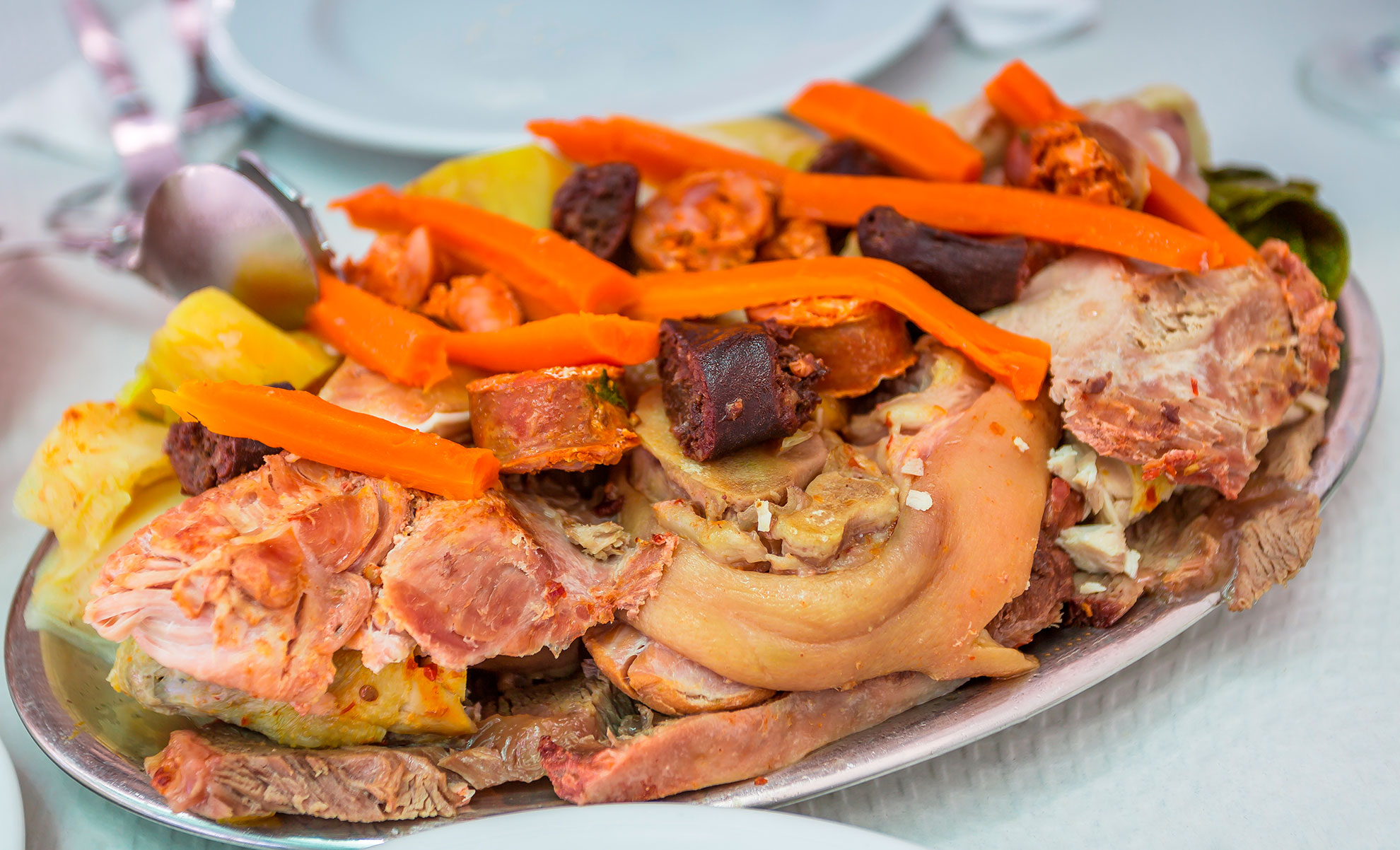
Cozido das Furnas is a variant of the broader Portuguese cozido à portuguesa tradition, a slow-cooked stew of mixed meats and vegetables. The Furnas version typically contains cuts of beef, pork, chicken, blood sausage (morcela), smoked sausage (chouriço), farinheira, cabbage, carrots, turnips, potatoes, and yams. The combination is unremarkable on paper. The cooking method is what separates it entirely from its mainland cousin.
The earth-braised result is a depth of flavor that conventional boiling rarely produces. Because the heat is completely uniform and never reaches a rolling boil, protein fibers break down gradually rather than contracting sharply. The collagen in tougher cuts of beef and pork converts to gelatin over those six to seven hours, producing a texture that is genuinely described by regular visitors as falling off the bone without any effort. The cooking liquid, thick with rendered fat, dissolved collagen, and the natural sugars of root vegetables, carries a faint mineral undertone. Whether that mineral quality derives from the volcanic soil or simply from the extended cooking time is debated, but it is consistently noted by first-time visitors.
"The stew arrives at the table still steaming in its pot, carrying the faintest ghost of sulfur-kissed air from the lake — not unpleasant, but unmistakably present, a reminder that the meal was made underground."
Several restaurants in the village of Furnas, including the well-known Restaurante Tony's and Terra Nostra Garden Hotel's dining room, serve the stew at lunch, the only practical meal for food that has been cooking since dawn. Portions are substantial and the experience is communal by nature. ToursXplorer recommends booking a seat early, particularly between June and September when visitor numbers on São Miguel peak.
Beyond the Stew: Other Geothermal Food Gems in Furnas
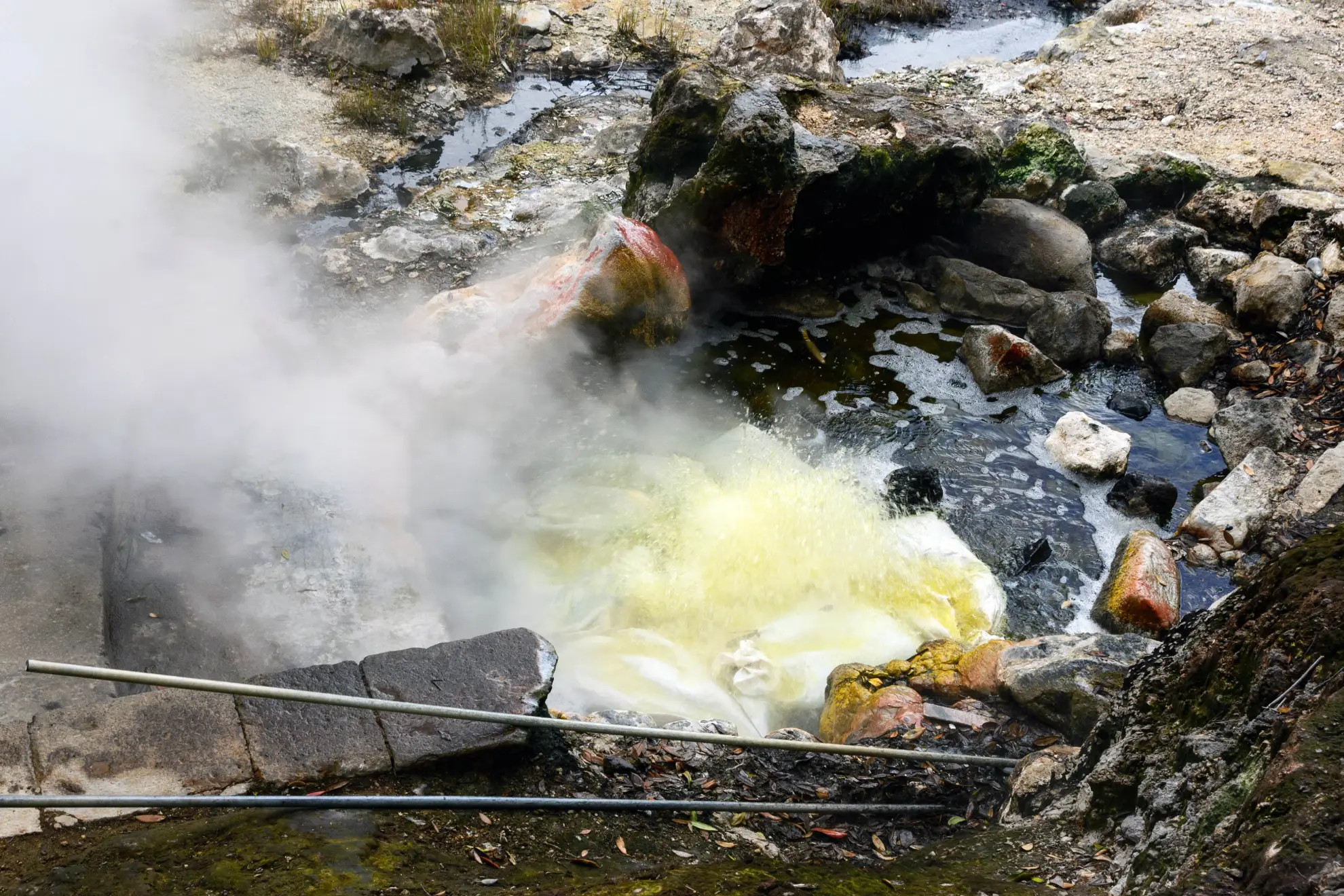
The Cozido dominates the conversation, but it is not the only geothermal food worth seeking out in Furnas. Along the public caldeiras path near the lake, vendors sell ears of corn (milho cozido) that have been boiled directly in the hot spring pools. The corn emerges naturally salted from the mineral-laden water and carries a faint earthiness that distinguishes it from any corn cooked in a kitchen. A single cob costs roughly one euro and is best eaten standing at the edge of the steaming vents, which is precisely where it is sold.
Perhaps the most visually striking geothermal curiosity in Furnas is Chá das Furnas, tea brewed using volcanic spring water. The naturally acidic and iron-rich water, with a pH that can drop below 4 in certain springs, reacts with certain tea compounds to produce a brew that shifts to a deep purple-grey color. The tea has been served to visitors since at least the late 19th century, when the British community that settled in the Azores after 1830 established a tradition of taking the waters at Furnas. Today it is available at several cafes and market stalls in the village and represents a low-cost, high-curiosity addition to any Furnas afternoon.
In 2026, São Miguel tourism operators have expanded what they call the Cozido Experience, structured workshops in which visitors participate directly in the pot burial ritual. Groups gather at the lake cooking ground before 8:00 a.m., assist in lowering and sealing the pots, then spend the morning exploring the caldera on foot or by jeep before returning to eat the meal they helped prepare. ToursXplorer lists several operators offering combined versions of this experience, merging the cultural ritual with guided valley exploration. The workshops create a personal bond between visitor and meal that is difficult to achieve through observation alone — there is a particular satisfaction in eating something you helped place in the earth.
The Furnas Valley itself, beyond the lake, contains additional geothermal points of interest. The Terra Nostra Park, a botanical garden established in 1775 and expanded significantly in the 19th century, contains a famous thermal pool fed by iron-rich water that stains the surrounding stone a deep orange. The garden covers approximately 4 hectares and includes cycads, tree ferns, and over 2,000 plant species, many of them endemic to the Azores. Walking the park before or after a geothermal lunch extends the sensory range of a Furnas visit considerably.
How to Plan a Geothermal Cooking Experience in Furnas in 2026
Furnas is located in the eastern interior of São Miguel Island, accessible via the EN1-1A road from Ponta Delgada. The drive takes approximately 40 minutes by car. Public bus service connects Ponta Delgada to Furnas village, operated by Caetano Bus lines, with a journey time of roughly one hour. The village itself is small, walkable, and centered around the Igreja de Nossa Senhora da Saúde church and the surrounding thermal facilities.
The geothermal cooking ground at Furnas Lake is publicly accessible and free to view. The pots are buried between approximately 6:30 a.m. and 8:00 a.m. and extracted between noon and 1:00 p.m. Visitors who wish to watch the extraction, one of the more visually memorable moments of any São Miguel itinerary, should arrive at the lake before 12:30 p.m. to secure a position. The sight of a dozen mud-caked pots being levered out of steaming earth by workers wearing thick gloves, against the backdrop of the lake and the caldera walls, is the kind of scene that registers viscerally rather than intellectually.
For those without a private vehicle, joining a guided full-day or half-day tour from Ponta Delgada is the most practical approach. ToursXplorer offers several curated options, listed in the section below, that combine transportation, guiding, and in some cases the Cozido lunch itself into a single bookable package. Group tours typically depart from Ponta Delgada city center between 8:00 a.m. and 9:00 a.m. and return by late afternoon, making them compatible with a same-day flight departure if necessary.
Explore Furnas Valley: Guided Tours and Volcanic Stew Experiences
Ready to eat a meal cooked by the earth? Browse all Furnas tours on ToursXplorer and book your geothermal experience in São Miguel for 2026.
Click hereIs the Geothermal Food Experience Worth Planning Your Day Around?
The honest answer is yes, but with a specific caveat: the meal itself, while genuinely distinctive, is not the only reason to visit Furnas. The Cozido das Furnas is most meaningful when experienced as the conclusion of a morning spent at the lake, watching the steam, smelling the sulfurous air, and understanding the geological system that cooked the food. Eaten in isolation, as a lunch reservation without the surrounding context, it is a very good Portuguese stew. Eaten after a morning at the caldeiras, it becomes something closer to an ancestral ritual, a way of ingesting the island's own energy through food.
This distinction matters for planning. Travelers who visit Furnas only for the meal and spend fewer than two hours in the valley tend to rate the experience positively but not memorably. Those who combine the Cozido lunch with a morning walk around the lake, a stop at the cooking ground extraction at noon, an afternoon in Terra Nostra Park, and a cup of volcanic tea before departing consistently describe Furnas as a highlight of their entire Azores itinerary. ToursXplorer's full-day guided options are structured precisely around this longer engagement with the valley, and the difference in depth of experience is substantial.
São Miguel Island measures approximately 65 kilometers in length and 16 kilometers at its widest point, making it geographically compact enough to combine Furnas with Sete Cidades caldera, the east coast viewpoints, or the green tea plantations of Gorreana (established in 1883 and still operating as one of the only tea plantations in Europe) within a single day itinerary. For visitors with one week on the island, dedicating a full day exclusively to the Furnas valley and its geothermal food culture is a reasonable and rewarding use of time.
Frequently Asked Questions
Cozido das Furnas is a traditional Portuguese stew of mixed meats, sausages, and root vegetables cooked underground in volcanic soil at Furnas Lake, São Miguel Island. The pots are buried each morning at around 6:30 to 8:00 a.m. in earth heated to approximately 100°C by the island's geothermal system and extracted six to seven hours later. No fire or electricity is used at any stage.
The cooking ground is located on the northeastern shore of Furnas Lake, inside the Furnas caldera on the eastern side of São Miguel Island, approximately 30 kilometers from Ponta Delgada. It is publicly accessible and free to visit. The pots are extracted daily between noon and 1:00 p.m., and watching the extraction is one of the most photographed moments in Azores gastronomy tourism.
Yes. Public buses run from Ponta Delgada to Furnas village operated by Caetano Bus lines, with a journey time of roughly one hour. The lake cooking ground is a short walk from the village center. However, a guided jeep or walking tour adds geological context and access to viewpoints above the caldera that are difficult to reach by public transport.
Chá das Furnas is tea brewed using naturally acidic, iron-rich volcanic spring water from Furnas, with a pH that can drop below 4 in certain vents. The acidic water reacts with compounds in the tea leaves, shifting the brew to a distinctive purple-grey color. It has been served to visitors since at least the late 19th century and is available at cafes and market stalls in Furnas village.
Cozido das Furnas is available year-round, as the volcanic heat beneath Furnas Lake does not vary seasonally. However, the overall Furnas experience is most atmospheric between October and April, when morning mist in the caldera is denser and visitor numbers are lower. June to September brings peak tourism and requires earlier restaurant bookings, particularly for groups.
A minimum of five to six hours allows time to arrive before the noon extraction, watch the pots emerge from the earth, eat the Cozido lunch, sample geothermal corn and volcanic tea, and walk part of Terra Nostra Park, which covers approximately 4 hectares and has operated since 1775. A full day is recommended for travelers combining the food ritual with jeep exploration of the surrounding caldera terrain.