




Cairo Tours: Expert Guide to the Best Guided Experiences for First-Time Visitors
Discover Islamic history, medieval bazaars, and vibrant street culture through curated city tours and evening river experiences.
Cairo is a city layered with 2,000 years of history, where Islamic monuments, medieval bazaars, and living street culture converge. For first-time visitors, guided tours are essential to navigating the city's three core pillars: the Citadel of Saladin and Khan el-Khalili bazaar in Islamic Cairo, street food experiences through UNESCO-listed quarters, and evening Nile dinner cruises. These structured experiences provide cultural context, historical accuracy, and direct access to Cairo's most authentic neighbourhoods.
What Makes Islamic Cairo Essential for First-Time Visitors?
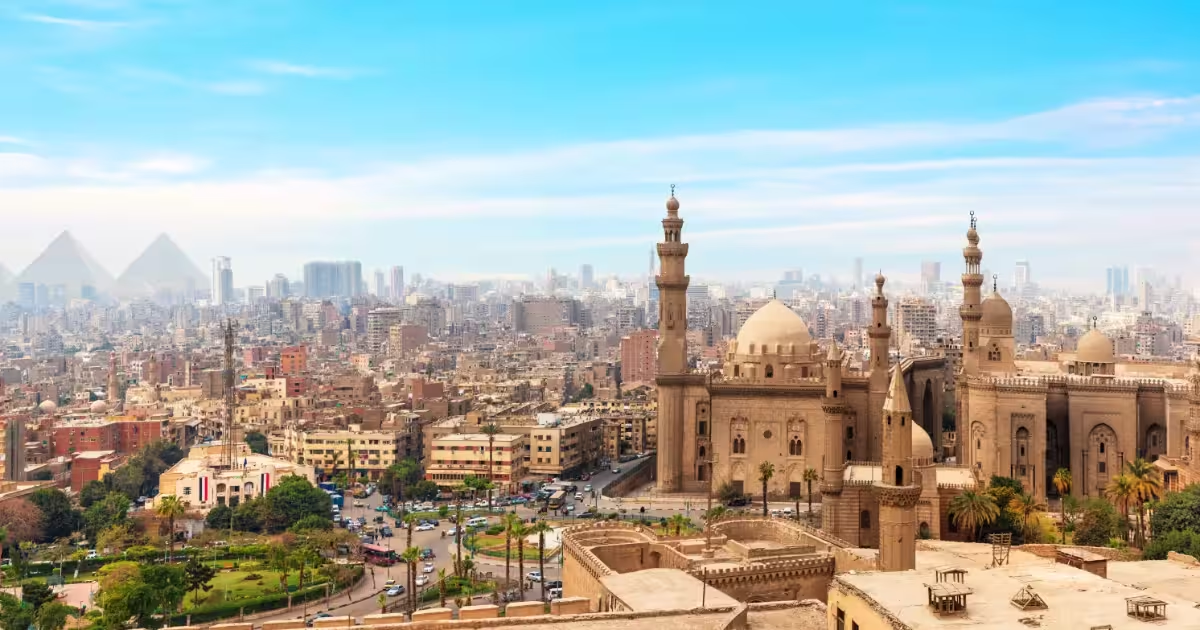
Islamic Cairo, the medieval heart of the city, spans an area of roughly 0.4 square kilometres and contains more than 600 historic monuments from the 9th to 19th centuries. The district was designated a UNESCO World Heritage Site in 1979, recognising its architectural and cultural significance. The Citadel of Saladin, built in 1176 on a limestone plateau 75 metres above the city, once served as the royal residence of Egypt's rulers and now houses three major mosques and multiple museums.
A guided tour through this neighbourhood transforms what could be an overwhelming maze into a coherent historical narrative. Local guides explain the architectural details of medieval mosques, the social hierarchy reflected in the bazaar's layout, and the centuries of Mamluk, Ottoman, and modern Egyptian rule that shaped the district's character. The Khan el-Khalili bazaar, which has operated as a trading centre since 1382, remains a functioning marketplace where vendors sell spices, textiles, metalwork, and souvenirs alongside the same goods traded five centuries ago.
The Citadel of Saladin offers views across Cairo to the Giza Plateau, where the pyramids appear as distant monuments on the western horizon, spatially reminding visitors how the city spans multiple eras and kingdoms.
How Do Street Food Tours Connect Travellers to Cairo's Living Culture?
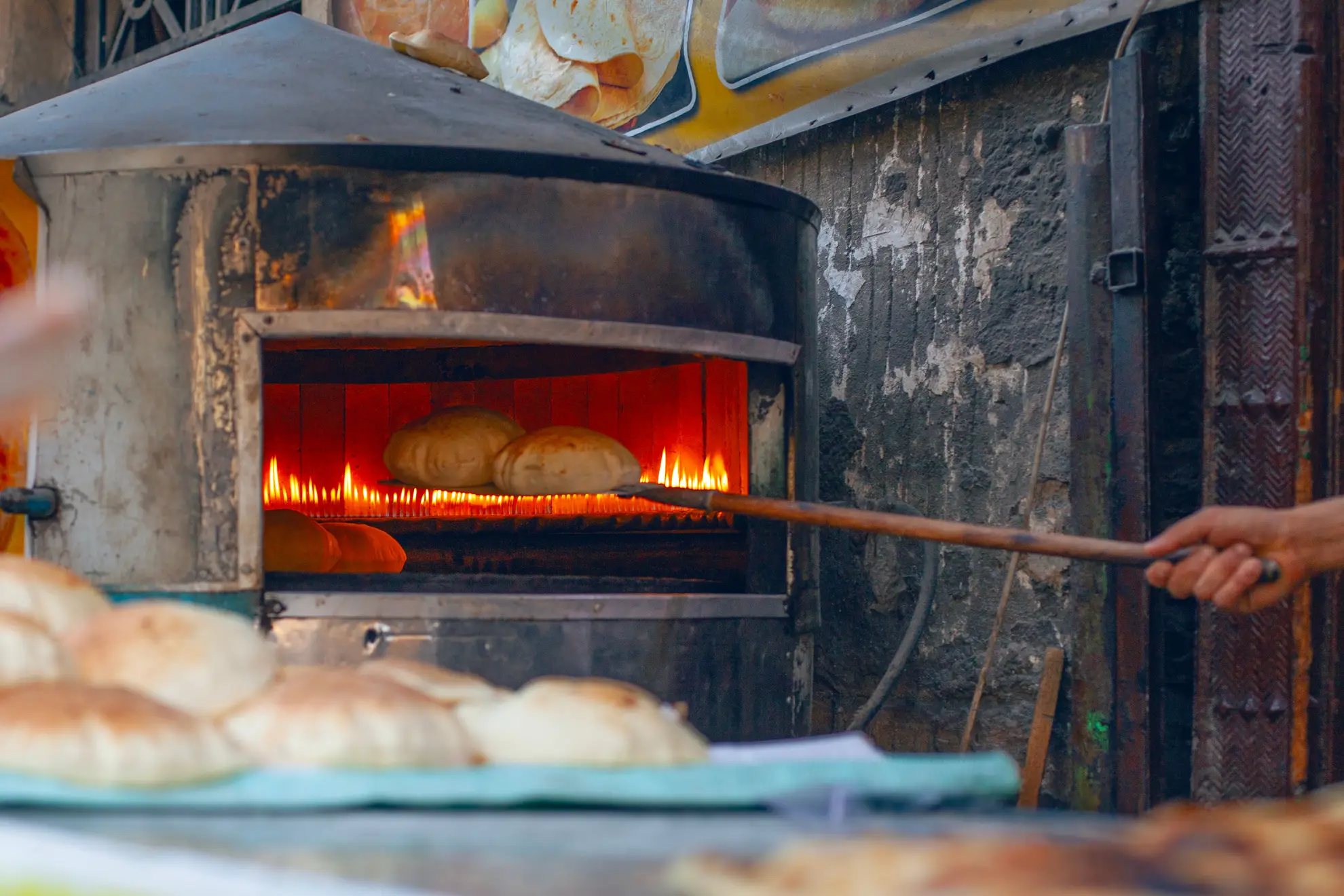
Cairo's culinary identity is inseparable from its street food tradition. A guided walking tour through the old city reveals not only the food itself, but the social fabric of neighbourhood life. Falafel (fried chickpea patties) are sold from small carts near mosque entrances; koshari (a layered dish of rice, lentils, pasta, and tomato-garlic sauce) is the working person's comfort food sold in dedicated shops; kunafa (crispy pastry with cheese or nuts and honey syrup) is a dessert found in family-run bakeries operating for decades. The Nile Delta region produces the vegetables, lentils, and grains that define Egyptian cuisine, connecting food directly to geography and agriculture.
Walking tours that include street food stops typically last 3 to 4 hours and pass through UNESCO-listed architecture in the historic districts of Khan el-Khalili, Darb al-Ahmar, and the spice markets near the Al-Azhar Mosque, which was founded in 970 and remains one of the world's oldest universities. These tours are led by local guides or food historians who explain preparation methods, ingredient sourcing, and the historical reasons why certain dishes dominate the Cairo diet. ToursXplorer offers several street food walking tours that combine culinary experience with architectural context, ensuring travellers understand the city through multiple senses.
What Is the Best Way to Experience Cairo's River and Evening Culture?
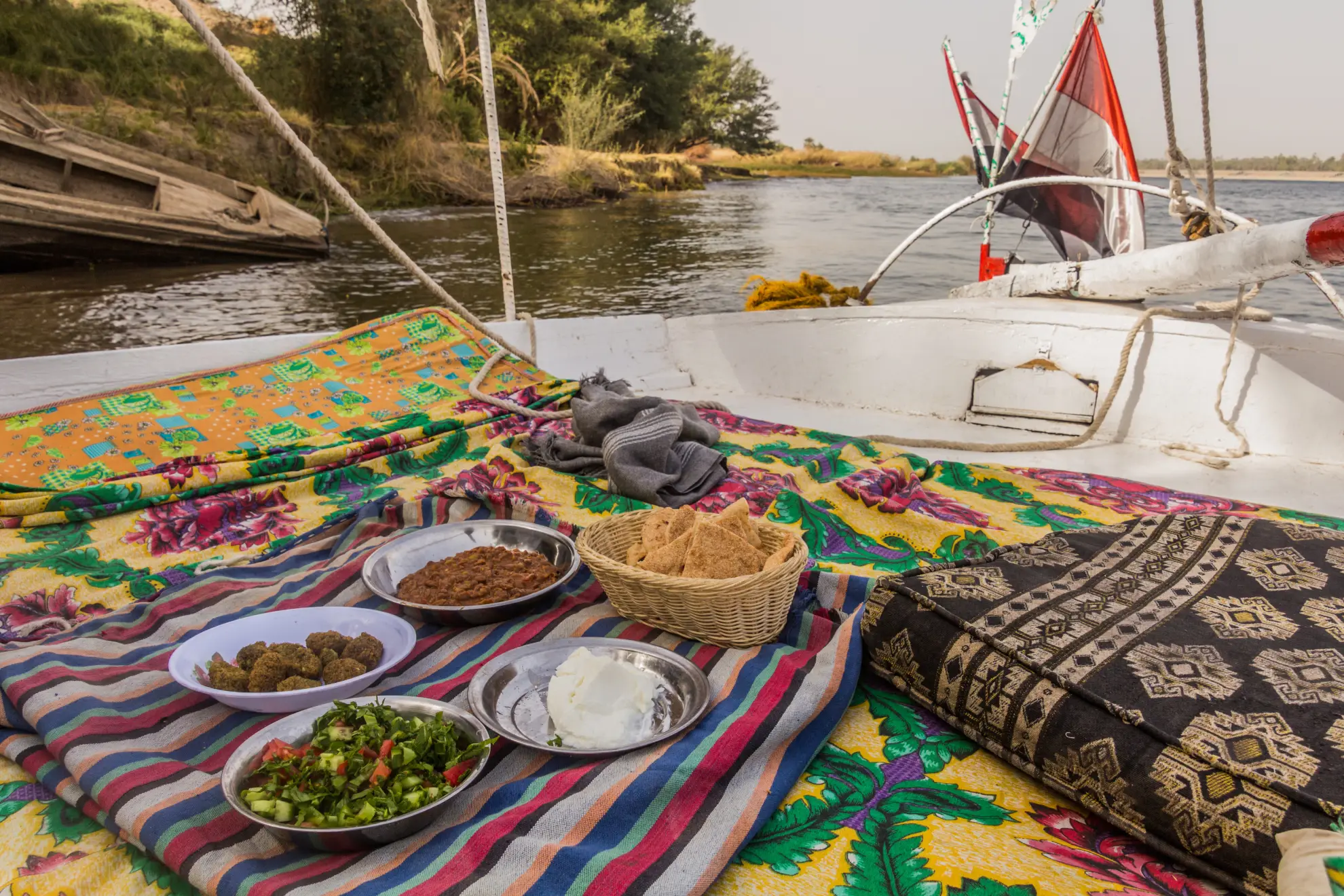
The Nile River has sustained Egyptian civilisation for over 5,000 years and remains central to daily life in Cairo. Evening dinner cruises on the Nile provide a different perspective on the city: the skyline lights up, the cooler night air makes outdoor seating comfortable, and the river itself becomes a stage for traditional entertainment. Belly dance and tanoura (whirling dervish) performances are rooted in Middle Eastern and North African cultural traditions spanning centuries, and professional performances on river cruises blend historical movement vocabularies with modern choreography.
Dinner cruises typically last 2 to 3 hours, depart from central Cairo marinas, and include a multi-course Egyptian meal alongside live music and dance, positioning the river as a natural amphitheatre for experiencing Cairo's cultural expressions.
ToursXplorer's listings for Nile dinner cruises include options that cater to different dietary preferences and cultural comfort levels. These evening tours appeal to first-time visitors seeking a structured, safe, and culturally engaging way to spend their final night in Cairo, and they serve as an accessible introduction to traditional Egyptian performance arts. Tours typically include hotel transport to and from the marina, eliminating navigation concerns for international travellers.
Guided Tours of Islamic Cairo and the Bazaar
Evening River Experiences
Ready to explore Cairo? Browse all available tours on ToursXplorer and book your first guided experience today.
Cairo Tours: Best Guided Experiences | ToursXplorerPlanning Your First Cairo Tour: What First-Time Visitors Need to Know
Cairo's population exceeds 20 million people, making it Africa's largest metropolitan area and one of the world's most densely populated cities. This scale can be overwhelming for first-time visitors navigating independently. Guided tours compress complexity into manageable experiences, provide cultural and historical interpretation, and ensure travellers visit sites safely and during optimal hours. Most tours operate year-round, though October through April offers the most comfortable daytime temperatures (ranging from 15 to 28 degrees Celsius compared to 35 to 40 degrees Celsius in summer months).
ToursXplorer's platform simplifies the booking process by aggregating tours from multiple operators, displaying schedules, pricing, and user reviews in one location. First-time visitors typically benefit from booking a full-day Islamic Cairo tour first (to establish geographical and historical bearings), followed by a street food walking tour (to experience living culture), and then an evening Nile cruise (to reflect on the city from a different vantage point). This sequence builds understanding progressively and uses different times of day to prevent fatigue.
Language barriers are minimal on professional guided tours, as most operators provide tours in English, Arabic, and several European languages. Hotel pickup and dropoff are standard inclusions, eliminating the need to navigate Cairo's public transport system or negotiate with taxi drivers unfamiliar with tourist routes. Most tours are small groups (8 to 20 people), creating opportunities for questions and conversation with guides who are invested in ensuring travellers leave with deeper understanding of Cairo's history and culture.
Beyond the Pyramids: Why Islamic Cairo Offers Deeper Historical Experience
The Giza Pyramids, located on the western outskirts of Cairo about 20 kilometres from downtown, are Cairo's most globally recognised monuments. However, they represent only one layer of the city's 2,000-year history. Islamic Cairo, by contrast, was founded in 969 and contains the accumulated architectural and cultural heritage of the Fatimid, Mamluk, and Ottoman periods. The Al-Azhar Mosque, founded in 970, remains the intellectual heart of Islamic scholarship and continues to function as a teaching institution. The Muhammad Ali Mosque, completed in 1857, represents Ottoman architectural influence and contains alabaster decorations, towering domes, and panoramic views across the city.
Walking through the Khan el-Khalili bazaar engages all senses: the smell of cumin, cinnamon, and saffron in the spice markets; the visual complexity of textiles, metalwork, and lanterns displayed in narrow stalls; the sound of vendors calling out prices, customers haggling, and prayer calls echoing from nearby mosques at regular intervals throughout the day. This sensory immersion, facilitated by a knowledgeable guide, connects abstract historical knowledge to lived experience. Guides can explain why the bazaar's layout follows historical trade routes, why certain goods cluster in specific areas, and how the space has survived centuries of political upheaval and modern urban development.
Street Food as Cultural Ambassador: Understanding Egypt Through Its Cuisine
Egyptian cuisine reflects the country's geography and history. The Nile Delta produces the lentils, chickpeas, and vegetables that form the basis of daily eating. Wheat, traditionally the dominant grain, appears in bread consumed at nearly every meal. Koshari, which combines rice, lentils, pasta, and a tangy tomato-garlic sauce, emerged in the 19th century as a working-class dish, blending influences from Indian, Italian, and Egyptian culinary traditions. Falafel, found throughout the Middle East and North Africa, represents one of the region's oldest forms of portable, protein-rich food. Kunafa, a pastry dessert, has roots in medieval Islamic cuisine and appears in historical texts from the Abbasid period.
Street food walking tours create a framework for understanding Cairo's social geography and daily rhythms. Eating at a small falafel vendor, a koshari shop, and a traditional bakery positions the traveller not as a tourist consuming exoticised cuisine, but as a participant in the city's normal food economy. This shift in perspective extends beyond food: it makes visible the neighbourhood dynamics, the relationships between vendors and regular customers, and the economic life that sustains the historic districts.
Secure your spot on a guided Cairo tour before your trip. ToursXplorer offers flexible booking and instant confirmation.
Frequently Asked Questions
Professional guided tours operating through established tour operators are considered safe. Guides are familiar with current conditions, accompany groups throughout activities, and arrange secure transport. ToursXplorer's listings include operator ratings and user reviews. Most tours operate in well-touristed areas with significant security presence, and group dynamics provide additional safety compared to independent travel.
Full-day Islamic Cairo tours, including the Citadel of Saladin and Khan el-Khalili bazaar, typically last 6 to 8 hours including transport, meals, and visit time. Street food walking tours through the bazaar and historic quarters last 3 to 4 hours. Starting times usually accommodate hotel pickup between 8 and 9 a.m., with return by early evening.
Wear comfortable walking shoes (you will cover 5 to 8 kilometres on foot) and light, breathable clothing. Conservative dress (covering shoulders and knees) is respectful in religious areas like mosques and is expected at some sites. Sunscreen, a hat, and water are essential, especially during warmer months. Women may consider a lightweight headscarf for mosque visits, though guides can advise on site-specific customs.
Most Nile dinner cruises offer menu flexibility and can accommodate vegetarian, vegan, and religious dietary requirements with advance notice (typically 24 to 48 hours). Communicate dietary needs at booking. Beverages typically include local Egyptian wine, beer, soft drinks, and coffee or tea. ToursXplorer tour descriptions specify what's included; contact the operator directly for detailed menu information.
October through April offers the most comfortable temperatures (15 to 28 degrees Celsius) and is considered peak travel season. Tours operate year-round, but daytime temperatures June through September exceed 35 degrees Celsius, making walking tours exhausting. Book 2 to 4 weeks in advance during peak season, or 1 to 2 weeks during shoulder months (May-June, September).
Professional guides on ToursXplorer-listed tours operate in English, French, German, and other languages. Guides are trained historians or tourism professionals familiar with explaining cultural and architectural details to international audiences. Small group sizes (typically 8 to 20 people) allow opportunities to ask questions and request clarification throughout the tour.