




Cairo Tours: Cultural Sightseeing & Guided Experiences for First-Time Visitors
Navigate Cairo's layered history across Islamic quarters, riverside spectacle, and ancient monuments with expert-guided cultural experiences.
Cairo demands more than a quick checklist. Over 5,000 years of human settlement have compressed Egyptian, Islamic, Coptic, and modern cultures into neighbourhoods stacked one atop another. First-time visitors benefit from guided cultural experiences that decode this complexity: Islamic Cairo walking tours navigate mediaeval streets unchanged since the 14th century, Nile dinner cruises offer live entertainment and Cairene hospitality, and Citadel-anchored half-days connect Ottoman military architecture to centuries of governance. This guide clarifies which experiences deliver genuine cultural immersion versus crowded commodity tours.
Why Cairo's Neighbourhoods Tell Different Stories
Cairo is not one city but a palimpsest. Islamic Cairo, designated a UNESCO World Heritage Site in 1979, occupies roughly 3 square kilometres south of Bab al-Futuh gate and contains over 600 registered monuments spanning the Fatimid, Mamluk, and Ottoman periods. A single walking tour through its lanes passes 14th-century madrasas, 15th-century caravanserais, and a continuous murmur of artisan workshops unchanged in centuries.
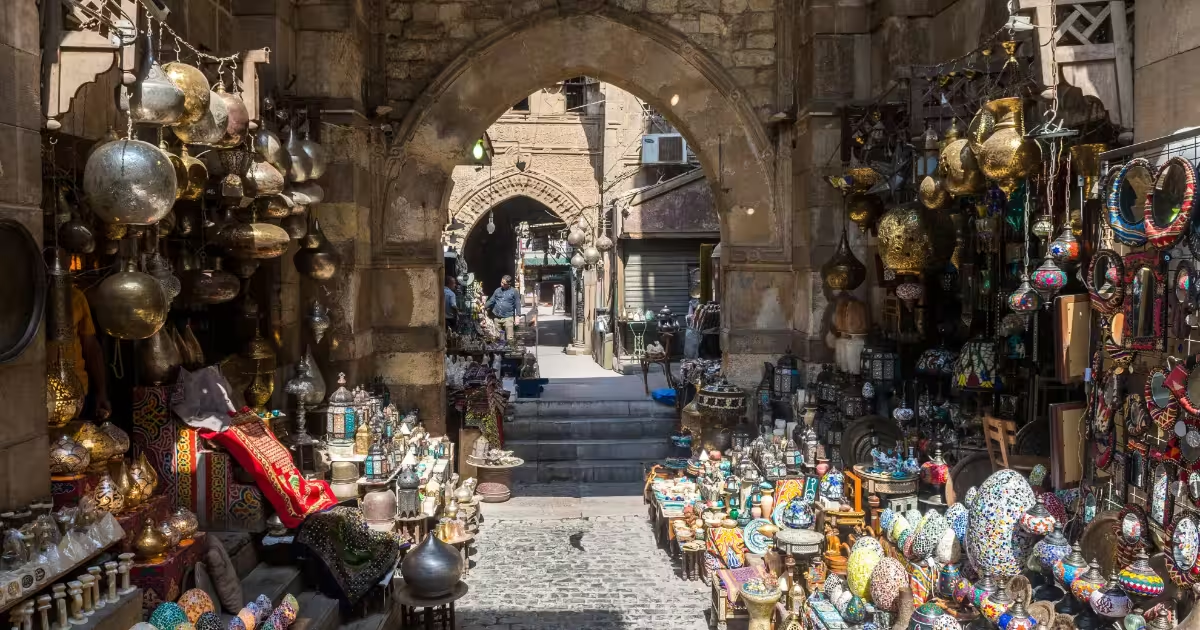
Khan el Khalili bazaar, established in 1382 by the Mamluk emir Barquq, still functions as Cairo's principal market for spices, textiles, jewellery, and handicrafts. Its 900-plus stalls generate sensory overload by design: merchants call in Colloquial Arabic and English, spice vendors arrange produce by hue and aroma, and the narrow passages force human contact that makes bargaining inevitable and theatre.
Cairo's neighbourhoods are not historical exhibitions. They are living, working quarters where families have occupied the same apartment buildings for generations and merchants still occupy the same shop-fronts as their great-grandparents did.
By contrast, the Citadel of Saladin, perched on Mokattam Hill 75 metres above the city, occupies 473,000 square metres and houses the Muhammad Ali Mosque (completed 1849), military museums, and panoramic vistas across the entire metropolitan sprawl. The Citadel complex testifies to nine centuries of military and administrative power: from Saladin's initial fortress (12th century) through Ottoman and Khedival expansions, to British occupation and Egyptian independence.

What Nile River Experiences Actually Offer
The Nile Dinner Cruise with Belly Dance and Tanura Show operates on the premise that evening entertainment, a multi-course meal, and gentle motion northward through central Cairo create a framework for relaxation and cultural observation. Cruises depart at sunset (approximately 19:00 to 21:00, depending on season), ascend north toward the Qasr el Nile Bridge, and return within 2.5 to 3 hours.
On-board programming typically includes live music (Oud, traditional percussion), belly dance performances (raqs sharqi, a formal dance idiom), and the Tanura show, a male solo spinning dance rooted in Sufi mysticism where the performer wears a 20-kilogram tiered skirt and spins for 15 to 20 minutes at a time. The theatrical effect is genuine: the skirt creates a hypnotic mandala pattern, and the dancer's footwork remains stationary while the garment orbits at velocity.
A Nile dinner cruise is not a boat ride with a meal attached. It is a concentrated venue for observing how Cairo's modern leisure culture co-opts and stages traditional performance for a mixed audience of Egyptians, expatriates, and tourists.
The meal consists of appetizers (hummus, tabbouleh, mezze platters), a main course (usually grilled fish, chicken, or lamb kofta), salad, and dessert. Drinks are typically included (soft drinks and juice) or optional (wine, beer, spirits at additional cost). The social atmosphere is relaxed, and the Nile itself—illuminated in the evening with the city lights of Heliopolis and Garden City reflecting across its surface—provides a genuine geographical context for understanding Cairo's relationship to the river that sustained it for millennia.
How to Navigate Islamic Cairo Without Getting Lost
Islamic Cairo Walking Tour with Street Food Experience combines movement through dense mediaeval lanes with eating: a typical itinerary departs mid-morning (08:00 to 09:00), visits the Citadel and its immediate surrounds, descends into Khan el Khalili, walks to the Al-Azhar Mosque complex (founded 970 CE, one of the world's oldest universities), samples street food at designated stalls, and concludes by mid-afternoon (13:00 to 14:00). Distance covered is 4 to 6 kilometres, mostly on foot, often uphill or through congested lanes.
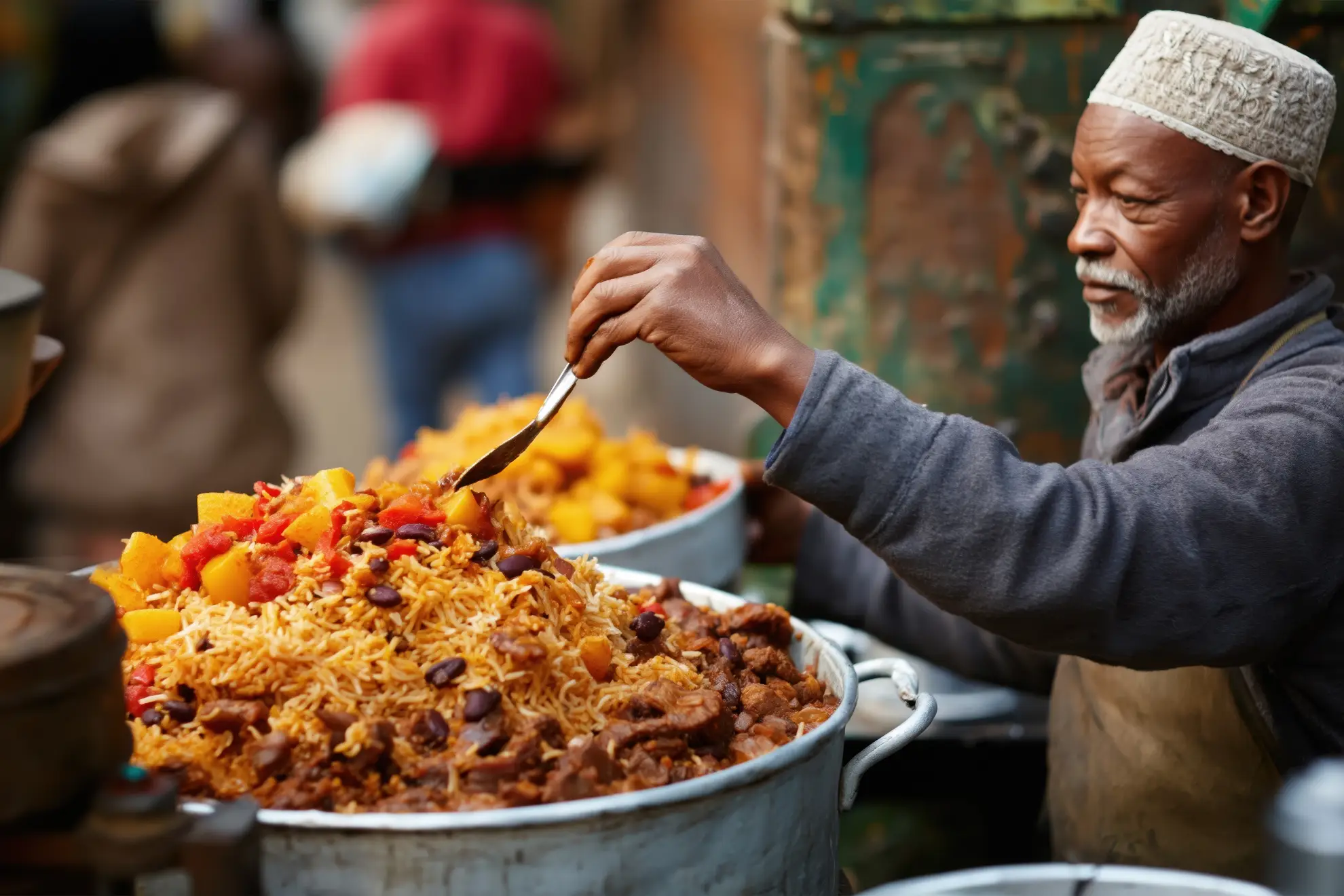
Street food stops typically include koshary (a carbohydrate and protein mixture of lentils, chickpeas, pasta, and tomato sauce), ta'ameya (Egyptian falafel made from fava beans), liver or meat kebab wrapped in Egyptian flatbread, and sweet treats such as basboosa (semolina cake soaked in sugar syrup) or konafa (shredded pastry with nuts or cream). A guide's role is not merely to identify these foods but to connect them to neighbourhoods, family recipes, and the informal economics of street vending in modern Cairo.
First-time visitors often worry about getting lost in Islamic Cairo. Guided tours eliminate this risk while also decoding the spatial logic. The quarter is actually less chaotic than first impression suggests: main arteries (Al-Muizz Li-Din Allah Street, the historic spine) connect major monuments, and guides navigate using landmarks (a particular mosque's minaret, a recognizable shop-front) rather than GPS. ToursXplorer's platform lists multiple Islamic Cairo walking experiences, each with different pacing, language options, and food stops, so travellers can choose based on physical ability and dietary needs.
Top-Rated Cairo Cultural Tours on ToursXplorer
Start your Cairo journey with a guided experience. Browse 300+ tours on ToursXplorer and book your first cultural outing today.
Click hereHow to Choose a Cairo Tour Based on Your Interests
Cairo contains over 310 active tour products spanning pyramids, museums, neighbourhoods, and riverine activities. ToursXplorer's search and filter tools allow visitors to narrow by category (cultural, historical, adventure), duration (half-day, full-day, multi-day), price range, language, and group size. For first-time visitors, a logical itinerary combines one full-day experience (such as the Giza Pyramids and Sphinx with professional Egyptologist guide) with one evening river experience (Nile dinner cruise) and one walking immersion (Islamic Cairo).
A half-day Citadel and Khan el Khalili tour suits travellers with limited time or moderate physical capacity, and covers two major Cairo landmarks in a single itinerary. A street-food walking tour suits foodies and those interested in everyday Cairene culture beyond the monument circuit. A Nile dinner cruise suits couples, groups celebrating occasions, and those seeking rest and entertainment without structured sightseeing.
Practical Considerations for Cairo Cultural Tours
Most guided cultural tours operate in English, French, Arabic, and German. Book in advance (24 to 48 hours recommended) via ToursXplorer to confirm availability, group size, and guide language. Many tours include hotel pickup and drop-off in central Cairo neighbourhoods; confirm your accommodation location when booking.
Islamic Cairo walking tours are best undertaken in cooler months (October to April), as summer temperatures exceed 38 degrees Celsius. Wear comfortable walking shoes with grip (lanes are uneven and sometimes wet), bring sunscreen and a hat, and carry cash in Egyptian pounds for bazaar purchases and food vendors—many do not accept cards.
Dietary requirements (vegetarian, vegan, kosher, halal, gluten-free) should be communicated to your guide or tour operator before departure. Street food experiences offer flexibility; guides can identify suitable options at stops or advise vendors in advance. Most tours include bottled water and a snack. Tipping is expected in Egypt; budget 10 to 15 Egyptian pounds per person for guides and drivers as a discretionary add-on.
Ready to explore Islamic Cairo? Filter by neighbourhood, duration, and meal preferences on ToursXplorer's Cairo tours page.
Frequently Asked Questions
Prices vary widely. A half-day Citadel and Khan el Khalili tour ranges from 500 to 1,200 Egyptian pounds (USD 17 to 40) per person in a group. A Nile dinner cruise ranges from 1,500 to 3,500 Egyptian pounds (USD 50 to 120) depending on meal quality and drinks. Street food walking tours run 400 to 800 pounds (USD 13 to 27). Book via ToursXplorer to compare rates and inclusions.
Cairo is generally safe for tourists on organised tours. Guides are trained professionals familiar with neighbourhoods, local dynamics, and tourist protocols. Islamic Cairo, Khan el Khalili, and the Citadel are regularly visited by thousands of international visitors annually. Avoid unguided night-time wandering in unfamiliar areas, keep valuables secure, and follow guide instructions regarding photography (some mosques restrict camera use).
October to April offers ideal conditions: temperatures range from 15 to 28 degrees Celsius, humidity is lower, and rainfall is rare. Summer (June to September) sees temperatures above 38 degrees Celsius and is uncomfortable for extended walking. Ramadan (dates vary annually) affects restaurant hours and street-food availability but also opens Ramadan-specific cultural experiences like evening bazaar strolls and suhoor (pre-dawn meal) gatherings.
A minimum of 3 days allows: one full day at Giza Pyramids and Sphinx (20 kilometres west of central Cairo), one day exploring Islamic Cairo and Khan el Khalili on foot, and one evening on the Nile. A week permits deeper exploration of the Egyptian Museum, Coptic Cairo (south of Khan el Khalili), the Mohammed Ali Museum, and neighbourhood-specific food tours. Most first-time visitors spend 4 to 5 days.
No. Most major cultural tours are guided in English by trained professionals. Many guides speak 2 to 4 languages. Learning basic Arabic phrases ('hello'—'salam alaikum', 'thank you'—'shukran') enhances interactions with local vendors and guides. Khan el Khalili vendors often speak English and are accustomed to negotiation with international visitors.
Yes. Active mosques welcome respectful visitors outside prayer times (Fajr 05:00, Zuhr 12:30, Asr 15:30, Maghrib 18:00, Isha 19:30 approximately). Women should wear modest clothing (shoulders and knees covered); some mosques provide loaner abayas (robes). Remove shoes before entering prayer halls. Guided tours handle logistics and etiquette; independent visits require advance research and sensitivity to worshippers present.