There’s a hush in the air right before the flutter of wings. You’re on the southern edge of Portugal, where the wind carries salt from the ocean and songs from the sky. This is the Algarve—where birds rule the skyline and wetlands shimmer under migrating shadows.
You don’t just watch birds here—you feel the pulse of their journeys, their stillness, their sudden, perfect flight.
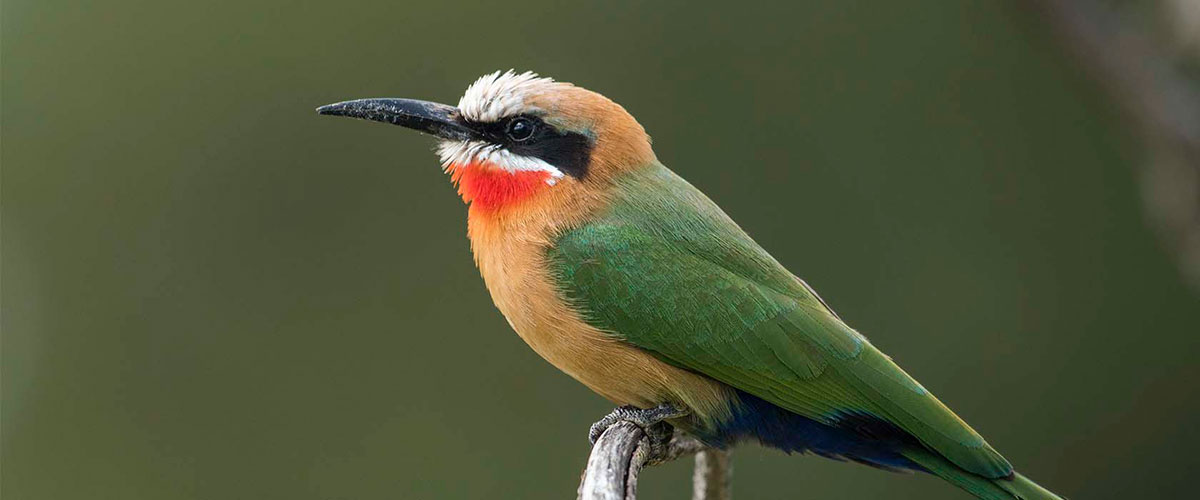 A European Bee-eater displays its vivid plumage against the Algarve backdrop.
With its mix of marshes, lagoons, dunes, and cliffs, the Algarve is nature’s theatre. A permanent stage for some, a seasonal refuge for others, it’s one of Europe’s richest birdwatching regions. Whether you’re a curious first-timer or a seasoned birder with a weathered logbook, this place grips your soul and won’t let go.
The region’s geography is a bird magnet. Sitting at the crossroad between Europe and Africa, the Algarve is a pit stop and breeding ground for hundreds of species. Its ecosystems—tidal flats, salt pans, estuaries, Mediterranean scrublands—offer a buffet of biodiversity.
Migratory birds follow the East Atlantic Flyway, and many make landfall here. Some stay to nest in the warm spring; others rest before continuing toward Africa or returning north again. In this ever-turning cycle, the Algarve becomes a live migration map.
The cliffs along Sagres offer raptor sightings mid-soar. Salt marshes around Castro Marim teem with life. And those sunlit lagoons near Ria Formosa? They're like avian airports, buzzing with arrivals and departures. You never quite know who might show up.
They aren’t shy. These pink-hued giants move elegantly through shallow waters, long necks swaying like reeds. With up to 6-foot wingspans, flamingos are spectacle birds. Watching hundreds sweep across the marshes of Castro Marim at sunset is spine-tingling.
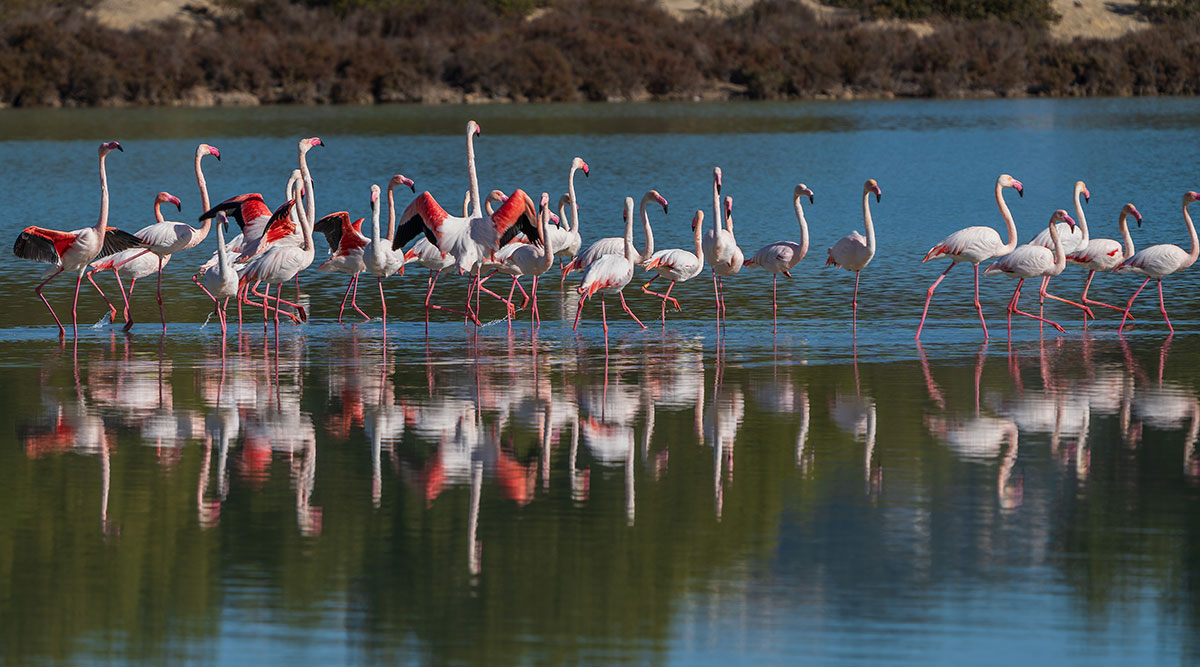 A flamboyance of Greater Flamingos gracefully feeding in Ria Formosa's lagoons.
They feed with a filter system built into their beaks—yes, like tiny whale mouths—sifting plankton and algae in hypnotic unison.
They look like they borrowed their faces from a Salvador Dalí painting. That bill—long and flat like a spoon—is perfect for sweeping up small crustaceans and fish.
Often seen in the tidal zones of Ria Formosa, spoonbills feed in slow-motion choreography. Their white plumage flashes gold at dawn, making them impossible to ignore.
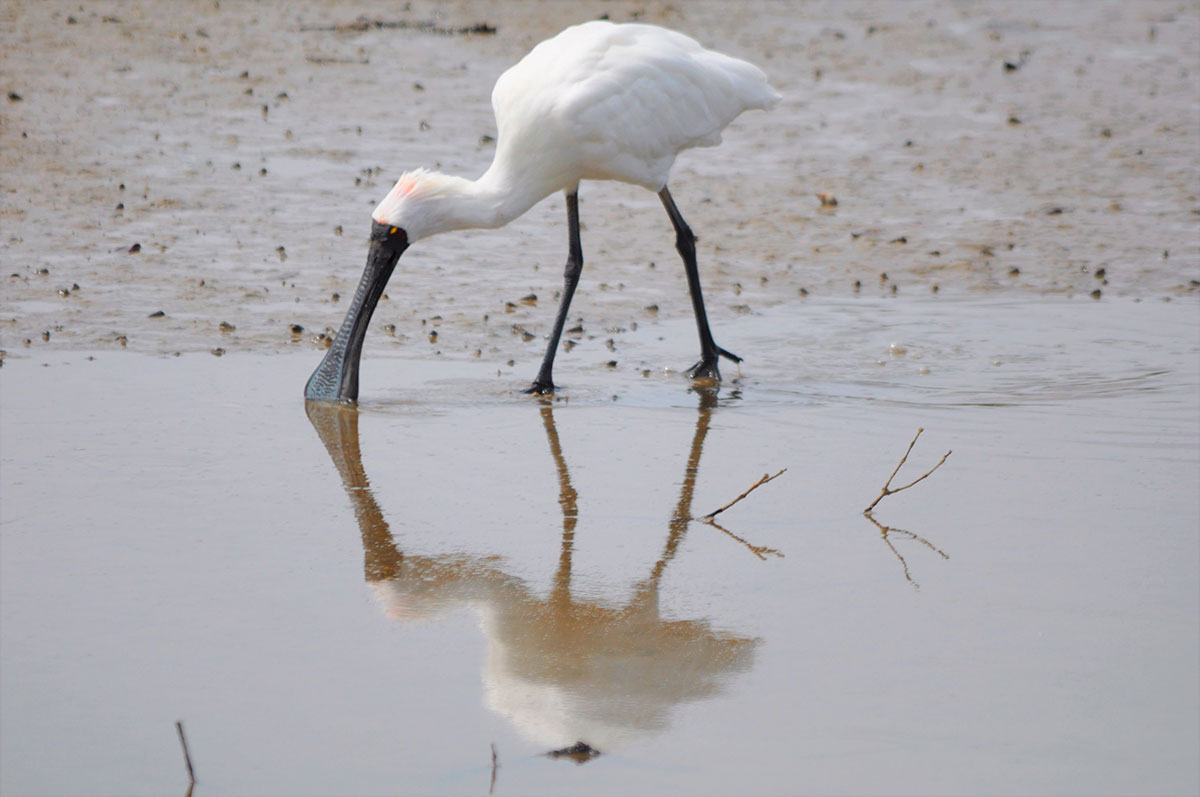 An Eurasian Spoonbill elegantly searches for food at Lagoa dos Salgados.
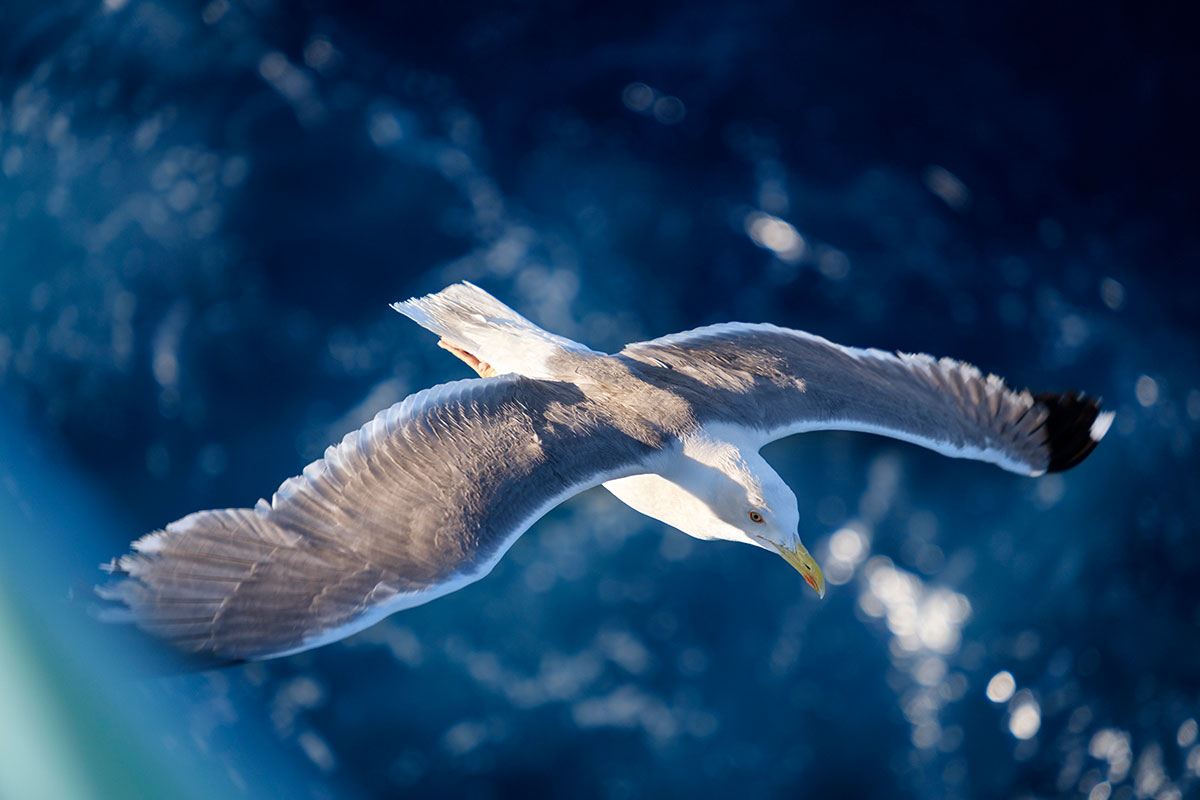 An Audouin's Gull gliding effortlessly over the scenic Ria Formosa.
This vast network of barrier islands, saltwater lagoons, and marshes is the birding hotspot. Home to over 200 species, including little egrets, herons, storks, and oystercatchers.
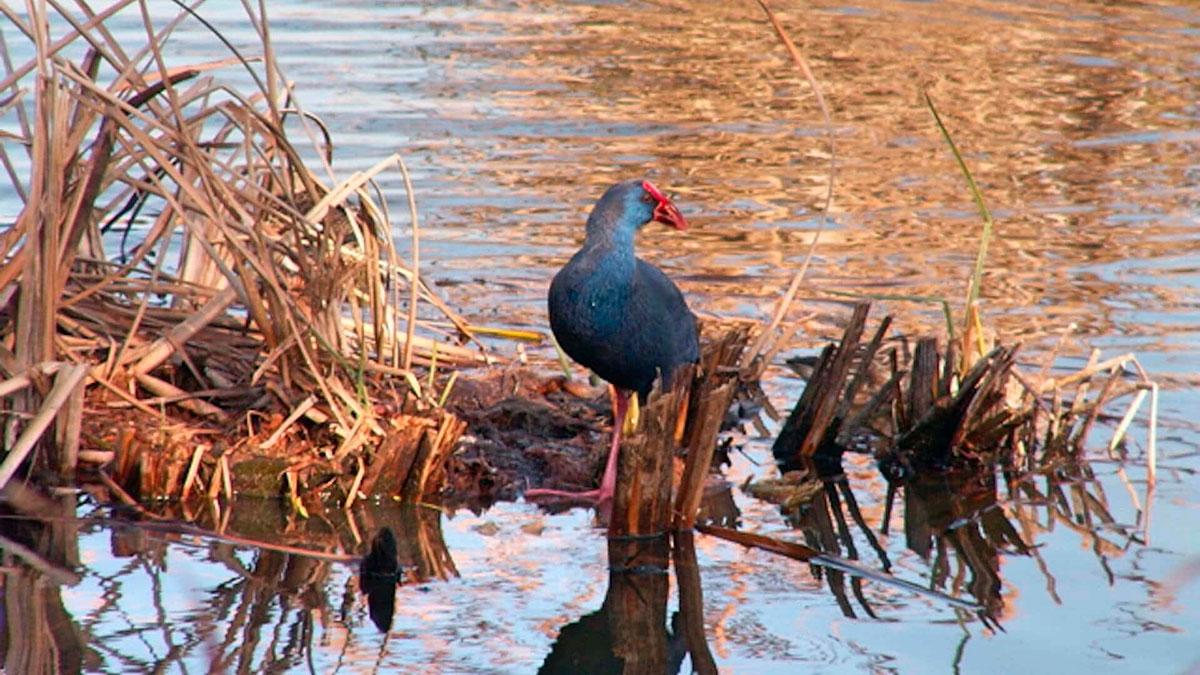 Enthusiasts engage in birdwatching amidst the diverse habitats of Ria Formosa.
Bring your camera, and some patience. From the quiet boardwalks near Olhão to hidden trails by Faro, the landscape shifts constantly with the tide—and with it, the birds.
Salt pans glitter like fractured mirrors. Flamingos, avocets, and stilts strut through them like runway models. Located near the Spanish border, this protected area is both stark and poetic.
It’s one of the few places in Portugal where you can spot the rare Kentish Plover. Bring your scope.
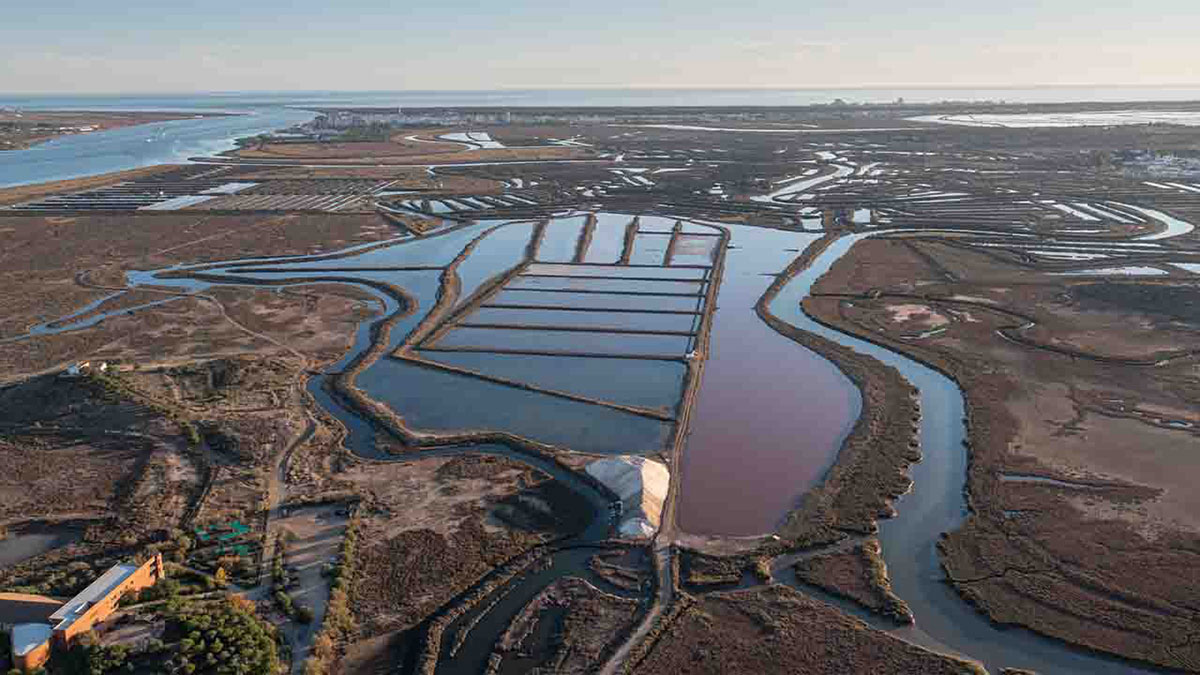 The historic salt pans of Castro Marim, a unique habitat for various bird species.
Tucked between the beach at Praia Grande and the bustling resorts of Armação de Pêra, this brackish lagoon is easy to reach and wildly photogenic.
In spring, black-winged stilts and glossy ibis rule the shallows. Terns divebomb the waters, while hoopoes flit through the tamarisks.
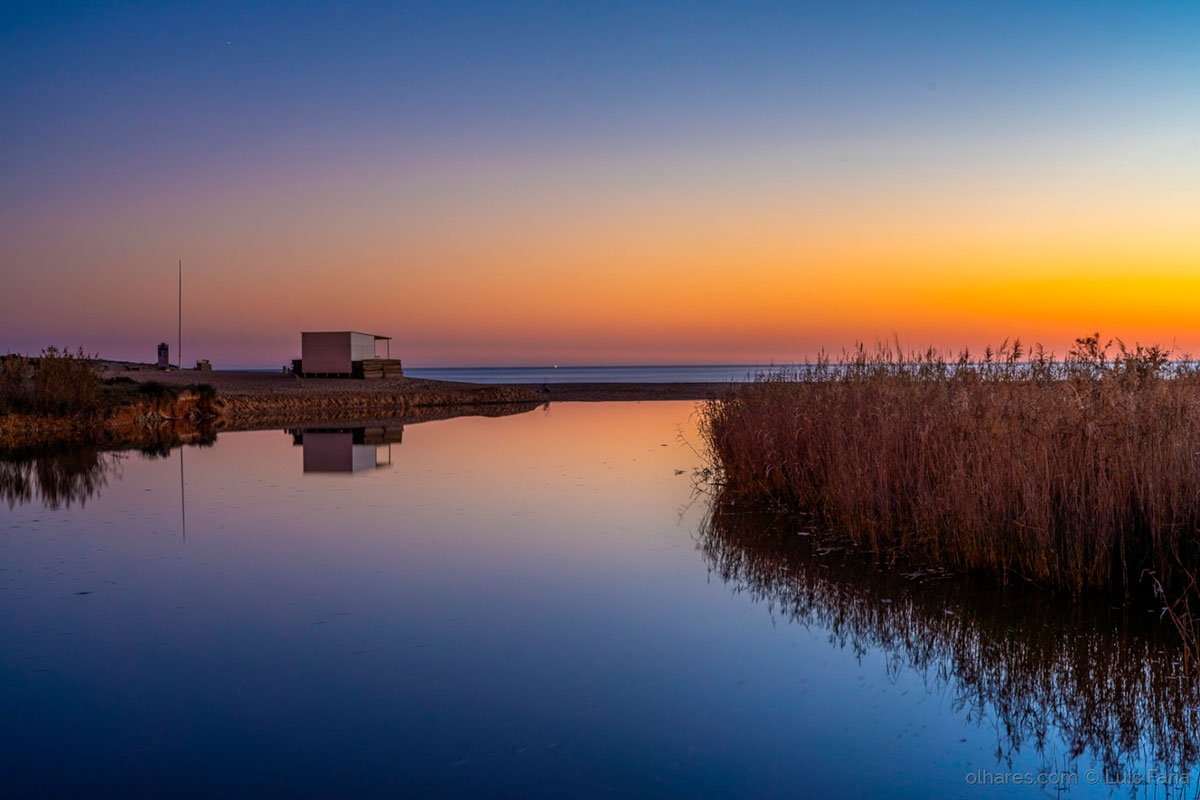 The tranquil waters of Lagoa dos Salgados illuminated by the setting sun.
Birdwatching solo can be meditative—but with a guide, it becomes transformational.
Local guides know where to go, what to listen for, and how to get close without stress to the birds. Whether you’re after a lifer for your checklist or just want to hear the story behind a kestrel’s hunting habits, a guided tour is gold.
Tours often include:
With Toursxplorer.com, you can find birding tours for every level. Some even include boat trips through Ria Formosa or night excursions for owls and nightjars.
The air is thick with new songs. Warblers return, storks settle into nests, and eagles cruise the thermals. Everything feels fresh, green, and urgent.
Migration begins. Birds gather in massive flocks. Raptors like honey-buzzards and booted eagles patrol the cliffs of Sagres. Waders refuel on the tidal flats.
The Algarve stays mild while northern Europe chills. Ducks arrive in droves. Ospreys and grebes take over lagoons. Some flamingos linger, like pink ghosts in the fog.
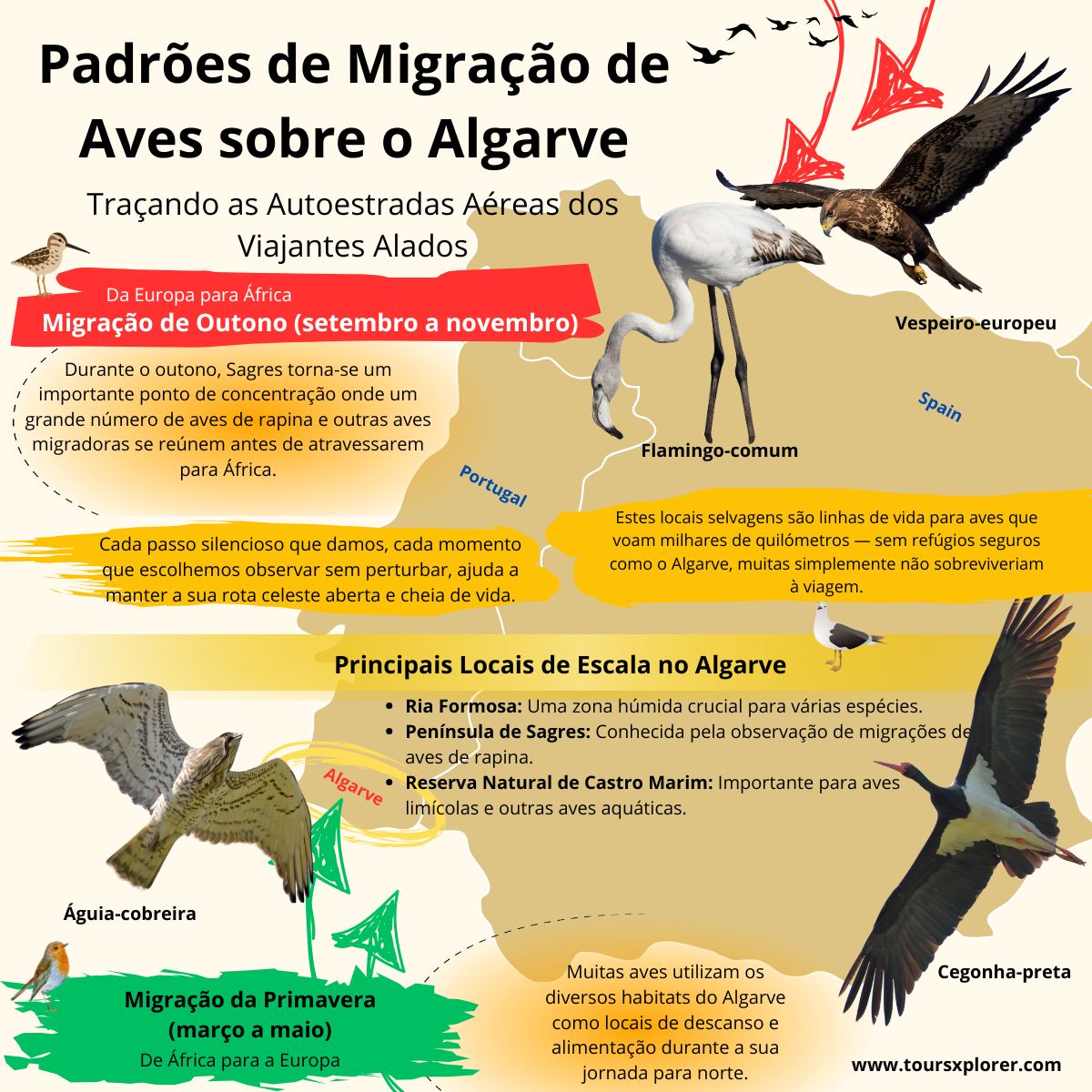
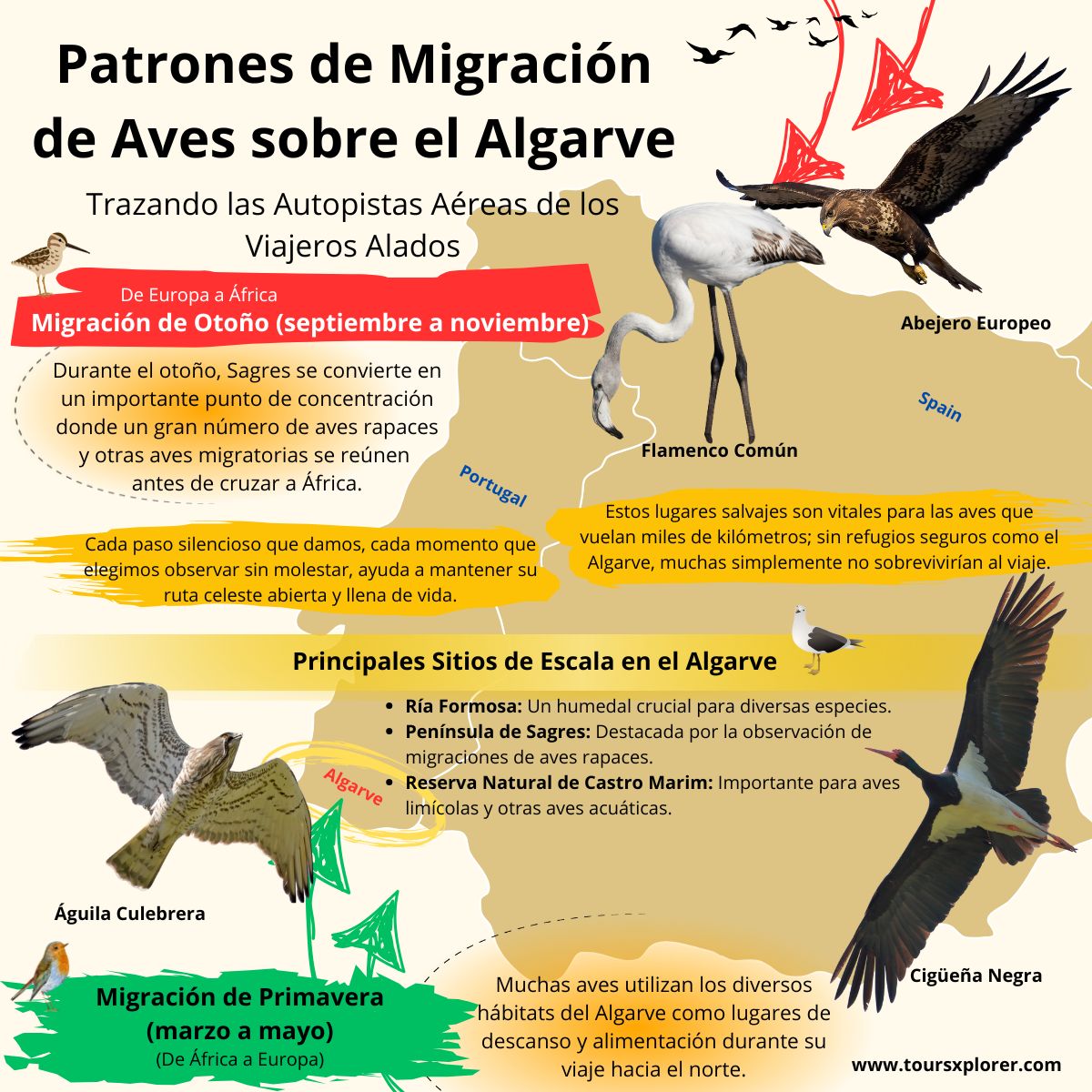
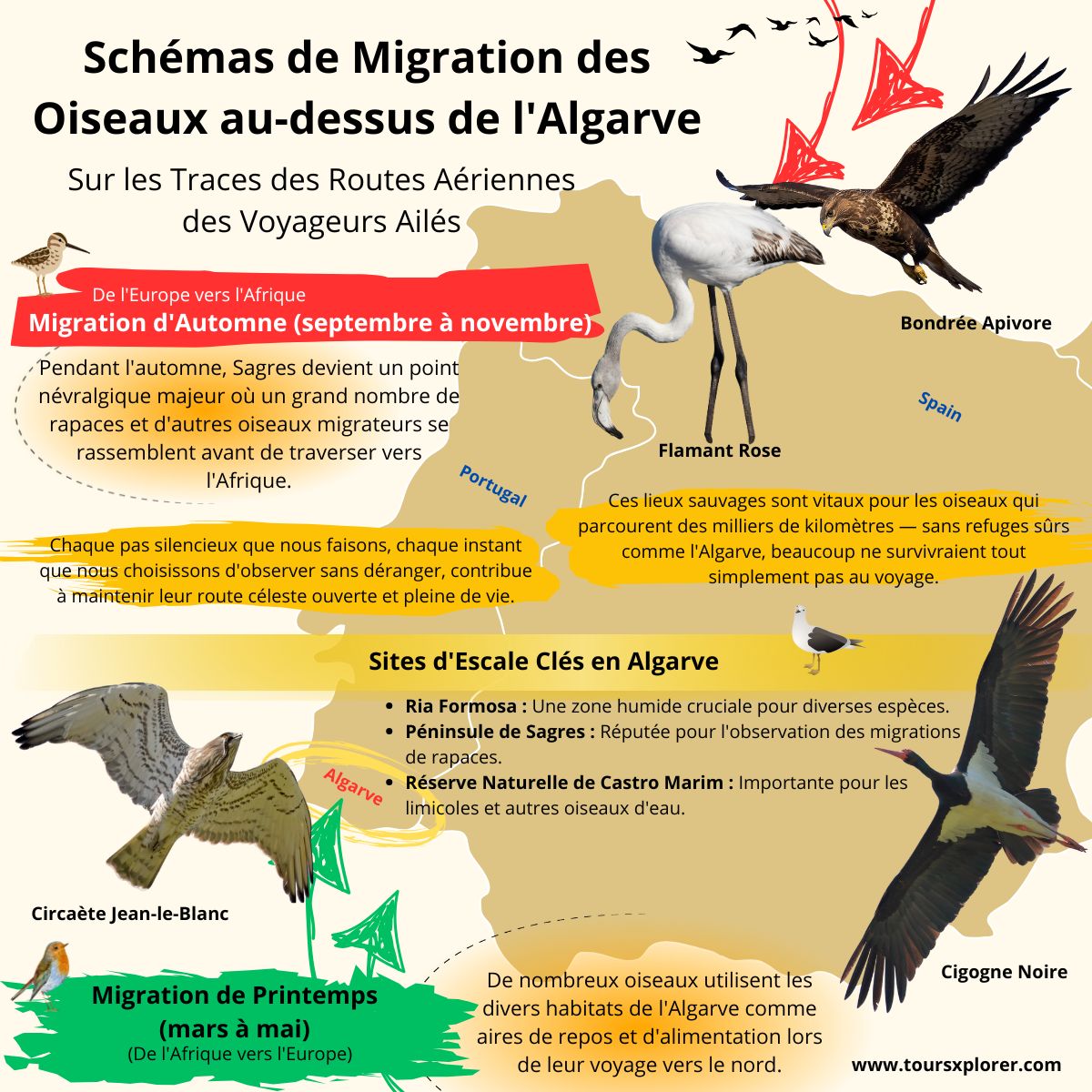
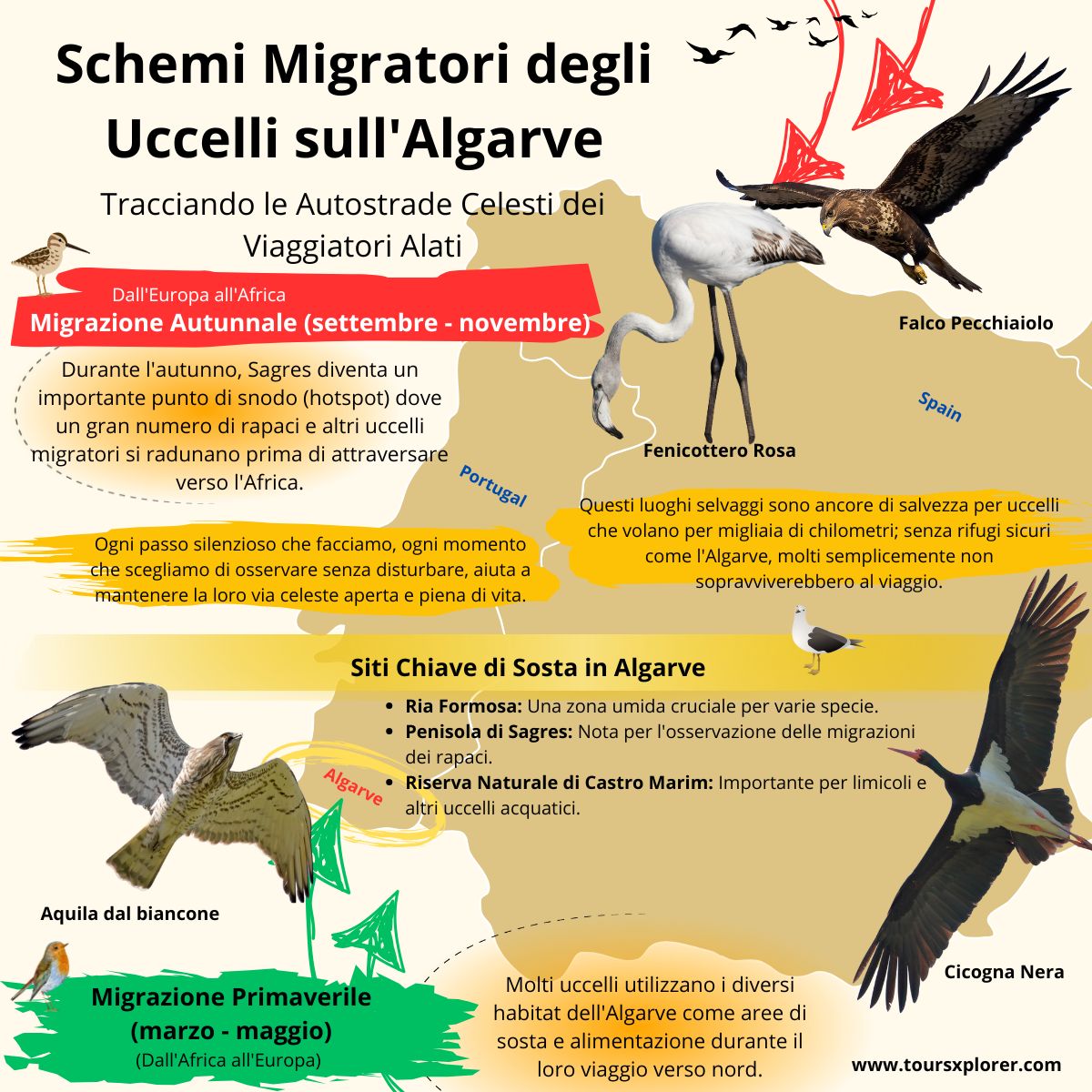
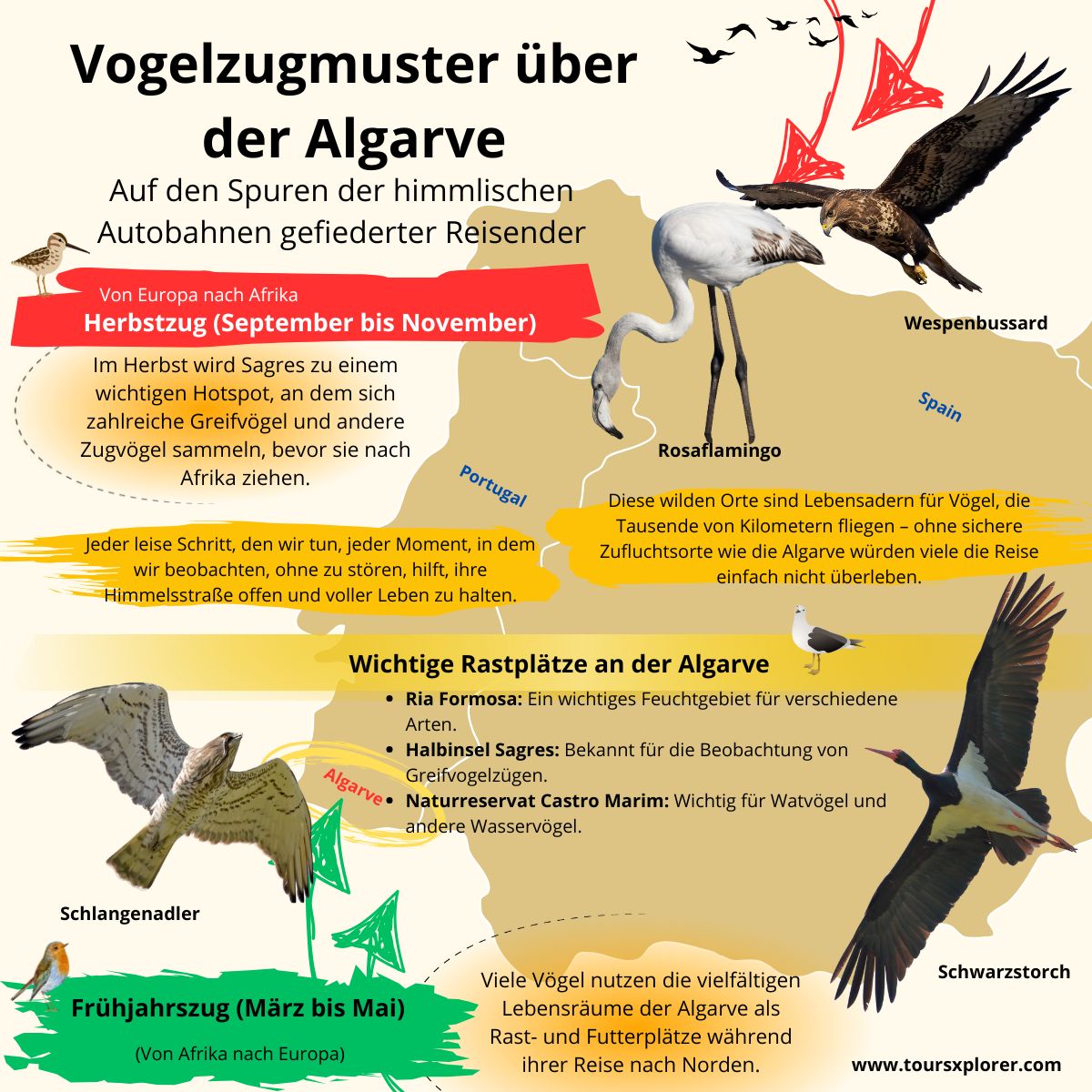
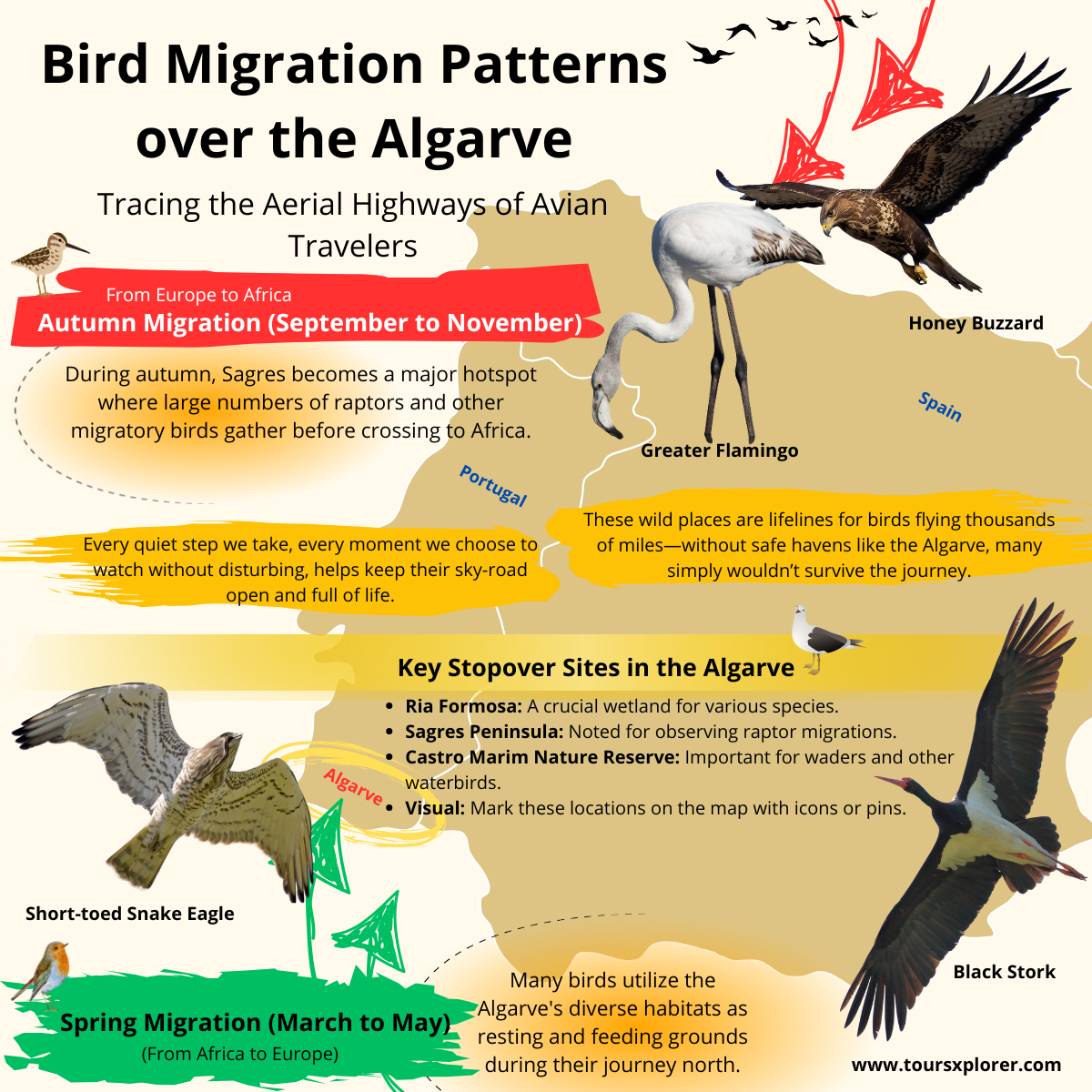
A visual representation of key bird migration pathways intersecting the Algarve.Groups like SPEA and RIAS are constantly monitoring bird populations, restoring habitats, and rescuing injured wildlife. They often host tours and education days—well worth joining.
Respect builds trust—between humans and nature. That trust is fragile.
In the Algarve, birds aren’t just wildlife—they’re part of the folklore. The white stork is seen as a symbol of good fortune. Locals even build special platforms to help them nest.
Traditional salt harvesting in Castro Marim coexists with avian life. Festivals celebrate the harmony, blending music, food, and guided birdwalks.
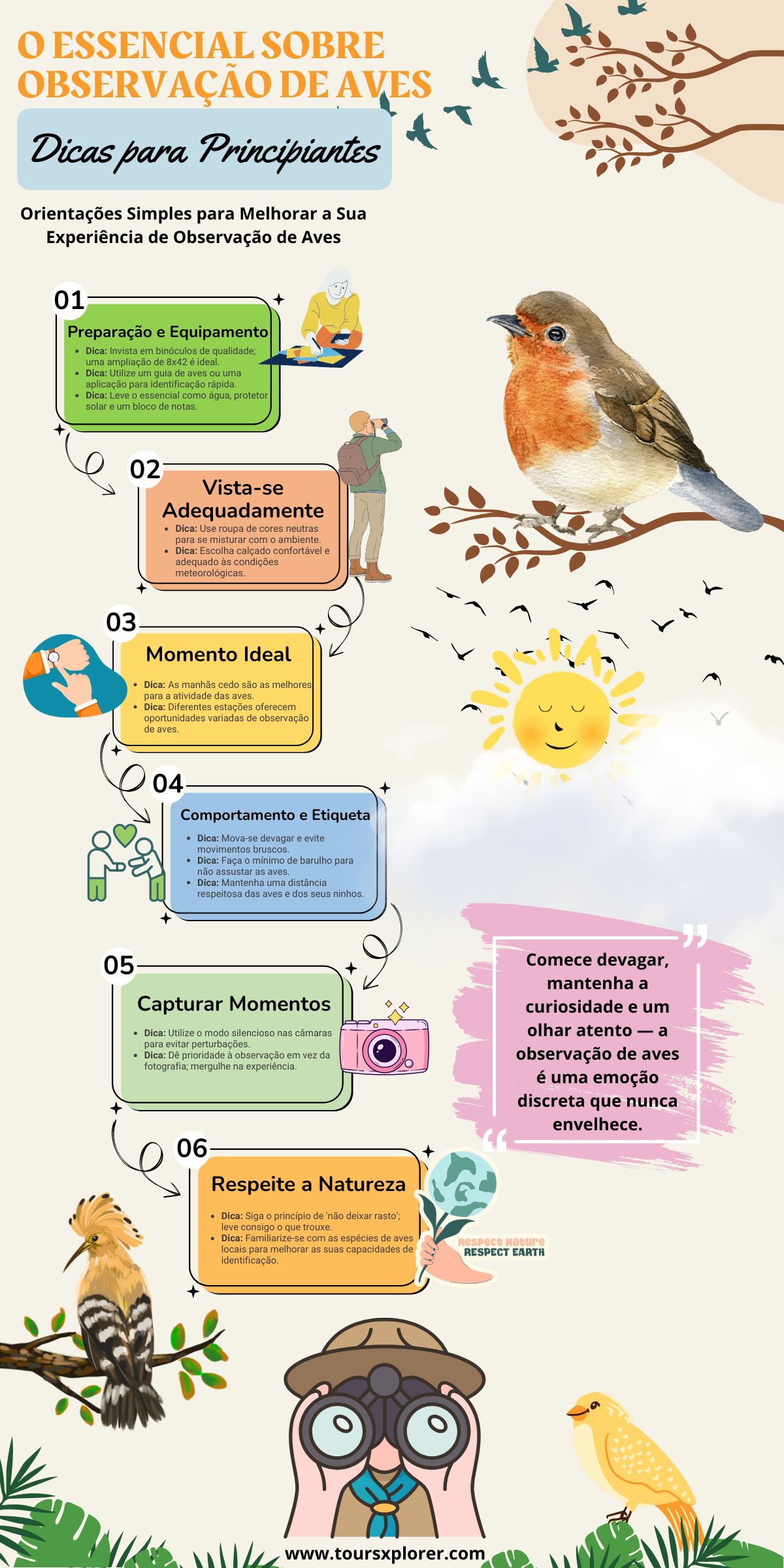
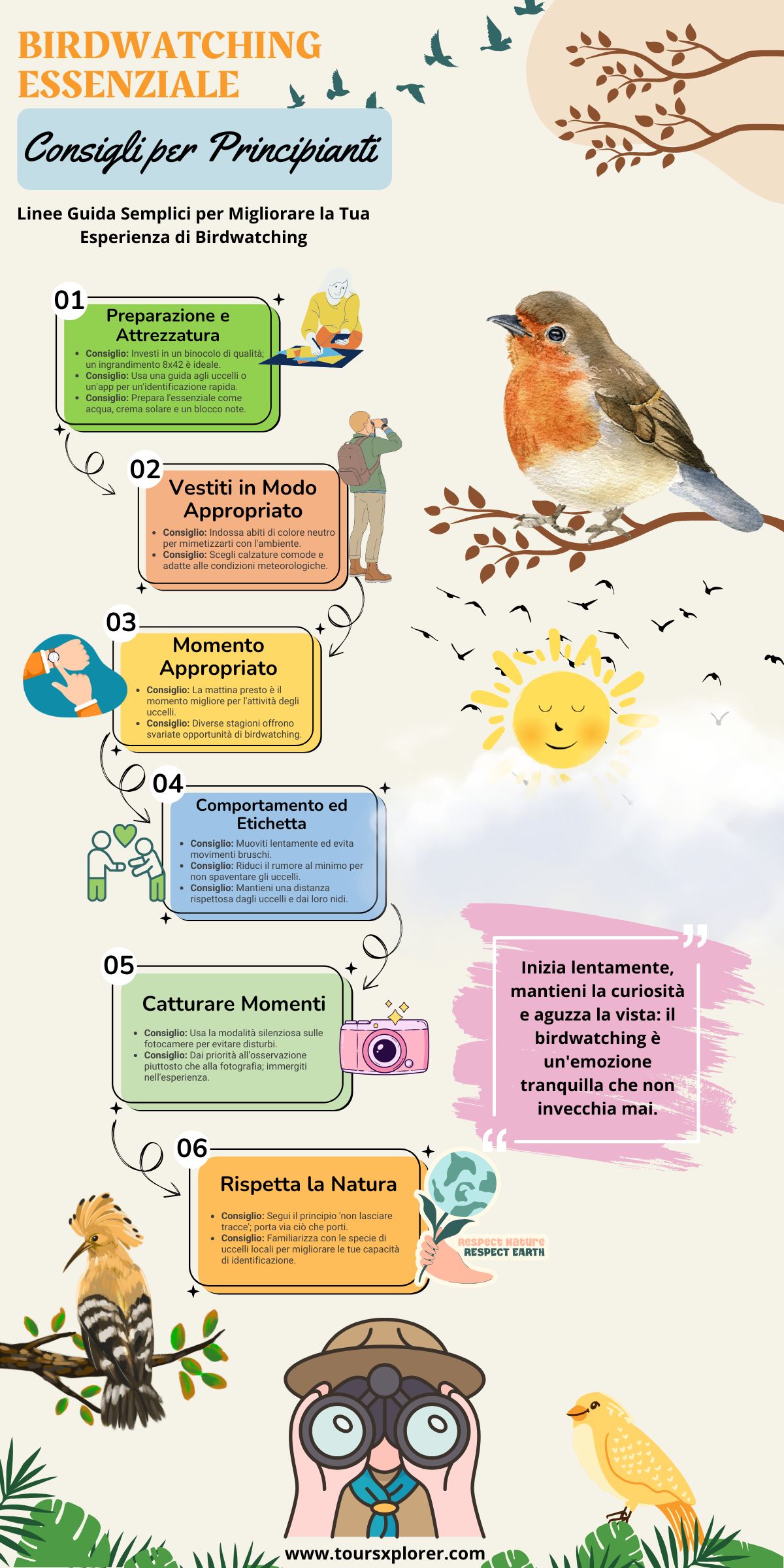
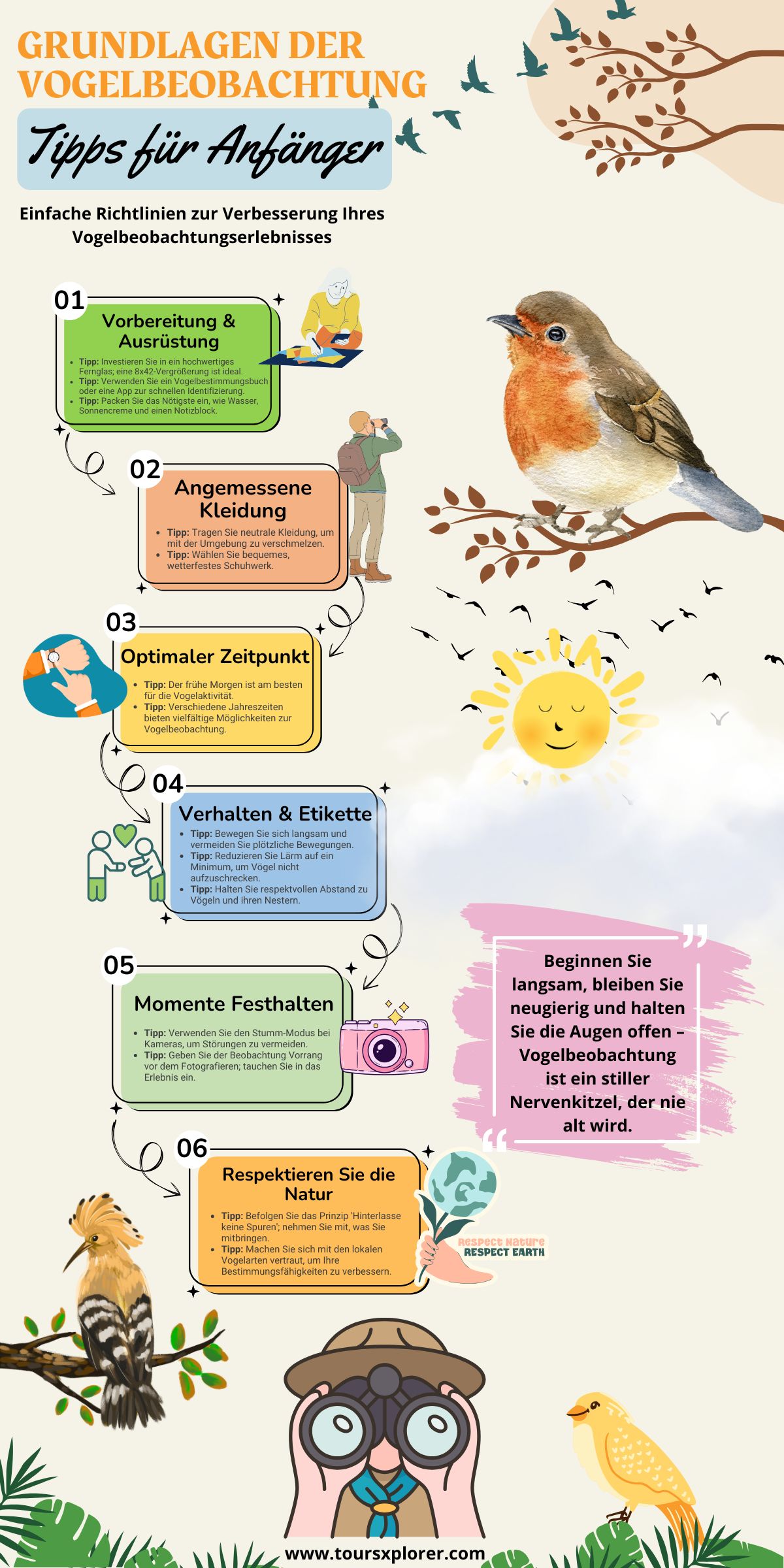
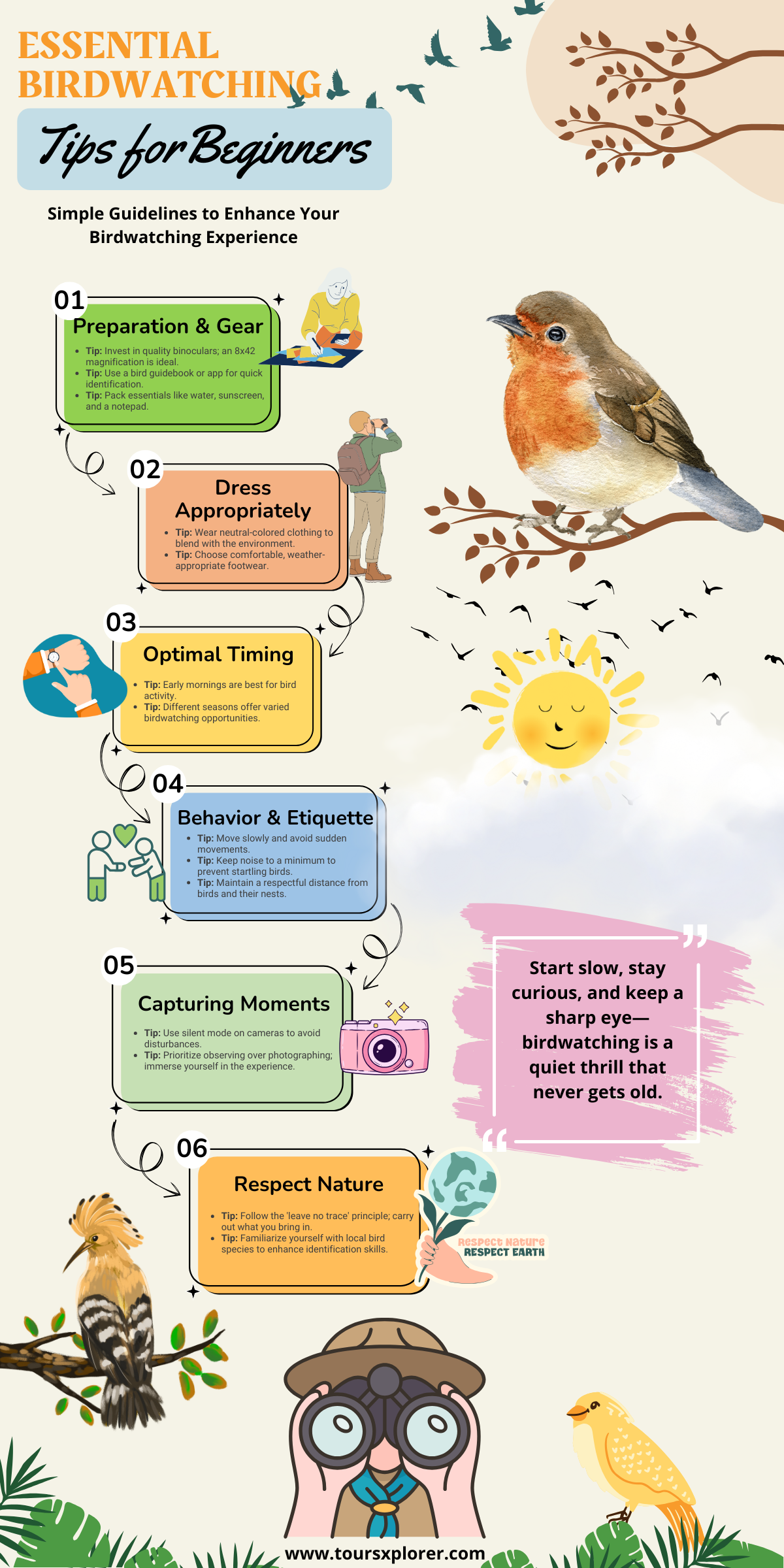
Handy guidelines to enhance the birdwatching experience for beginners.This isn’t just a destination—it’s an invitation. A call to slow down, to listen, to witness life unfolding on feathered wings.
Whether it’s the first time you spot a bee-eater or the hundredth time a flamingo makes your heart flutter, the Algarve delivers awe in heavy doses.
So grab your gear, follow the call—and book your guided birdwatching experience now at Toursxplorer.com.
The Algarve is singing. You just have to listen.