




Best Things to Do in Iceland in Winter
Explore northern lights, ice caves, and uncrowded landscapes on guided winter tours across Iceland.
Iceland's winter season, roughly November through March, transforms the country into a destination for aurora hunters, glacier explorers, and adventurers seeking solitude. Daylight shrinks to four to six hours in December, but guided tours maximize evening and nighttime experiences. Ice caves inside Vatnajökull glacier—the island's largest ice mass—are accessible only when winter stabilizes the ice structure, making this the most compelling reason to visit during these months.
Why Visit Iceland in Winter?
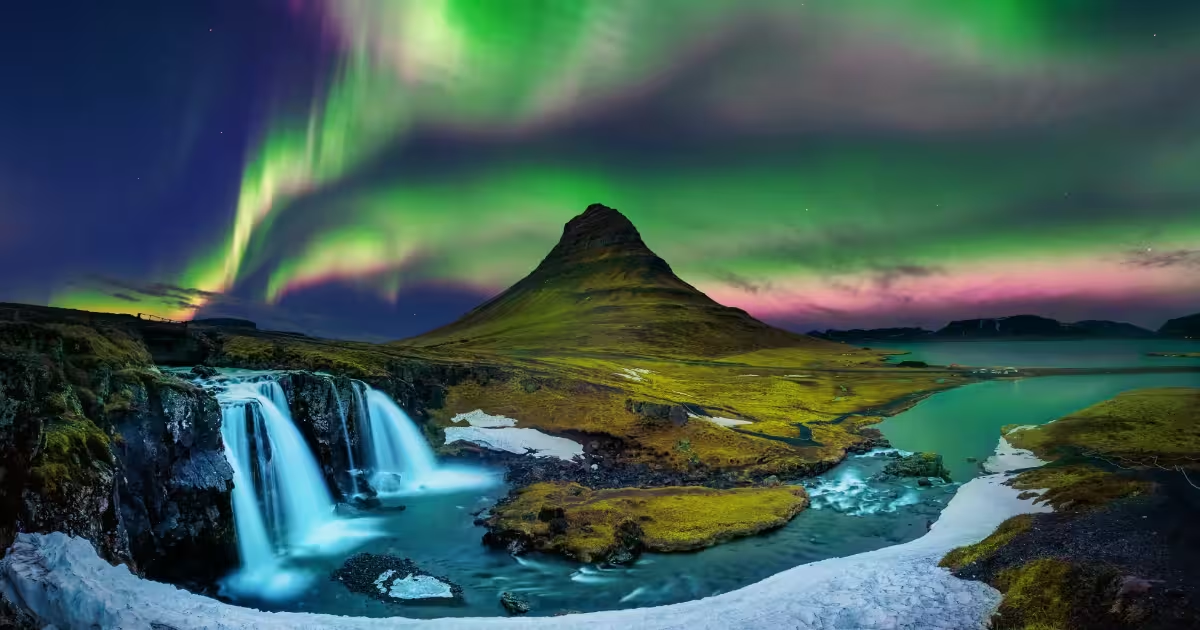
Winter fundamentally reshapes Iceland's appeal. While summer attracts roughly two million annual visitors, winter months bring dramatic quiet. Daylight ranges from four to six hours at the winter solstice in December, but this brevity unlocks unobstructed views of the northern lights on clear, dark nights.
The Aurora Borealis is visible from September through April, yet winter's extended darkness and stable cold fronts create optimal viewing conditions. Guided small-group tours from Reykjavik, Iceland's capital, chase the best-lit skies away from the city's light pollution. Beyond aurora hunting, winter ice caves in Vatnajökull—covering 8,100 square kilometres and representing one-tenth of Iceland's total landmass—are structurally safe only when temperatures drop below freezing consistently. These caves feature walls of crystal-blue glacial ice, some reaching depths of 200 metres into the glacier's interior.
Winter is not the off-season in Iceland; it is the season for experiences you simply cannot have any other time of year.
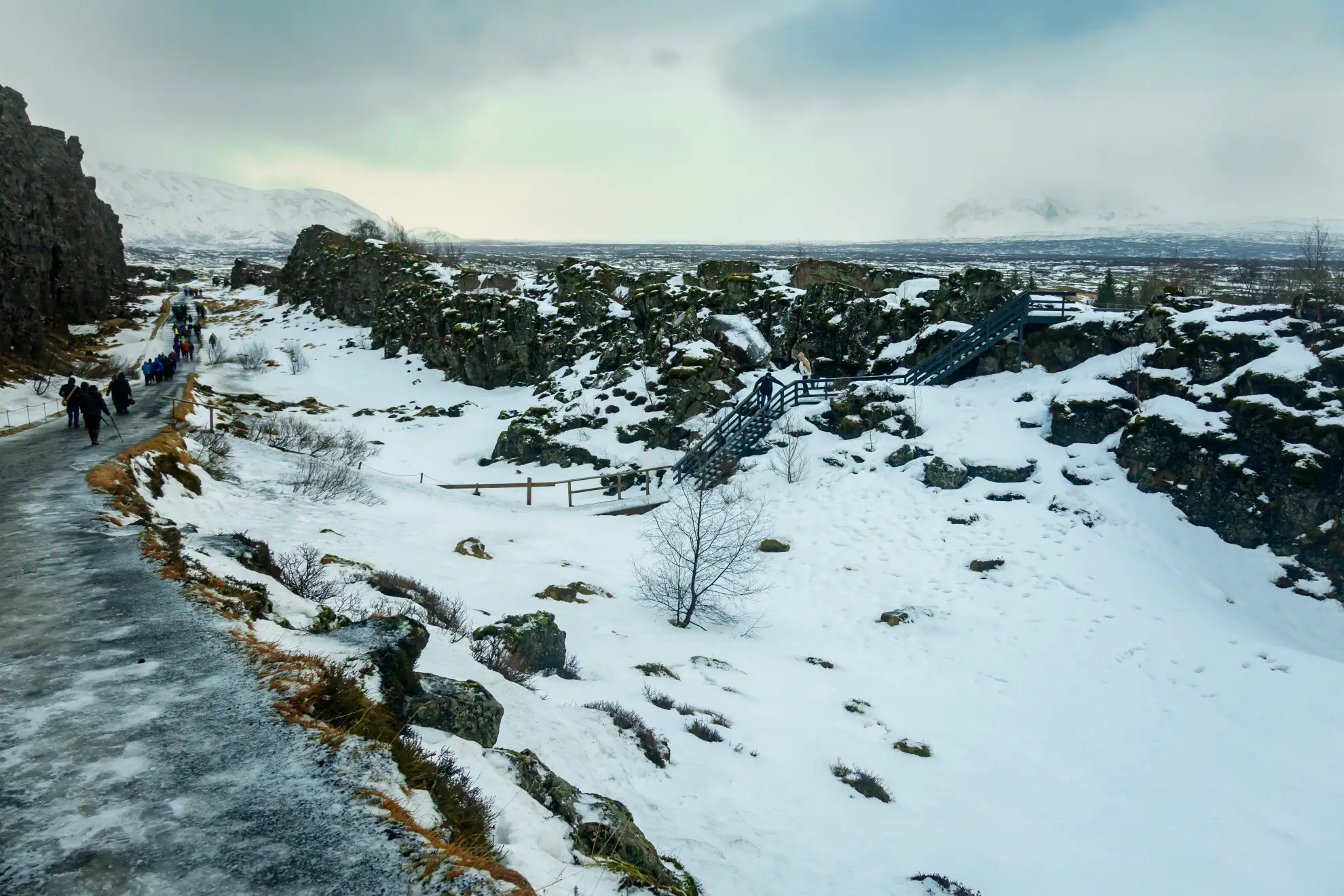
Travellers planning a winter itinerary benefit from uncrowded access to the Golden Circle, a route encompassing Þingvellir National Park (UNESCO World Heritage site, established 970 CE), Geysir geothermal area, and Gullfoss waterfall. Snow and ice transform these landmarks into stark, photogenic landscapes.
How Many Hours of Daylight in Iceland's Winter?
December marks the shortest days, with Reykjavik receiving approximately four to six hours of twilight and daylight combined. By late January, this extends to six to eight hours. In early March, the sun rises before 7 a.m. and sets after 6 p.m., offering nine to ten hours of daylight.
This constraint reshapes tour scheduling. Most guided tours depart in the late afternoon or evening, aligning with natural darkness for northern lights viewing. Daytime activities concentrate on glacier walks, ice cave exploration, and Golden Circle drives, where snow and ice enhance visual contrast. Tour operators synchronize itineraries with the astronomical twilight phase—roughly one to two hours before and after sunset—when the sky retains enough light for safe travel but darkness deepens enough to reveal aurora activity.
What Ice Caves Can You Explore in Iceland's Winter?
Vatnajökull glacier dominates Iceland's ice cave landscape. Located in the southeast, Vatnajökull spans 8,100 square kilometres and contains subglacial caves carved by geothermal heat and meltwater. The most accessible and popular caves lie within Skaftafell region, a sub-area managed by Vatnajökull National Park. Tours to Skaftafell ice caves depart from Reykjavik (six to seven hour drive each way) or from towns closer to the glacier, such as Hof or Hnappavellir.
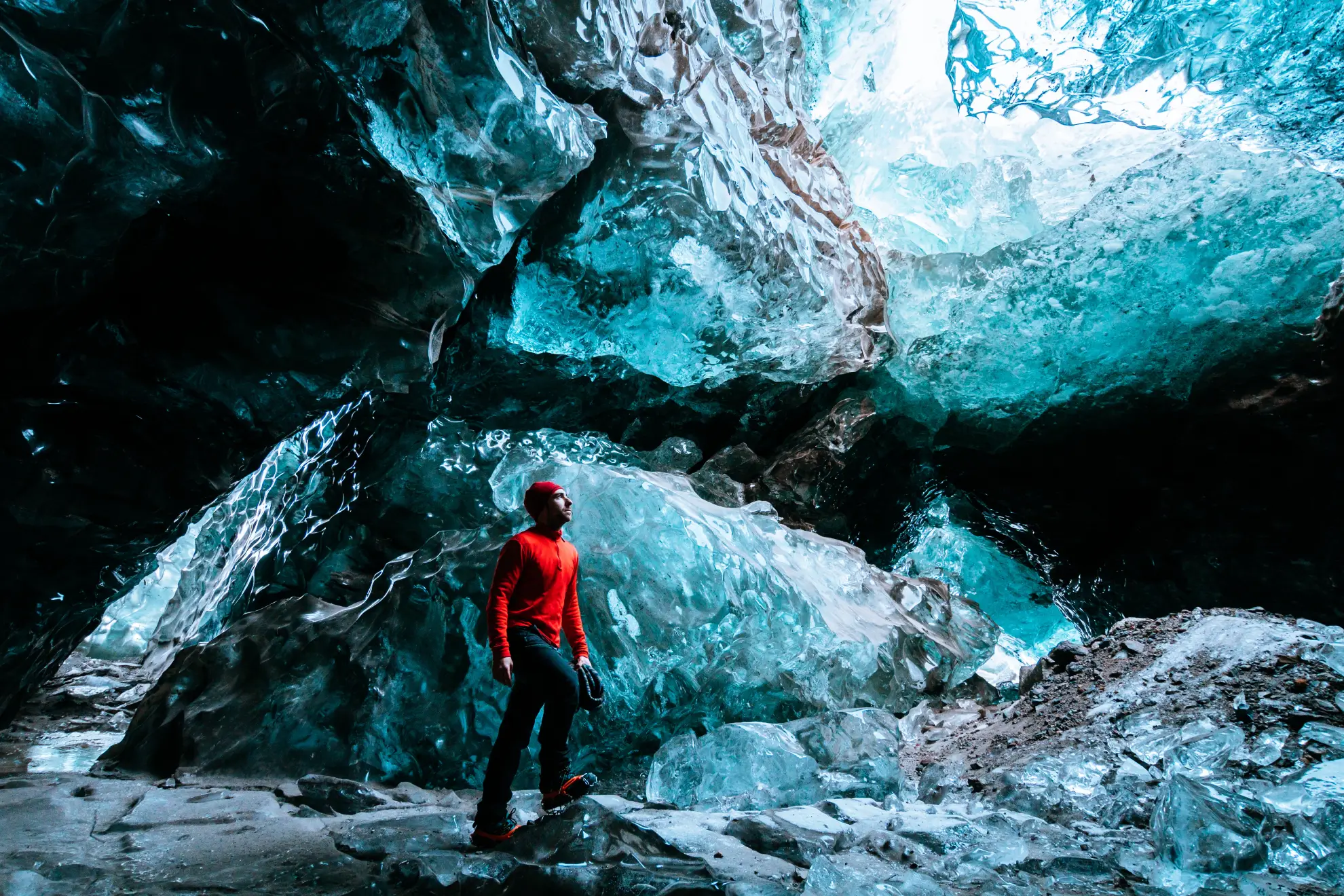
Inside these caves, walls display layered ice in shades of white, grey, and deep blue. Blue ice forms when compressed glacier snow expels air bubbles, allowing light to penetrate and scatter in the blue wavelength. Tours typically last two to three hours inside the glacier and include all necessary safety gear: crampons, helmets, and ice axes. Guides assess ice stability daily and cancel tours if structural integrity is compromised. Winter (December–February) sees the most stable conditions; March and April bring increased meltwater risk.
The ice cave interior exists in a state of constant—though imperceptible—motion, as the glacier flows downslope approximately 20 to 30 metres per year.
Aurora and Evening Tours from Reykjavik
Walking and Cultural Tours in Reykjavik
Ready to book your Iceland winter adventure? ToursXplorer offers curated northern lights tours, private Reykjavik walks, and multi-day glacier expeditions. Filter by tour type and duration to find your perfect match.
Browse all Iceland tours on ToursXplorerPlanning Your Iceland Winter Itinerary: Practical Considerations
Preparation determines success in Iceland's winter environment. Daylight scarcity, snow cover, and dark nights are features, not obstacles, when properly anticipated. ToursXplorer's search filters allow you to narrow tours by activity type, group size, and duration, then compare departure times and seasonal availability.
Weather volatility is real. Reykjavik's December average temperature sits at minus 0.5°C; the South Coast near Vatnajökull averages minus 4°C. Wind speeds routinely exceed 25 kilometres per hour, and sudden visibility drops due to snow squalls occur. Reputable tour operators, listed on ToursXplorer, provide comprehensive gear checklists and reserve the right to cancel or reschedule if safety thresholds are crossed.
Consider layering: thermal base layer, fleece mid-layer, and insulated waterproof outer shell. Hands and feet deserve special attention; insulated gloves, thick socks, and winter boots rated to minus 20°C are standard. Many tour operators loan specialized equipment such as crampons and helmets at no extra cost, but personal outer layers must be sourced in advance.
Booking windows differ by tour type. Northern lights tours often sell out weeks in advance during peak aurora season (December–January) but may offer last-minute cancellation discounts. Private walking tours and glacier expeditions can be reserved with shorter lead times. ToursXplorer's filter and booking system shows real-time availability and pricing.
Best Time Within Winter: December, January, or February?
Each month offers distinct conditions. December brings the winter solstice (21 December) and the darkest skies—ideal for aurora visibility—but the fewest daylight hours. Daytime activities must compress into a four to six-hour window. January maintains dark nights and winter stability, with slightly more daylight (six to seven hours) than December. February offers a balance: aurora nights remain optimal, daylight extends to seven to eight hours, and ice cave conditions remain stable.
March complicates planning. While daylight jumps to nine to ten hours, increasing meltwater from warming temperatures destabilizes ice caves. Northern lights become less frequent as nights shorten. If ice cave exploration is your priority, December through February is essential. If flexibility on ice caves suits your goals, March offers a middle ground between winter aurora season and spring's longer days.
Weather unpredictability spans all three months. Reykjavik's cloudiness averages 75 percent in winter; clear nights for aurora viewing require patience or flexibility in tour rescheduling. Many tour operators offer rain-check policies or reschedule options at no charge if aurora activity is not visible on your booked date.
Frequently Asked Questions
Iceland's winter is safe when proper precautions are taken. Tour operators follow strict safety protocols, and roads are regularly maintained and salted. Dress warmly, carry emergency contact information, and book guides for glacier and ice cave activities. Hire a rental car only if experienced in winter driving; alternatively, book multi-day tours that include transportation. Solo travel is common; female travellers report Iceland as one of Europe's safest destinations year-round.
Visa requirements do not change by season. Iceland is part of the Schengen Area; EU and EEA citizens enter without visas. US, Canadian, Australian, and New Zealand citizens receive 90-day visa-free stays. Non-Schengen travellers must check eligibility. Winter travel does not alter immigration rules, only logistical planning. Confirm passport validity at least six months beyond your departure date.
No. Aurora visibility depends on solar activity, cloud cover, and geomagnetic conditions. Clear, dark skies are essential; Reykjavik's 75 percent winter cloudiness means aurora may hide behind clouds on many nights. Peak aurora season is December and January, coinciding with maximum darkness. Tour operators typically offer reschedule options if aurora is not visible on your booked date. Success rates average 60 to 70 percent for guided tours during peak season.
Northern lights tours from Reykjavik typically cost 40 to 80 USD per person for small-group tours, 150 to 300 USD for private tours. Private walking tours in Reykjavik range from 200 to 500 USD depending on group size and meal inclusions. Multi-day glacier and ice cave expeditions cost 800 to 2,000 USD per person, including transport, guides, meals, and equipment. Accommodation in Reykjavik averages 100 to 250 USD per night for mid-range hotels.
Ice cave tours typically require 6 to 8 hours total: 3 to 4 hours driving from Reykjavik or nearby towns, 2 to 3 hours on the glacier including cave exploration, and 30 minutes for safety briefing and gear fitting. Tours depart early morning or midday to maximize daylight and return before dark. Fitness level should be moderate; uneven ice, crampons, and altitude gain up to 200 metres require steady balance and endurance. Operators provide all technical gear and assess participants' suitability before departure.
Layer clothing: thermal base layers, fleece or wool mid-layer, insulated waterproof jacket and trousers, wool hat, balaclava or neck gaiter, insulated gloves, thick wool socks, and winter boots rated to minus 20°C. Bring sunglasses and sunscreen for daytime snow glare. Pack a headlamp for dark afternoons. For ice cave tours, bring extra warm socks and hand/toe warmers. Most tour operators loan specialized gear (crampons, helmets) but expect to supply personal outer layers.