Last updated:
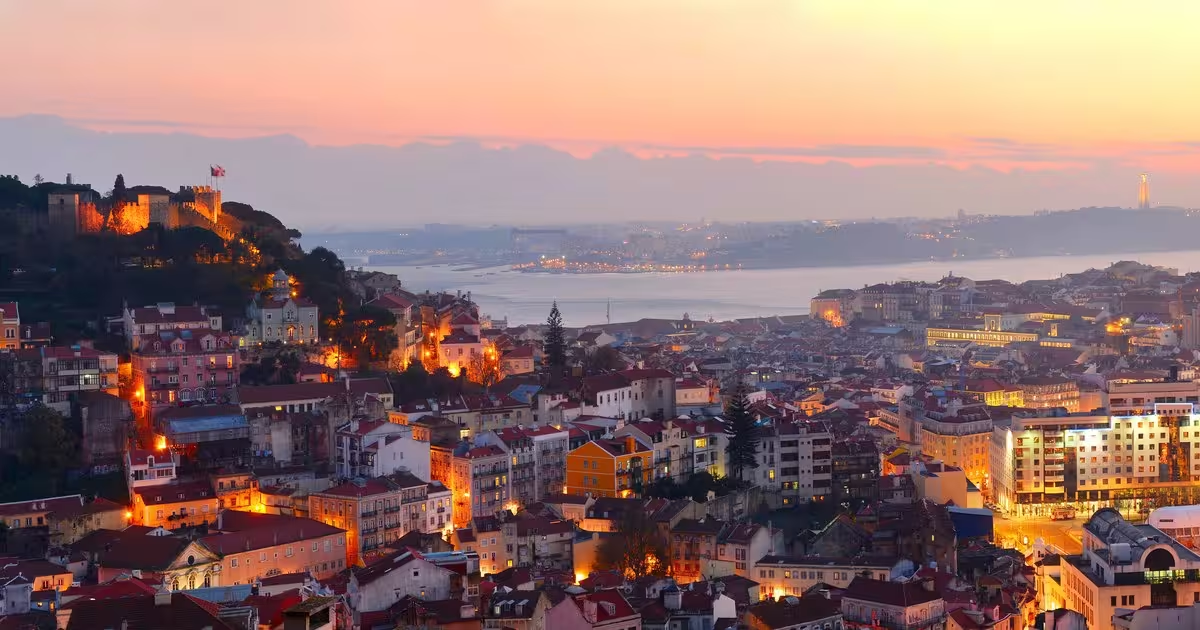
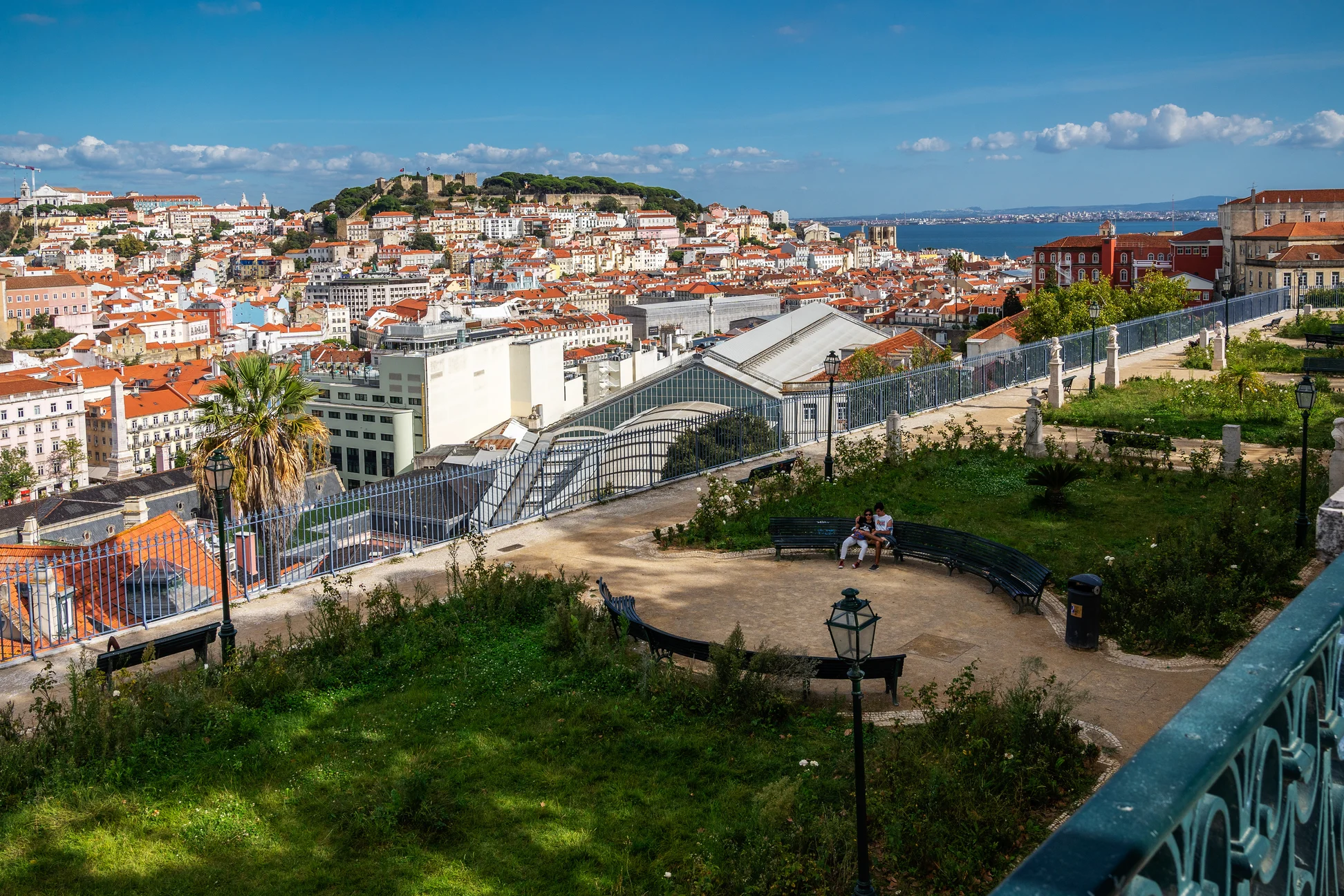
Lisbon is a city you see from above. Its miradouros, the viewpoints on top of the hills, often come with a kiosk, a few benches and a view across the rooftops to the Tagus.
Travellers usually look for them by name: Santa Luzia and the Portas do Sol, Senhora do Monte, Graça and Santa Catarina. Pair Senhora do Monte and Graça on one hill, Santa Luzia and the castle on the next, and finish the day at Santa Catarina or São Pedro de Alcântara on the other side of the centre. If you would rather see the whole city in a day, Lisbon in one day: Alfama, Belém and the river shows how the viewpoints fit with Alfama, Belém and the river.
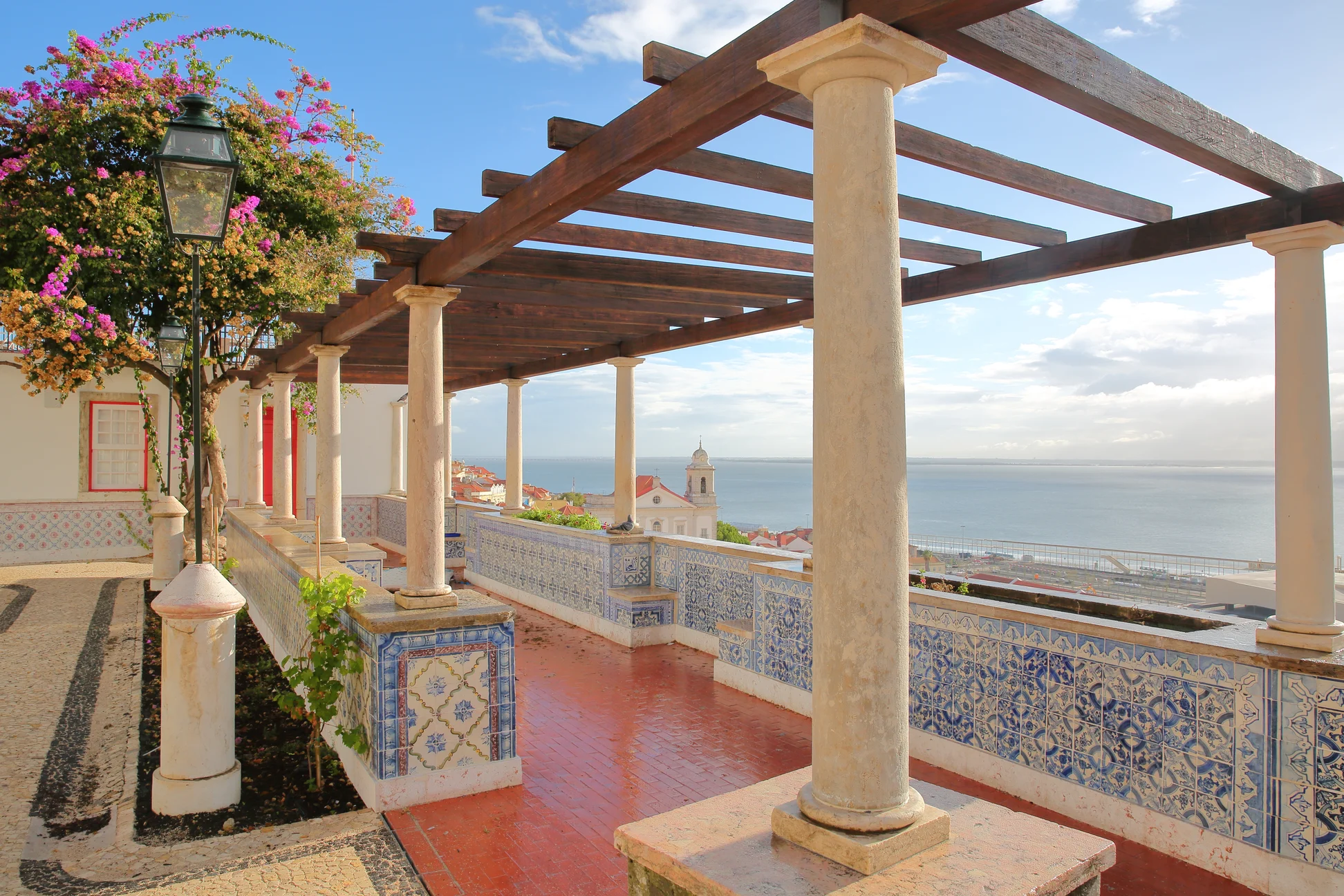
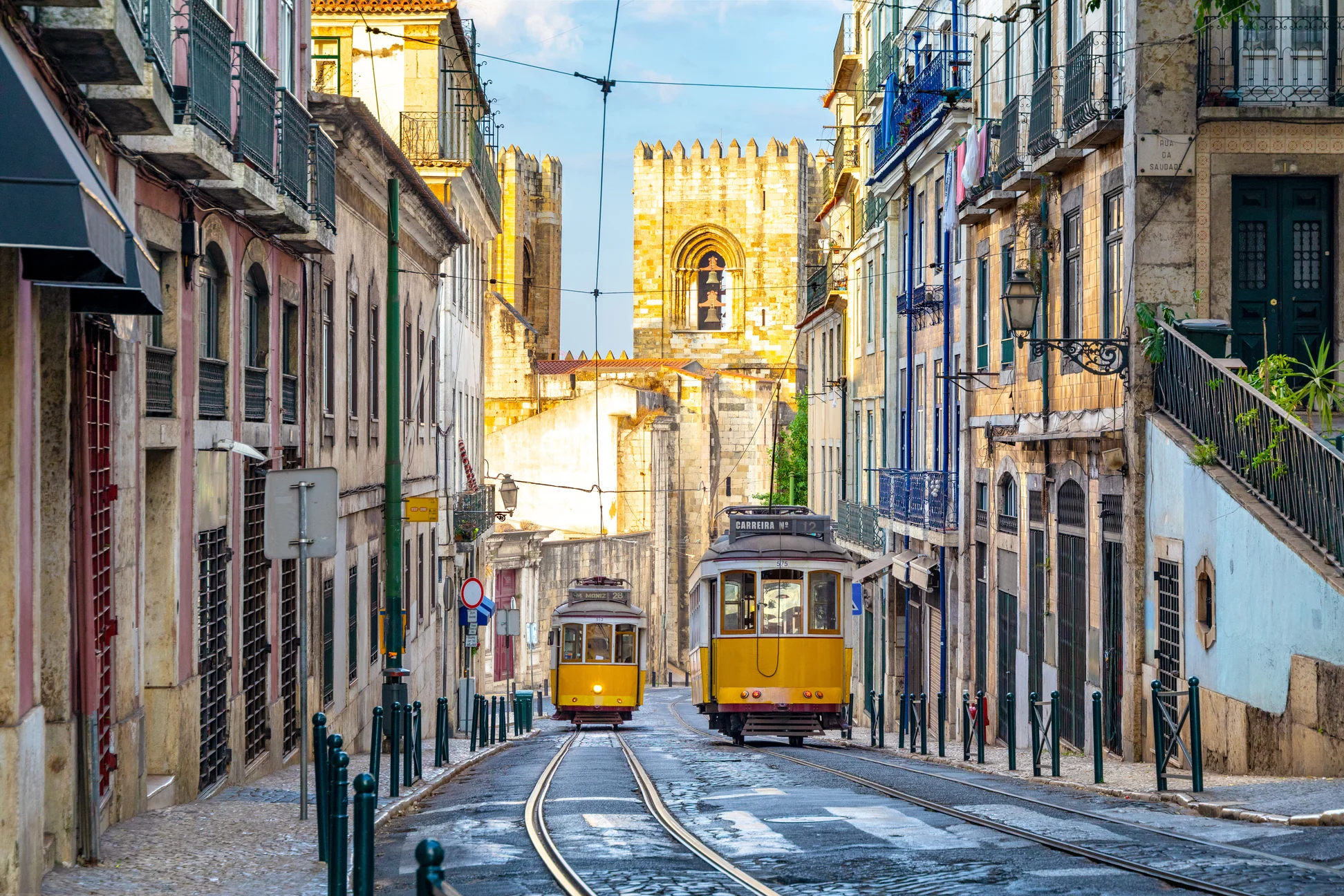
The Miradouro de Santa Luzia is in the Largo das Portas do Sol e de Santa Luzia, in Lisbon, so the two names belong to the same stop in Alfama. It is known for its decorative tiles, its garden and pond, and the trams that pass by sounding their bells. Arrive early if you want the terrace to yourself.
Three churches help you get your bearings from here: Santa Engrácia's dome, Santo Estêvão and São Miguel with its twin towers, with the Tagus behind. Look at the walls as well as the view: tile panels by António Quaresma at Santa Luzia show Praça do Comércio as it looked before the earthquake, and the castle being taken from the Moors.
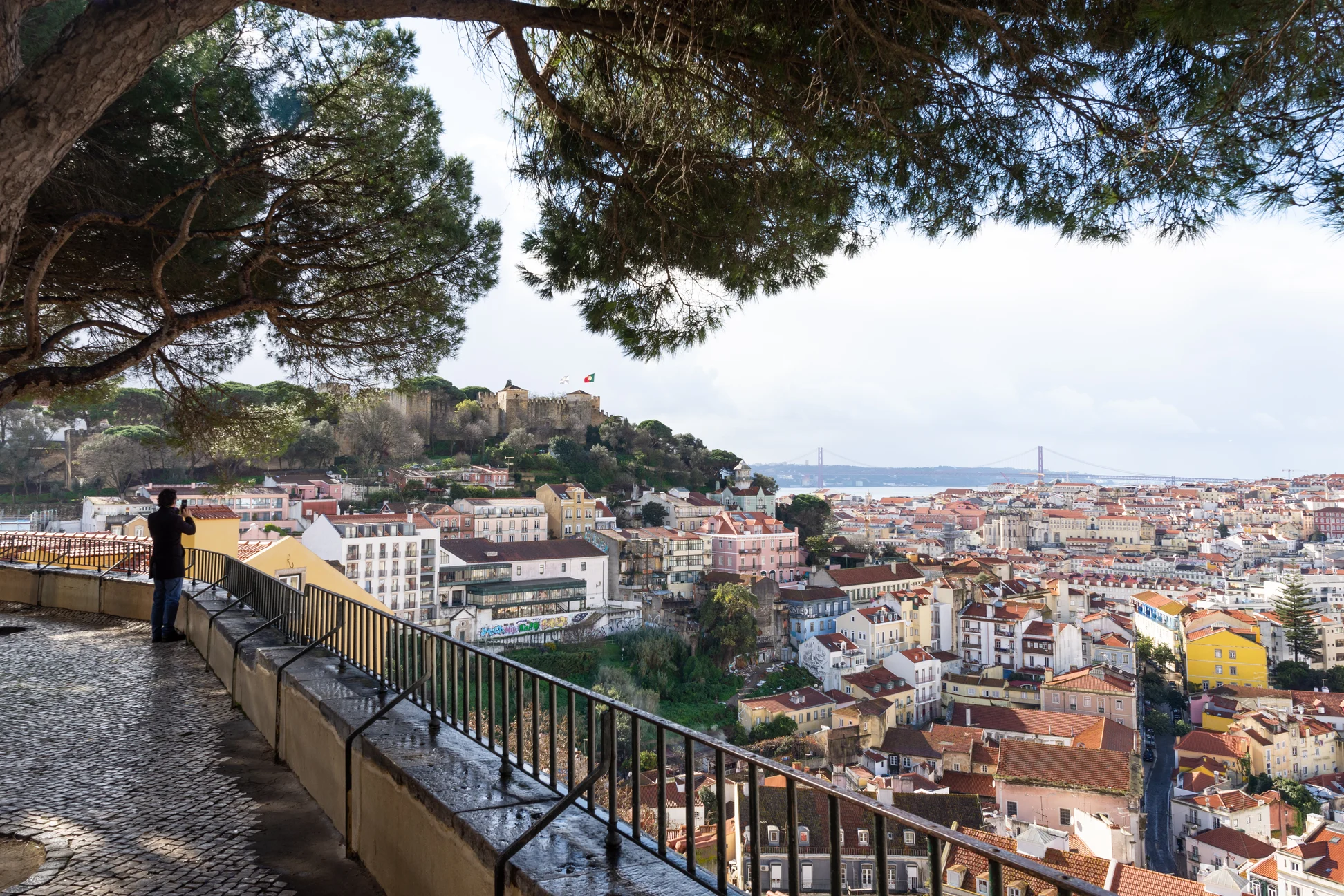
The Miradouro da Senhora do Monte, a few metres from the Miradouro da Graça, is among the quietest spots in Lisbon for taking in the view. To its left are the church of Graça and the castle, and the view runs over the Baixa rooftops and the Carmo ruins to the pastel-coloured Avenidas Novas, with the river beyond.
The place has a long memory. This is where Afonso Henriques, the first king of Portugal, assembled his troops to conquer Lisbon, and the chapel of the Lady of the Mount was founded in 1147.
If the hills feel daunting, the Electric Tuk Tuk Guided Tour in Lisbon Old Town climbs by electric tuk-tuk from the old town up to the Graça panorama, with a stop above Alfama on the way, and the Full-Day Private Tour in Lisbon: Iconic Sites & Viewpoints includes Senhora do Monte in a private day that also covers Belém and the old town.
The Miradouro da Graça stands on the hill next to the castle hill, in the shade of the church and its pine trees, with a café and low walls to rest on. Visit Lisboa suggests combining a ride on the no. 28 tram to Graça with the view from the Miradouro da Graça, and it is a good way to start a morning.
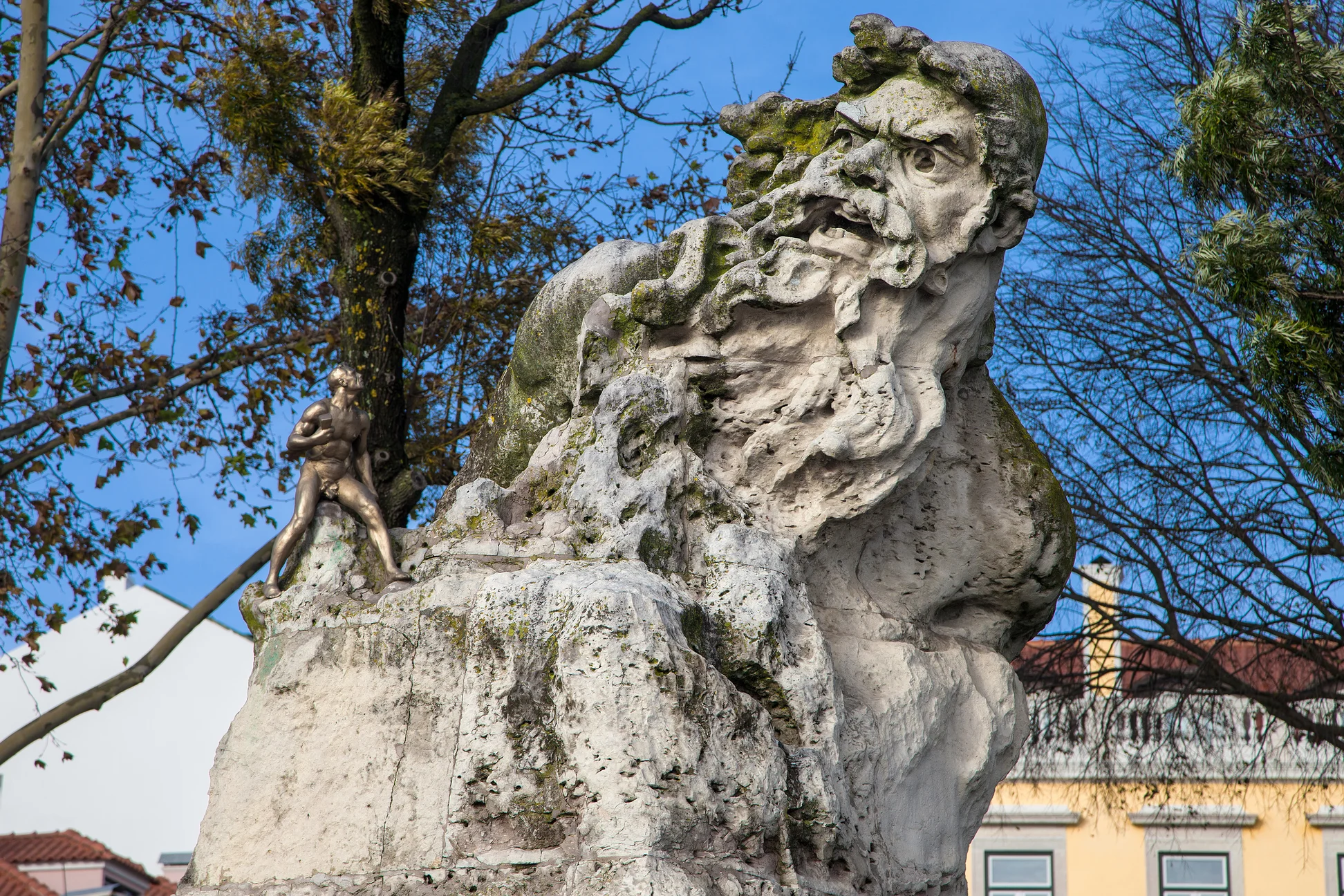
At the Miradouro de Santa Catarina the real attraction is the vast terrace, with a huge statue of Adamastor and a view that takes in the Tagus estuary, the bridge and the rooftops. Adamastor is the mythical figure Camões created to symbolise the Cape of Torment, the original name of the Cape of Good Hope, which Bartolomeu Dias finally rounded in 1488.
Santa Catarina is a popular place to watch the sunset, with music and conversation in the evening and into the night. Expect company rather than silence, and bring a layer for when the breeze picks up off the river.
The Castelo de São Jorge, built in the mid-11th century, still has eleven towers, and steps up the walls let visitors walk the ramparts around the whole perimeter, with many viewpoints over the city. It is a visit in its own right rather than a quick stop, so give it an unhurried morning or afternoon.
Carris lists the Glória funicular, which links Praça dos Restauradores to Bairro Alto, as out of service, and the Lavra and Bica funiculars too. The Santa Justa lift, designed by Raoul Mesnier du Ponsard and inaugurated in 1902, is temporarily closed.
Services change, so look at the Carris website on the day before you build a route around a lift, and keep a walking plan in reserve for the steeper streets.
On the western side of the centre, the Miradouro de São Pedro de Alcântara, beside the upper station of the Elevador da Glória, is one of the largest viewpoints in Lisbon, looking over Avenida da Liberdade, Restauradores and Baixa to the Castelo de São Jorge. The viewpoint is part of a well-kept garden with a kiosk, and a map made of azulejos helps you identify some of the places you can see. With the funicular out of service, plan to walk up from Restauradores or come through Bairro Alto.
Across the valley, the Miradouro do Torel, in the Jardim do Torel, has a broad view of Avenida da Liberdade and São Roque hill, with lots of shade and few tourists. It is the one to choose when the famous terraces are crowded.
In Baixa, since 9 August 2013, the top of the Arco da Rua Augusta has been open to the public, with a 360º view over Baixa and the river. It saves you a hill, and it is a good choice on a grey day.
Nearby, the Santa Justa lift connects Rua do Ouro to Largo do Carmo, and the viewpoint at the top of its tower looks over Baixa, the castle, the Tagus and the ruins of the Convento do Carmo. While it is closed, the Arco da Rua Augusta gives you a high view in the same part of town.
At the top of the city's central avenue, from the Miradouro do Parque Eduardo VII you look down over the park, the statue of the Marquis of Pombal and Avenida da Liberdade to the Tagus, the south bank and, on a good day, the hills of Arrábida. The Guided Tuk Tuk Tour of Chiado & Bairro Alto in Lisbon takes in a Chiado terrace facing the castle and the view down from Parque Eduardo VII in a single short ride.
Walking is the cheapest way to link the miradouros, but the cobbles are steep and polished, and the climbs add up. A guided ride lets you see more of them without arriving out of breath.
The Lisbon 7 Hills Guided E-Bike Tour with Panoramic Views uses electric assistance to reach several miradouros with a small group. For a whole day, the Lisbon 7 Hills and Belem E-Bike Guided Tour Full Day adds a ride along the river to Belém after the hilltop stops.
Wear shoes with a good grip: the stone pavements can be slippery, especially after rain. Carry water in summer, as shade is scarce on some terraces, and a light jacket for the evenings.
Go early for quieter terraces and save Santa Catarina for the evening. Keep an eye on your bag in the busiest places.
Santa Catarina is the classic choice, with its wide terrace facing the river and the bridge. Arrive a little early to find a place to sit.
In practice, yes. Visit Lisboa gives Santa Luzia's address as the Portas do Sol square, so one stop covers both names.
Carris lists it as temporarily closed. Check the Carris website before you go. Meanwhile, the top of the arch at the end of Rua Augusta gives you a view over Baixa.
Senhora do Monte and Graça are neighbours on the same hill, only a short walk apart, so you can do both on one outing.
Partly. Tram 28 runs to Graça, and tuk-tuk and e-bike tours do the climbing for you. Several of the old lifts are closed, so check Carris before you plan around them.