




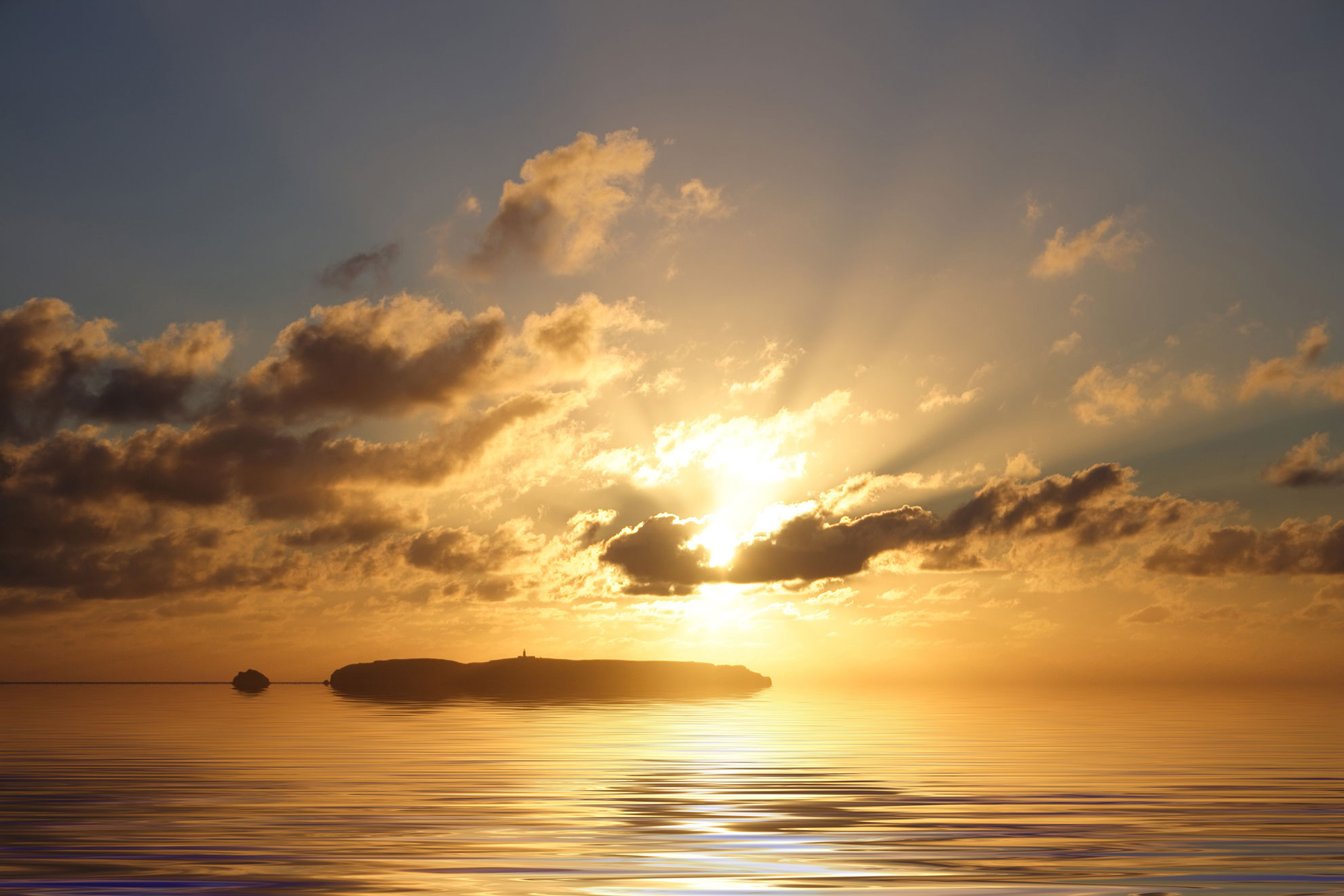
Berlenga Grande, seen from above — the granite fortress island sits 10 km west of Peniche, connected to the mainland only by scheduled ferry and tour boats.
Berlenga Island — The Last Frontier
Boat Tours to Berlengas Island: Portugal's Most Controlled — and Compelling — Natural Reserve
Ten kilometres off the coast of Peniche, a granite archipelago that looks like it belongs in a nature documentary sits quietly in the Atlantic, waiting for the roughly 550 people permitted to visit each day.
The Berlengas archipelago is technically well-known — it holds UNESCO Biosphere Reserve status and appears on most serious Portugal itineraries. In practice, its strict visitor limits and raw, weathered character keep it feeling genuinely remote. Getting there by boat is not just logistically necessary; it is part of what makes the experience.
From the moment the ferry or tour vessel clears Peniche harbour and the granite towers of Berlenga Grande come into view, the scale shift is immediate. There are no cars, no hotel chains, no beach bars. What you find instead is a 17th-century fortress perched on a tidal islet connected to the main island by a stone arch bridge, some of the clearest Atlantic water in Europe, and nesting colonies of razorbills — small seabirds that look, as locals note, like miniature penguins. The island covers less than one square kilometre, but the density of things to observe, swim through, and photograph is high.
"The access limit is not a bureaucratic inconvenience — it is the reason the place still works. Step off the boat on a July morning and you will hear seabirds before you hear other tourists."
Boat tours departing from Peniche vary considerably in what they include. The shortest circuits pass through the sea caves — particularly the Gruta Azul, where refracted Atlantic light turns the water an intense electric blue, and the Furado Grande, a natural tunnel that cuts clean through a section of the island. Longer options land passengers on the island itself for snorkelling at Praia do Carreiro do Mosteiro, the island's main beach, where underwater visibility regularly exceeds fifteen metres. Full-day formats and diving-specific packages extend the experience into the island's underwater terrain: submerged rock formations, several historic wrecks, and marine life that benefits directly from the reserve's protected status.
Tours Available from Peniche to Berlengas Island
The following options cover the main formats available, from introductory half-day cave circuits to full scuba diving programmes and private day tours originating in Lisbon. Each suits a different pace and level of interest in the island's marine environment.
Core Packages — Cave Tours & Half-Day Options
Diving & Specialist Experiences
From Lisbon — Private Transfer & Full Day
Looking for more Berlengas options or want to compare departures and availability across all tour formats from Peniche?
Browse all Berlengas tours →The Forte de São João Baptista: Context for the Castle on the Rock
The fort is the most photographed structure in the Berlengas, and the photographs do not distort its character — a 17th-century military building on a separate tidal islet, reached by a low stone bridge over turquoise water. Construction began in 1651 following earlier fortifications destroyed by Dutch raids. Today it operates partly as budget accommodation — there are a small number of rooms available through the Peniche municipality during the summer season — and partly as a freely walkable historic site during the day.
Walking the perimeter walls gives a clear sense of why the position was chosen: the fort controls the only navigable approach to the island's main anchorage, and the surrounding sea stacks and channels would have made any naval assault difficult. It also happens to be, in purely visual terms, one of the more unusual pieces of military architecture on the Portuguese coast — the arch bridge, the granite walls worn smooth by Atlantic spray, and the consistent colour of the water beneath it combine into a scene that most visitors photograph at length and still find difficult to represent accurately.
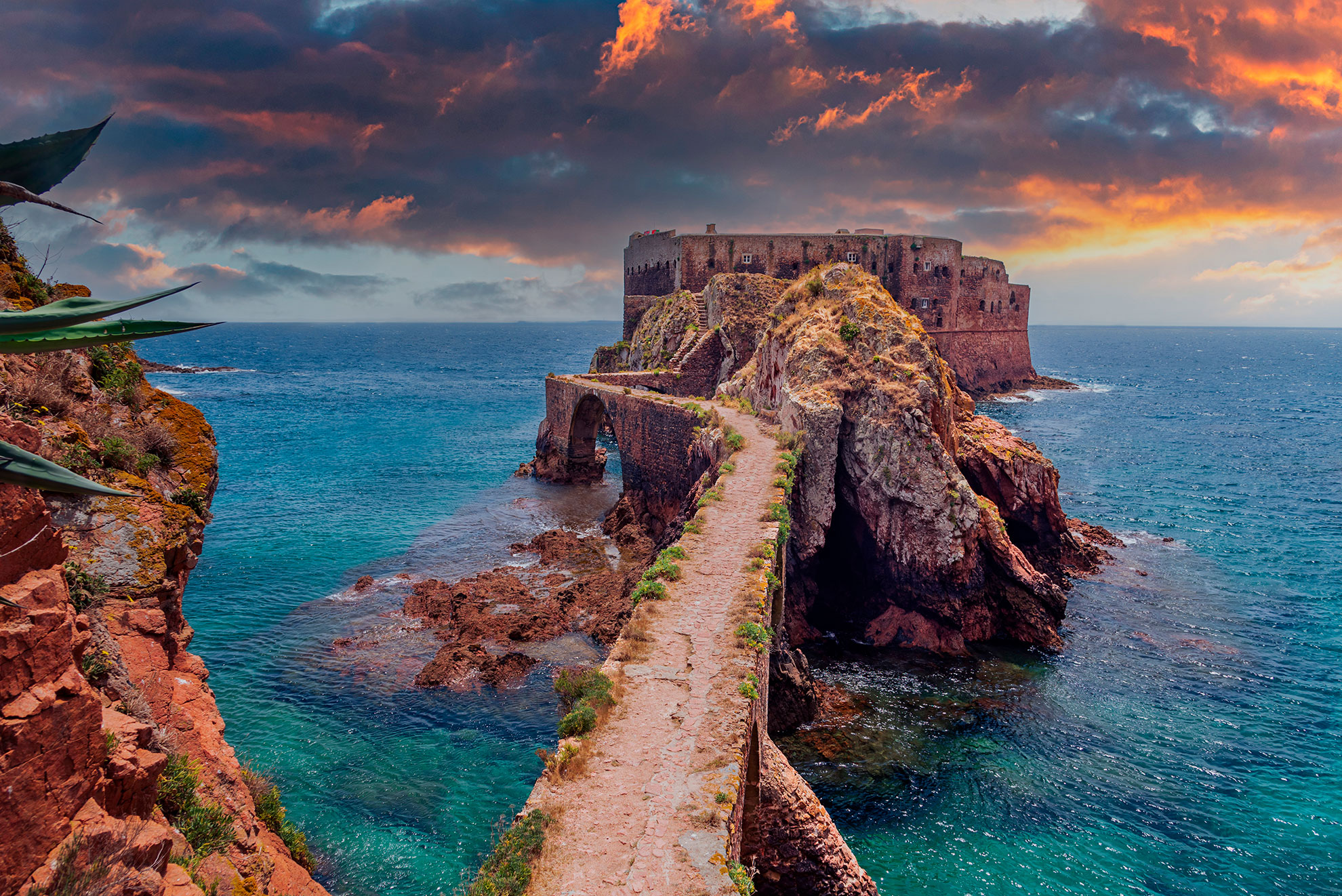
The 17th-century fortress sits on a separate islet and is reachable by a stone arch bridge — one of the more architecturally distinctive coastal sites in Portugal.
Marine Life, Sea Caves, and What the Water Actually Looks Like
The underwater quality around the Berlengas is a direct consequence of the Atlantic current patterns that pass through the archipelago and the reserve's protected status, which prohibits fishing and anchoring in most areas. The Gruta Azul — the Blue Cave — is the best-known sea cave on the circuit, a narrow inlet where the light filters through the water column from below and produces the intense blue-green colouration that appears in most travel photographs of the island. The Furado Grande tunnel is more dramatic in scale: a natural passage roughly wide enough for a small boat, cutting through a granite formation with open sky visible at the far end.
"The water clarity around Berlenga Grande is not tropical by temperature — the Atlantic sees to that — but by visibility it competes with destinations most people would need a long-haul flight to reach."
For snorkellers landing at Praia do Carreiro do Mosteiro, the shallow reef systems close to the beach hold wrasse, moray eels, and sea bass at relatively easy depths. For certified divers, the sites around the island include several wrecked vessels and deeper rock formations where larger pelagic species are regularly observed. The reserve's controls on access mean that fish populations here are notably less depleted than at comparable Atlantic sites without protected status.
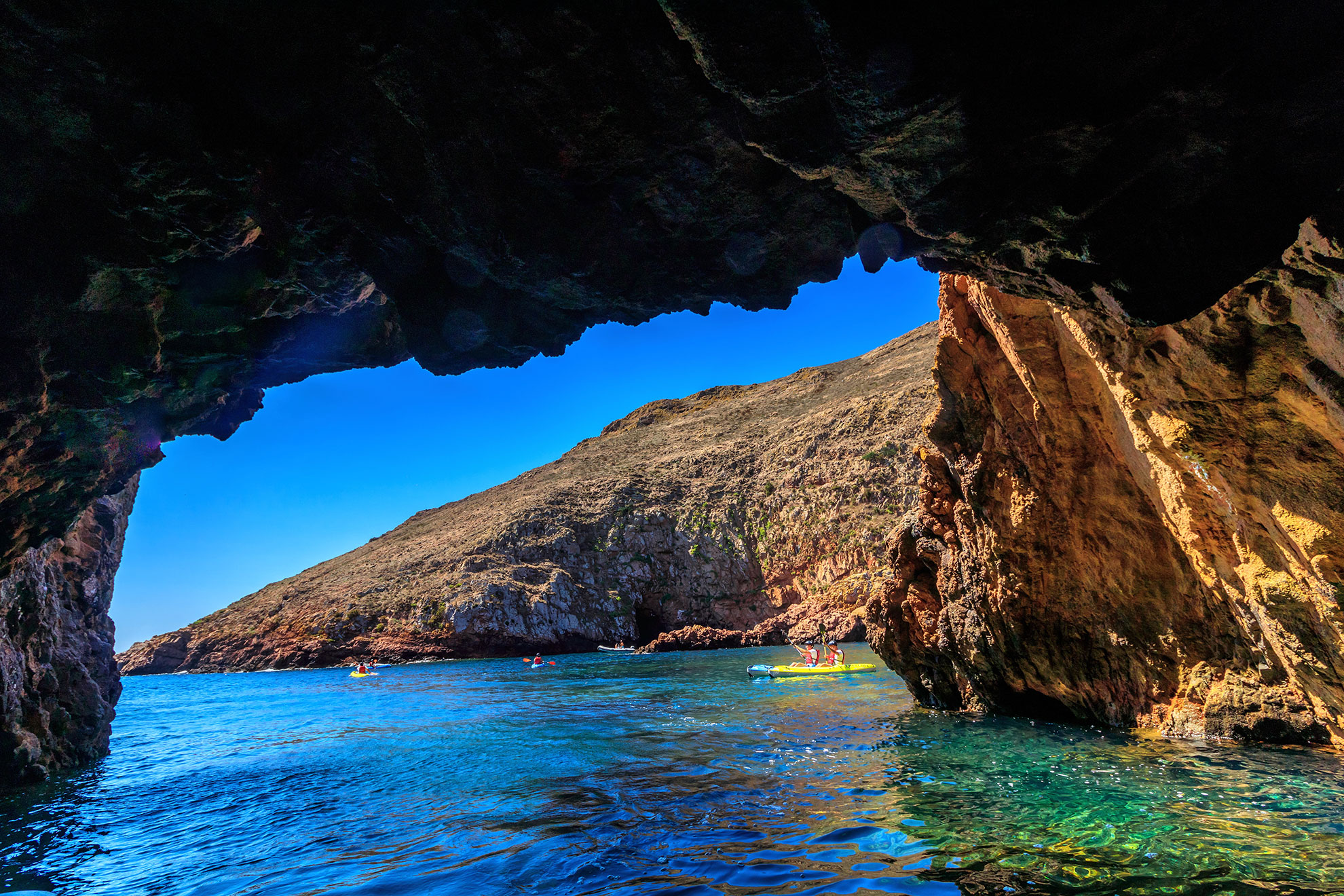
The Gruta Azul — light refracts from below through the clear Atlantic water, producing the intense colour that makes this one of the most distinctive cave circuits in Portugal.
Wildlife on the Island: The Razorbill and Its Neighbours
The Berlengas are a critical nesting site for several Atlantic seabird species. The razorbill — known locally as the airo — is the reserve's unofficial symbol and the bird most visitors most want to see. It stands roughly 40 centimetres tall, has the upright posture of an auk, and nests in crevices along the granite cliffs in numbers that, during the summer breeding season, produce audible colonies at close range. It is, in person, a more characterful bird than the photographs suggest.
Alongside the razorbill colonies, the island hosts large populations of yellow-legged gulls and shags, and the absence of ground predators means nesting activity is visible at eye level in several locations. The conservation logic behind the visitor cap becomes clear when you spend time on the island: the nesting areas are unfenced, the birds are habituated to a controlled level of human presence, and the habitat functions largely as it would without any tourism infrastructure. That balance is fragile, which is why the Berlengaspass system exists and why the numbers are enforced rather than suggested.
All Berlengas tours depart from Peniche harbour, approximately 90 minutes from Lisbon by road. Private transfers from Lisbon are available, or the journey can be made independently by bus or hire car.
See all available departures →Frequently Asked Questions
Do I need to buy a Berlengaspass separately from my tour ticket?
Yes. The Berlengaspass is a visitor tax charged by the Peniche municipality and must be purchased online before arrival on the island. It is separate from any boat tour or ferry ticket. Check current requirements at the official reserve portal, as the fee and booking process can change between seasons.
How long is the boat crossing from Peniche to Berlenga Grande?
The crossing takes approximately 30 to 40 minutes depending on sea conditions and vessel type. The Atlantic can be choppy, particularly outside the summer months — travellers prone to motion sickness should take precautions in advance.
What is the best time of year to visit the Berlengas?
June through September offers the calmest sea conditions and warmest water for snorkelling and diving. July and August are the busiest months, when the daily visitor cap fills quickly — booking tours and the Berlengaspass well in advance is essential. May and late September offer a reasonable balance of conditions and lower demand.
Is the Scuba Pack suitable for beginners?
The Scuba Pack is designed for certified divers with existing open-water qualifications. Beginners interested in diving should contact the operator directly to ask about discovery dive or introductory formats, which some providers offer as an alternative at shallower depths near the island.
Can I visit Berlengas from Lisbon without a car?
Yes. Peniche is reachable from Lisbon's Sete Rios bus terminal by regular Rodoviária do Oeste services, with a journey time of roughly 90 minutes. Alternatively, the private full-day tour from Lisbon listed above handles all transport logistics as part of the package.
Is there food and water available on the island?
There is a small seasonal restaurant near the harbour on Berlenga Grande, but options are limited and prices reflect the logistical difficulty of supply. Most visitors bring food and water for the day. Full-day tour operators typically advise on this in their pre-departure information.