




What to Do in the Azores: The Ultimate Multi-Island Itinerary
A methodical, island-by-island travel plan for exploring nine volcanic worlds across the mid-Atlantic, from São Miguel to the Central Group triangle.
Scattered across 600 kilometres of the mid-Atlantic ridge, the nine islands of the Azores archipelago each sit on a distinct tectonic personality. Planning a coherent Azores Portugal itinerary means understanding that inter-island travel is not a logistical obstacle but the spine of the journey itself. This guide maps a practical 10-to-14-day route for 2026, anchored in São Miguel and extending west into the Central Group.
Why the Azores Demand a Multi-Island Approach
The Azores are divided into three geographic groups: the Eastern Group (São Miguel and Santa Maria), the Central Group (Terceira, Graciosa, São Jorge, Pico, and Faial), and the Western Group (Flores and Corvo). Each cluster sits on a separate segment of the Mid-Atlantic Ridge, which means the volcanic character, landscape, and culture differ visibly from island to island.
São Miguel, the largest island at roughly 65 kilometres long, offers the widest range of infrastructure for first-time visitors: international flights from Lisbon, London, and Boston land at João Paulo II Airport in Ponta Delgada. Terceira, home to the UNESCO World Heritage city of Angra do Heroísmo, functions as the second major hub. The Central Group triangle of Pico, Faial, and São Jorge sits about 200 kilometres west-northwest of São Miguel and is best navigated by the Atlântico Line ferry network, where crossings between those three islands take between 30 and 90 minutes.
"The Azores are not one destination dressed in nine costumes. They are nine distinct geological arguments, each making a case for a different kind of wildness." — ToursXplorer Editorial Team
Flying between the island groups via SATA Air Açores (branded commercially as Azores Airlines on transatlantic routes) takes between 30 and 55 minutes per leg, with multiple daily departures from Ponta Delgada (PDL) to Horta (FAI) on Faial and to Lajes (TER) on Terceira. Budget roughly 60 to 120 euros per inter-island flight when booked at least six weeks in advance.
São Miguel: The Gateway Island (Days 1 to 4)
Most Azores Portugal itineraries begin in São Miguel for practical reasons: it has the most direct international connections and the greatest concentration of accessible geothermal landmarks. Allocate at minimum three full days here, ideally four.
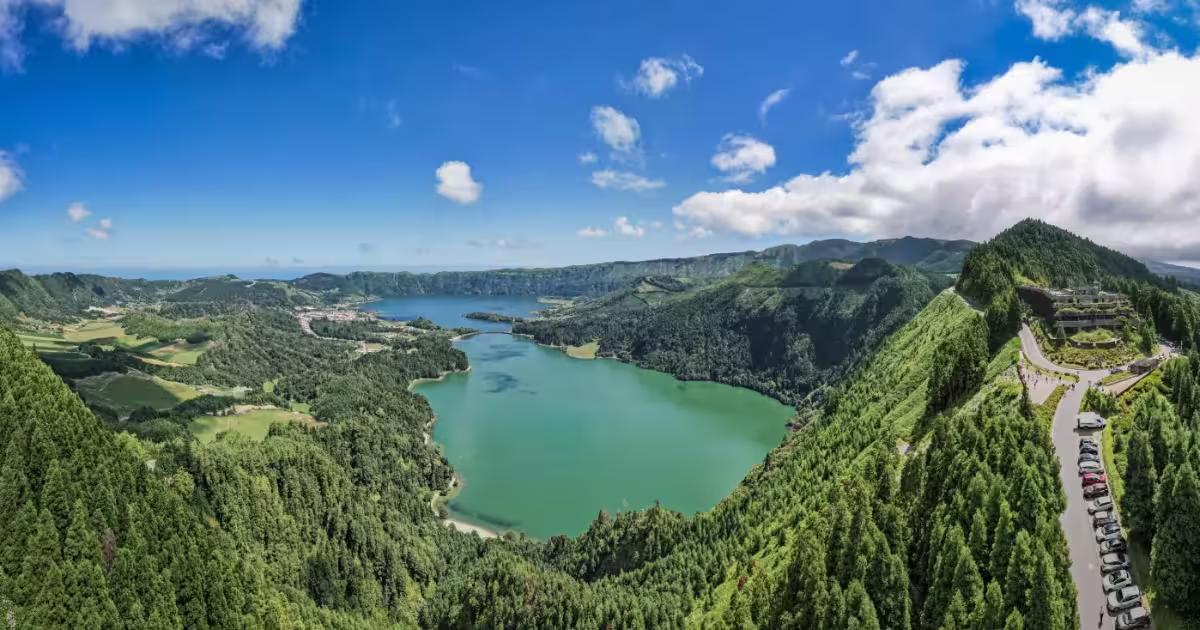
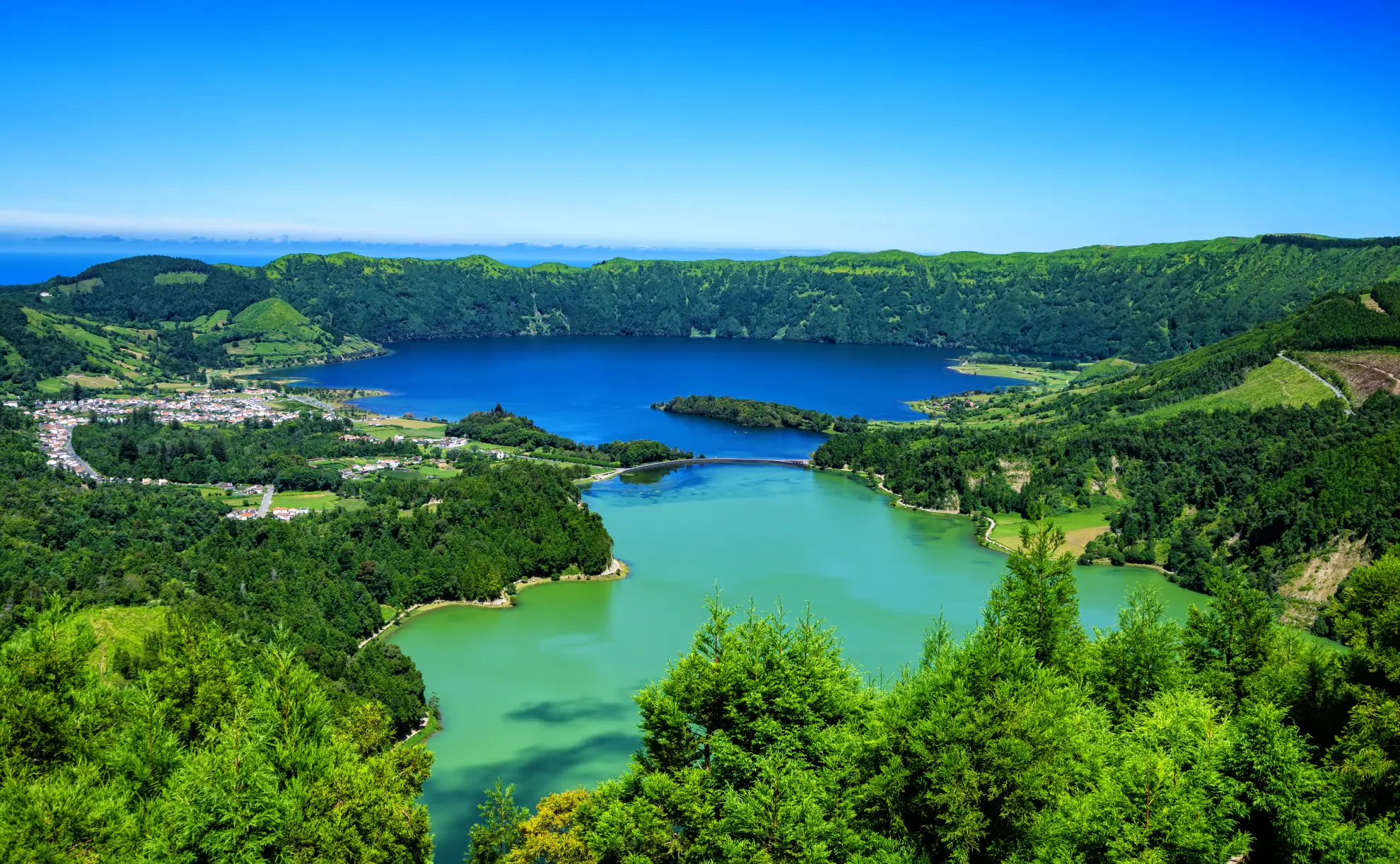
The caldera of Sete Cidades, located in the western part of the island, contains two colour-contrasting lakes — the Lagoa Verde and the Lagoa Azul — separated by a narrow stone bridge. The lakes sit inside a volcanic caldera that is approximately 12 kilometres in diameter. The classic viewpoint is Vista do Rei, reached by a winding road from the village of Sete Cidades. A full circuit of the caldera rim on foot covers around 11 kilometres and takes three to four hours at moderate pace.
On the island's eastern flank, the Furnas Valley holds the most concentrated geothermal landscape in the archipelago. Caldeira Velha, a thermal waterfall area protected as a natural monument, lies along the EN1-1A road between Ribeira Grande and Furnas. Alongside it, the local geological curiosity known as Janela do Inferno (Window to Hell) exposes a boiling volcanic vent at close range. The Furnas village itself is home to the cozido das Furnas, a meat and vegetable stew slow-cooked underground for six to seven hours in geothermal heat, served at several restaurants around Lagoa das Furnas.
"Standing at the edge of a fumarole field in Furnas, the ground hisses and steams underfoot. It is one of the few places in Europe where cooking happens by geology." — ToursXplorer Editorial Team
Whale watching departs from the marina in Ponta Delgada, which sits on the southern coast of São Miguel. The waters south of the island are part of a cetacean corridor where sperm whales (Physeter macrocephalus) reside year-round, while blue whales (Balaenoptera musculus) and fin whales (Balaenoptera physalus) pass through primarily between March and June. Common dolphins (Delphinus delphis) and bottlenose dolphins (Tursiops truncatus) are encountered on most outings regardless of season.
How to Navigate the Central Group Triangle
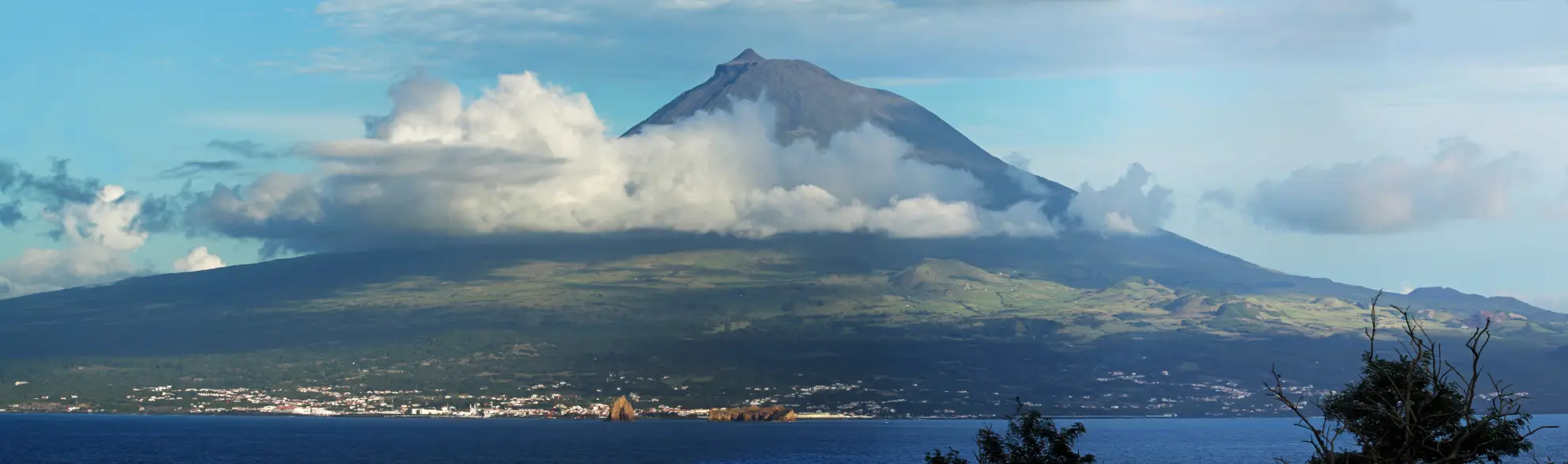
The Central Group's most rewarding multi-island combination is the triangle formed by Pico, Faial, and São Jorge. These three islands are close enough to see from one another on a clear day, and the Atlântico Line operates regular ferry services connecting them. The crossing from Horta (Faial) to Madalena (Pico) takes approximately 30 minutes. The crossing from Madalena (Pico) to Velas (São Jorge) takes about 1 hour and 30 minutes. Ferries run multiple times daily between Faial and Pico, with less frequent service to São Jorge.
The recommended routing from São Miguel is to fly directly into Horta on Faial, spend two days there, take the 30-minute ferry to Pico for two to three days, and then the ferry onward to São Jorge for two days before flying back to São Miguel via Terceira or direct. This circuit can be completed in six to seven days and requires only one inbound flight to Faial and one or two outbound legs to return.
Pico Island is defined by its volcanic centrepiece: Mount Pico (Montanha do Pico), which rises to 2,351 metres and is Portugal's highest point. The official ascent trail from the Casa da Montanha base station at roughly 1,230 metres altitude takes four to five hours up and two to three hours down. Permits are required and limited to 192 hikers per day; the Azores Regional Government manages bookings through the official trail system. The lower slopes of Pico are covered by a UNESCO World Heritage Site landscape of basalt stone wall vineyards, classified in 2004, where the Verdelho grape variety has been cultivated since the 15th century.
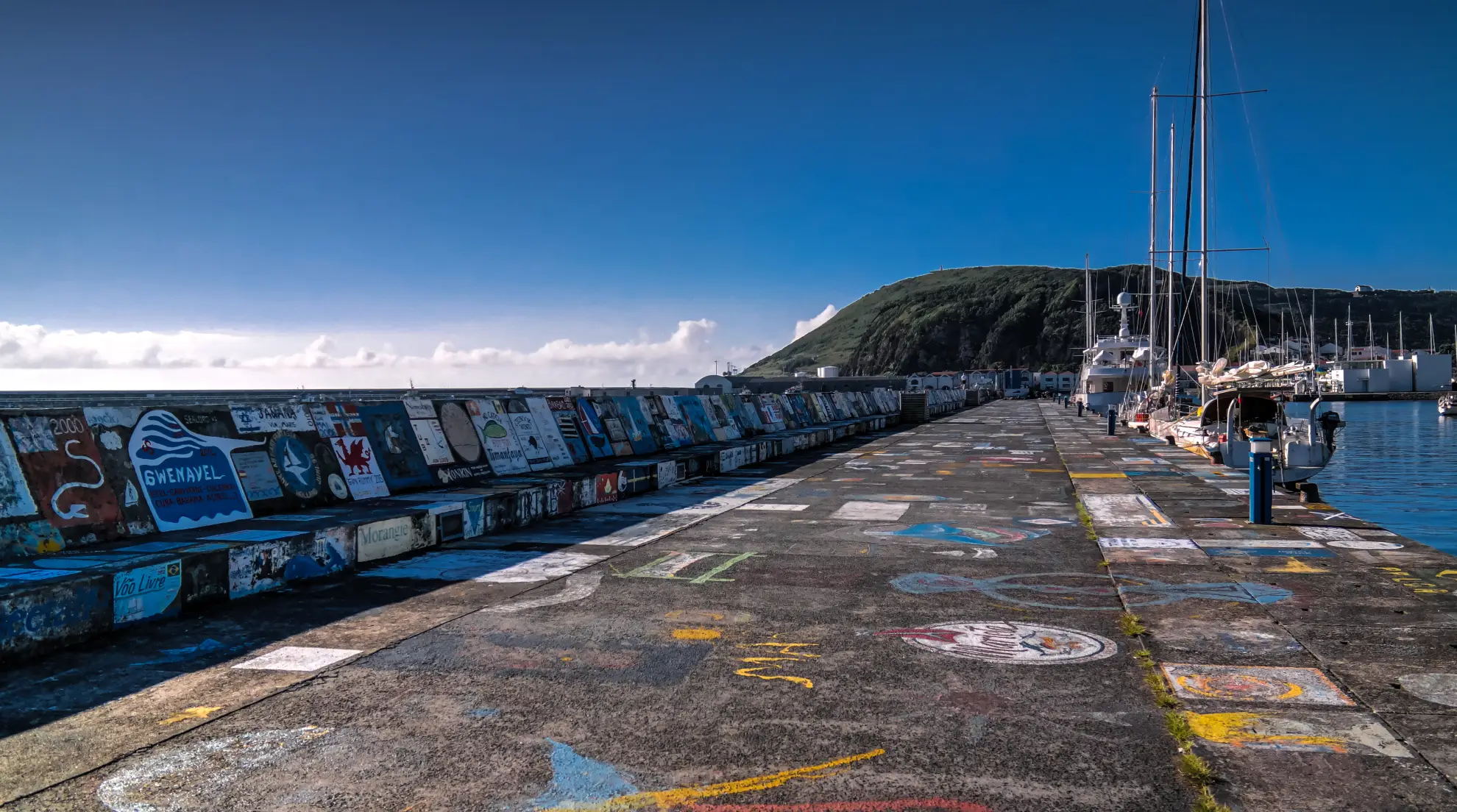
Faial Island's defining landmark is the Capelinhos Volcano on the island's westernmost tip. The eruption of Capelinhos between September 1957 and October 1958 added approximately 2.4 square kilometres of new land to the island and triggered the emigration of roughly 20,000 Faialenses, many of whom settled in New England under a special US immigration act. The Interpretation Centre built partially underground beside the lighthouse opened in 2008 and documents the eruption using original photographic records and geological samples. Horta's Marina, one of the most frequently visited stops for transatlantic sailors, displays thousands of painted boat murals on the harbour walls, a tradition dating to the 1980s.
São Jorge is the most vertically dramatic island in the Central Group, rising steeply from the sea with a ridge that reaches 1,053 metres at Pico da Esperança. Its coastline is interrupted by a series of fajãs, low-lying coastal platforms formed by ancient lava flows or landslides that settled at sea level. The Fajã da Caldeira de Santo Cristo, accessible only by a four-hour walk along the GR-06 trail or by boat, holds a brackish lagoon that is the only place in the world where the juvenile stage of the European flat oyster develops naturally in wild conditions.
The Buffer Rule: A Practical Warning for 2026 Travellers
Weather-related flight cancellations and ferry suspensions are a recurring reality in the Azores, particularly between October and March when Atlantic depressions pass through regularly. The most important logistical rule for any Azores Portugal itinerary is to end the trip on São Miguel rather than on a smaller island.
Returning to Ponta Delgada one or two days before an international departure flight creates a buffer against the scenario where fog, wind, or sea conditions prevent travel from Faial, Pico, or São Jorge at the last moment. This buffer has saved many travellers from missed transatlantic connections. São Miguel has the most frequent onward connections to Lisbon (TAP, Ryanair), London Gatwick (Ryanair), and Boston (Azores Airlines), and its airport handles the widest range of conditions.
ToursXplorer recommends building this buffer explicitly into any 10-to-14-day itinerary. A sample structure for 14 days looks like this: Days 1 to 4 on São Miguel, Day 5 a flight to Horta (Faial), Days 5 to 7 on Faial, Day 8 ferry to Pico, Days 8 to 10 on Pico, Day 11 ferry to São Jorge, Days 11 to 12 on São Jorge, Day 13 ferry to Pico then flight via Terceira to São Miguel, Day 14 buffer day in Ponta Delgada before international departure.
Best Time to Visit Azores Portugal
The Azores experience a subtropical oceanic climate (Köppen classification: Cfb) with mild temperatures year-round. Sea surface temperatures range from approximately 17°C in February to 24°C in September. The islands receive precipitation in all months, but the driest and warmest window runs from late June through September, when average daytime temperatures on São Miguel sit between 22°C and 26°C.
For whale watching, the peak season for blue and fin whales is April to June. Sperm whales are present year-round, making any month viable for cetacean tours. For climbing Mount Pico, July through September offers the clearest summit days, though cloud cover can close the trail even in summer at short notice. The Sanjoaninas festival in Angra do Heroísmo on Terceira runs across the second and third weeks of June and is one of the oldest popular festivals in the North Atlantic, with origins dating to the 16th century.
Travellers planning trips to Azores Portugal through ToursXplorer will find the widest tour availability between May and October, when most outdoor operators run full schedules for canyoning, kayaking, whale watching, and off-road excursions.
Whale Watching and Ocean Tours
Off-Road and Crater Exploration Tours
Canyoning and Waterfall Tours
Coastal and Water-Based Tours
Geothermal and Walking Tours
Ready to build your Azores Portugal itinerary? Browse all available tours across São Miguel, Terceira, and the Central Group on ToursXplorer and book with confirmed availability for 2026.
Click hereWhere to Stay in Azores Portugal: Island-by-Island Overview
Accommodation infrastructure varies significantly across the archipelago. São Miguel has the widest range, from international hotel chains in Ponta Delgada (notably along Avenida Infante Dom Henrique and around Largo de Gonçalo Velho Cabral) to rural quintas in Furnas and Nordeste. Faial's main concentration is in Horta, where the Hotel do Canal beside the marina is the traditional choice for visiting sailors and land-based travellers alike. Pico's accommodation is spread between Madalena, Lajes do Pico, and São Roque do Pico, with a growing number of rural cottages near the vineyard landscape.
São Jorge has the most limited options but the most authentic rural character: a handful of guesthouses in Velas and Calheta, plus a small number of cottages accessible to the major fajã trails. Travellers visiting in July and August should book all Central Group accommodation at least three months in advance, as capacity is genuinely constrained relative to summer demand.
ToursXplorer's tour listings for the Azores include operator notes on meeting points and local logistics, which can assist in matching accommodation location with tour departure schedules across the islands.
Getting to the Azores: Flight and Ferry Logistics for 2026
Ponta Delgada's João Paulo II Airport (PDL) is the primary international entry point, served by TAP Air Portugal from Lisbon (flight time approximately 2 hours), Ryanair from London Stansted and Manchester, and Azores Airlines (SATA International) from Boston Logan, Toronto Pearson, and several Portuguese and UK cities. Horta Airport (FAI) on Faial accepts direct flights from Lisbon and inter-island services from PDL.
Within the archipelago, SATA Air Açores operates turboprop and jet services on all inter-island routes. The Atlântico Line ferry network connects Faial, Pico, São Jorge, Graciosa, and Terceira with scheduled services, though frequency drops significantly outside the May-to-October season. Ferries do not currently operate between São Miguel and the Central Group as a scheduled service; that connection requires a flight.
Travellers should verify schedules directly with SATA and Atlântico Line when finalising their Azores Portugal itinerary, as timetables for 2026 will be confirmed closer to the season. Weather cancellations are common enough that travel insurance covering trip interruption is considered standard practice for Azores travel planning.
Planning trips to Azores Portugal for a group? Check ToursXplorer's full selection of private and small-group tours across multiple islands, from whale watching to canyoning and off-road crater excursions.
Frequently Asked Questions
For a first visit, São Miguel is the logical starting point due to direct international flights and diverse landscapes including Sete Cidades, Furnas, and whale watching. Pairing it with the Central Group triangle of Pico, Faial, and São Jorge adds significant variety. This combination covers volcanic geology, cetacean encounters, and UNESCO heritage within a 10 to 14-day window.
A practical 10-day structure allocates days 1 to 4 on São Miguel (Sete Cidades, Furnas, whale watching), day 5 flying to Faial (Horta Marina, Capelinhos Volcano), days 6 to 7 on Pico (Mount Pico hike, UNESCO vineyards), day 8 ferry to São Jorge (Fajã da Caldeira de Santo Cristo trail), and days 9 to 10 as a buffer back in Ponta Delgada before international departure.
Inter-island travel uses two main options: SATA Air Açores flights (30 to 55 minutes between major islands, roughly 60 to 120 euros) and Atlântico Line ferries within the Central Group (30 minutes between Faial and Pico, 90 minutes between Pico and São Jorge). Ferries do not connect São Miguel to the Central Group; that segment requires a flight.
June through September offers the warmest and driest conditions, with sea temperatures reaching 24°C in August and September. April to June is optimal for blue and fin whale sightings. Sperm whales are present year-round. The Sanjoaninas festival on Terceira runs in mid-June. Winter travel is viable but inter-island disruptions from Atlantic weather systems are more frequent.
Yes, and São Miguel is the best island for combining both. Canyoning tours operate at Ribeira dos Caldeirões in Nordeste and in various gorges across the island's interior, while whale watching departs from Ponta Delgada marina. Both activities can be scheduled on separate days within a 3 to 4-day stay on São Miguel, with morning departures typical for ocean tours.
Small-group outdoor tours including canyoning, whale watching, and buggy excursions in the Sete Cidades area typically fill 4 to 8 weeks before departure during July and August. For Mount Pico summit permits, the 192-person daily limit means booking several weeks ahead is advisable. Booking through ToursXplorer confirms availability directly with local operators.